Tomaso Filippi – was a photographer born in Venice in the middle years of the 19th century. For decades he had a photography shop in Piazza San Marco. His photos are an important social commentary of life in Venice – every day scenes observed by Filippi through the lens of his camera.
Filippi was born in 1852 into a city that could only be reached by boat. A city marooned between land and sea, where everyone was a seafarer and almost everyone understood the tidal waters of the lagoon. Arriving in Venice or leaving Venice for a trip to the mainland (terraferma) meant the hiring of a gondola to be rowed across the lagoon. The journey from Mestre to Rialto took at least one hour, more if the wind was blowing in from the Adriatic.
Venice in the 1850s was a poor city. Many of the palaces were boarded up, buildings were run down and dark, shadowy alleys were dangerous at night. The stench of sewage drifted from the canals. Murky oil lamps illuminated dank passageways in an unearthly manner, casting bright light in one direction and funereal gloom in another.
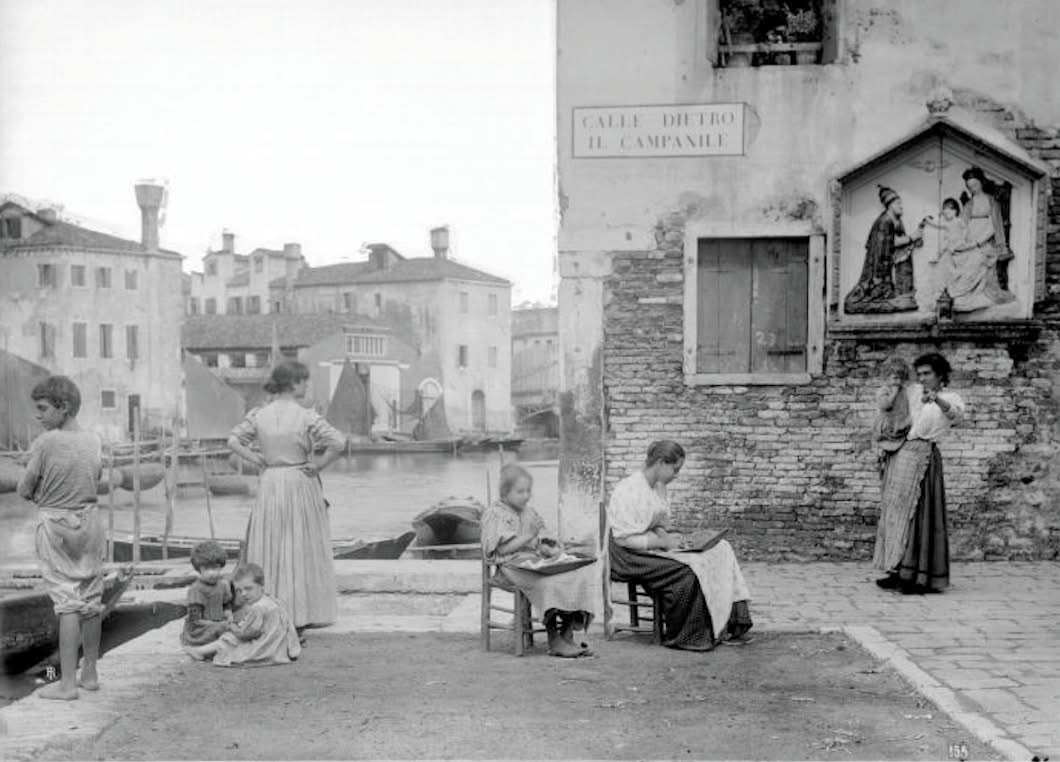
This was a Venice where the children swam in the canals and there was no running water in the houses. Women would fill up their buckets with water from the campo ‘pozzo’ every day. The ‘pozzo‘ (well) wasn’t really a well it was a cistern, an underground water tank, used for collecting and storing rain water. Many of the campos (small squares) had vegetable gardens and cages with ducks and hens inside. The ‘campo’ was the neighbourhood vegetable garden. Women would gossip at the ‘pozzo’ whilst waiting for their turn to fill their buckets. Fishermen would sit on wooden stools fixing their nets. Children would play and run around, jumping into the canals in the summer months.
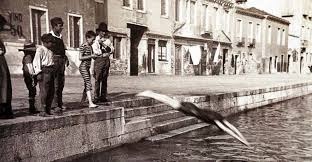
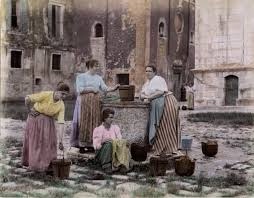
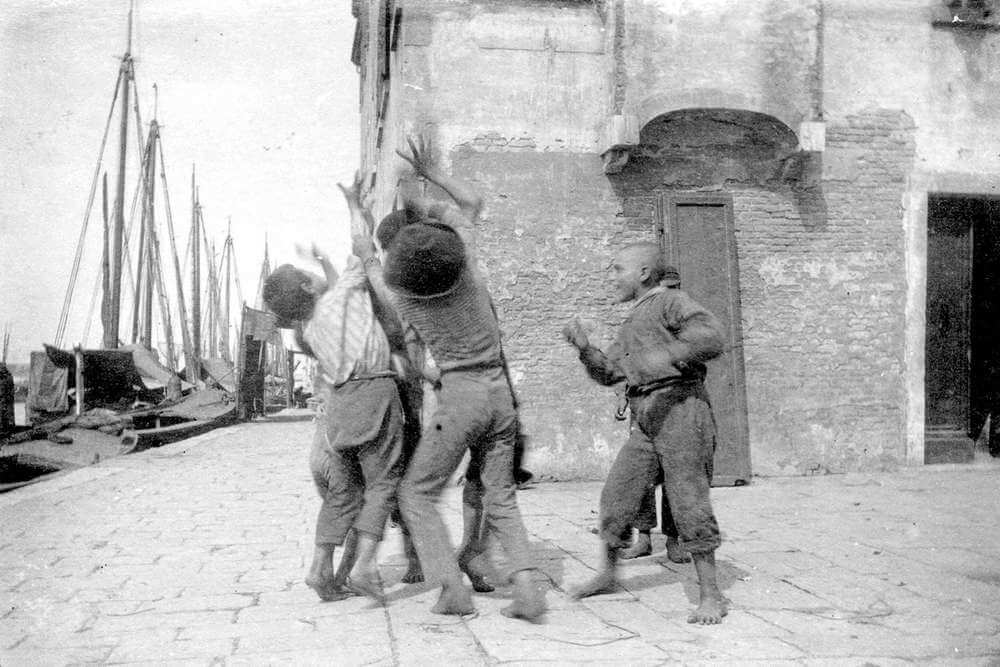
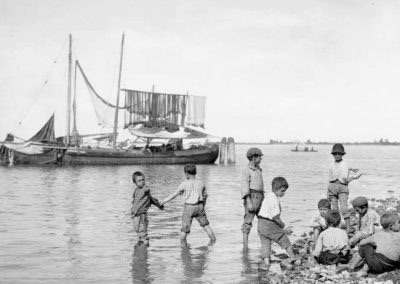
Careful inspection of these photos shows quite clearly that Venice as a city was run down. The city’s proud past as an independent republic for more than 1000 years had been brought to an abrupt end by the arrival of Napoleon in 1797, some fifty years earlier. The Venetian people were then subjected to French and then Austrian control until they became part of the kingdom of Italy in 1866. Filippi captures the lives of ordinary Venetians in these photographs. Children playing (probably with a ball) in the image below – all bare-footed. Then in the right hand photo there are children playing on the edge of the lagoon – there’s a trabaccolo (wooden cargo vessel) moored in the background. These trabaccolo boats were the workhorses of the Adriatic Sea, sturdy sailing boats with a broad beam and a sea-going hull. They transported all types of cargo including timber, wheat, salt and a huge range of dry goods.
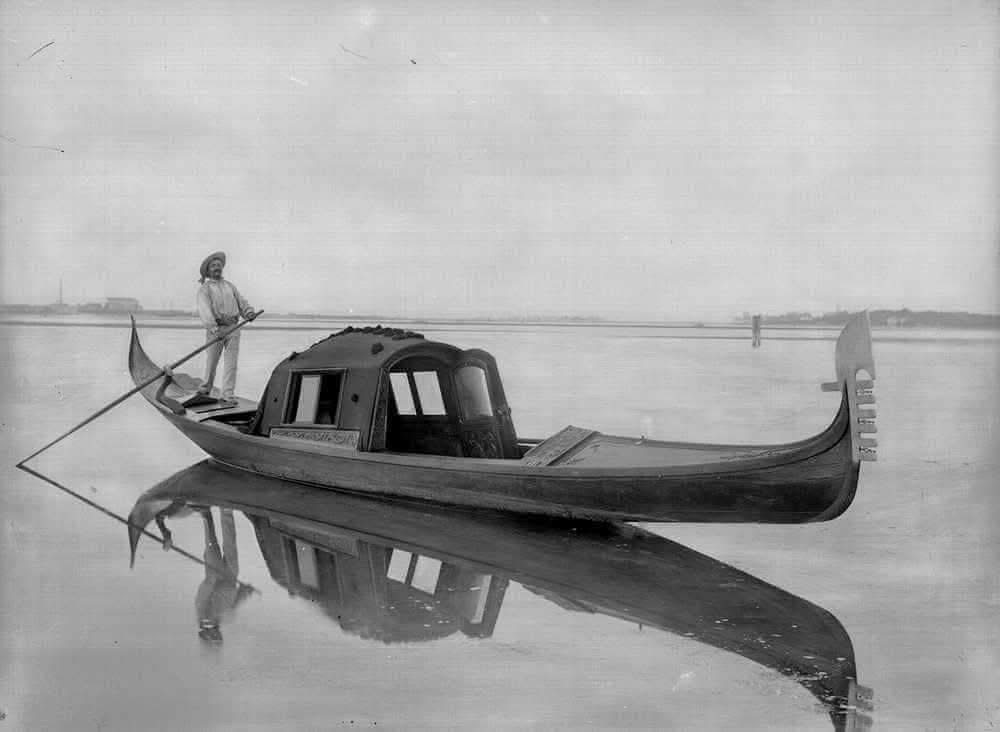
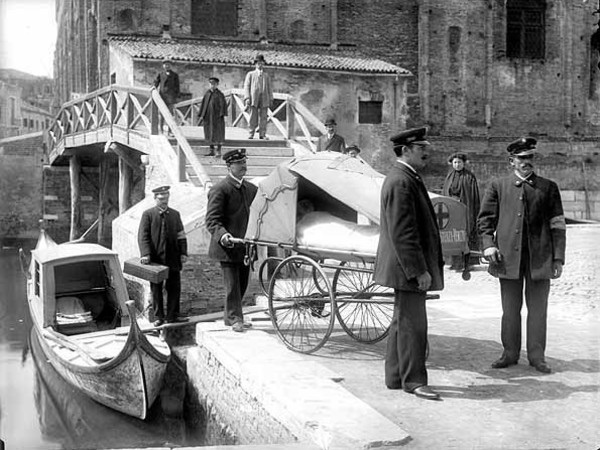
Filippi lived a long life and had the opportunity to observe Venice for almost a century – although most of his photos are from about 1890 to 1930. One of his most famous shots is this wonderful portrait of a gondola and gondolier (below left). The gondola is reflected beautifully in the still water of the lagoon. The gondolier stands proudly on the stern. This gondola has the traditional felze – leather roof – offering privacy to those inside. The slightly leaning bell tower on the horizon could be the campanile of San Martino on Burano. The other photo (below right) shows an ambulance cart of the Red Cross taking an injured person from a gondola to the hospital. The wooden bridge in the background could lead to the monumental church of San Giovanni Paolo – next door to Venice’s ospedale.
By the 1870s the railway had arrived in Venice. The Church of Santa Lucia had been demolished to make way for the brand new ‘ferrovia’ and Venice was linked to the mainland permanently. Purists like John Ruskin regarded this as a disaster. Ruskin first visited Venice in 1835 and returned many times up until 1888. On his numerous visits he felt compelled to sketch and record as many of Venice’s important buildings and architectural details as he possibly could. He was fearful that Venice’s unique heritage would be lost as tourists flooded the city and began to fund restoration work with little or no regard for the unique characteristics of each individual building.
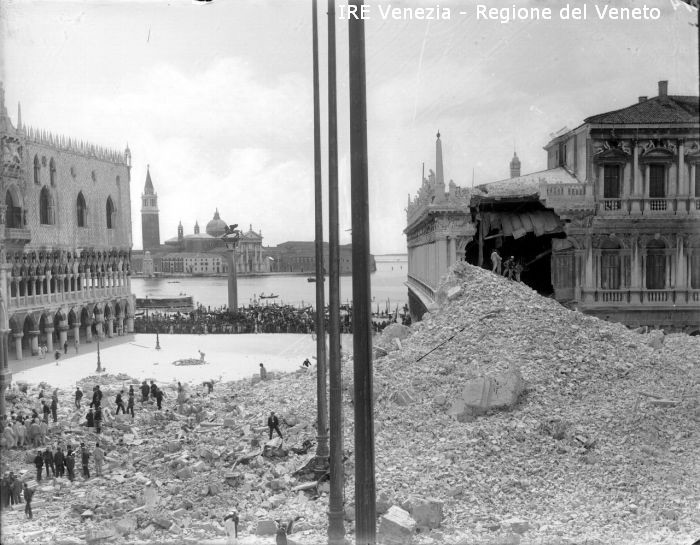
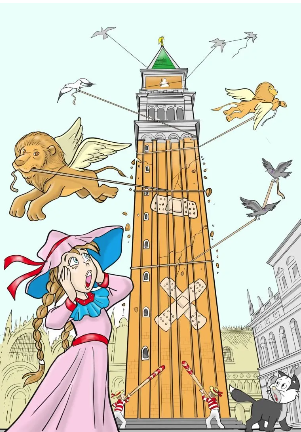
In 1902 when the bell tower of San Marco suddenly gave up the ghost and collapsed into a stately pile of bricks which filled the piazza and miraculously injured nobody, Tomaso Filippi was there with his camera to record the event. Just a year or so ago to commemorate the anniversary of the collapse of the bell tower a group of young graphic designers created a ‘cartoon version’ of events which I think is completely charming. I particularly like the sticking plaster holding up the tower and the winged lion trying in vain to support it. The artists behind this are Valerio Held and Maurizio Amendola (full details in the notes below).
By the turn of the century modernism was in the air and the spectacular oriental pile of the Excelsior Hotel emerged from the beach of the Lido. The Excelsior opened for business in 1908 and soon became part of the circuit for the international jet set. Once again Tomaso Filippi was there to record this event.
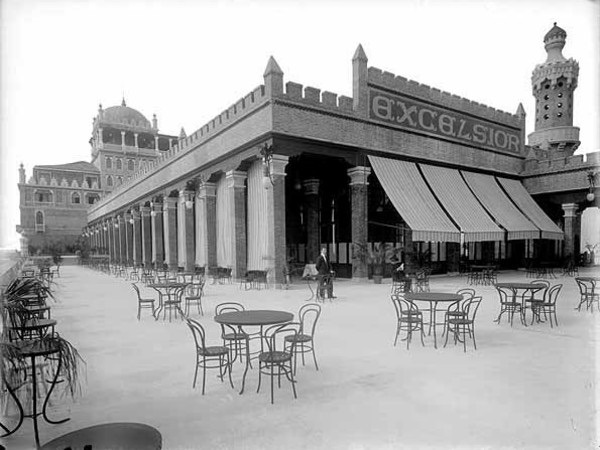
Excelsior Terrace – 1900s – photo: Tomaso Filippi
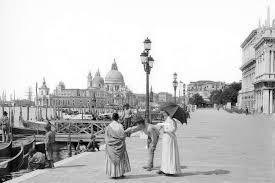
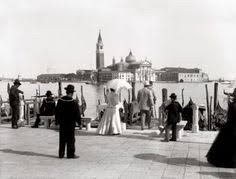
In 2013 there was a photography exhibition of Tomaso Filippi’s work at Villa Pisani at Stra. I think another exhibition is long overdue! The exhibition was curated by Daniele Resini and covered the period from 1895 to 1905 – this was a period when Filippi devoted himself to the production of views of Venice and other islands of the lagoon. These photos were mostly available for purchase to the tourists who were arriving in Venice in increasing numbers, mainly as a result of the railway.
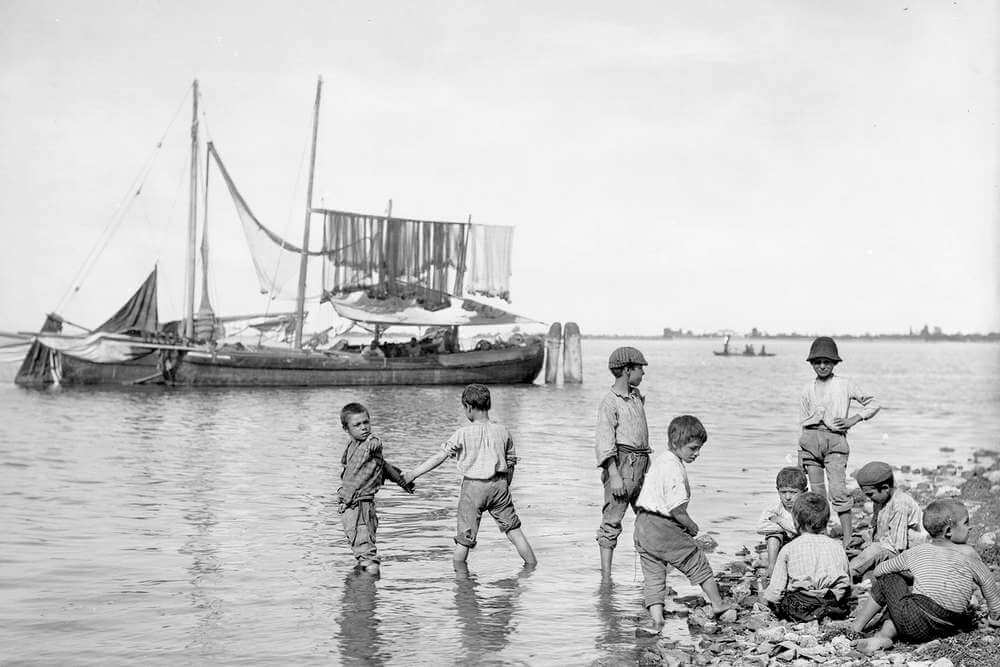
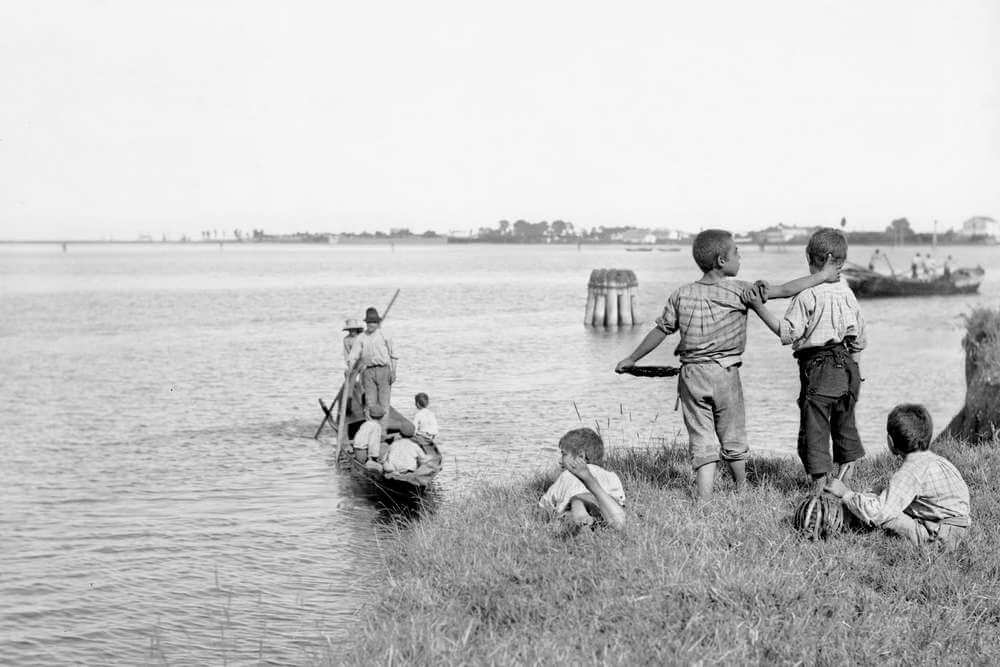
Tomaso Filippi left a legacy behind him of photographs that enable us to see, quite clearly, life in Venice in the 19th century. We can see the women filling their water buckets at the well in each campo. We can see the children playing bare-foot on the fondamenta. This is real life in all its glory; smelly, dirty and real. You can still see a traditional campo in Venice, if you know where to look, complete with fishing nets, cages for ducks and rabbits, even a small vegetable patch. Usually there’s even a couple of small fishing boats unloading the day’s catch on the fondamenta. It’s just a question of paying attention and knowing where to look.
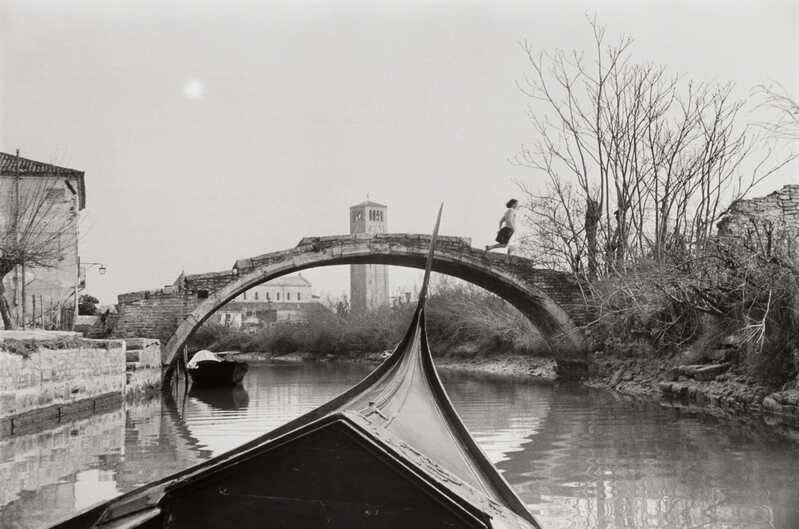
Torcello in the 1950s – photo: Henri Cartier-Bresson (left) and Gondola (1910) Tomaso Filippi (right)
Notes:
- Venice Film Festival (Mostra di Cinema) starts on 27th August, 2025. Why not travel to Venice to witness the stars and even watch some of the films being presented. Here’s a little about film in Venice: Venice and Film – starring and featuring the Excelsior Hotel (see photo above)!
- Venice – hidden corners…. to inspire you further
- Tomaso Filippi was born in Venice in 1852, he died in Venice in 1948 at the ripe old age of 96.
- The Archive of Tomaso Filippi photographs is held by ‘IRE’ Regione Veneto
- The delightful cartoon mentioned in my article comes from the book “Venezia è favolosa in viaggio verso la sostenibilità“. Published in 2024 to coincide with the 122nd anniversary of the collapse of the bell tower. The publisher is Armando Curcio Editore, and the book was written by Vittorio Baroni and Nadia De Lazzari. Illustrations by Valerio Held and Maurizio Amendola (all of whom are Venetian residents).
- For more reflections on the lagoon visit www.educated-traveller.com – my blog where I write about Italy, Venice and the lagoon.
- There’s a trabaccolo still in Venice – currently at the shipyard in Cannaregio having much needed restoration work done. It is called ‘Il Nuovo Trionfo’ you can read my article about it here: Il Nuovo Trionfo, Venice
- If you’d like to know more about the islands especially Torcello and Burano check out my blog for numerous articles and snippets of information.
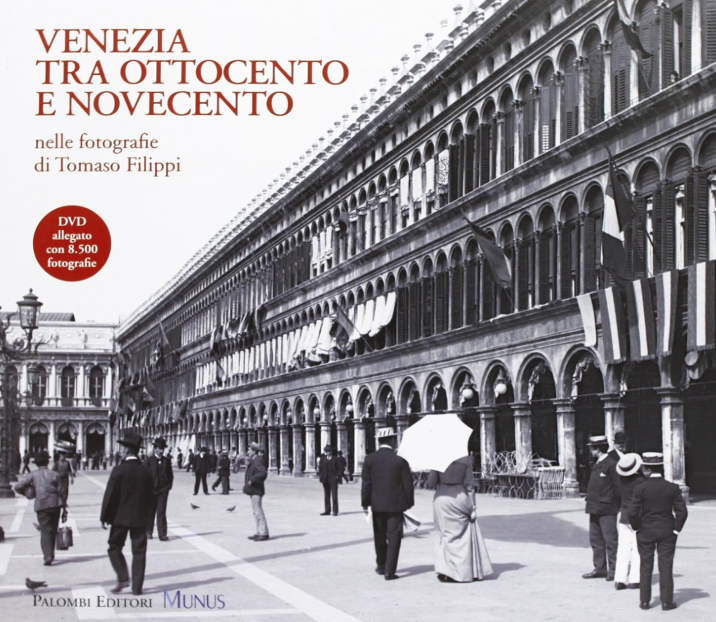
- The Tomaso Filippi Photo Exhibition curated by Daniele Resini was on show at Villa Pisani, Stra in 2013 – the catalogue/book associated with the exhibition is pictured below.
January 2025


Lovely! That was really nice to ready 🧡
Good old Filippi with his camera. This certainly makes for an interesting narrative, I think this one can make the cut for a published Educated Traveller book!
Lots of love 🙂 Wilbur x
>
LikeLiked by 1 person
Thank you William – I really appreciate that!
LikeLike