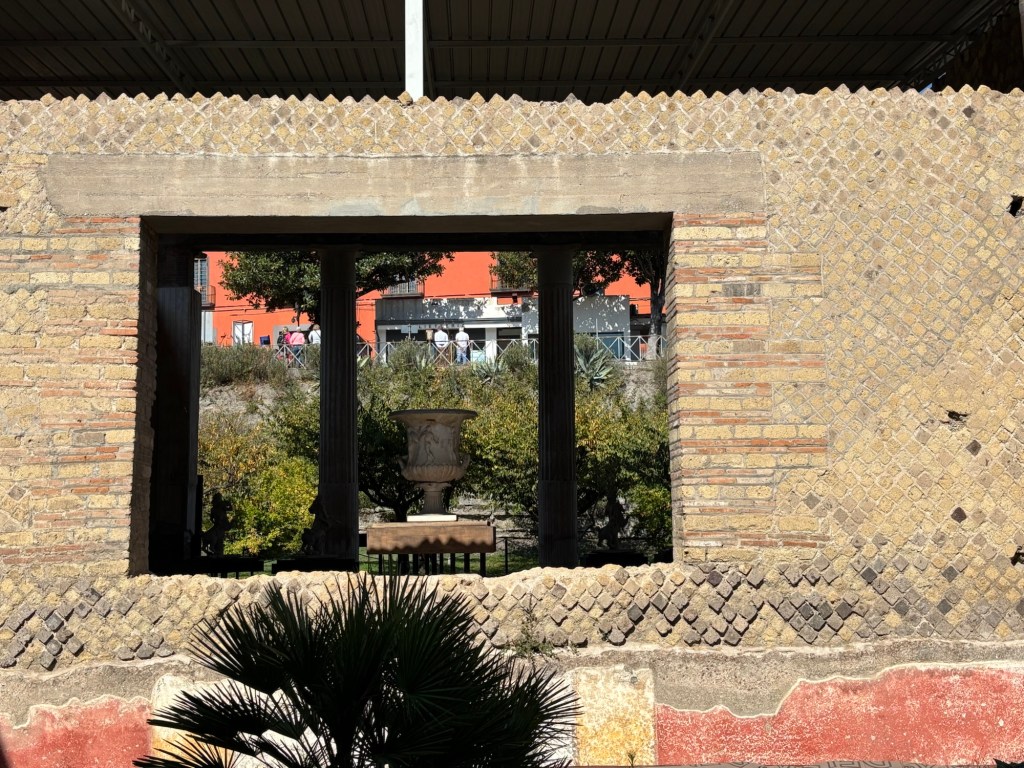
Oplontis – Restored Roman wall c. 1st Century BCE (Before Common Era) and frescoes
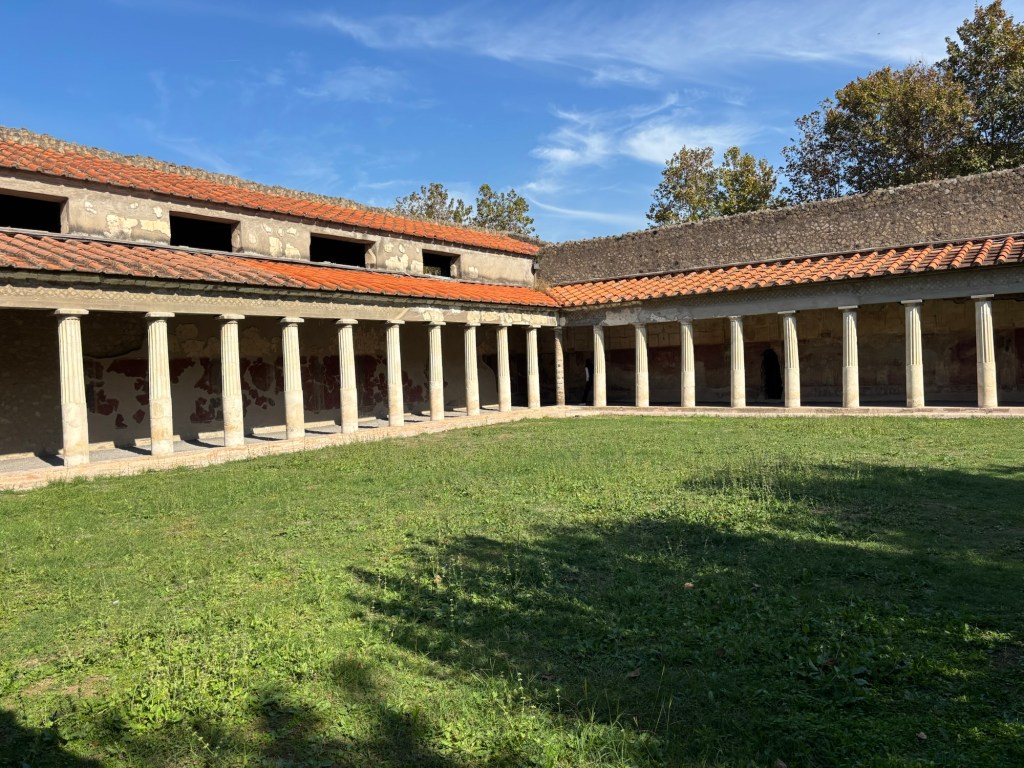
OPLONTIS – is a small archaeological site, on the Bay of Naples, just about 15 minutes from Pompeii. However it’s a different world from neighbouring Pompeii. There are almost no visitors and there’s an exceptional Roman villa to explore. You can wander around the peristyle, a colonnaded covered walkway and dream of being a Roman lady or gentleman dressed in a flowing gown and planning your next glass of Vesuvian wine. This large, luxurious villa was possibly the property of Poppaea, Nero’s second wife. It is known as Villa Poppaea or rather more prosaically Villa A.
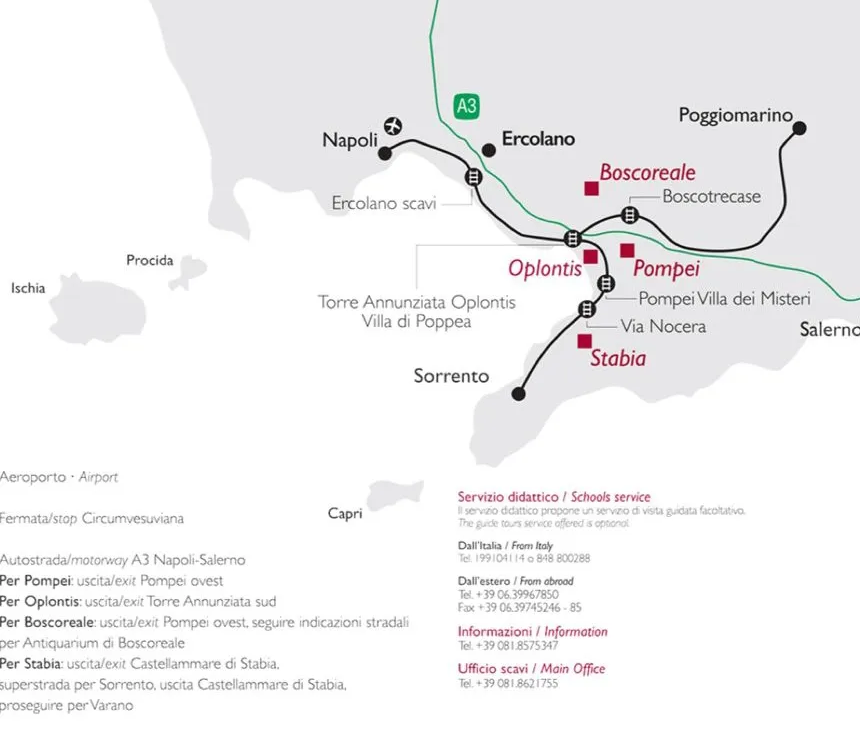
Just like Pompeii and Herculaneum, Oplontis was covered in debris when Vesuvius erupted in 79 AD. The map below shows Oplontis located just west of Pompeii. Before the eruption of Vesuvius the little town of Oplontis would have been on the coast and the huge villa discovered here would have had panoramic views of the sea. After the eruption the coastline was changed for ever and now the villa is about a mile inland from the sea.
EXCAVATION HISTORY – The excavation history of Oplontis has been haphazard, to say the least. The archaeological site was discovered by chance at the end of the 16th century, when Domenico Fontana was digging an underground conduit as part of the construction of the Sarno Canal. Fontana accidentally uncovered ruins and inscriptions from the ancient city of Pompeii – though the full scale of the discovery was not recognized or excavated until two centuries later. The canal was dug so that water from the River Sarno could be used in the flour mills of Torre Annunziata. The canal is still there at the southern boundary of the site.
HOWEVER excavation didn’t begin at Oplontis until 1785 when military architect Francesco La Vega attempted excavation works. He was soon deterred because the tunnel at the side of the Sarno Canal leading towards the site was filled with putrid air, sulphurous gases and probably mosquitoes! Fifty years later, in 1839 a small open air excavation at Oplontis was started, revealing a courtyard, peristyle and possibly servants quarters. From this starting point some narrow tunnels were dug to enable further excavation. Then the money ran out and work stopped – again! At this point local archaeologists recognised that the Oplontis site was ‘of interest’ and the Bourbons (who ruled this part of Campania at the time) placed a protection order on the site. Then nothing happened, again, until 1964 when a group of local enthusiasts campaigned to excavate the site properly. Approval was given and work did start. By the 1980s Villa A (or Villa Poppaea) had been brought to light and a vast and elegant house of more than 90 rooms could be seen. Many of the rooms were elaborately frescoed and it was obvious that a person of considerable wealthy and standing had lived in this property. In 1974, when a gym at a local high school was being built a second complex known as Villa B was discovered.
Villa A (the so-called Villa of Poppaea) is a grandiose and luxurious residential complex and the Villa B (possibly owned by Lucius Crassius Tertius) was a large country estate, with wine cellars and numerous amphorae for storing wine and olive oil. It has been suggested that Villa B was perhaps a commercial property exporting Vesuvian wines.
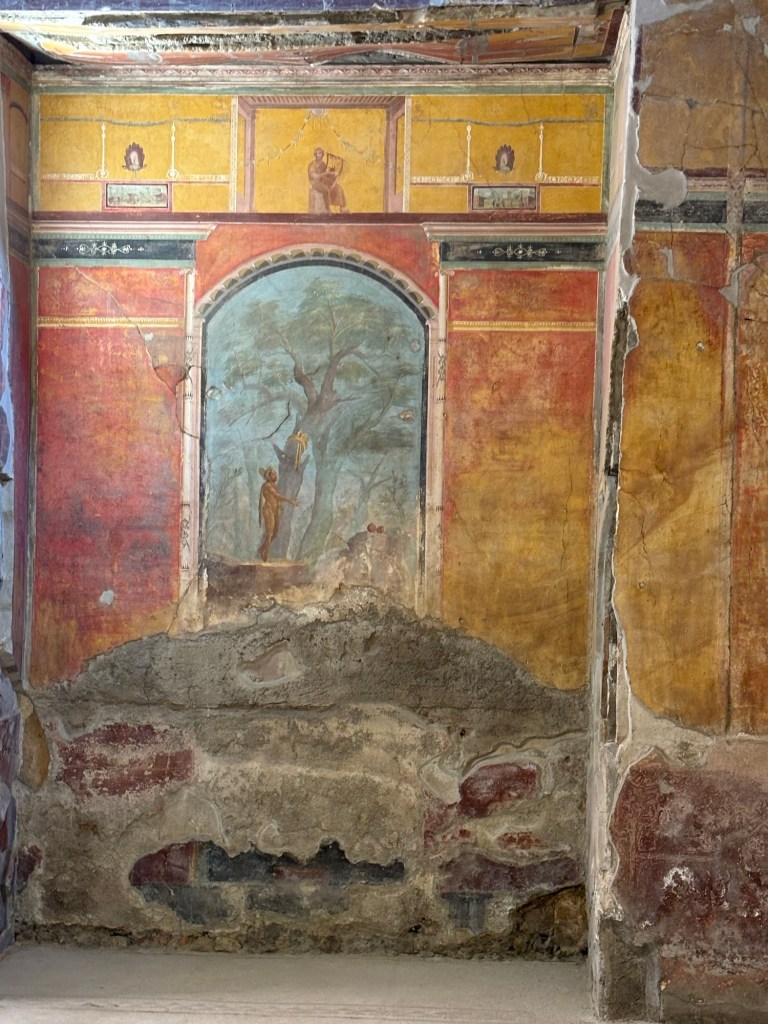
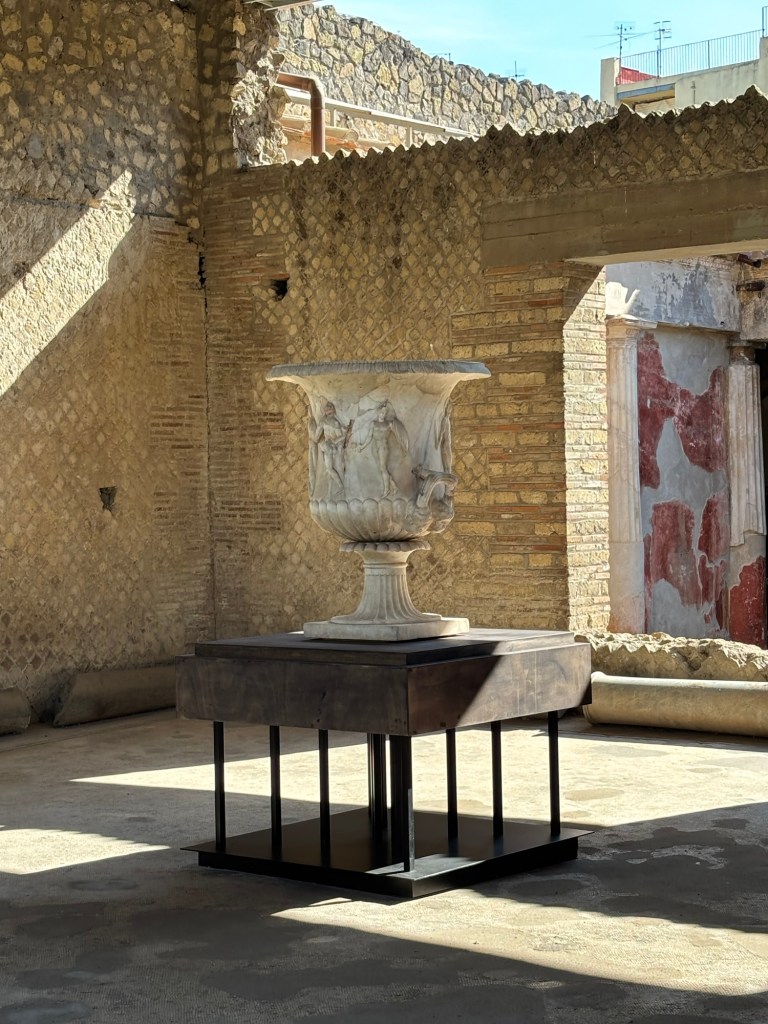
Villa Poppaea could have been the luxurious home of Nero’s second wife – a vast and palatial home, with an enormous swimming pool and extensive gardens. Perhaps Poppaea was the Kim Kardashian of her day! Many of the rooms in the villa are beautifully frescoed with birds, fountains, colourful reliefs and a sense of fun. There are even some statues that have been left ‘in situ’ giving the visitor an idea of how life in the villa might have been.
OPLONTIS – provides archaeologists with a very significant amount of monumental evidence of life in the luxurious Pompeii suburbs. A group of Roman era buildings, separate from Pompeii but probably part of the city from a government and civic point of view, show us life on the seashore in the Roman Imperial world.
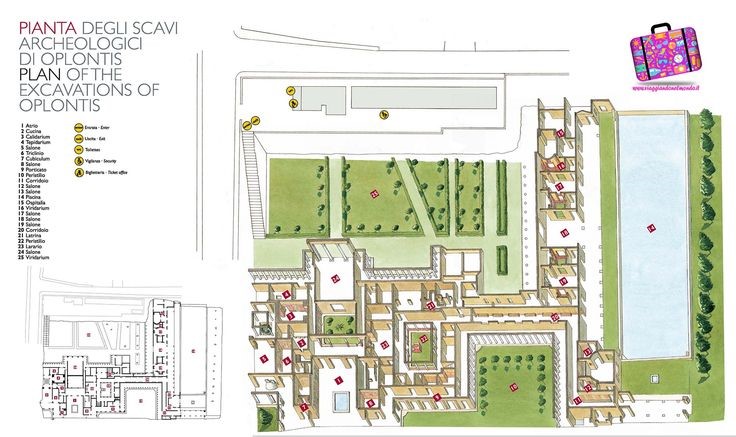
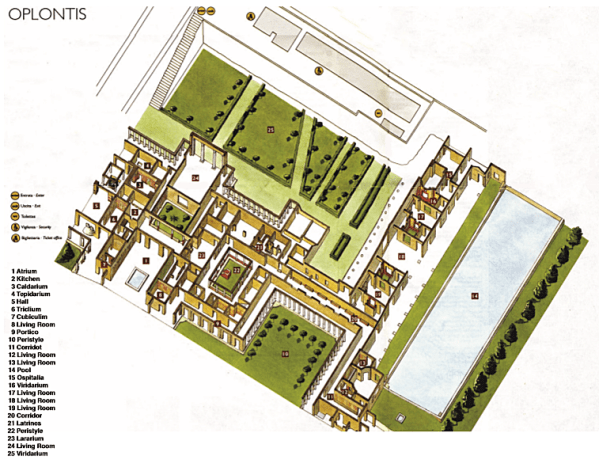
Oplontis – map of site pdf – You have to be patient whilst it loads!! Thank you regional government of Campania.
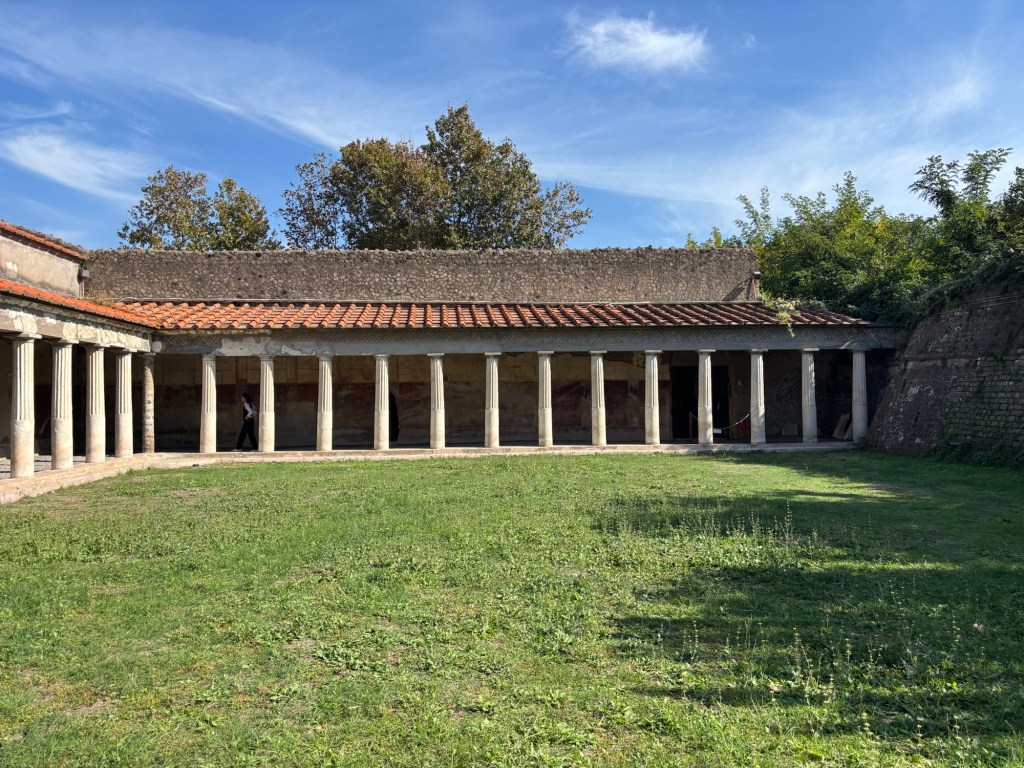
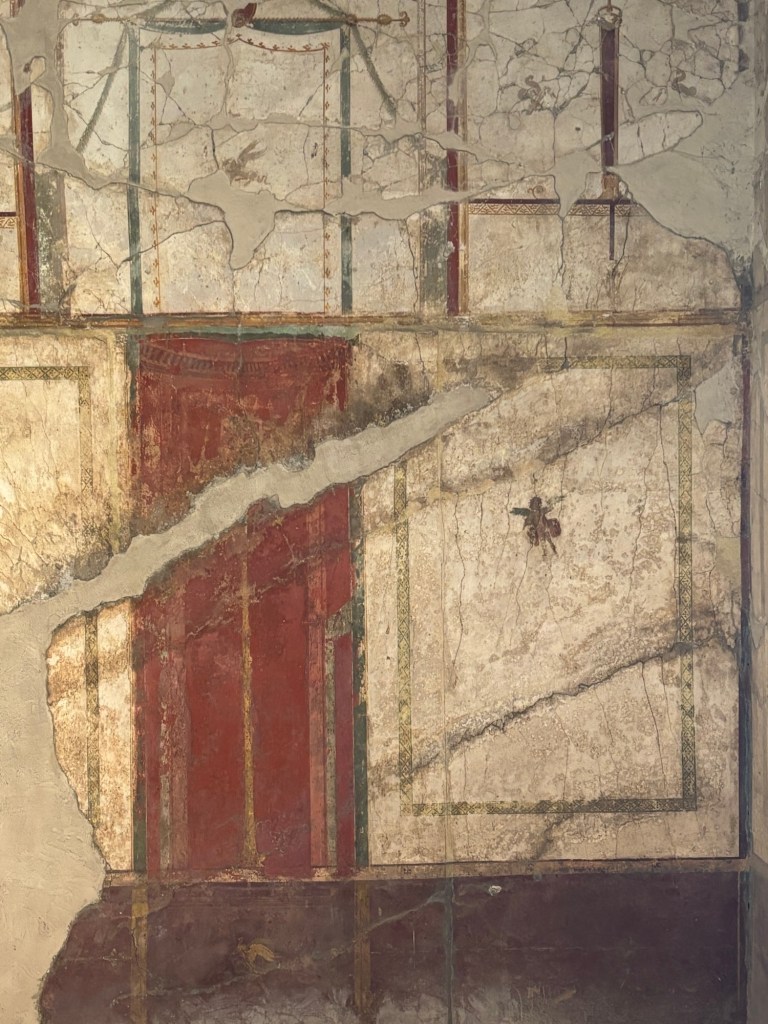
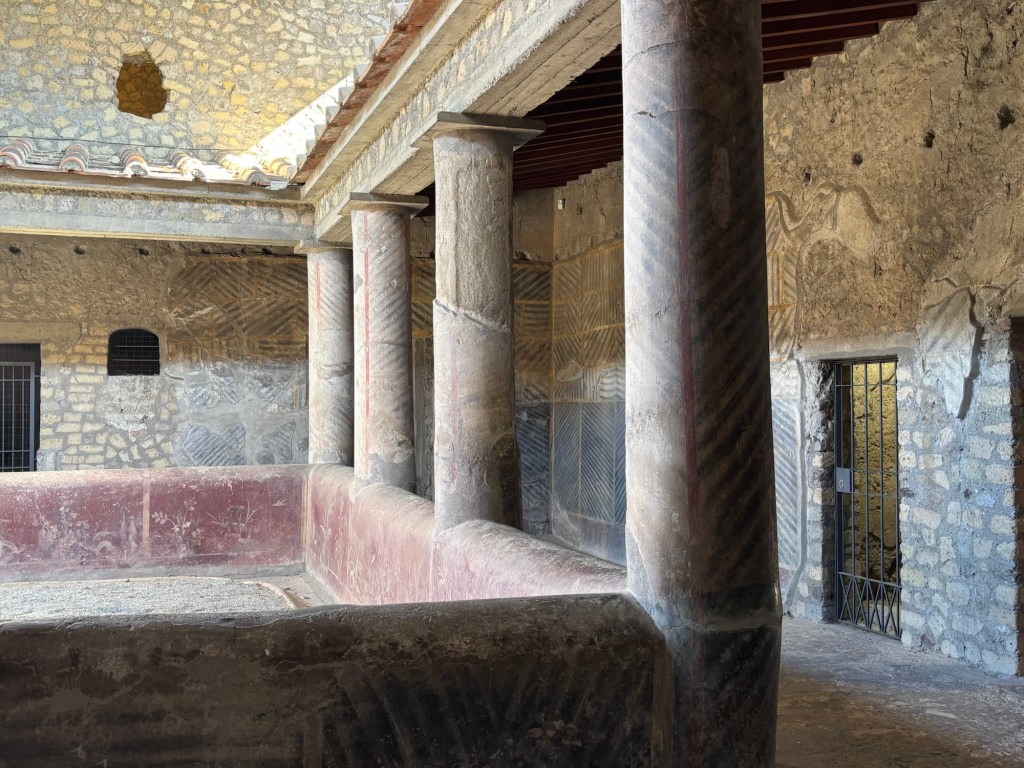
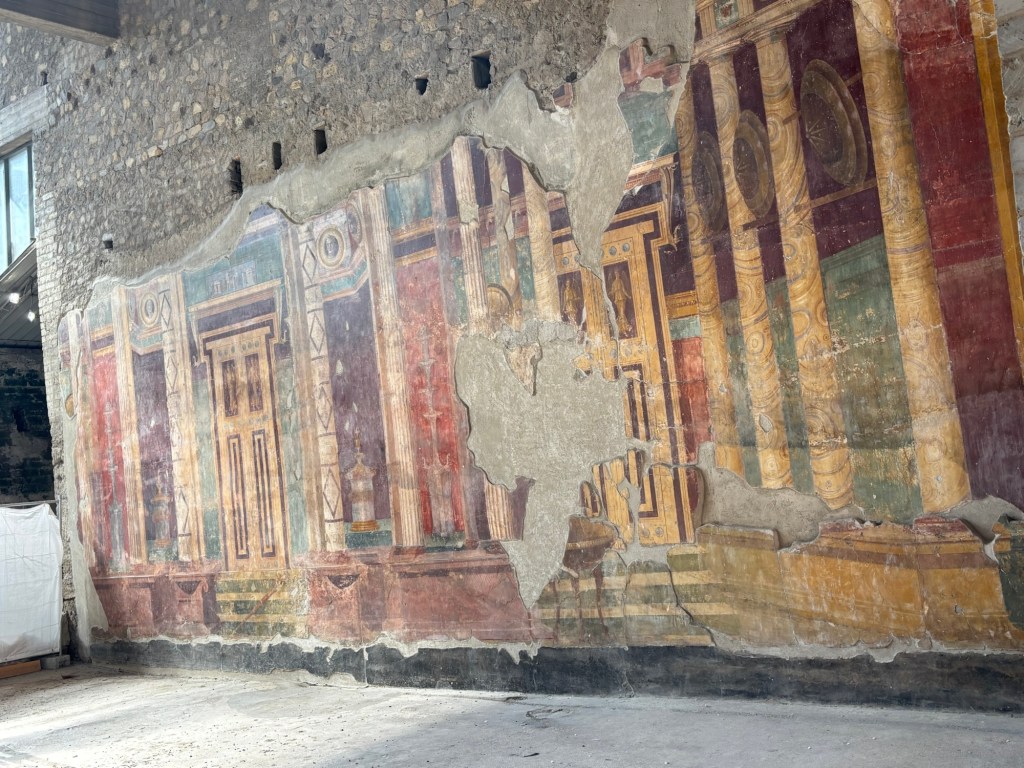
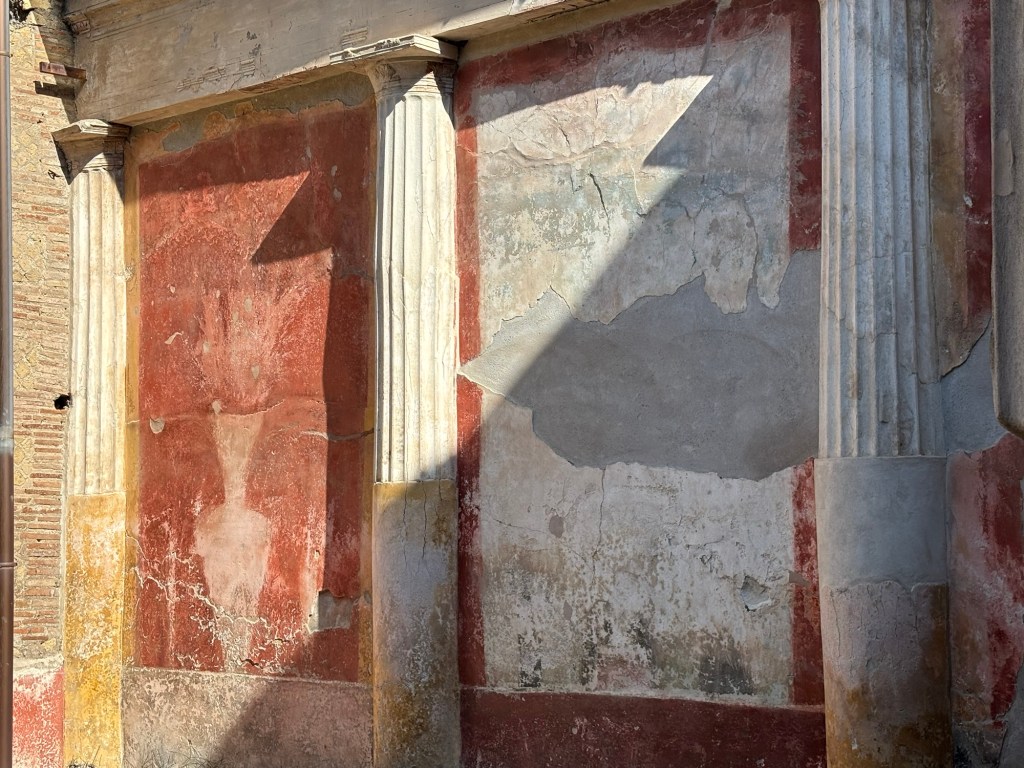
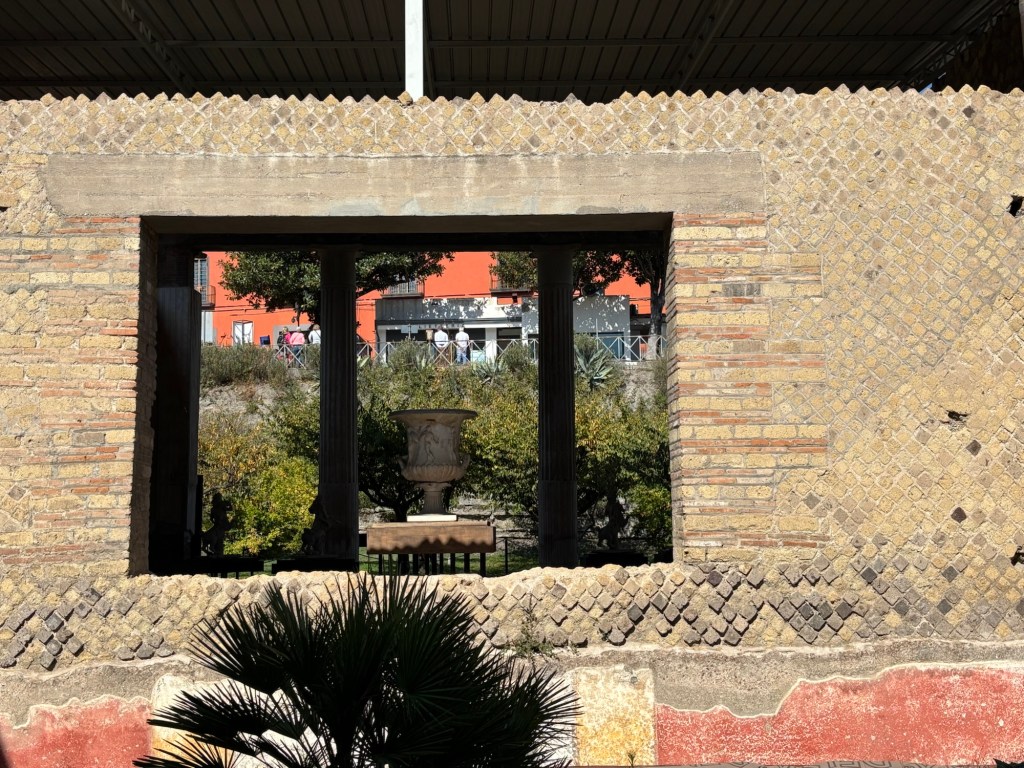
Detail, elegance and humour in the frescoes…..look carefully at each of the frescoes, there’s humour in those paintings.
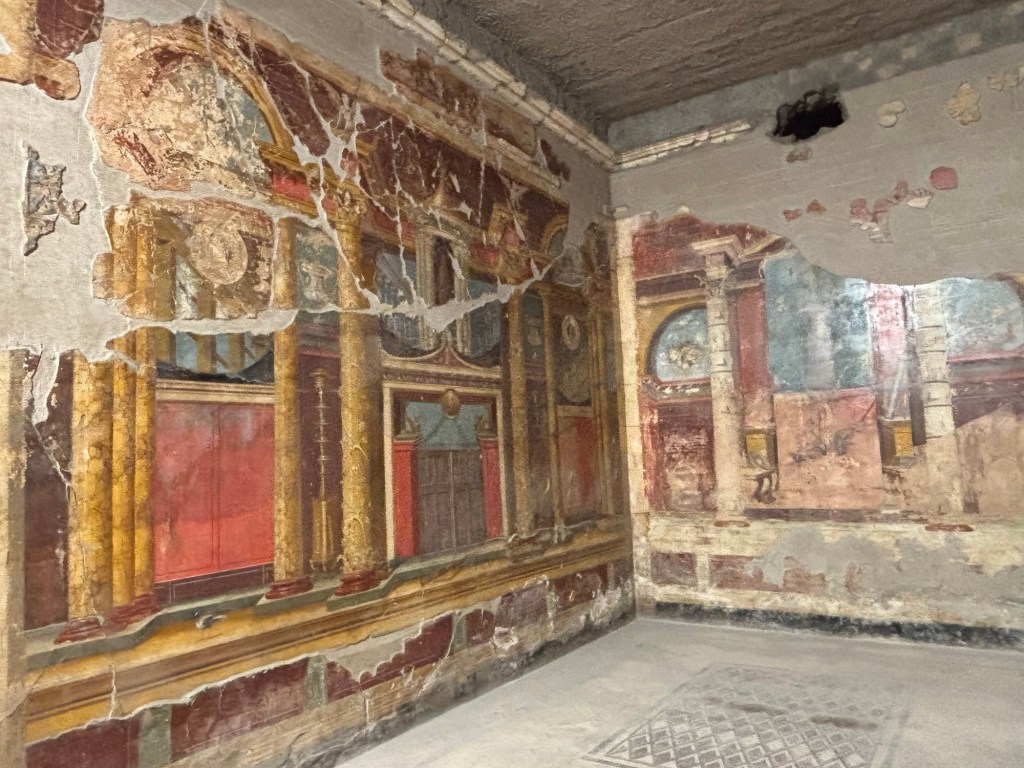
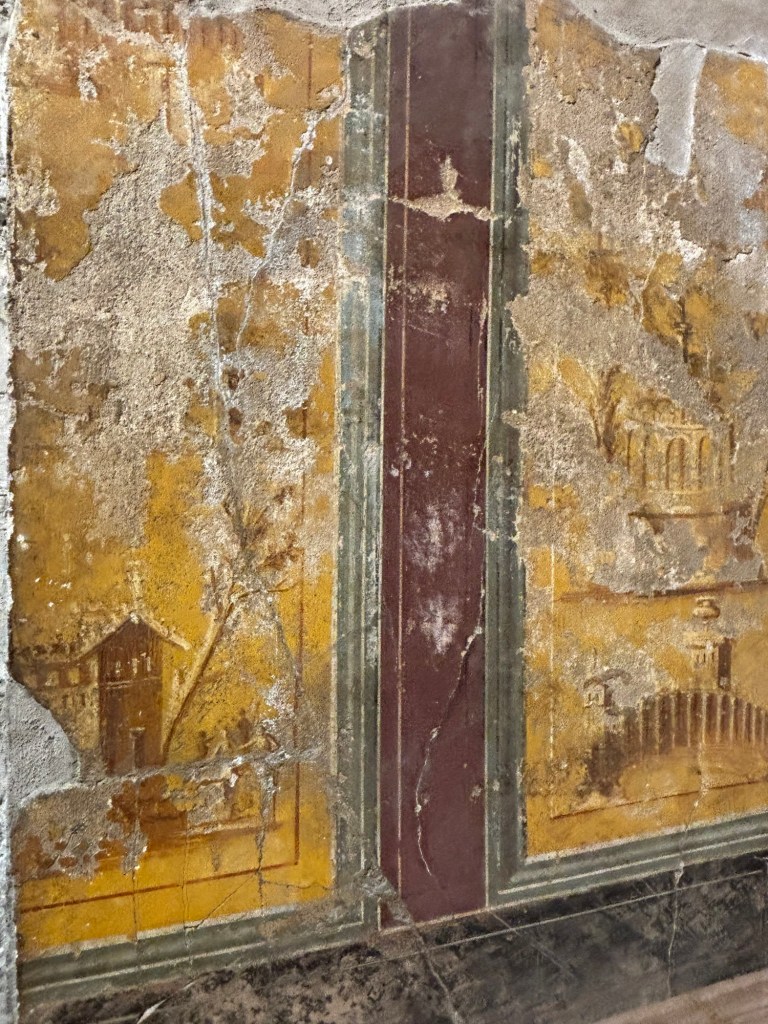
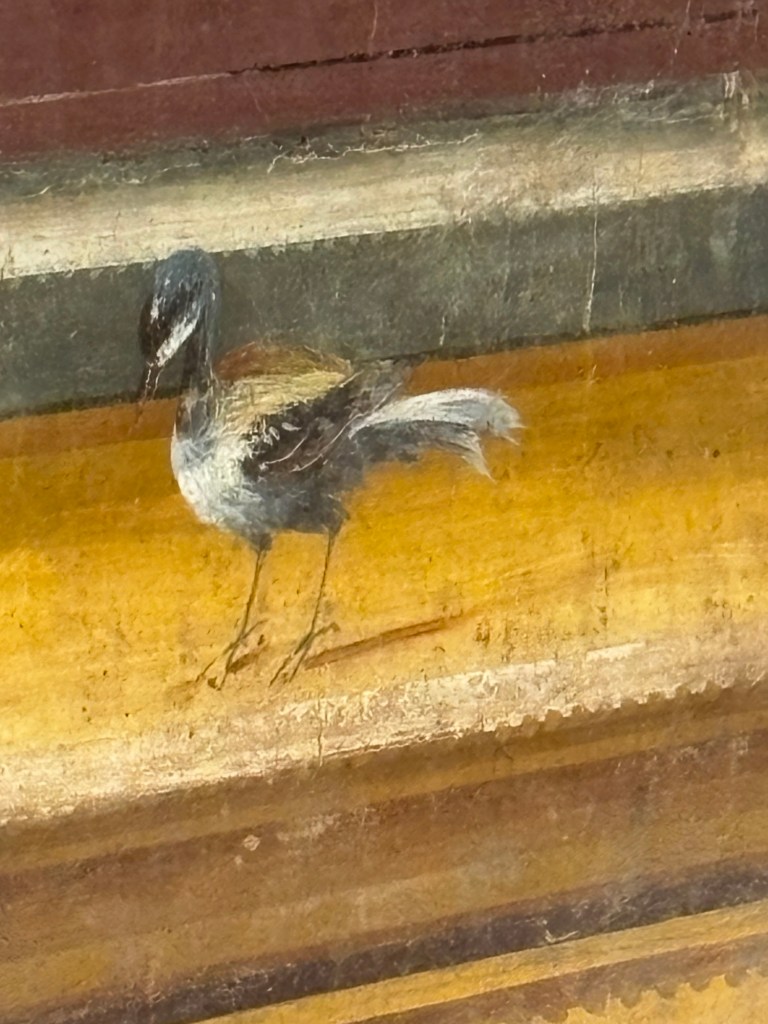
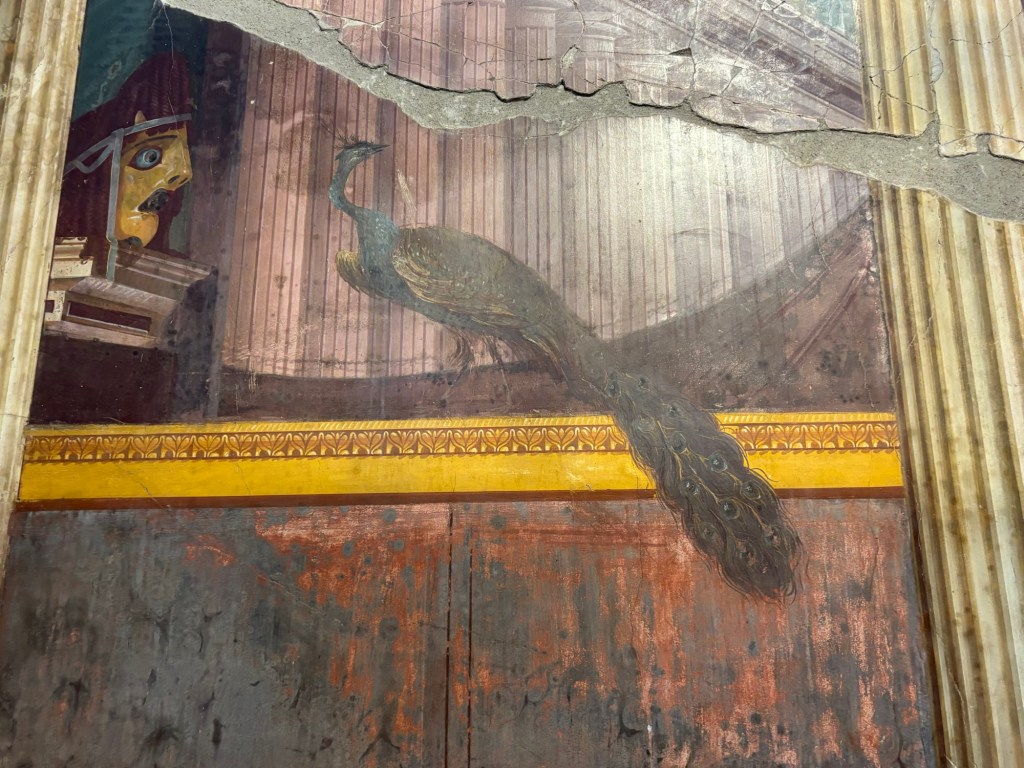
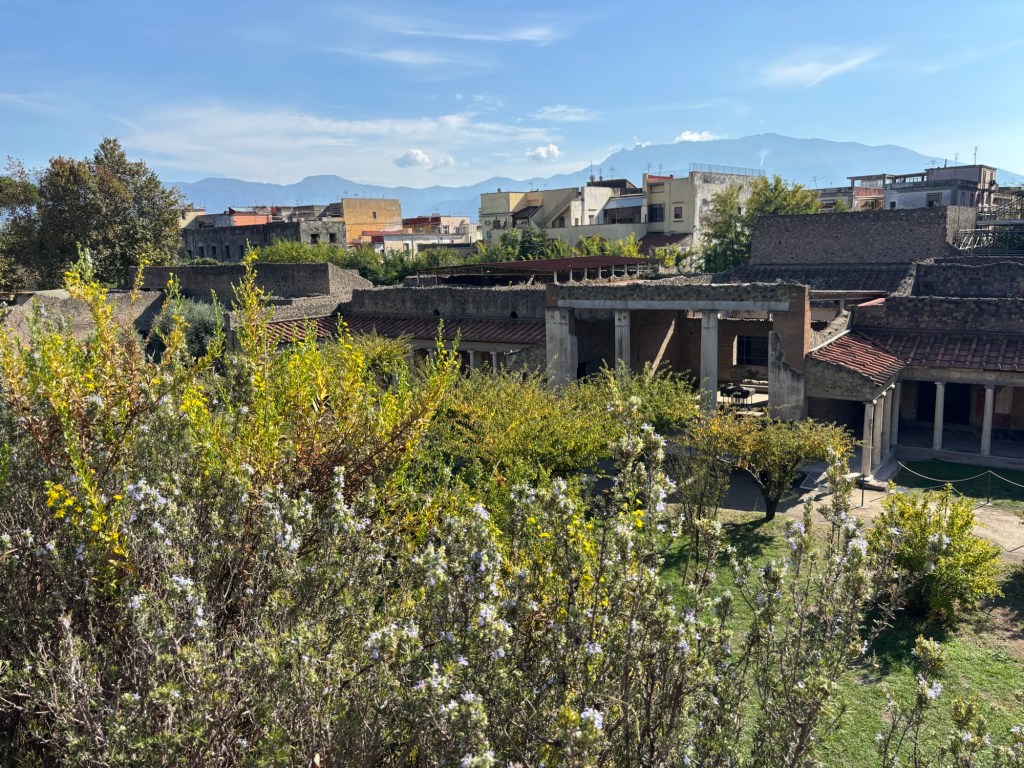
Oplontis – Villa A – from modern street level – looking down
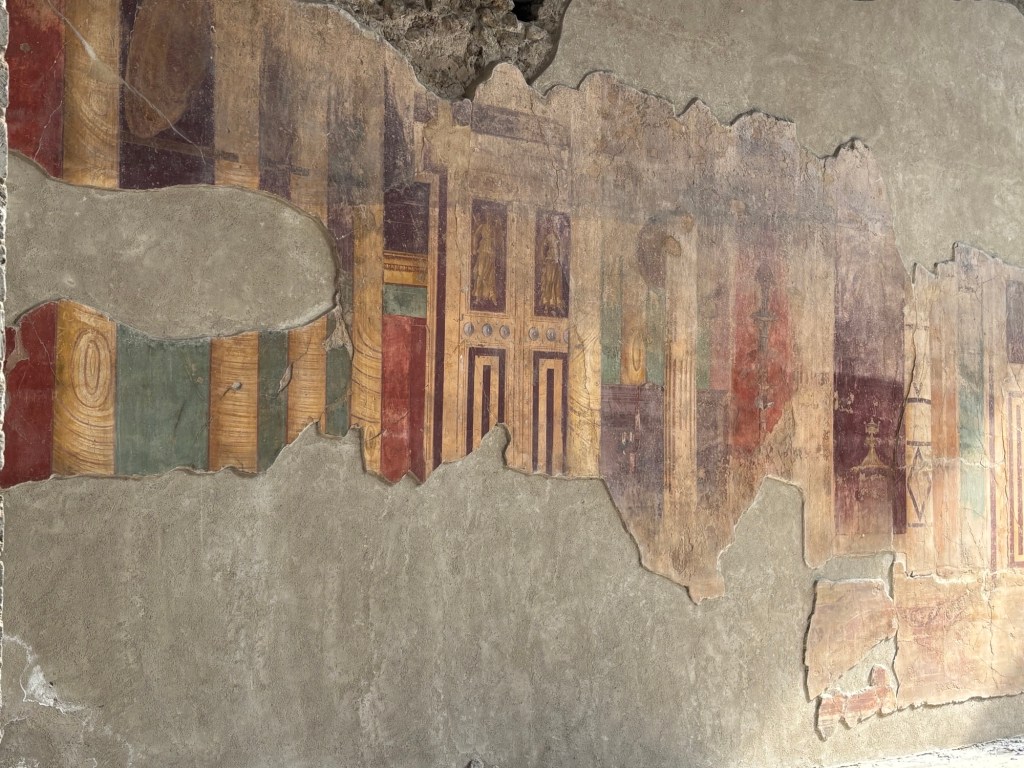
Architectural details, columns, cornices, decorated doors, range of colours – Villa A – Oplontis
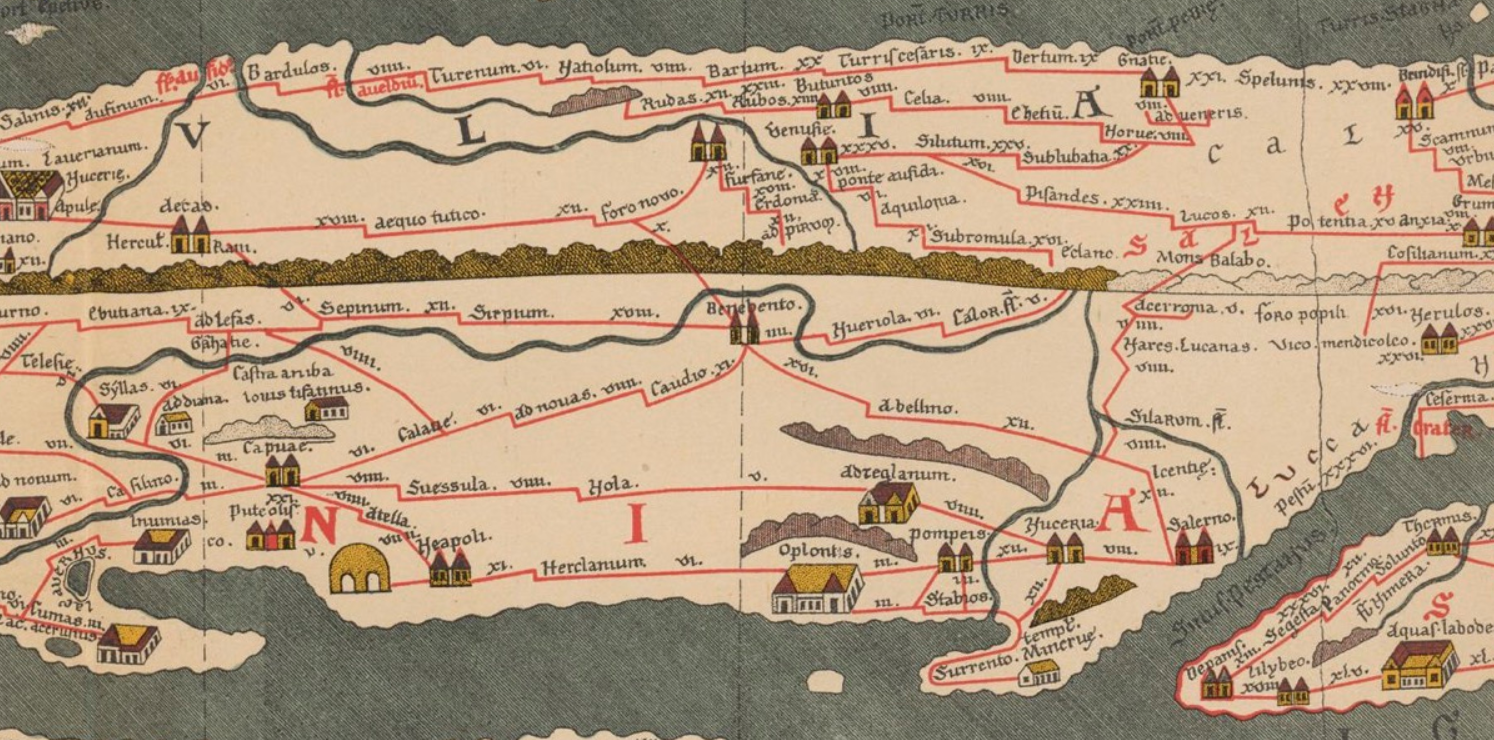
Tabula Peutingeriana – medieval copy of a Roman map, showing Oplontis (centre bottom of map) c. 1250
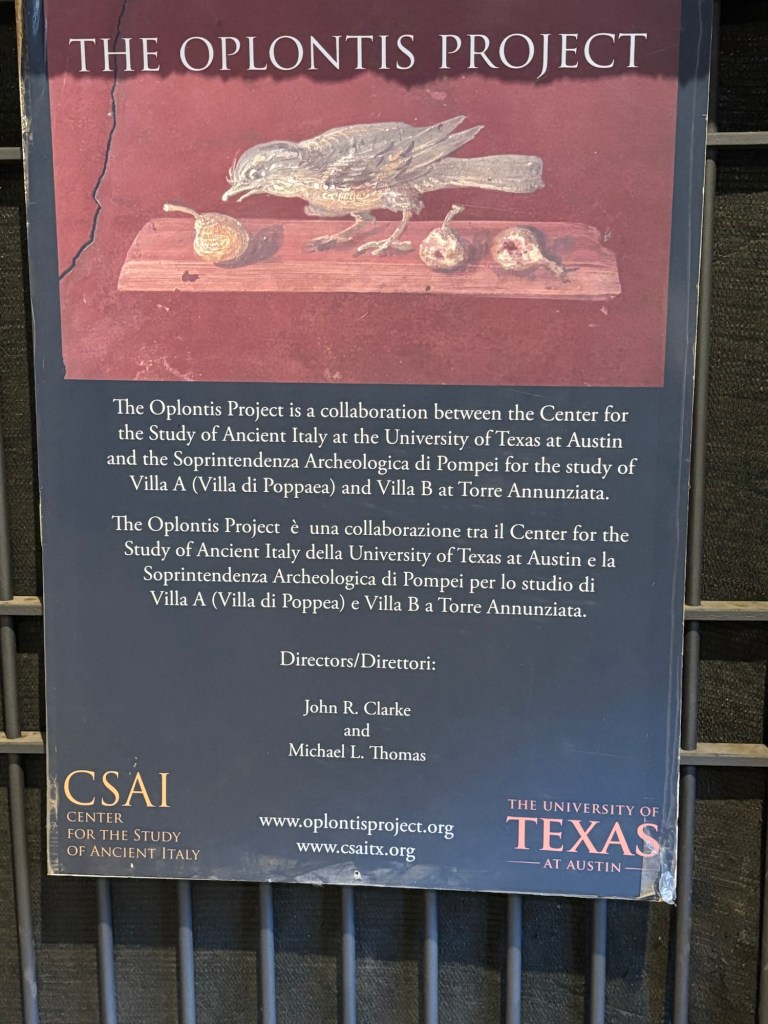
THE OPLONTIS PROJECT – One thing that the Oplontis site has given us is a self-contained area that has been excavated relatively recently and with the promise of much more to be revealed. In this context the Oplontis Project was set up in 2006. The project is a multidisciplinary archaeological research project launched in 2006 by John R. Clarke (University of Texas at Austin) and Michael L. Thomas (University of Texas at Dallas).
It is well worth looking at their site and seeing what they are up to The Oplontis Project
- This is what they have to say about Villa A (Poppaea) – https://oplontis.utdallas.edu/villa-a/
- And this is the latest on Villa B – https://oplontis.utdallas.edu/villa-b/
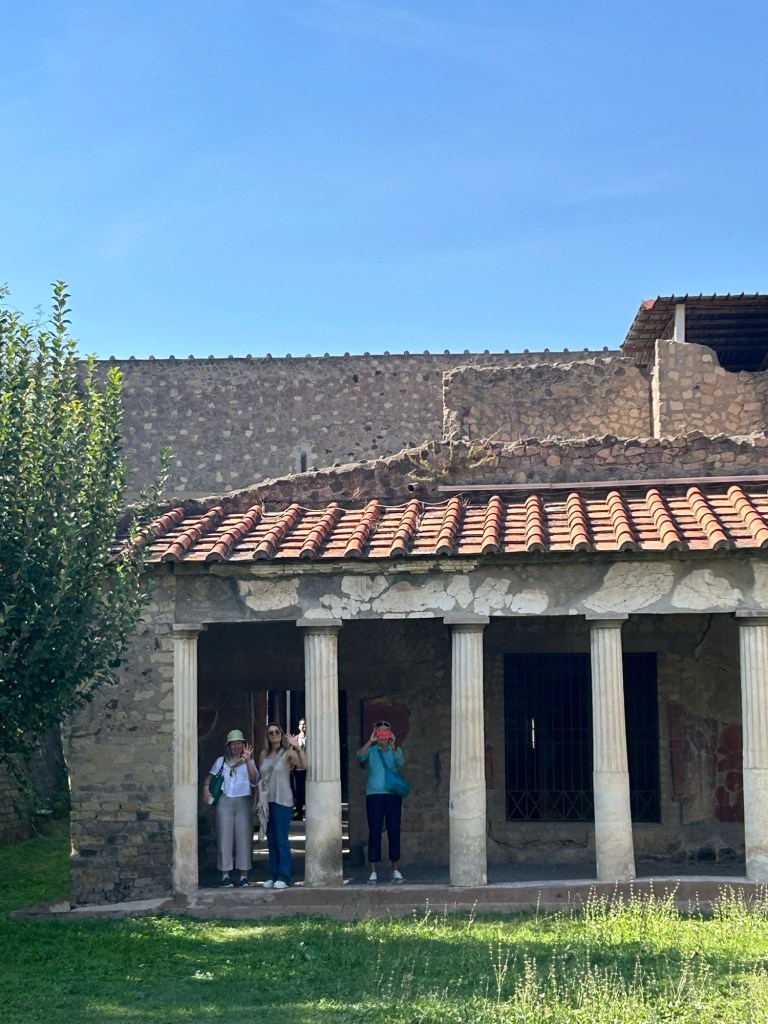
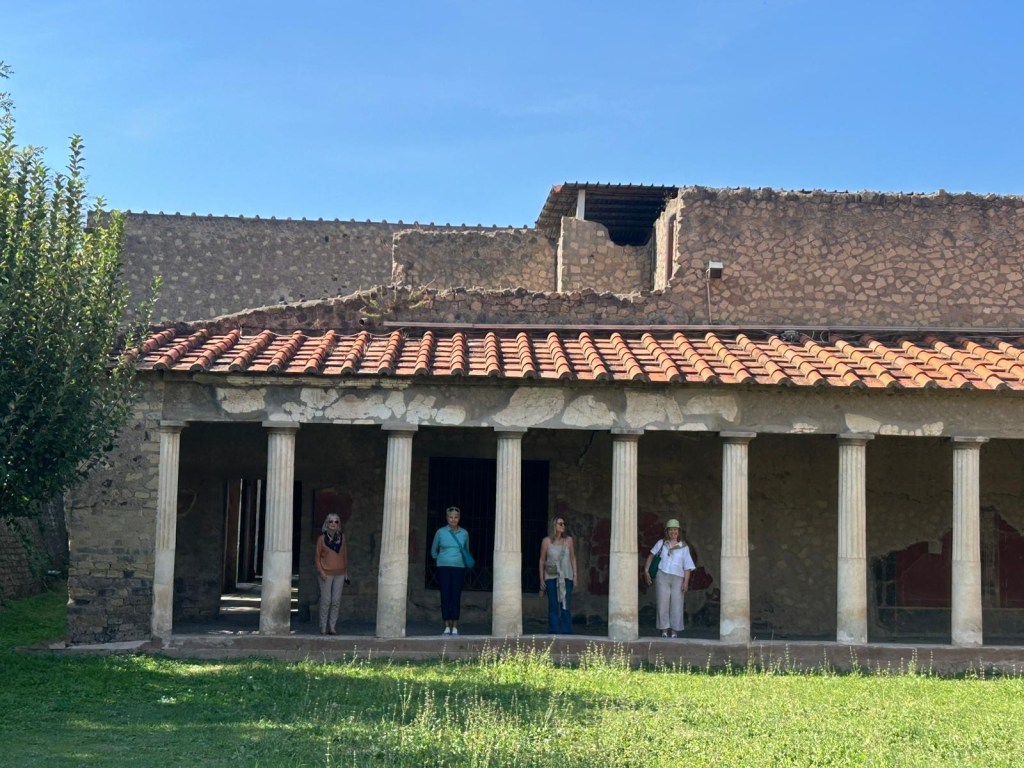
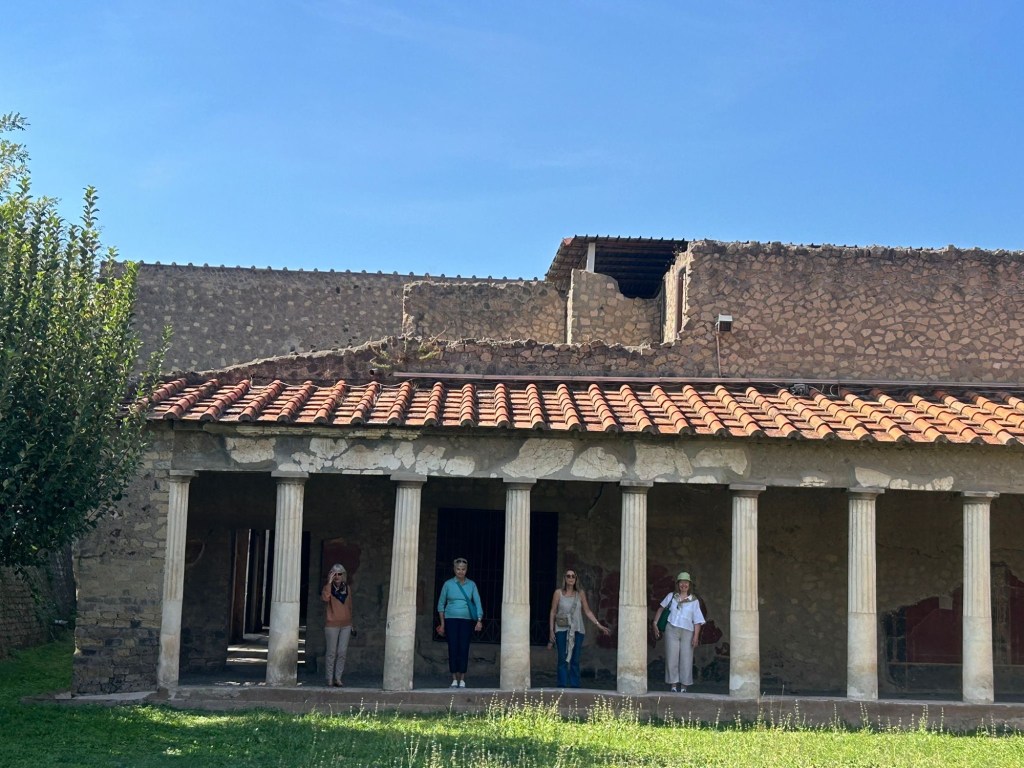
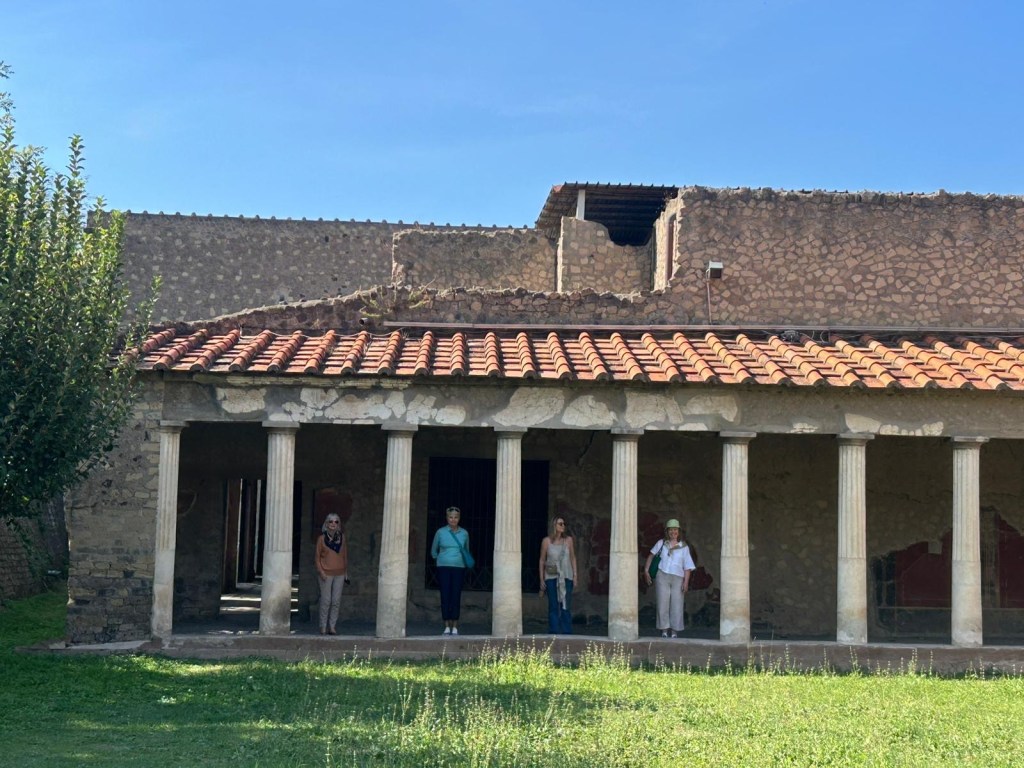
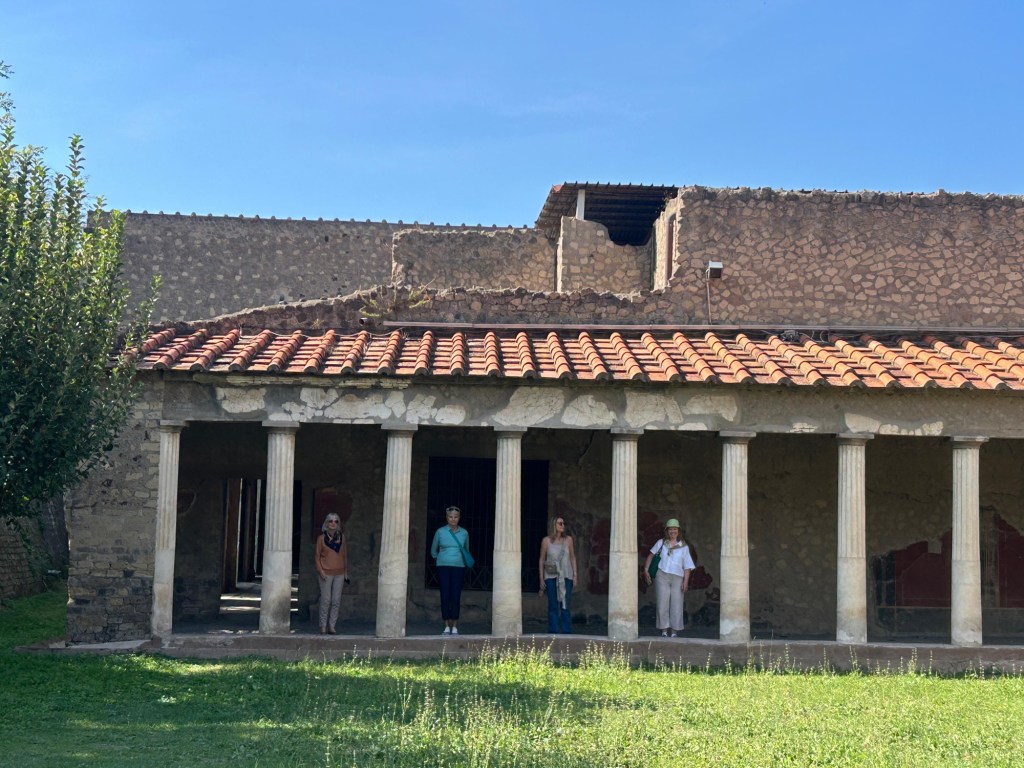
Peristyle above at Oplontis, populated by Sue and Sue and Celeste and Janet
Whilst Villa A is free for us to visit and enjoy Villa B is not currently open to the public. However work at Villa B is continuing and it is fascinating. Here’s what the Oplontis Project say about Villa B ……………
………..In the courtyard and ground-level rooms, excavations uncovered over 400 amphorae. Perhaps the most significant of these are the stacked amphorae still in place at the northwest corner of the courtyard. That these amphorae had been cleaned and stacked upside down to dry tells us that they were meant to be re-used at the site……………….
Let’s wait and see what will be revealed in the coming years.
Interesting bits and pieces:
- Agnes Crawford – probably the most erudite and considered Official Rome guide that I know had this to say about Oplontis: Peacocks and Peristyles
- Kathryn Gleason an eminent American landscape architect, archaeologist, and Professor Emerita at Cornell is well known and respected for her work reconstructing the ancient pleasure gardens of Villa A (Villa Poppaea) at Oplontis. She developed and built on the pioneering paleobotanical field research started by Wilhelmina Jashemski (University of Maryland). Gleason analyzed soil stratigraphy, plant pollen, and root cavity casts to map out the sophisticated layout, imported specimens, and advanced horticultural techniques utilized at the site. Kathryn Gleason at Cornell
- Well that’s telling us Chelsea Flower Show!
- The other active archaeological site in Italy that always excites me is Aquileia – you can read more on my blog – starting here: Aquileia – spectacular Roman mosaics
- Janet Simmonds is a writer, tour guide and Italy person – here’s a bit more:
- Over the last few years I’ve written hundreds of articles about Venice, The Alps, British Isles and the philosophy of the journey – discover more by visiting: www.educated-traveller.com
- I also run a specialist travel company www.grand-tourist.com
- For a perfectly curated Italian journey contact me – I’ll create something just for you.
- Happy Reading – let’s keep on dreaming!
October, 2026
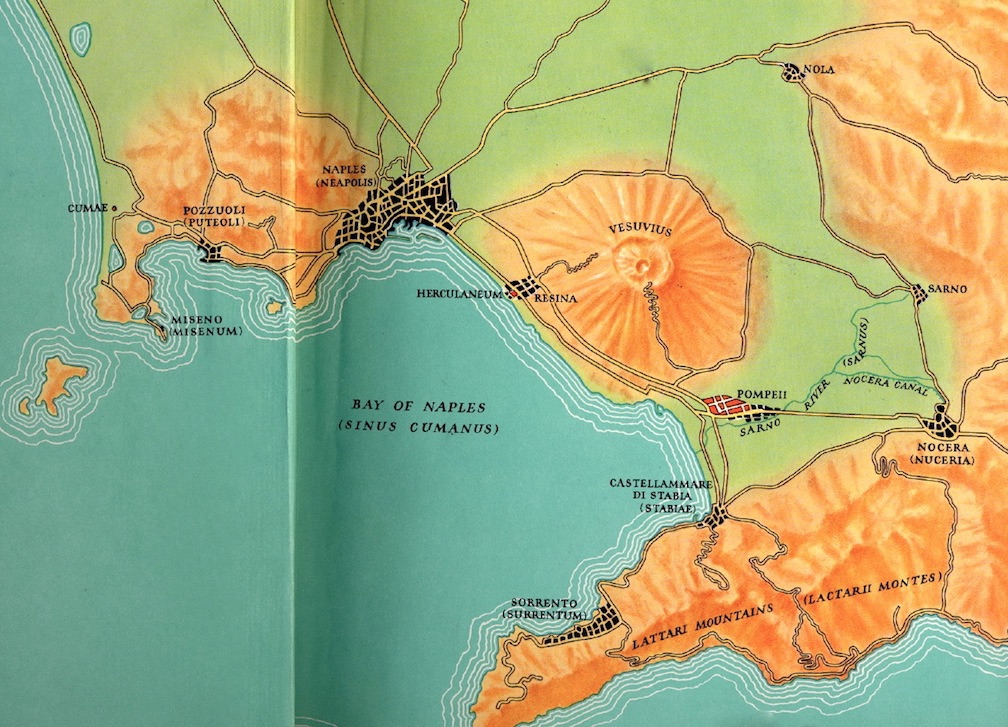

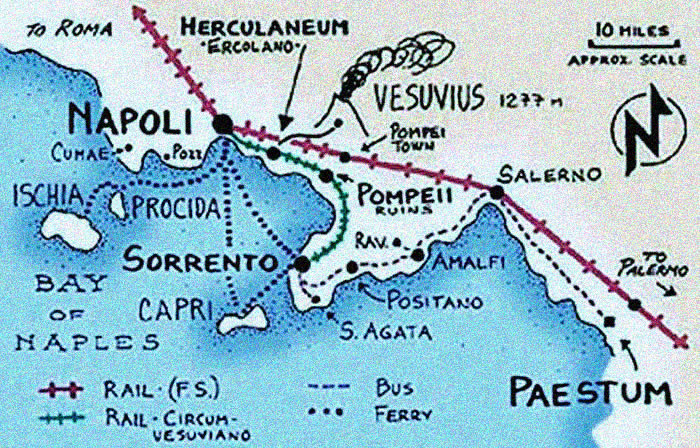
The Bay of Naples, dominated by Vesuvius, Pompeii to the south of Vesuvius and River Sarno shown (left hand map)


