FOR A BRIEF period from 1926 to 1934 the only way to travel, for the very wealthy, was by seaplane. This is a story of that time – filled with optimism, enthusiasm and bravery…
When you walk along Trieste’s magnificent waterfront, admiring the spectacular palaces and fairytale castle-style of the town hall, there’s a feeling of being in Vienna. This city was the Austrian Empire’s port on the Adriatic Sea for centuries. It was the base for the Austrian Navy and the city where Austrians came to board ships, huge ocean-going liners, bound for the Americas or the Indian Ocean and the Far East. Trieste was Vienna-on-sea.
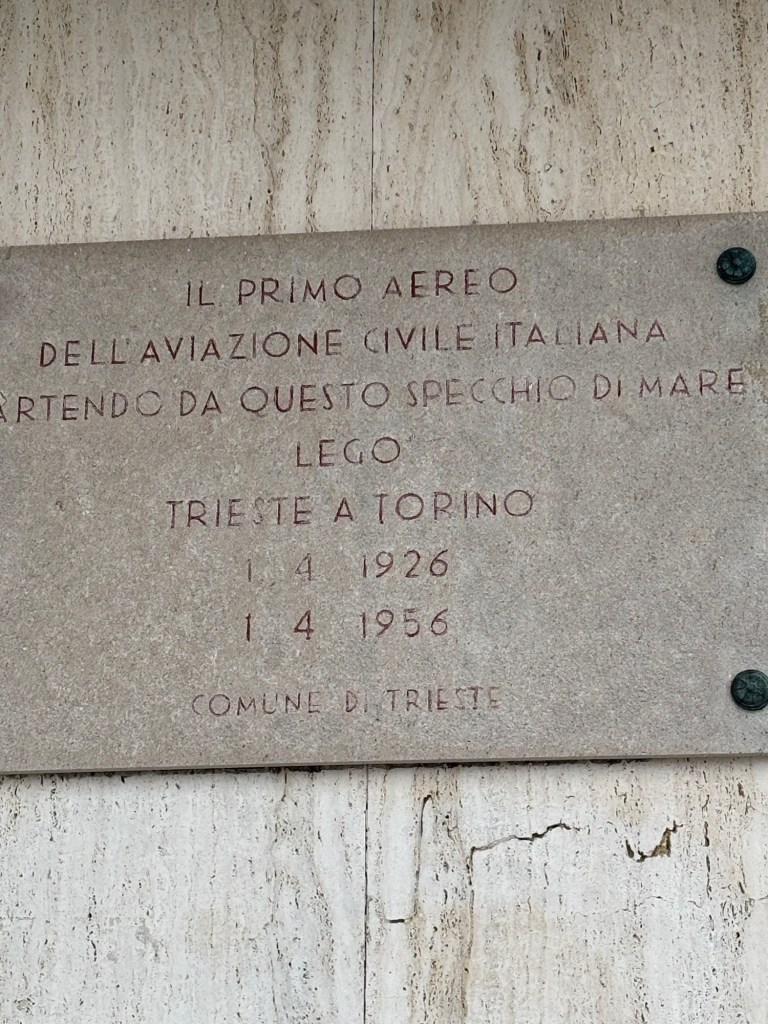
Next to Trieste’s famous pier, there’s a small building, a kiosk really, located close to the water’s edge. On the side of the diminutive building there’s a plaque commemorating the Cosulich Brothers and the first seaplane flights that took place from this point – starting in April 1926. It was from here, on the Trieste waterfront that the first commercial aeroplane flights took place linking Trieste and Torino. These were no ordinary plane journeys, these were seaplane adventures where the waters of the Adriatic Sea and the River Po acted as runways and landing strips. The company that operated these flights was called ‘Societa Italiana Servizi Aerei’ SISA for short.
The Cosulich Brothers, ship-builders and ship-owners in nearby Monfalcone, were the brains behind the idea. They wanted to provide transport for VIP clients arriving in the port city of Trieste and staying at their hotels in Portorose, a rather tedious boat ride down the coast. The brothers purchased a ‘retired’ seaplane from the Italian navy and started their seaplane service across the Bay of Trieste and along the Istrian Peninsula. They quickly added to their fleet with other seaplanes.
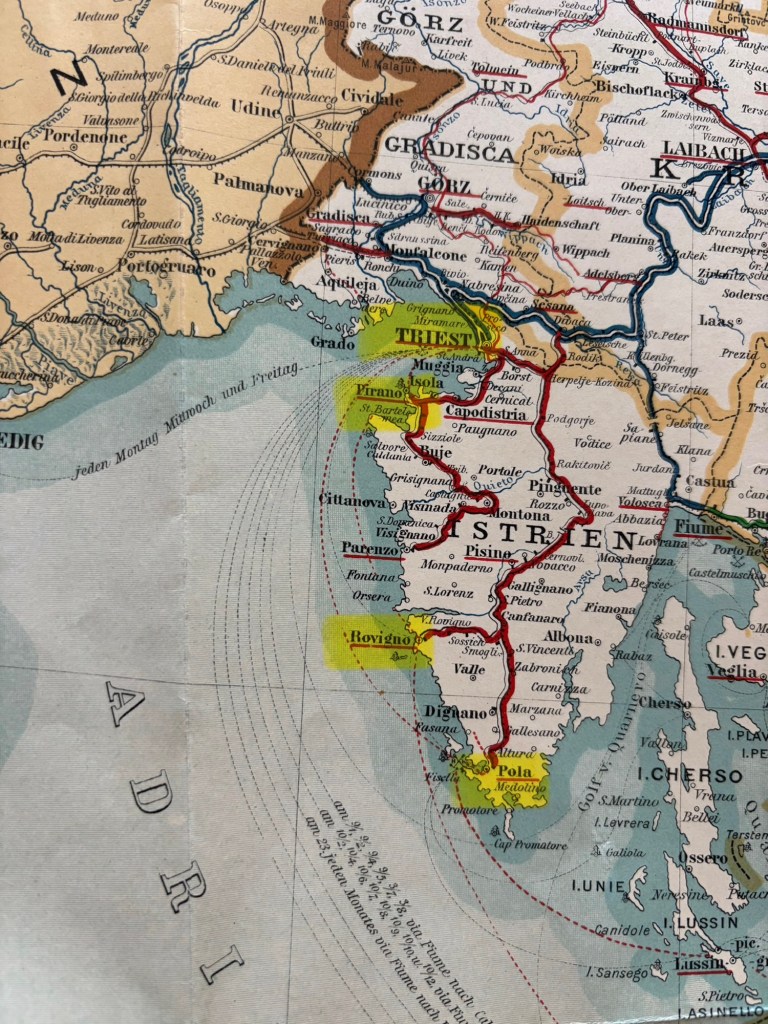
On 1st April, 1926 the very first flight took off linking the cities of Trieste and Torino with stops in Venice and Pavia. The seaplane route followed the coastline of the Adriatic to Venice and then it continued westwards along the valley of the River Po with regular stops along the way. The idea was, that the journey by seaplane from Torino to Trieste could be completed in a single day (about 5 hours plus stops). SISA constructed seaplane stations, known as ‘idroscali’ at regular intervals along the route; Trieste – Venezia (Sant’Andrea) – Adria – Ostiglia – Casal Maggiore – Piacenza – Pavia – Casale Monferrato – Torino. These seaplane stations were huge timber structures, built on stilts, high above the river. At least one of these seaplane stations, the one at Pavia, still exists today. The seaplane idea and the service provided was ambitious and brave.
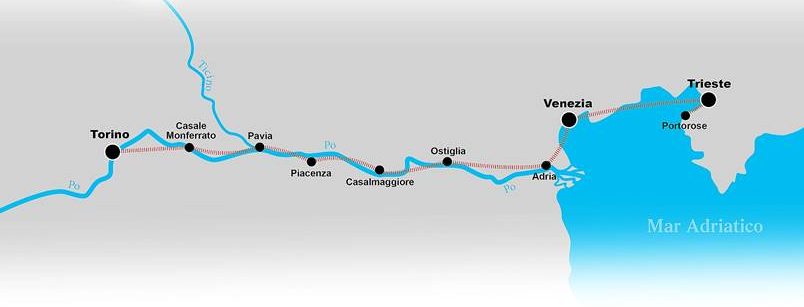
The seaplane route from Trieste-Torino (above)
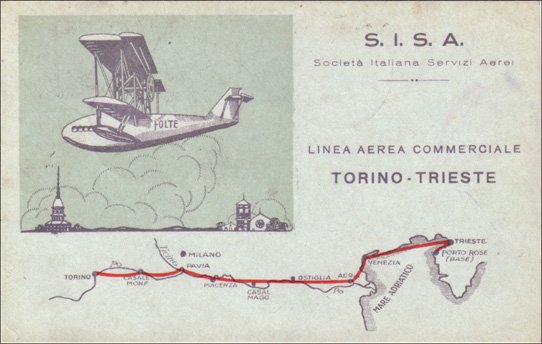
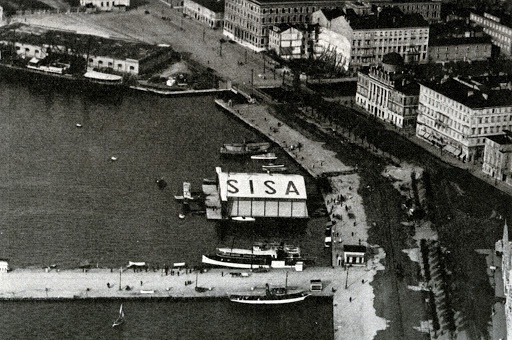
SISA Seaplane – late 1920s (possibly early 30s) and the SISA ‘idroscalo’ at Trieste (right)
A STEP INTO THE PAST…..
But for now, I’ve got to stop and watch and observe. There’s a commotion, people, cameras, shouting. What’s happening – I think someone important is arriving.
A lady in a blue-grey wool suit is walking towards the seaplane. She’s wearing high-heeled shoes, they are a polished chestnut colour. She’s tall, long-legged, and looks determined. Her hair is glued into an elaborate chinon, her lipstick is bright red. The crowd parts, like the waters of the Red Sea to let her through. Directly ahead of her the captain of the plane is straightening his tie and preparing to welcome his important passenger. He bows to her, she smiles and nods.
The narrow staircase hangs, in a wobbly fashion, from the body of the aircraft. The lady gamely walks up the steps, struggling slightly to maintain her balance. Once on board, the cabin is tiny, she has to bend down to make her way to her seat. The plane can take just 4 passengers. There’s no heating and no climate control of any sort. Passengers are given a blanket and a hot water bottle. The journey time from Trieste to Venezia is about 45 minutes, the little plane uses the sea as a runway. The pilot chats to the passengers, as well as the lady, there’s two men in dark grey suits, probably from the Cosulich factory at Monfalcone, the fourth seat is free. Actually it’s not, it turns out that the smart lady has got a white fur ball in her elegant leather handbag. The furball is yapping, it’s some kind of miniature poodle. It’s called Pepe of course. So Pepe is in the fourth seat. The captain surveys his human cargo with a slight note of resignation, a lady, a dog and two men in suits – aerial combat in the Great War seems like a distant memory now…..
Once the plane is fully fuelled and ready to go the captain checks the ladder has been pulled on board and the door carefully locked. He takes his seat at the front of the plane and turns on the engine, it’s a single propellor plane, one engine, located high above the cabin. The noise of the engine and the rotation of the propeller vibrate through the body of the plane. The lady grits her teeth, fur ball whimpers. The plane begins to move across the water, gaining speed, the captain pulls the wheel towards him and the nose of the plane rises gently pointing into the sky, the body of the plane follows suit and little by little the plane climbs into the sky.
The sky is blue, with the occasional fluffy white cloud. The coastline below shows the passengers the city of Trieste, the magazzini (warehouses) of the Old Port and the tower of the town hall. Trieste’s Grand Canal shimmers in the late morning sun. The church of Sant’ Antonio with its temple facade and the six statues on the roof are clearly visible.
The plane banks to the right and below the Castle of Miramare looks every inch the fairytale castle that Maximilian conceived when he built it. Perched on the edge of the water, the views over the Adriatic and bay of Trieste are truly ‘mozzafiato’. Beyond Duino Castle rises silently and solidly from its rocky outcrop, and then the docks and shipyards of Monfalcone – probably the suits work for the Cosulich brothers, thinks the pilot….
The plane proceeds west, and the medieval bell tower of Aquileia comes into view. Further on the lagoon of Marano shimmers in the cool spring air. The cabin of the plane is cold, the air outside, even at only 500 feet above sea level is chilly. The lady wraps the blanket around her legs and cuddles the furball. Just before Lignano the little seaplane crosses the mouth of the River Tagliamento, years later Ernest Hemingway will write about this river in one of his novels…
Then on the horizon a vast lagoon begins to unfold. It’s the Venetian Lagoon and little by little through the haze the city of Venice is revealed. The captain begins his descent towards the Fortress of Sant’ Andrea. A brand new ‘idroscalo’ has been built here to accommodate the arriving seaplanes. Little by little the aircraft loses height. To the left is the island of Lido, the barrier island, just a sandy spit of land really that separates the Venetian Lagoon from the Adriatic Sea.
The magical waterfront of Venice curves into view. The passengers can see the wonderful bell tower of San Marco, the Venetian-Gothic Palazzo Ducale and the magnificent domes of the basilica. They are seeing Venice as she was meant to be seen – from the sea. A theatrical backdrop of architecture, art and history.
As the plane descends further the passengers feel as if their feet are skimming the blue green waters of the lagoon. The staff at the ‘idroscafo’ are preparing to welcome them to Venice. There’s several boats bobbing around, people are waving and shouting. The seaplane touches down gently on the waters of the lagoon. A brass band starts to play, children wave flags, the elegant lady waves back, Hollywood has arrived in Venice.
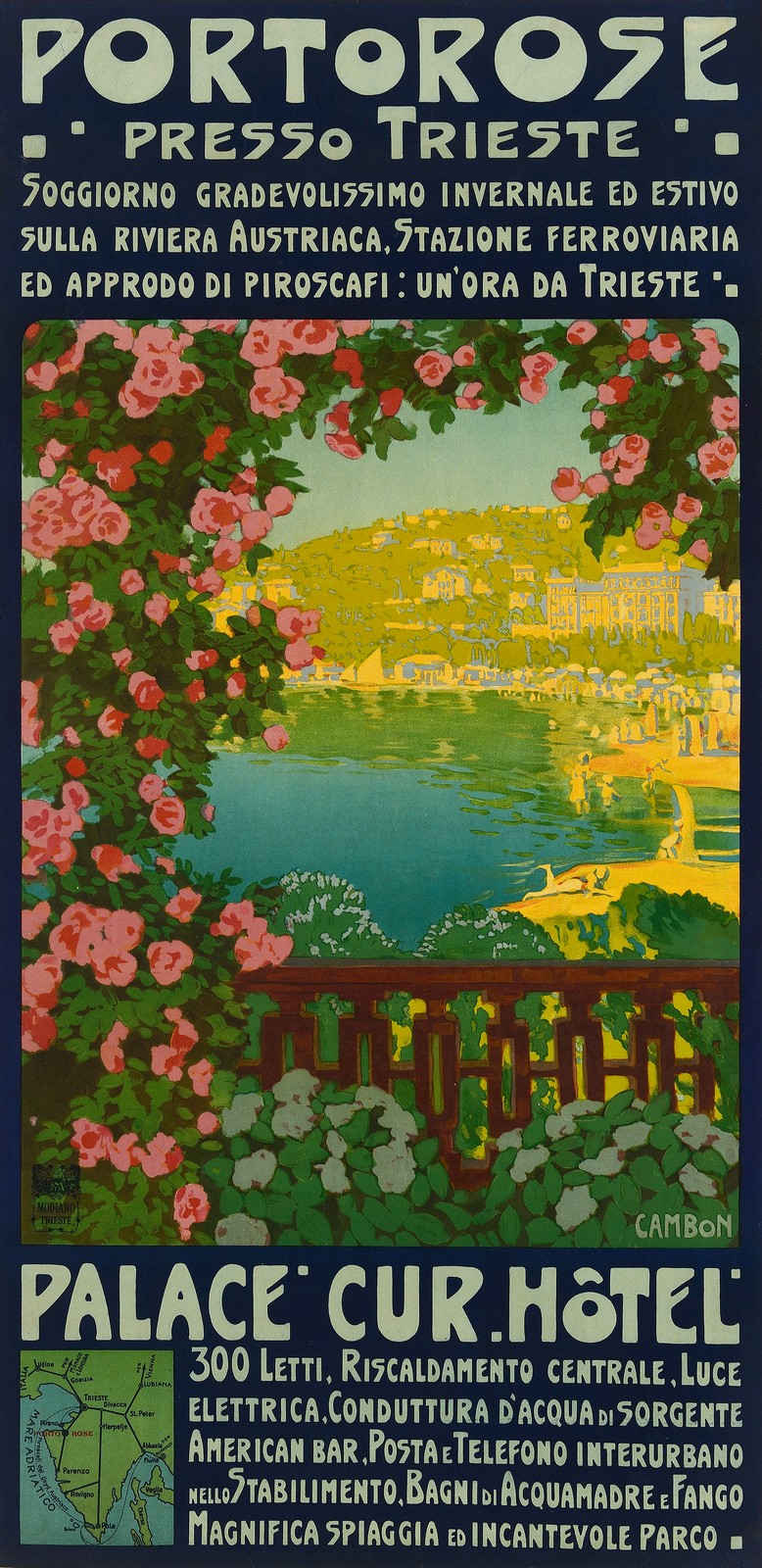
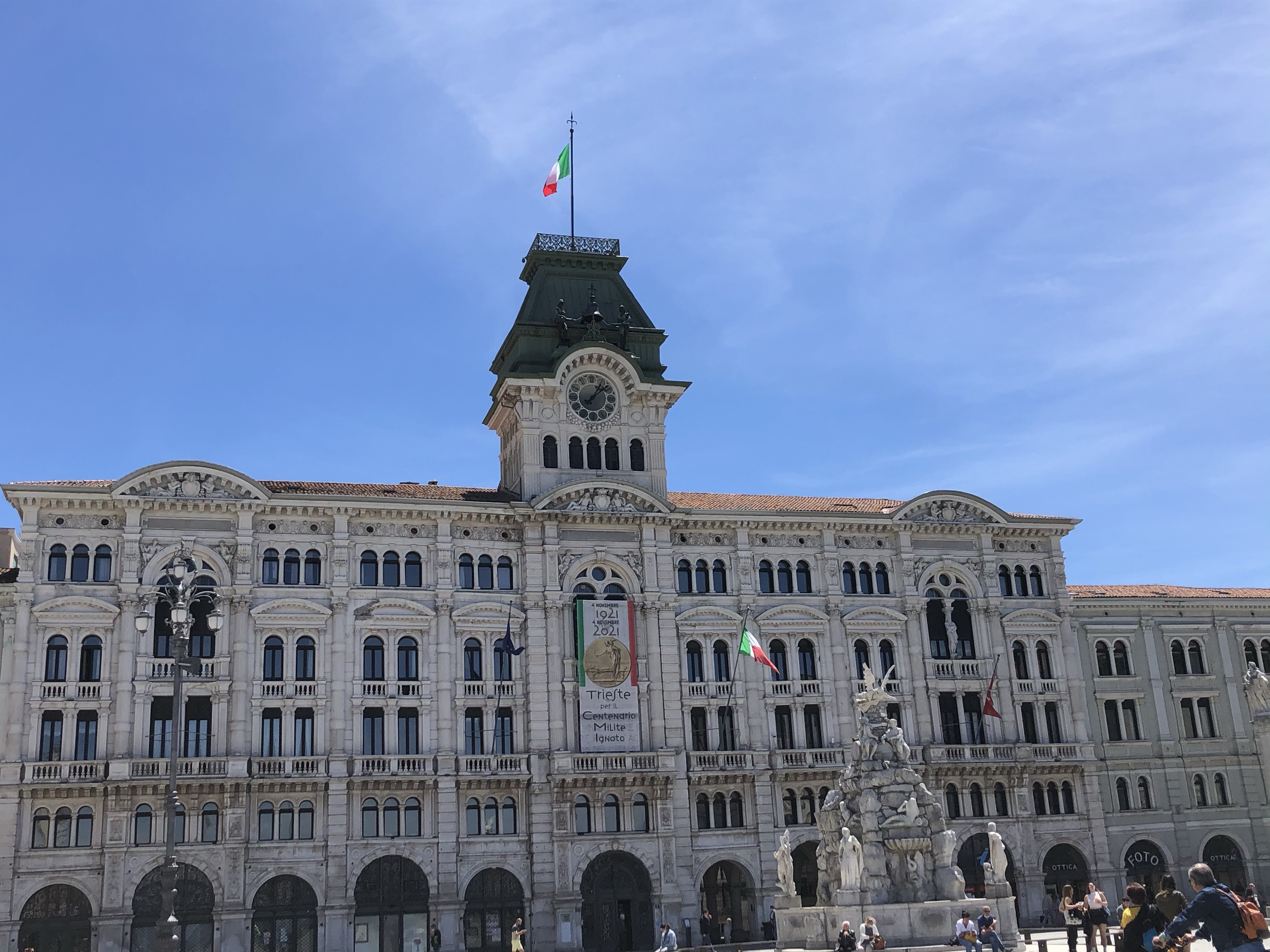
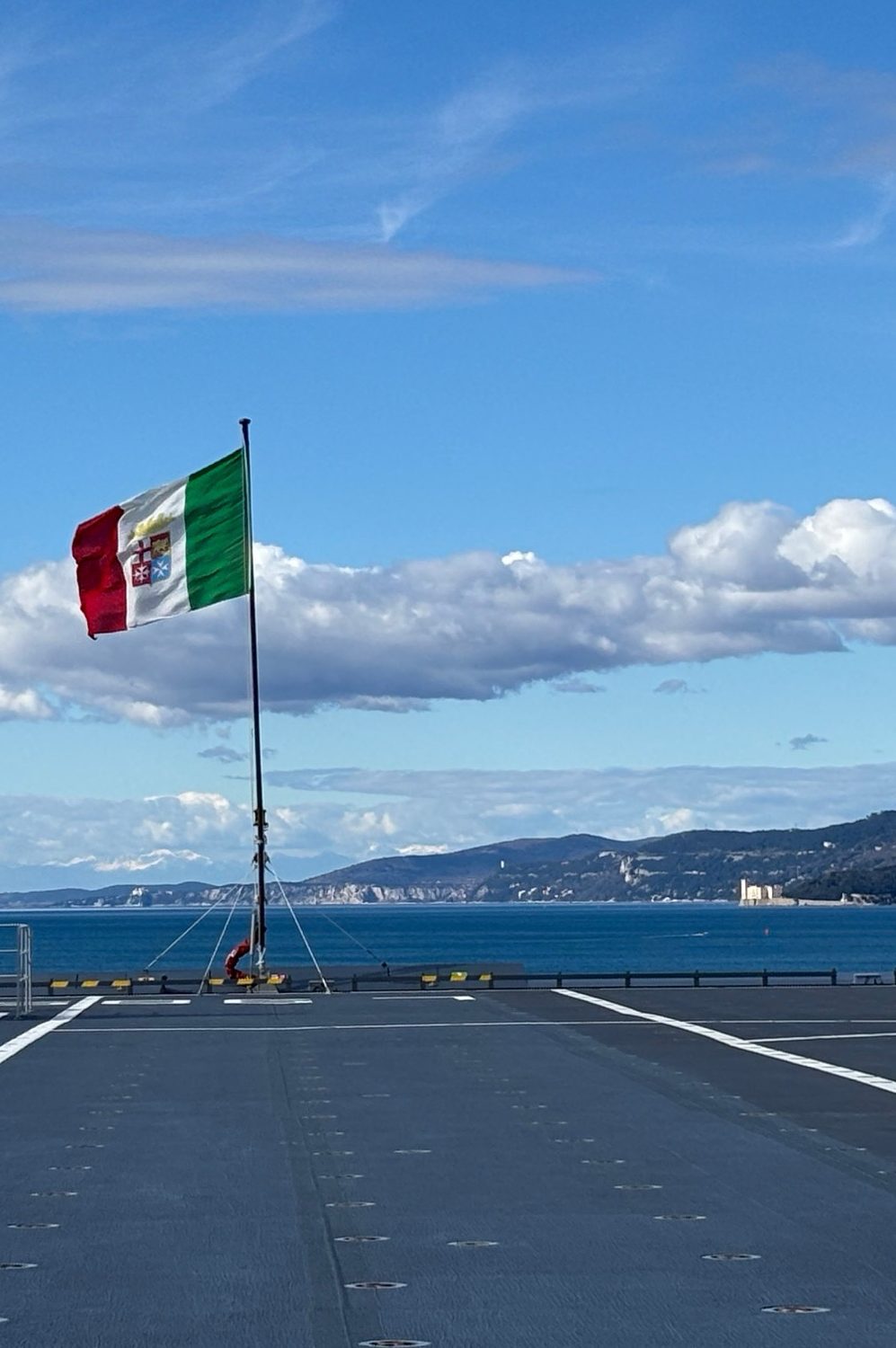
Portorose hotel poster (left), Trieste Town Hall (centre) and Bay of Trieste (right)
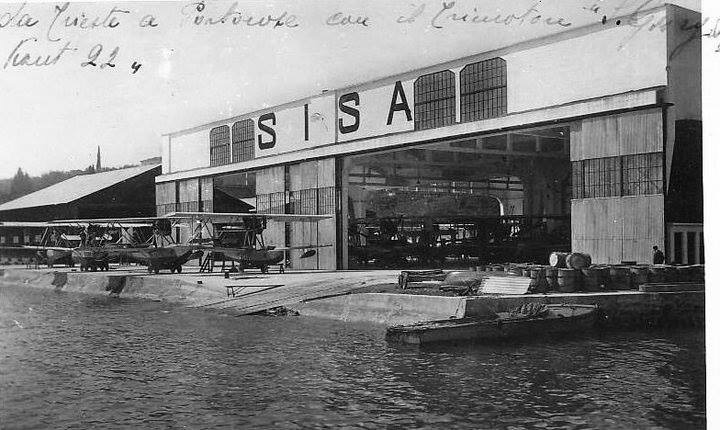
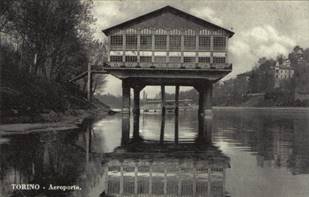
SISA was the first company to start a regular aviation service ‘alla linea’ in Italy. SISA also set up a flying school, for training pilots at Lussinpiccolo. Lussino is now in Croatia
VENICE – The seaplanes landed at Sant’Andrea, an old fortress, on the edge of the Venetian Lagoon. You can still see evidence of the slipway and the hangars used by the seaplanes. However in Venice the ‘idroscalo’ was soon superseded by the airfield on Lido (see photos below). Venice Lido Airport is still in operation today. It is a small airfield with a grass runway. The airfield is suitable for light aircraft and the planes using the airfield are typically small, single engine or twin engine aeroplanes.
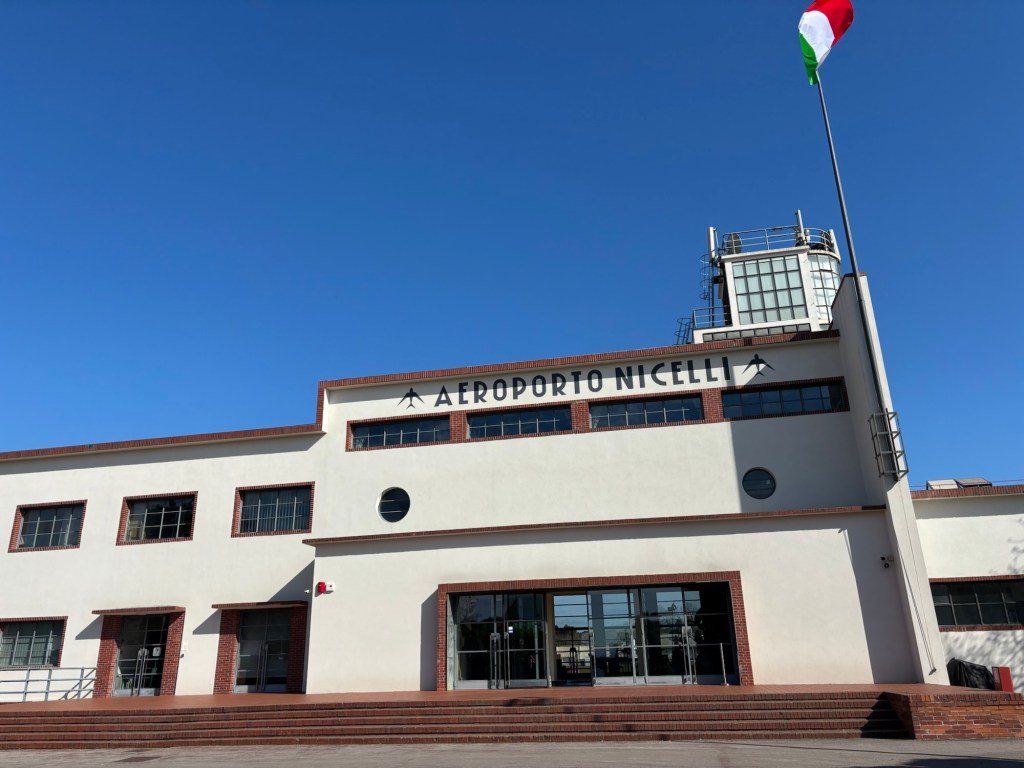
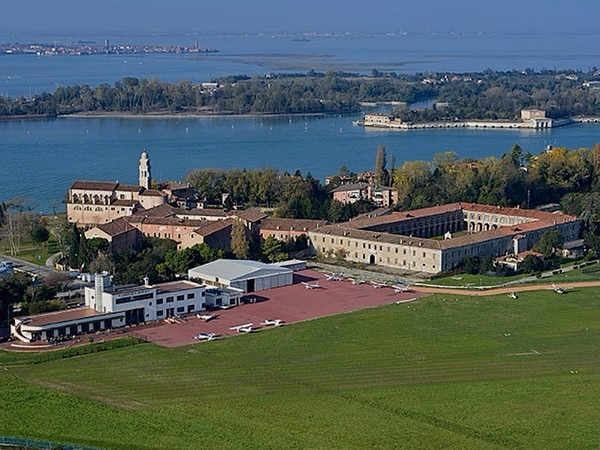
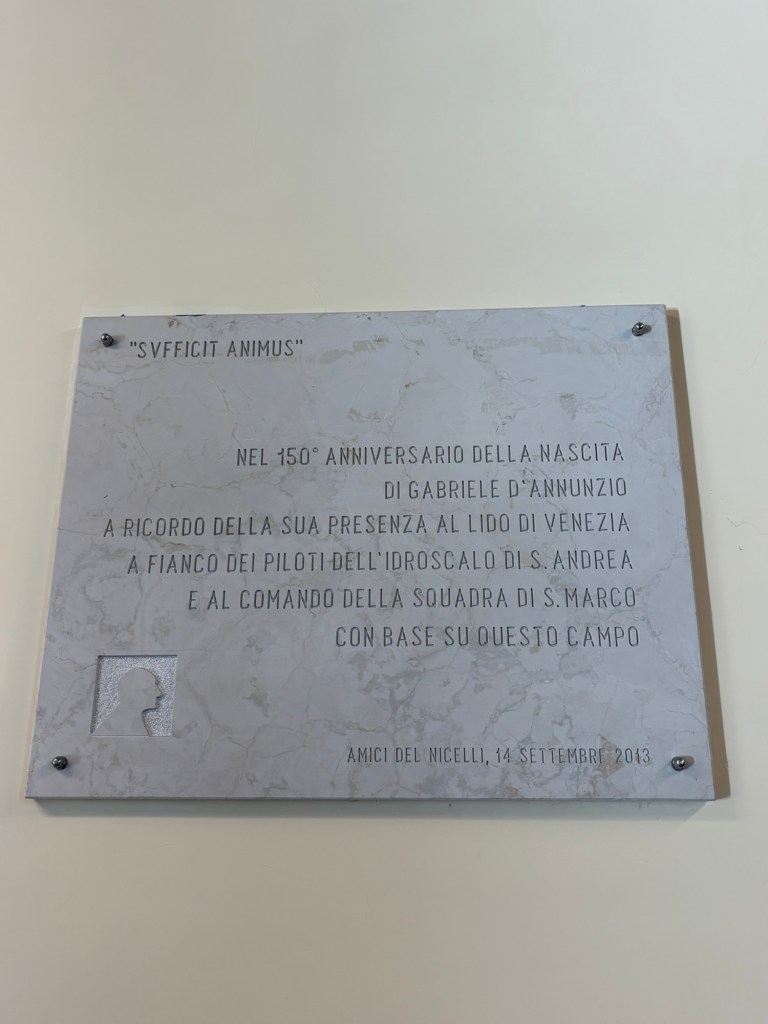
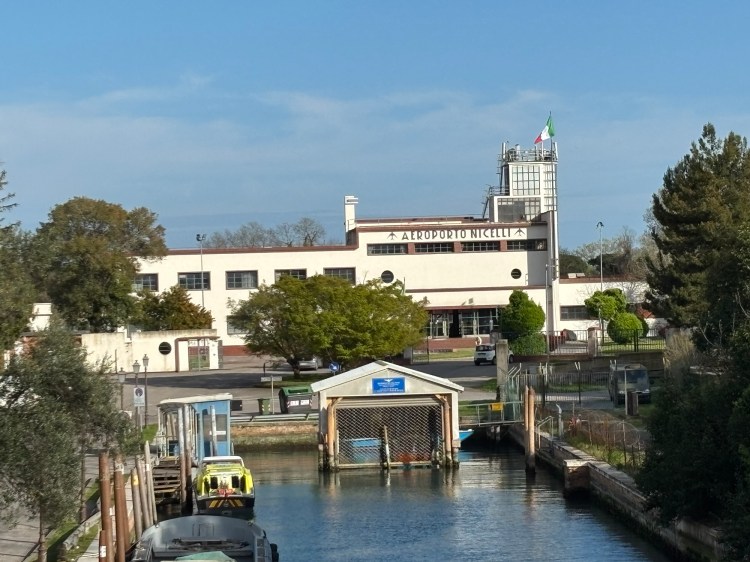
EVEN TODAY – on a sunny afternoon, it’s well worth heading to Lido Airport to watch the aircraft landing and taking off. There’s a cafe/restaurant with a terrace and (because this is Italy) a perfect coffee or a spritz awaits you at any time of day!
NOSTALGIA – The seaplane history of the Adriatic was short and sweet. SISA operated seaplanes from 1926 until 1934. By the 1930s numerous aircraft were being built in Italy and Germany specifically for the imminent war effort. However the construction of large numbers of airfields (on dry land) and later the development of the jet engine meant that the seaplane’s days were seriously numbered. The seaplane was excellent where airfields didn’t exist but (rather sadly) superfluous when a flat, dry runway was available. The development of Lido Airport, Venice from the 1920s onwards was the death knell of the ‘idroscalo’ at Sant’Andrea.
NOTES:
- Luisella Romeo – a tour guide in Venice and an expert on the history of the city, writes regularly about aspects of Venetian history and life. The article below is her considered and concise history of Venice’s Lido Airport known these days as Nicelli Airport.
- Giovanni Nicelli was an Italian World War One flying ace. He was credited with destroying at least eight enemy aircraft (Austro-Hungarian planes). He was the ‘Top Gun’ of the war years. He died in 1918 (in combat) aged 25.
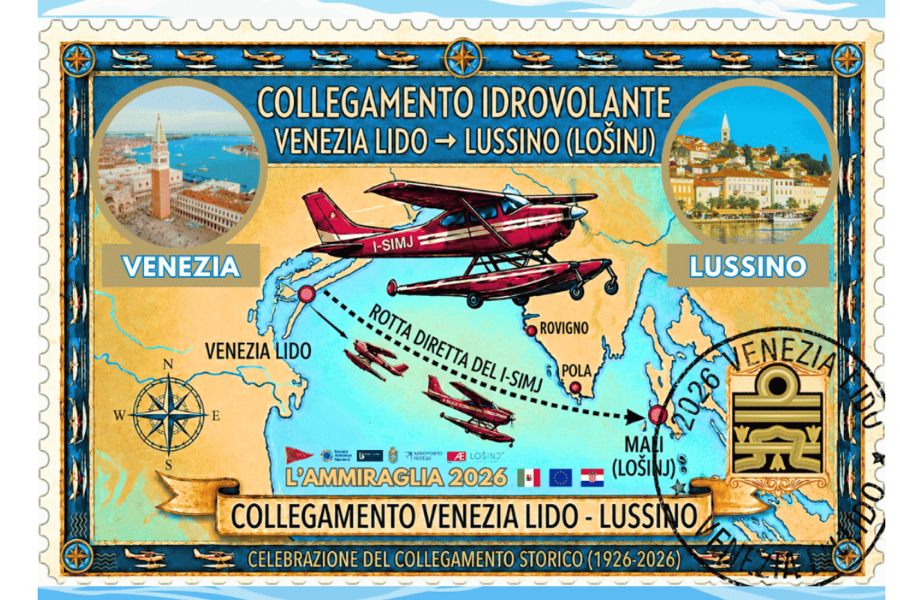
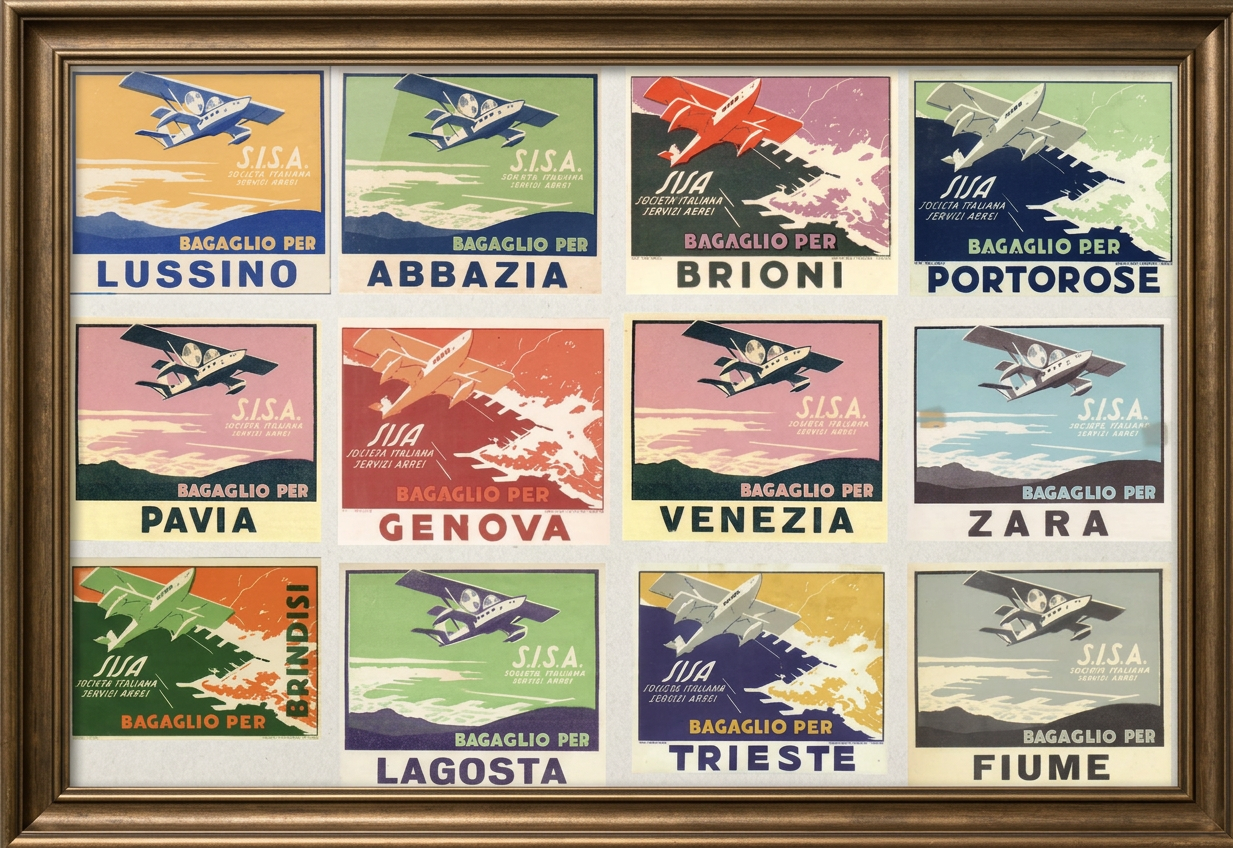
- On 13th June, 2026 a commemorative flight from Venezia Lido to Lussino (Croatia) took place – in honour of the seaplane service that once existed. Disclaimer: the image below left is probably AI generated (just so that you know). It’s pretty though isn’t it. Photo below right – luggage tags produced by SISA in the 1920s – so elegant.
- Lastly – who do you think the lady on the plane was? I like to think it was Greta Garbo although she moved to Hollywood in 1925. Maybe she came back for a weekend at one of Lido’s grand hotels.
- You can learn more about Venice Lido Airport here: www.aeroportonicelli.com
- For more on the history of Trieste – I’ve written various articles, perhaps start here: Trieste – Italy
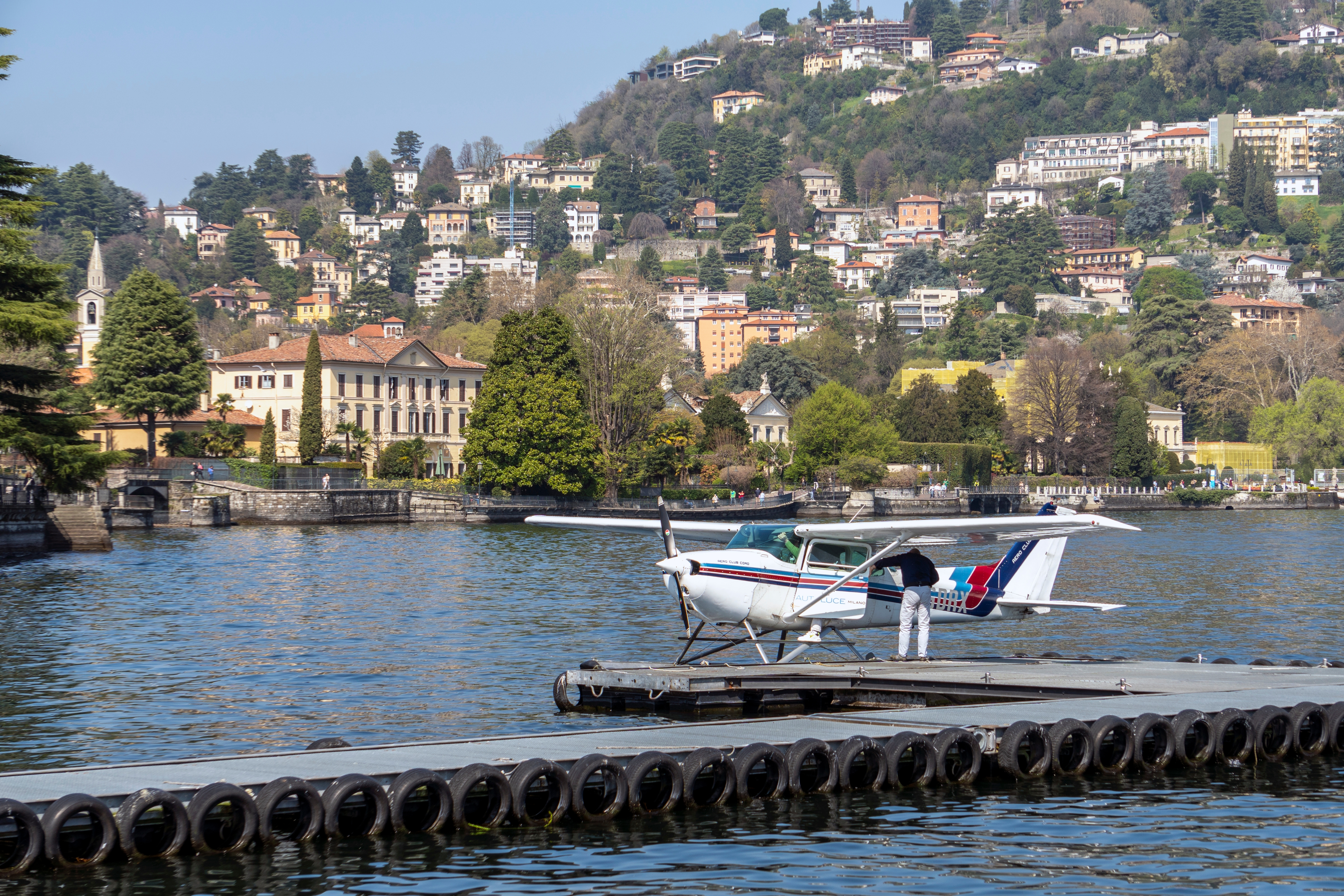
If you like the idea of a seaplane ride then head to Lake Como, just north of Milan. The Aero Club of Como was established in 1930. They run a training school for seaplane pilots and they offer sightseeing trips over Lake Como in their fleet of seaplanes.
LAKE COMO – You can book a 30 minute seaplane ride over the lake or you can book private use of a seaplane – perfect for special occasions. This is one of those ‘once in a lifetime experiences’. Our sister company Grand Tourist specialises in this type of amazing experience. Contact us for a proposal and prices.

THE AUTHOR – Janet Simmonds writes about Italy, especially Venice, Ravenna, Trieste but also The Alps, Sicily, Naples and Basilicata. She has Master’s degrees from Oxford University and Manchester University in Geography and History of Art respectively. Janet has worked with university groups, professional groups and well-known journalists assisting and informing guests on Italy and Italian culture. She offers guided tours throughout Italy where she acts as a guest lecturer and local expert.
She has been writing her blog for ten years – it is a treasure trove of information about Italy and The Alps. You can also discover more about Janet through her specialist travel company Grand Tourist – we invite you to visit the web site.
Find out more at www.grand-tourist.com and www.educated-traveller.com
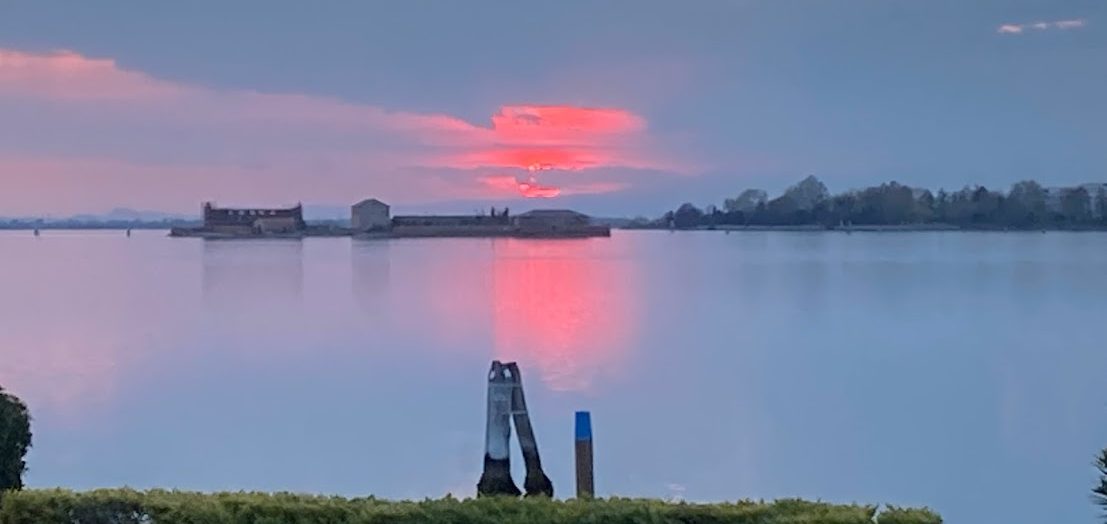
Sunset over the Venetian Lagoon – c. www.educated-traveller.com
June 2026


Janet, I think you have the start of an excellent historical novel here! When will you write it?
LikeLiked by 1 person
Thank you Sophfronia – just need my writer’s retreat next – to get it written x
LikeLike
Fascinating (as always) Janet – thank you!! Luv J
LikeLike