One of the things I love about travelling in Italy is that there’s always something new to discover. Three years ago I was invited by the Friuli Tourist Board to visit the small, medieval town of Spilimbergo. The town is located about one hour from Venice, heading in a north-easterly direction. It was an important medieval town, and the historic centre is beautiful. There’s a castle, romanesque cathedral and frescoed palaces. There’s also a very well-preserved medieval arched gateway leading into the oldest part of the town, complete with winged lion of St Mark. Spilimbergo was Venetian territory for centuries. The town lies to the west of the River Tagliamento, a vast flat-floored valley that flows from the mountains out into the Adriatic Sea. But I’m not here to visit the river or the old town, spectacular as they are, I’m here to visit the Mosaic School of Spilimbergo, a unique institution in Italy.
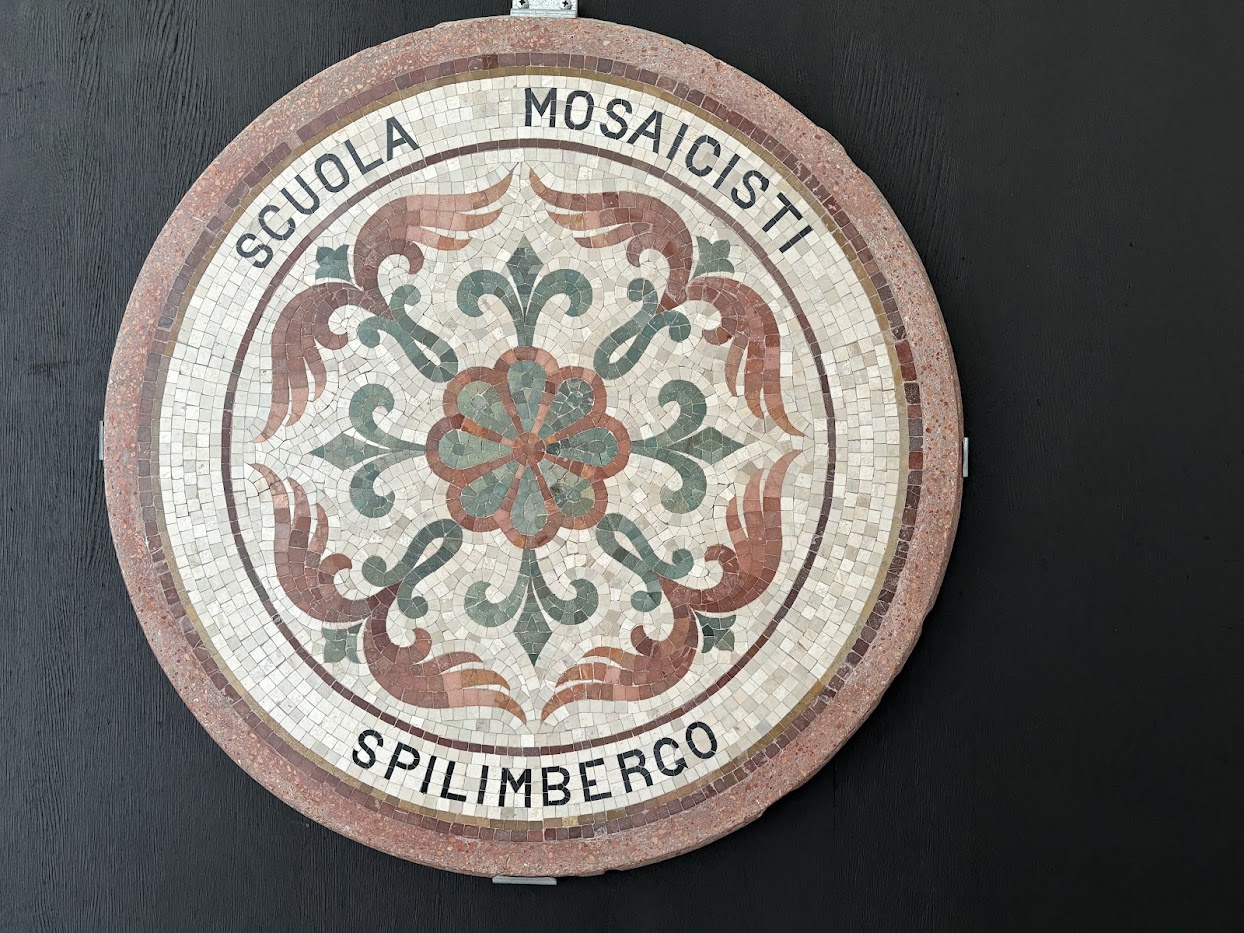
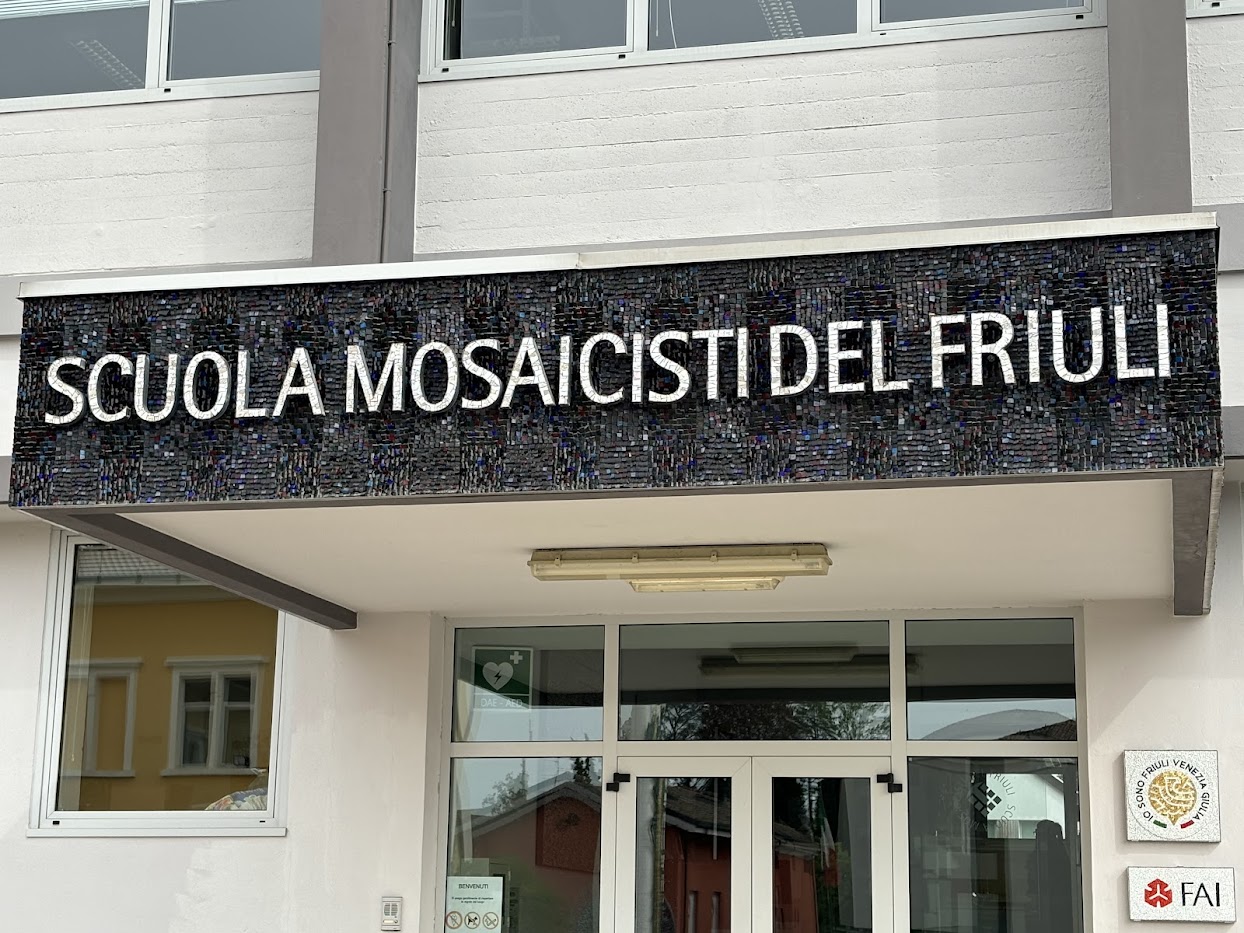
The ‘Scuola Mosaicisti di Friuli’ is a specialist school and training centre, dedicated to the preservation and development of mosaic-making skills, both now and in the future. The school was established in 1922, a difficult time in Italy’s history. The First World War had finished in 1918, just four years earlier. The lose of life in this part of Italy was terrible. There’s a war memorial at Redipuglia, an hour from here, that commemorates the loss of 100,000 Italian soldiers in the ‘Grande Guerra’. They called it ‘The White War’ because it was fought in the mountains, during the winter, often in freezing conditions. This was Italy’s equivalent of the Somme, in terms of loss of life. After the war it was necessary to revive the local economy and give people hope for the future. Lodovico Zanini suggested the idea of a school and Ezio Cantarutti, Mayor of Spilimbergo made it happen. The Mosaic School has become synonymous with the town of Spilimbergo and has fostered a tradition that is invaluable and important to the whole of the region.
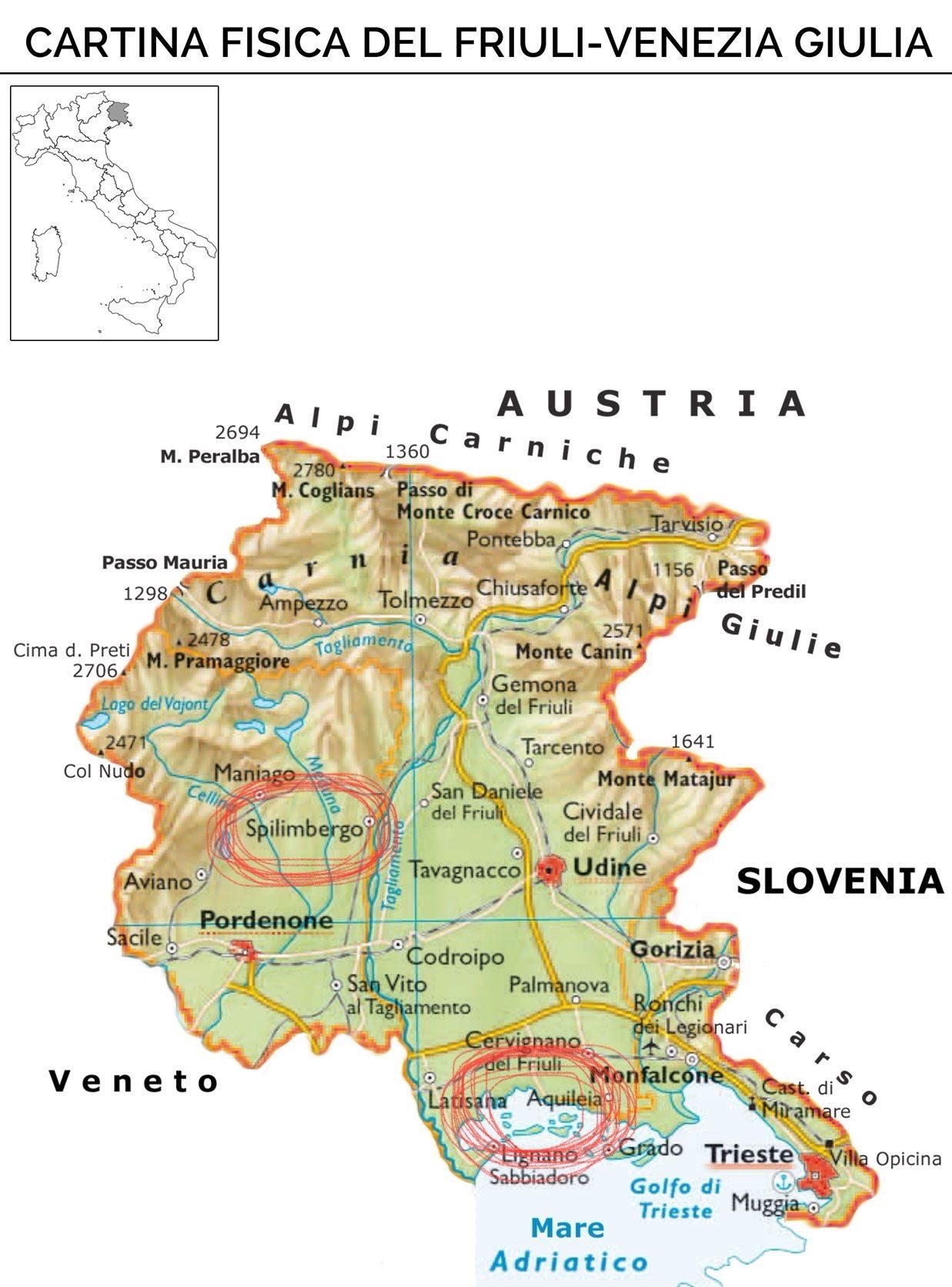
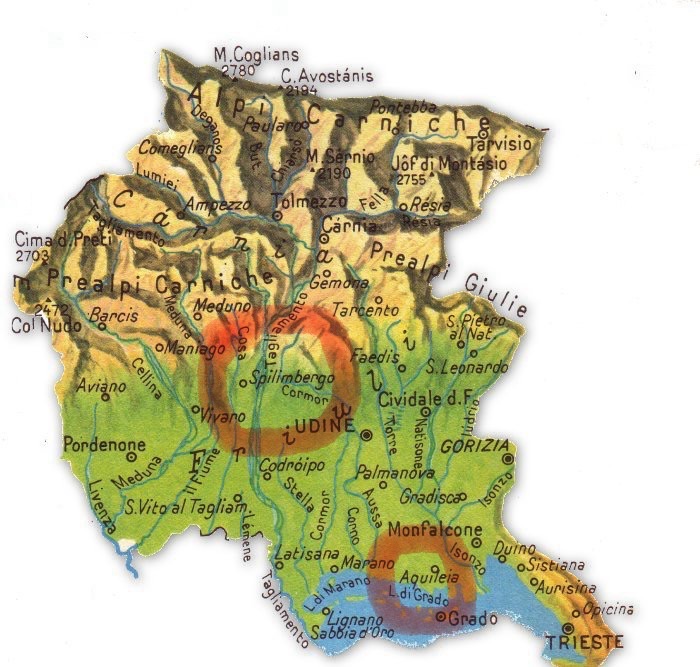
Friuli-Venezia Giulia Region, NE Italy (left) and Spilimbergo and Aquileia circled in red (right)
The area around Spilimbergo, including the nearby village of Sequals, has been known for mosaic-making for generations. Local people would collect small stones from the banks of the Tagliamento River to create small, simple mosaics. The Romans had small workshops in Altinum and Aquileia creating the small pieces of glass or stone (known as tesserae) needed for making mosaics. Spectacular Roman mosaics had existed in Aquileia, since the 4th century. In nearby Venice and Torcello mosaics dating from the 12th century were well known. There was plenty of ‘cultural heritage’ that needed restoring and maintaining. Further down the Adriatic coast in Ravenna, was the city of Byzantine mosaics, dating from the 6th century and now a UNESCO World Heritage Site. So the decision to offer a training school in Spilimbergo and (hopefully) to provide work for trained artisans was a logical decision. Several famous mosaic makers of the 19th century were born in this area including Gian Domenico Facchina in 1826. He was trained by various uncles, including Giuseppe Facchina, one of the most famous mosaic makers of all. Together they worked on mosaic restoration work in Trieste, Venice and Aquileia before moving to France and creating fantastic mosaics in Paris, including Opera Garnier and Galerie Vivienne.
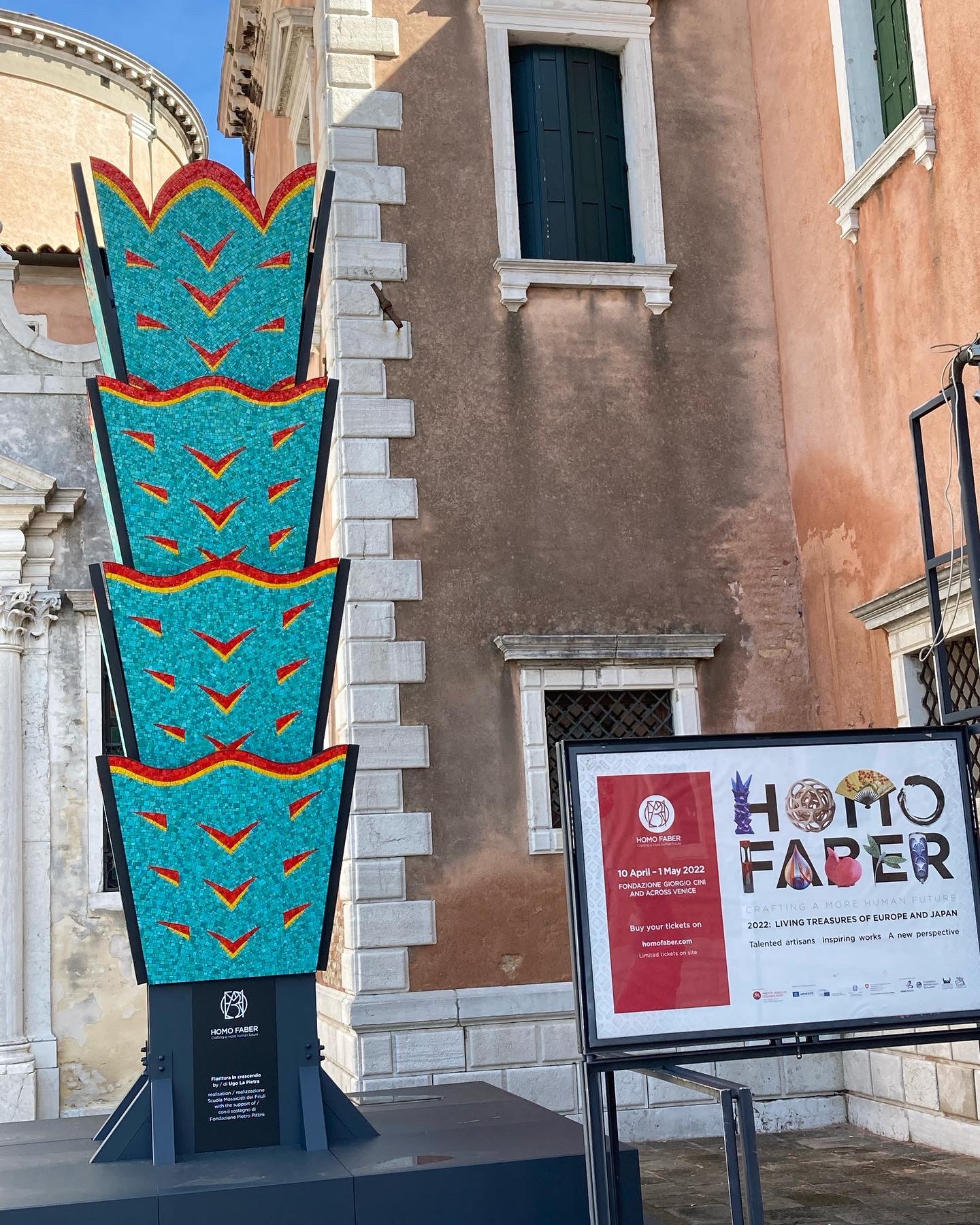
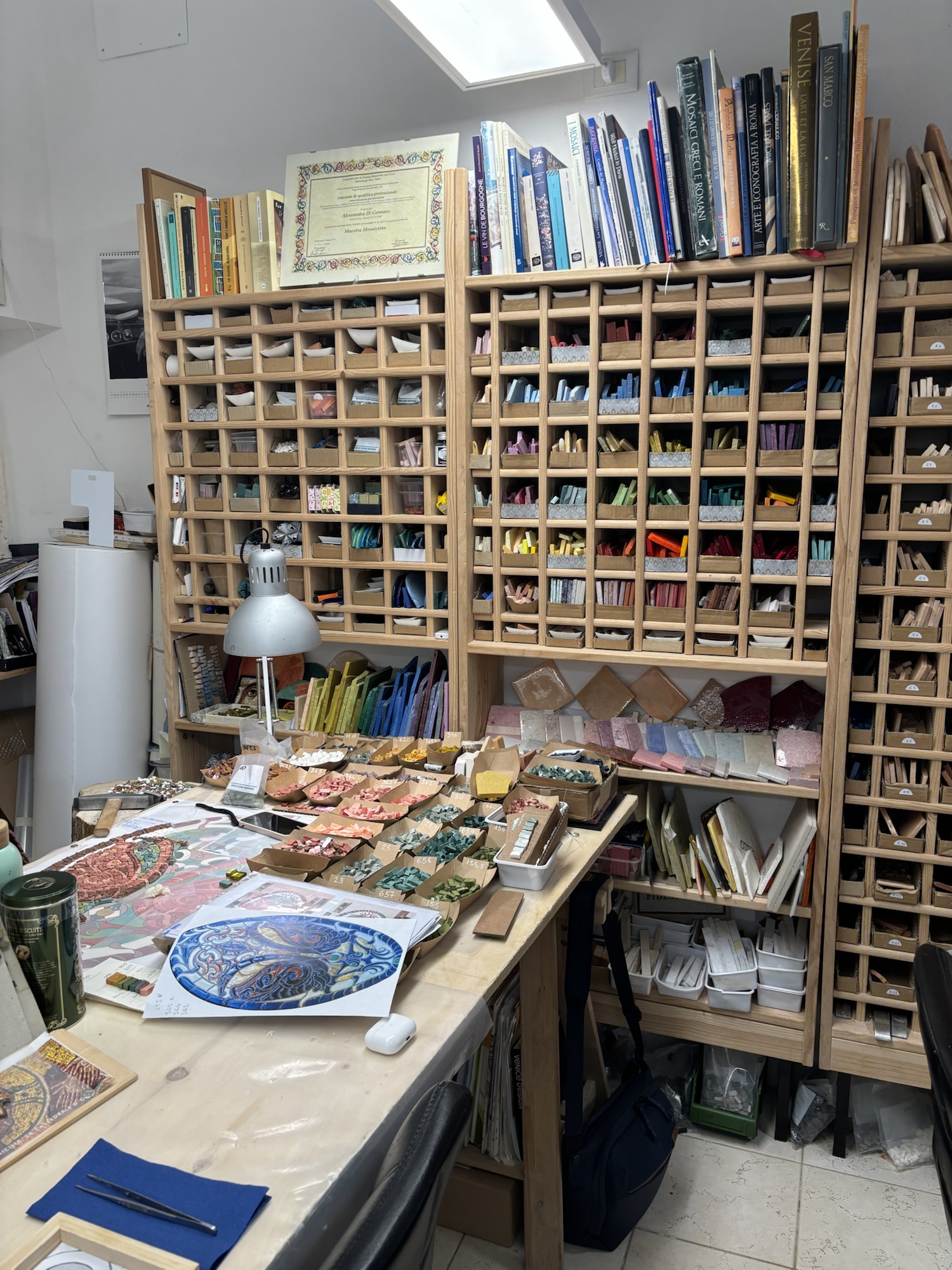
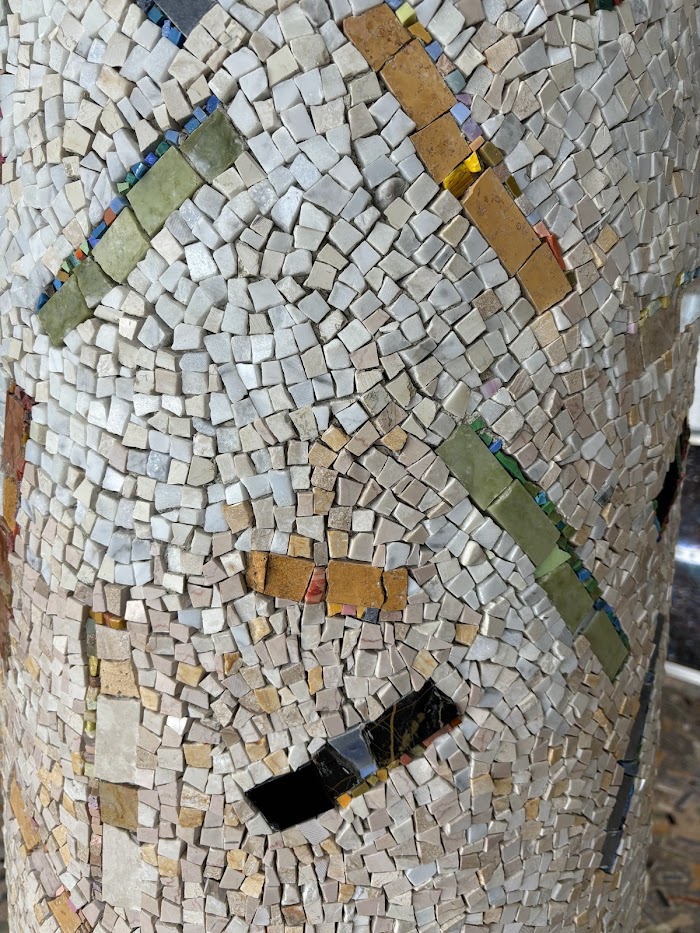
The school celebrated one hundred years of activity in 2022 (the year of my visit). Students come from all over the world to study here. The school is a beacon of talent, creativity and hard work. The school offers a whole variety of lessons, training courses and degrees for students wanting to improve and develop their mosaic-making skills. The walls and floors of the school are decorated with mosaics of every type and colour. Visitors are welcomed. It’s like setting foot in a museum crossed with a high school, the building is full of life, colour and people. When I was there it was term time. Class rooms were filled with students and teachers were busy teaching. The whole place was vibrant, alive, bursting with enthusiasm. In fact there was a big project on the go. A new ‘arts and crafts’ event in Venice had commissioned the school to create a mosaic tower for the entrance to their exhibition. The photos below show the process that leads up to creating a mosaic sculpture:
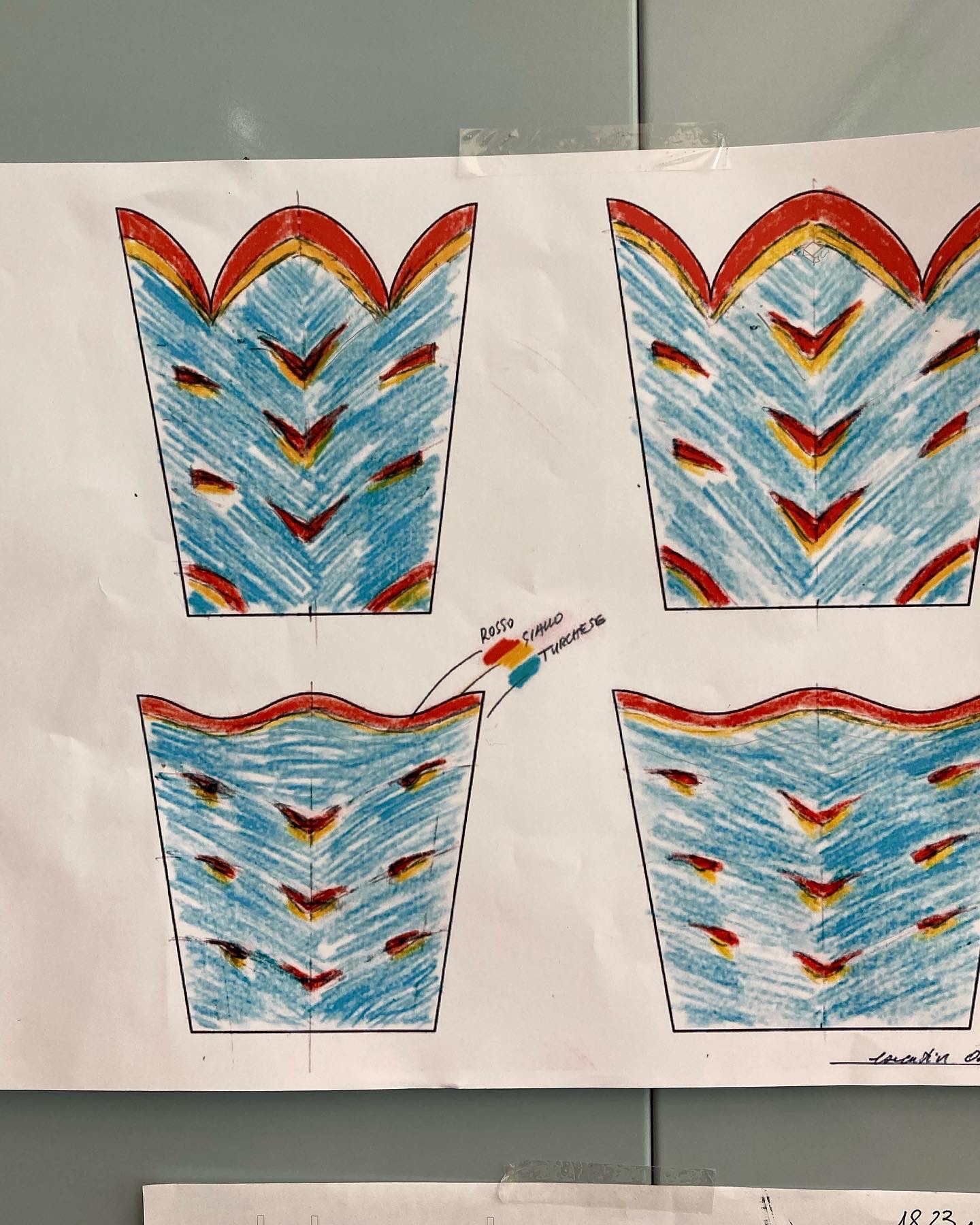
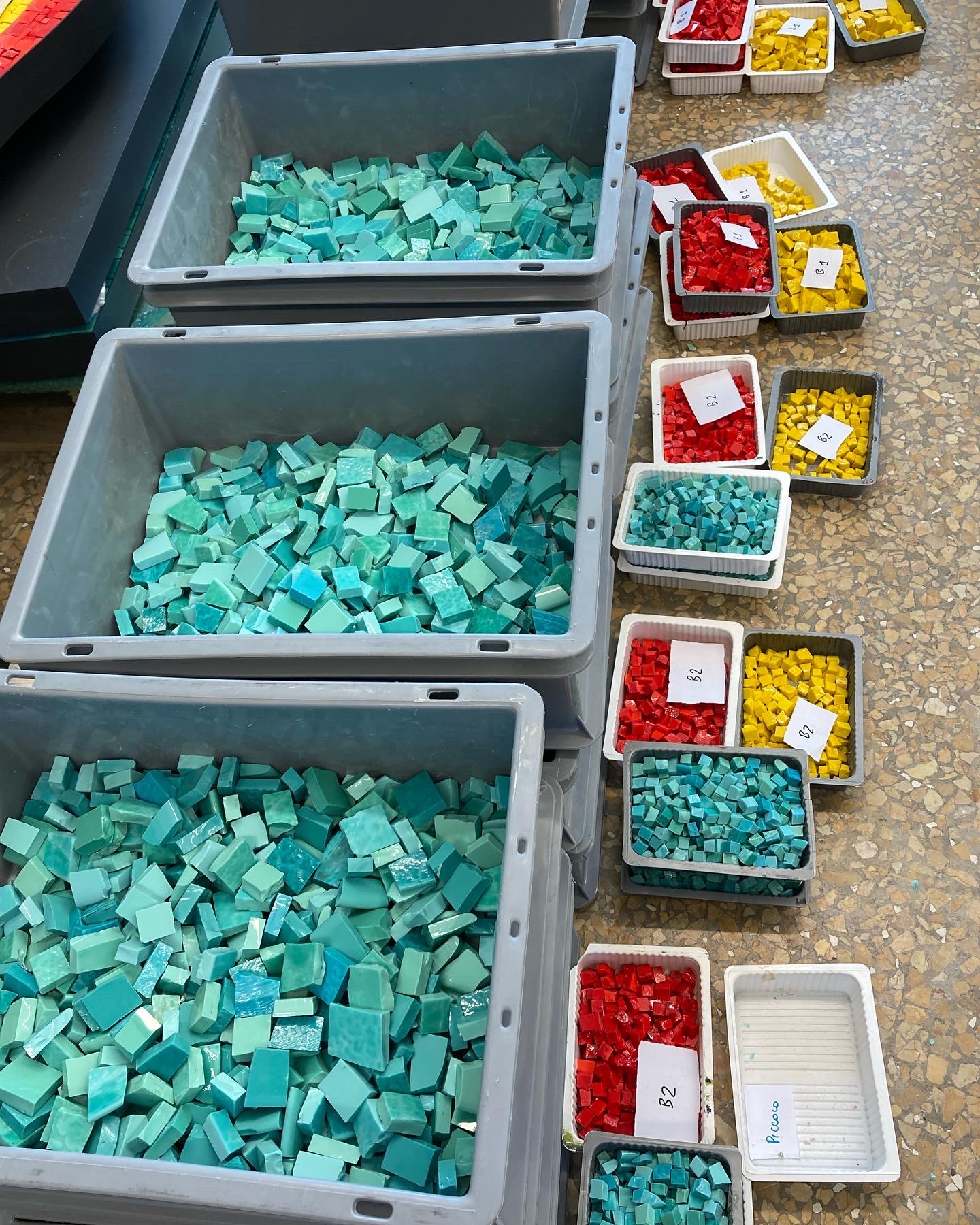
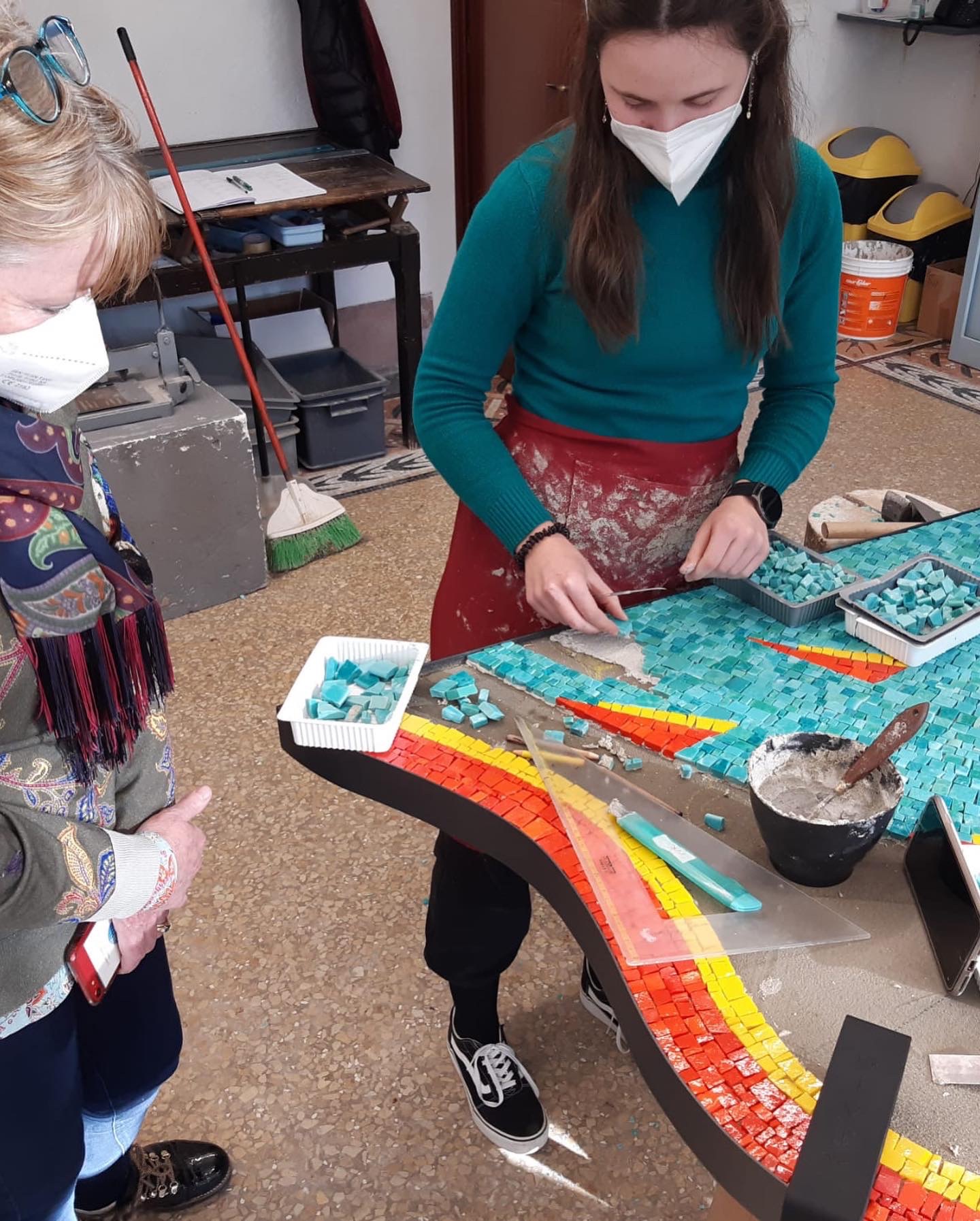
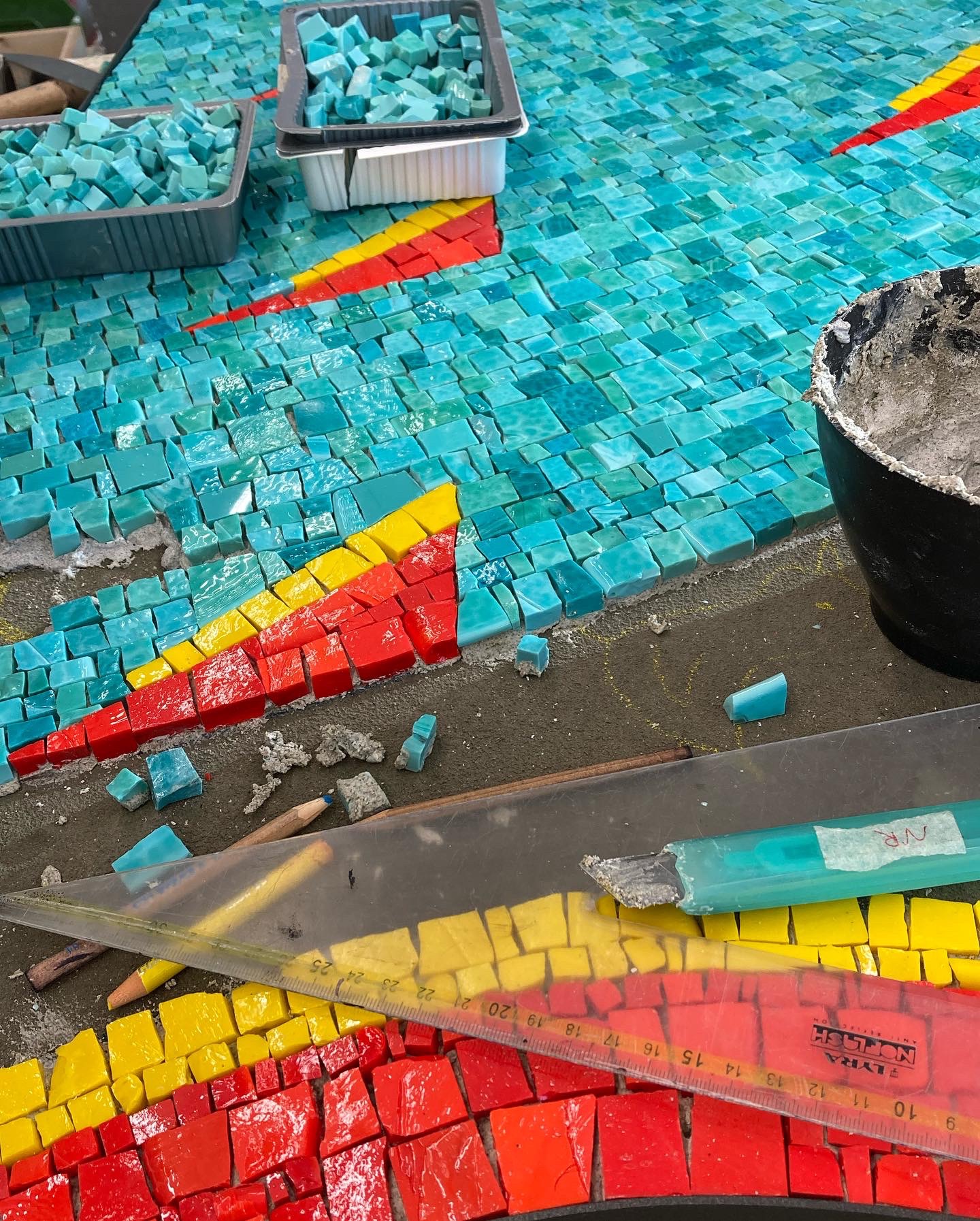
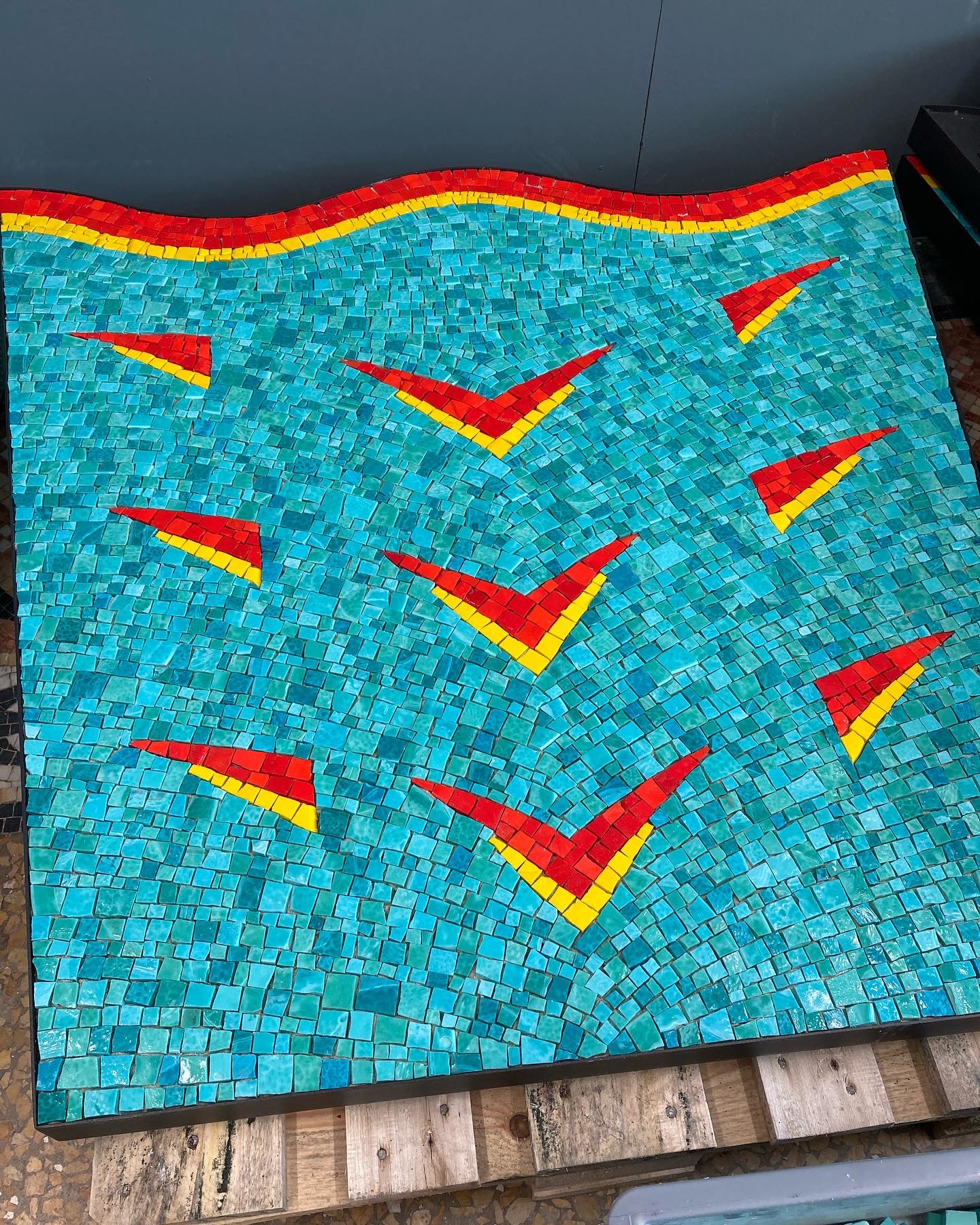
The mosaic school in Spilimbergo, is now a well-established centre of excellence. Students learn how to create a design, assemble the necessary tools and create the final object. The tiny fragments of stone or glass ‘tesserae’ that make up each individual mosaic (above), are shaped and sorted by hand. Each piece has to be carefully fitted into the jigsaw of ‘pezzi’ that becomes the finished mosaic. The work is painstaking and slow. Each tessera has to be placed and fitted, by hand, into the design.
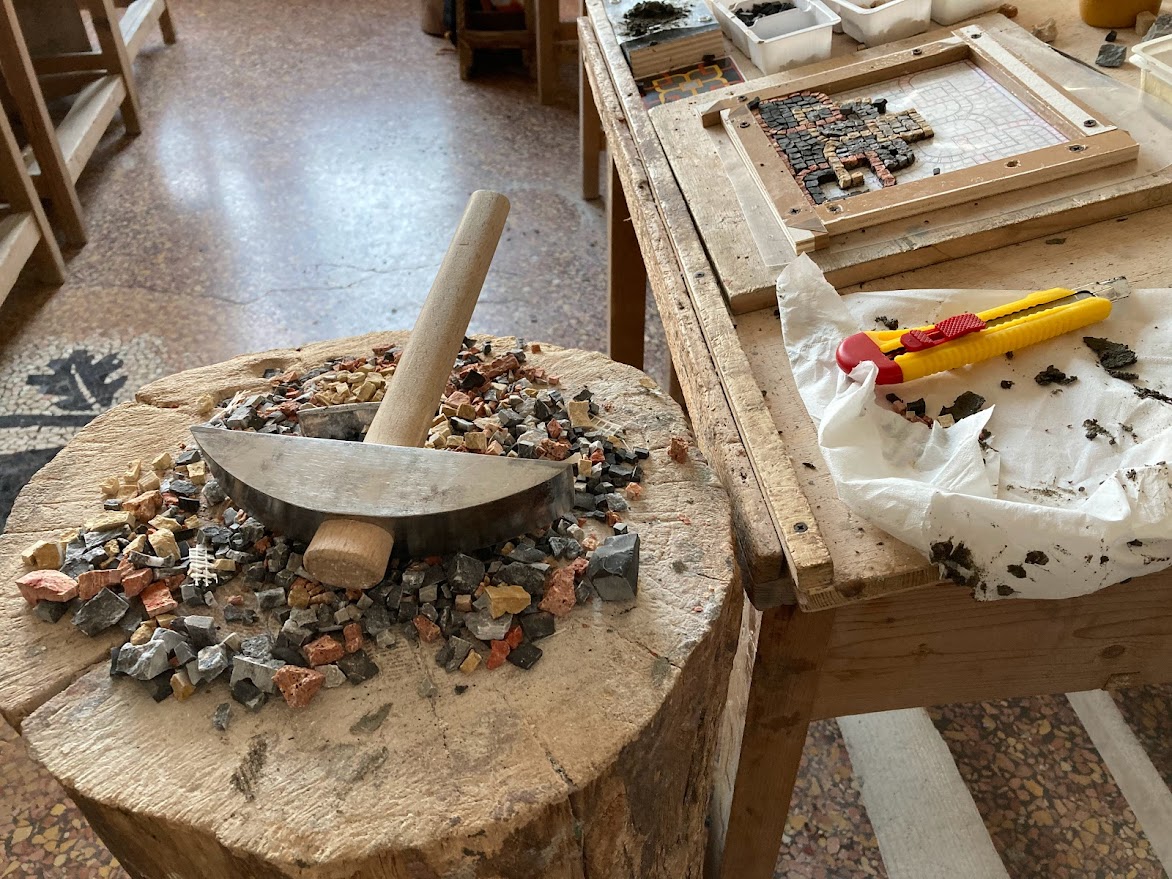
The skill and patience of the mosaic artist is vital. A unique design might take weeks to perfect. Over time (and with lots of practice) a mosaic artist will pick up the right tessera for the right space first time, every time. This level of expertise takes years to acquire. Mosaic artists prepare the tiny, mosaic pieces by using a ‘martellina’ hammer and ‘un ceppo in legno’ a piece of tree trunk typically about 1 meter high and about 25 cms in diameter. The piece of tree trunk stands at the side of each student’s workspace, like a bar stool. The student takes small pieces of glass, stone or ceramic and chips them carefully with the ‘martellina’ into the correct size. The tree trunk is used as the stand or the base for the procedure. If a fragment doesn’t fit it has to be shaped with the martellina until it is the correct shape. Then it is placed carefully into the design. Precision is very important.
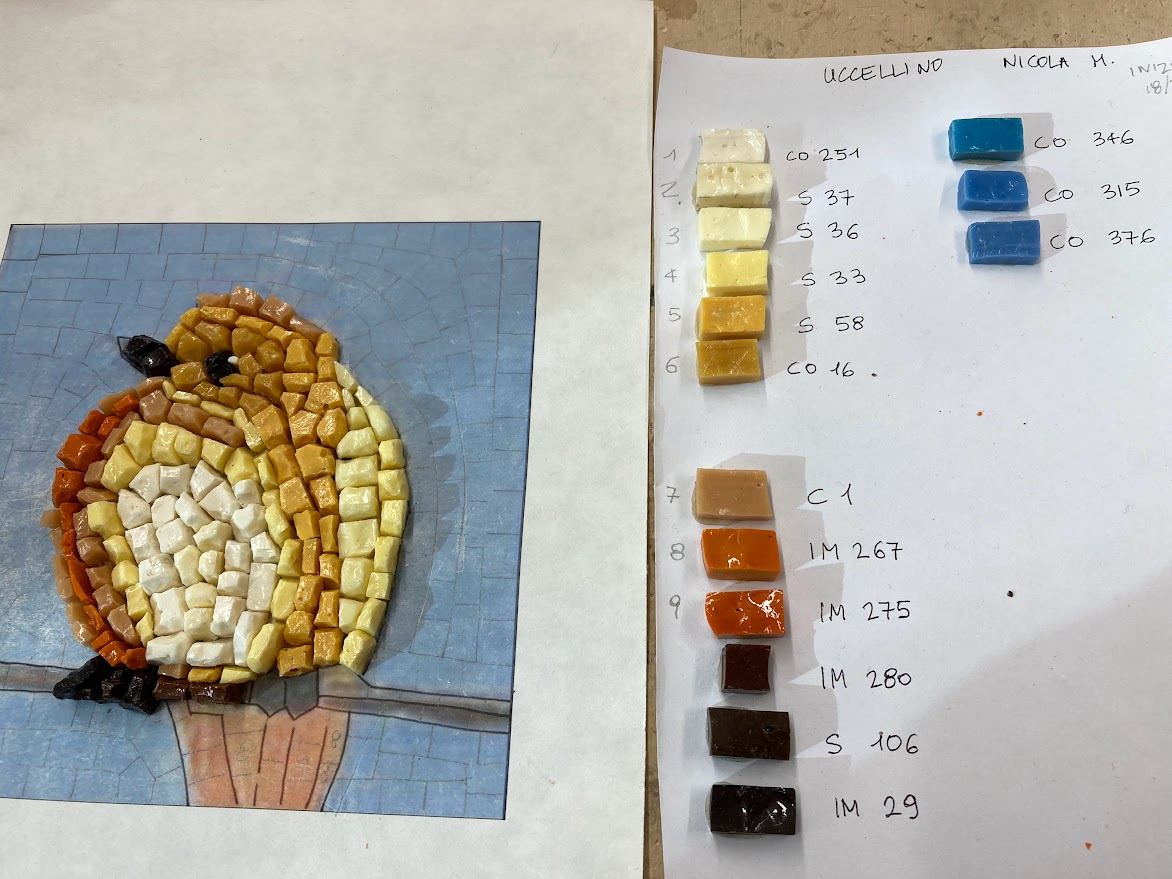
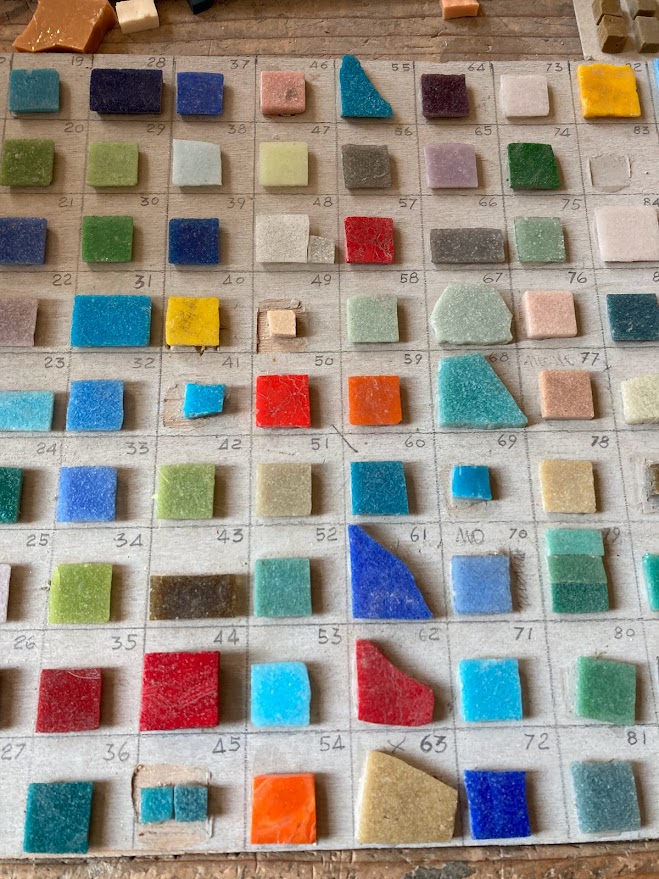
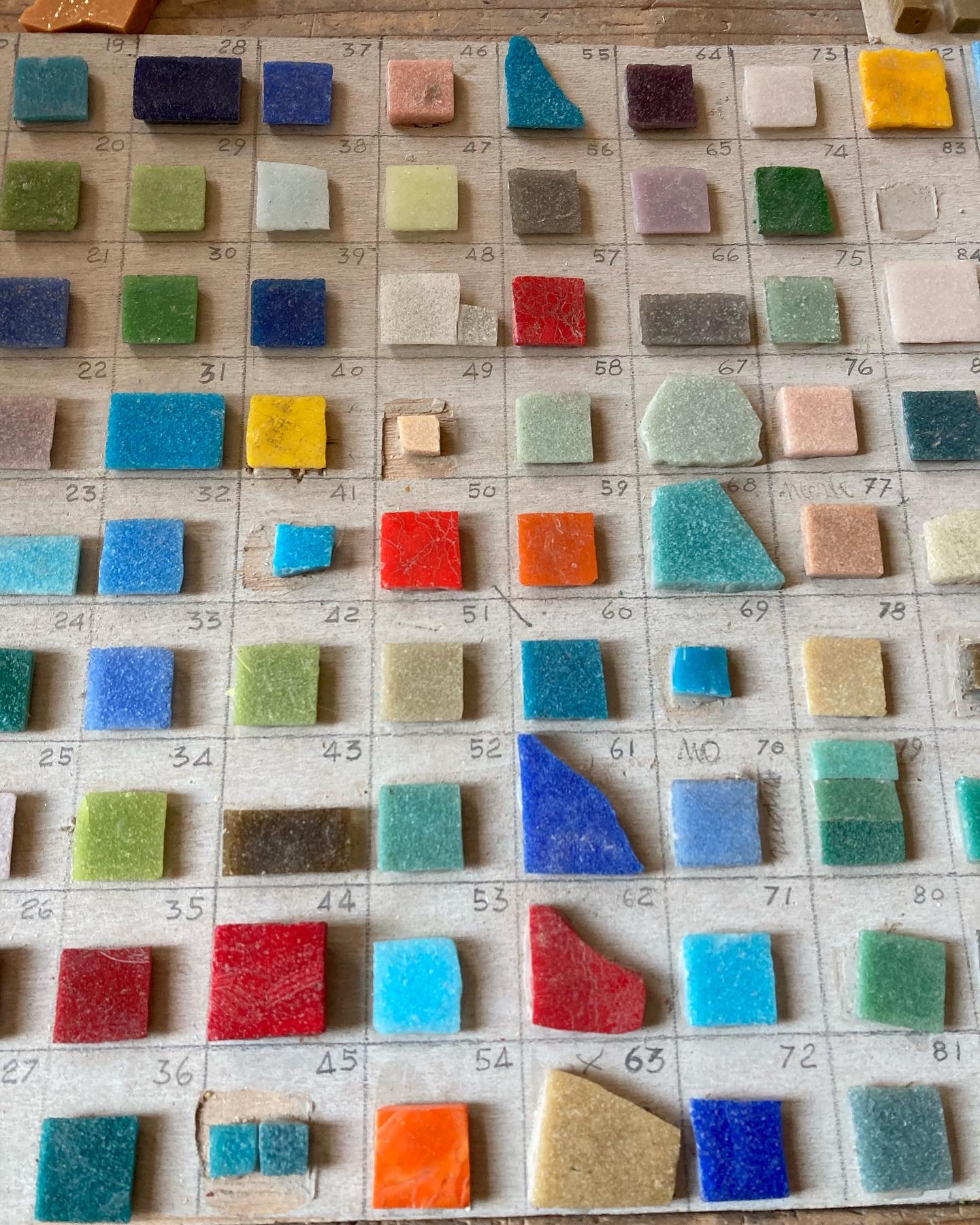
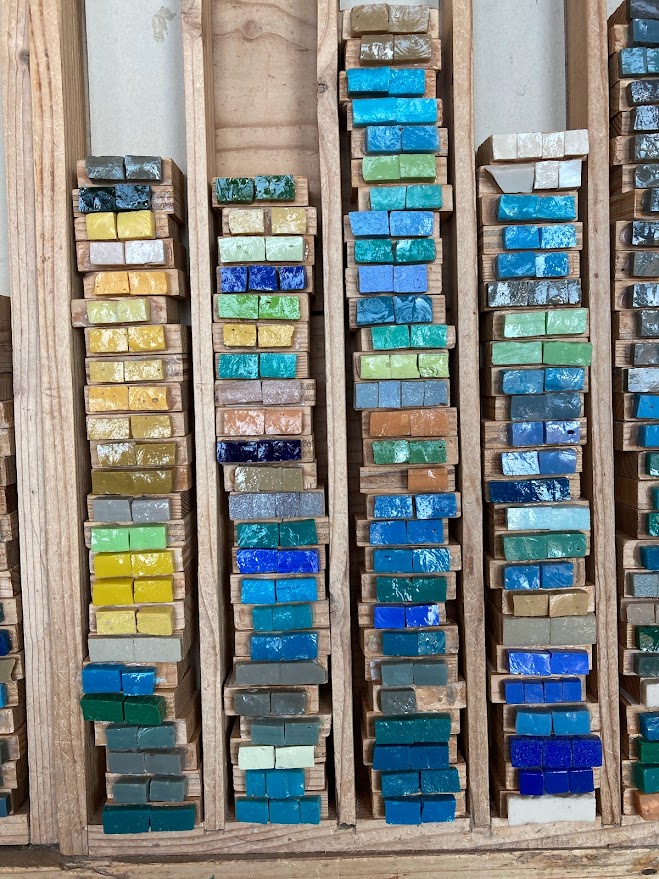
Whenever I’ve read about mosaics, I’ve always observed that ‘tessera’ and‘tesserae’ are the names given to the small, square pieces of material, typically about a centimeter square, that make up the mosaic picture. These tesserae can be glass, ceramic or stone (especially marble). In modern mosaics the tesserae can also be metal. Then there’s another word ‘smalto’ or ‘smalti’ for tesserae made out of coloured glass. Smalti are made by mixing silica, carbonate and coloured pigment and then baking them in a very hot furnace. Effectively this is the glass making process that is famous on the island of Murano.
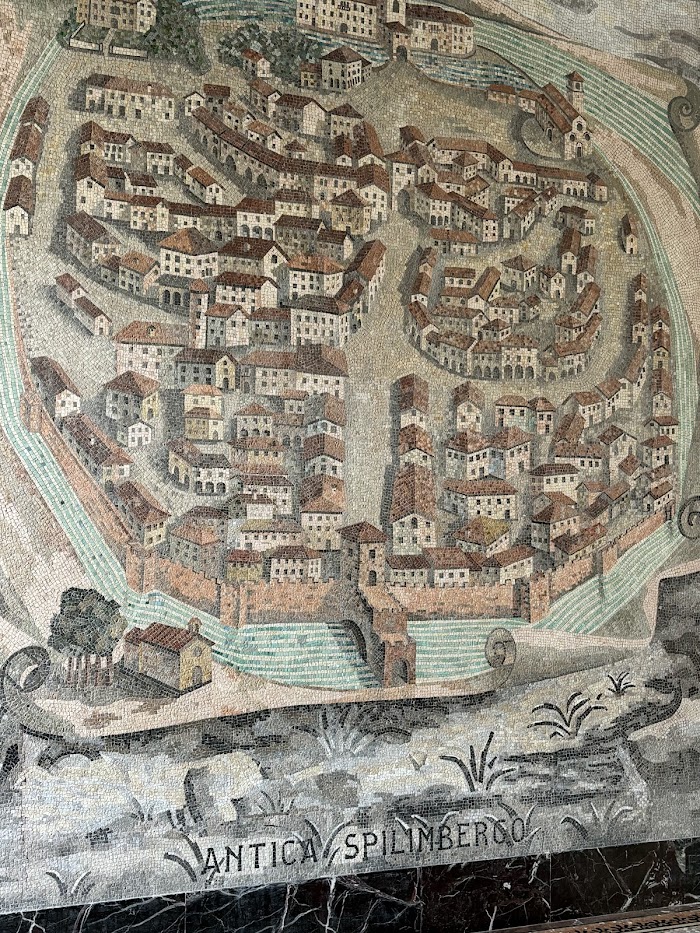
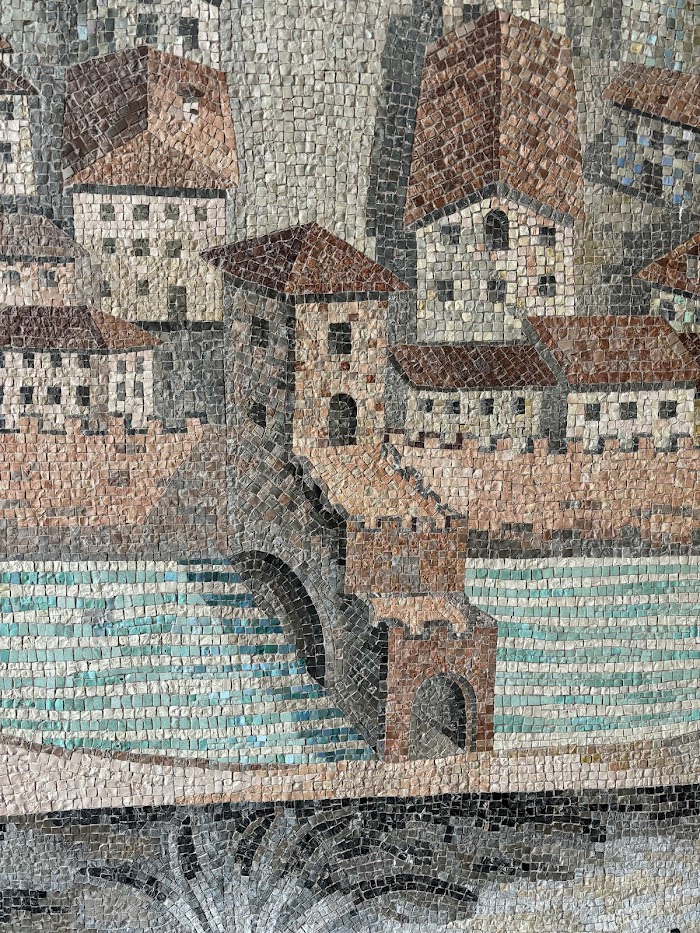
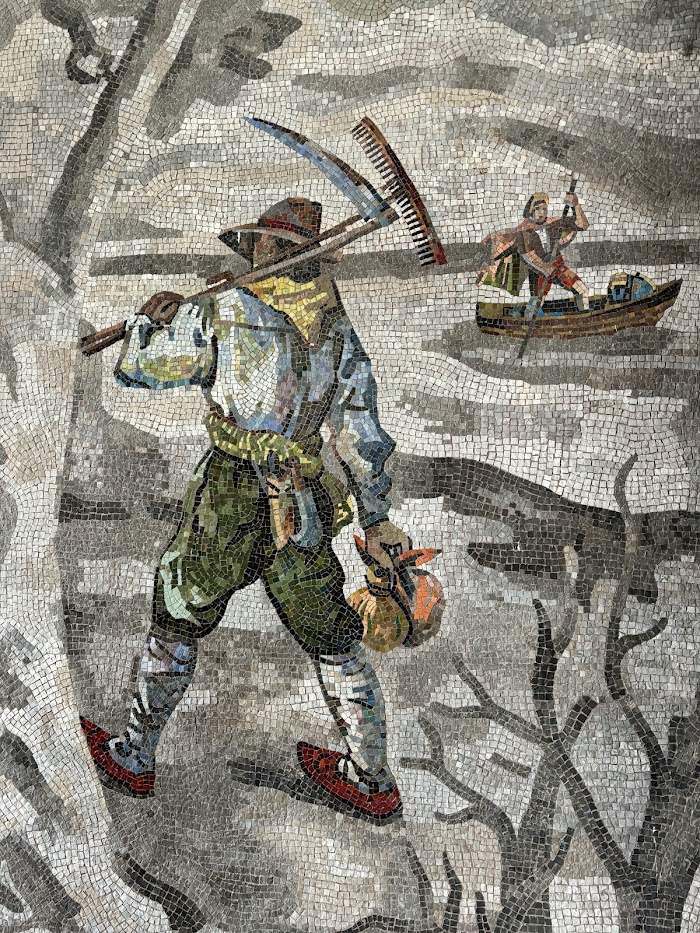
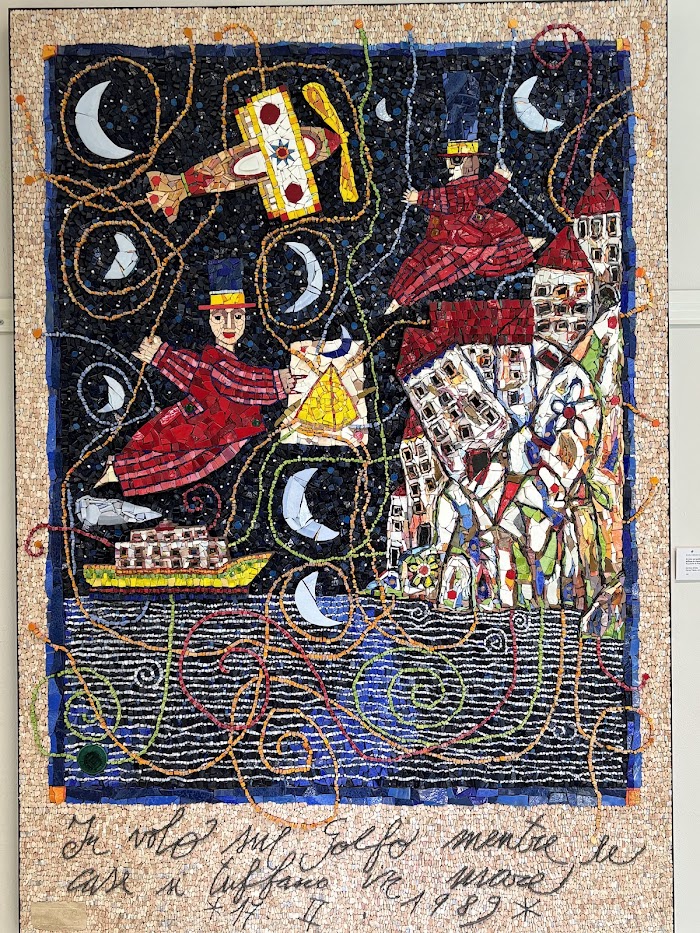
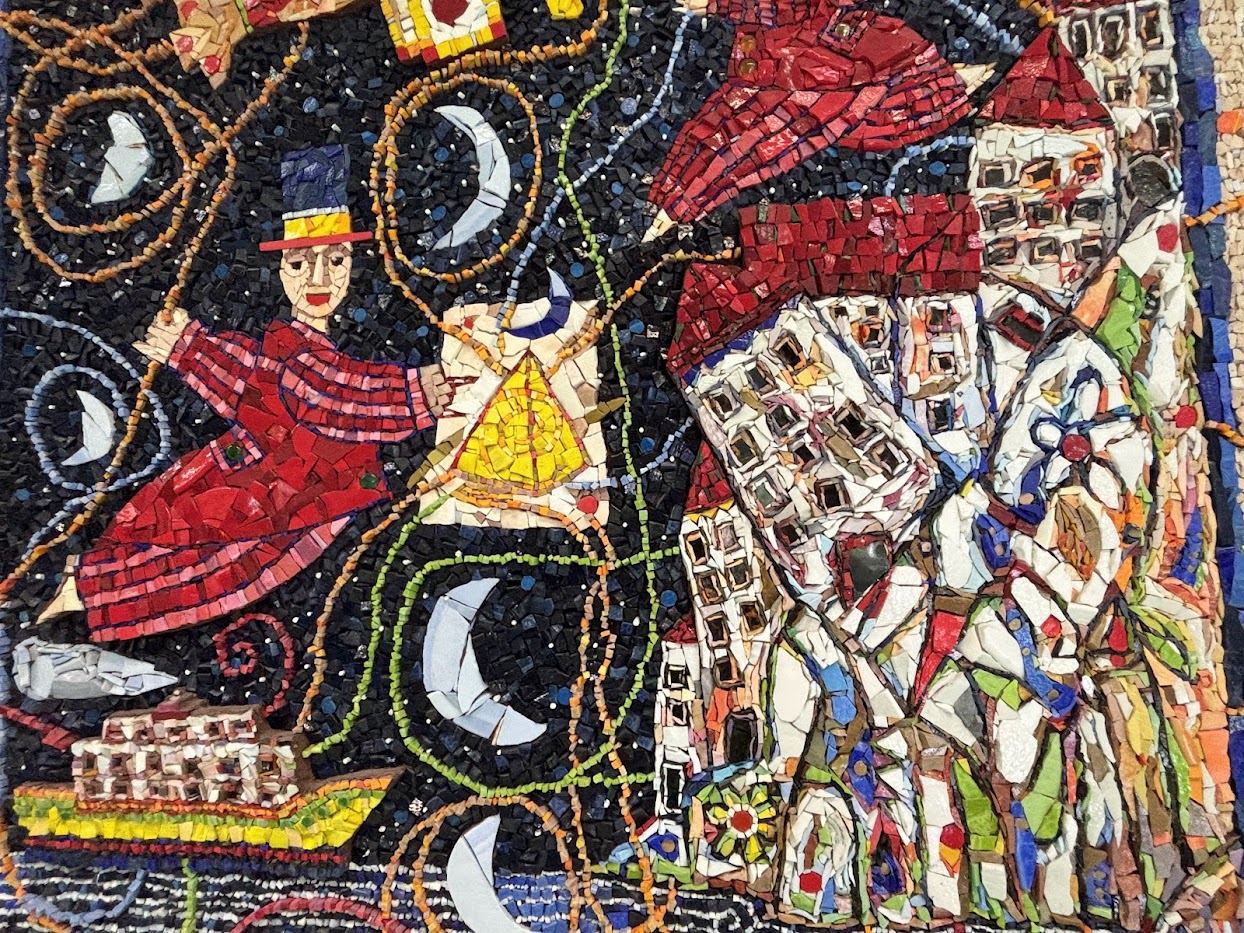
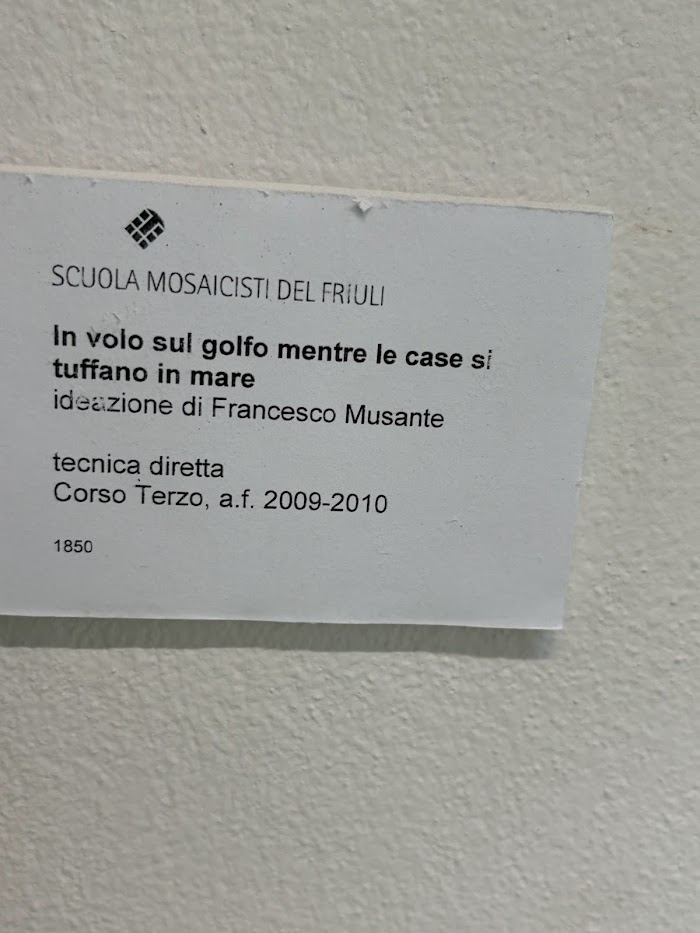
Wandering through the corridors and classrooms of Spilimbergo is a feast for the eyes, there are colours and panoramas everywhere. The map of ‘Old Spilimbergo’ is a personal favourite for me as a Geographer. It’s worth looking carefully at the hundreds and thousands of tiny tesserae that have been positioned in that mosaic to create that fantastic and highly readable picture of the medieval town. I also like the character heading off to work, scythe and rake over his shoulder, picnic lunch in his right hand. Then below the ‘worker’ there are two colourful and rich Marc Chagall style mosaics. These are the work of Francesco Musante, who worked at Spilimbergo as a teacher from 2009-10. Musante is a successful artist – he lives and works near Genova. In these mosaics an artist and/or designer creates the image, then the mosaicists transform the image into a mosaic. This is time consuming and painstaking work.
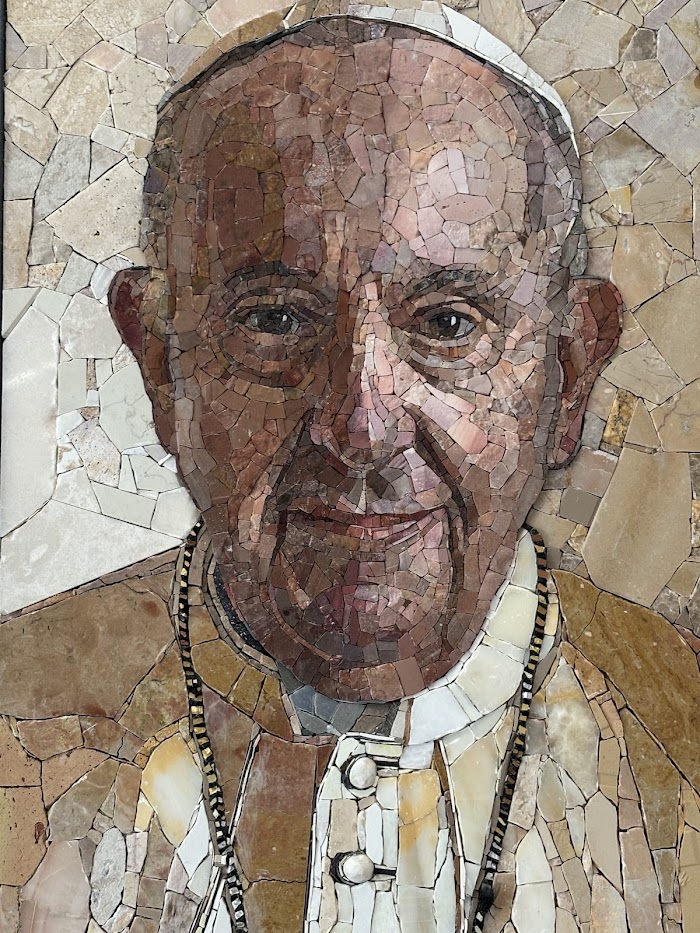
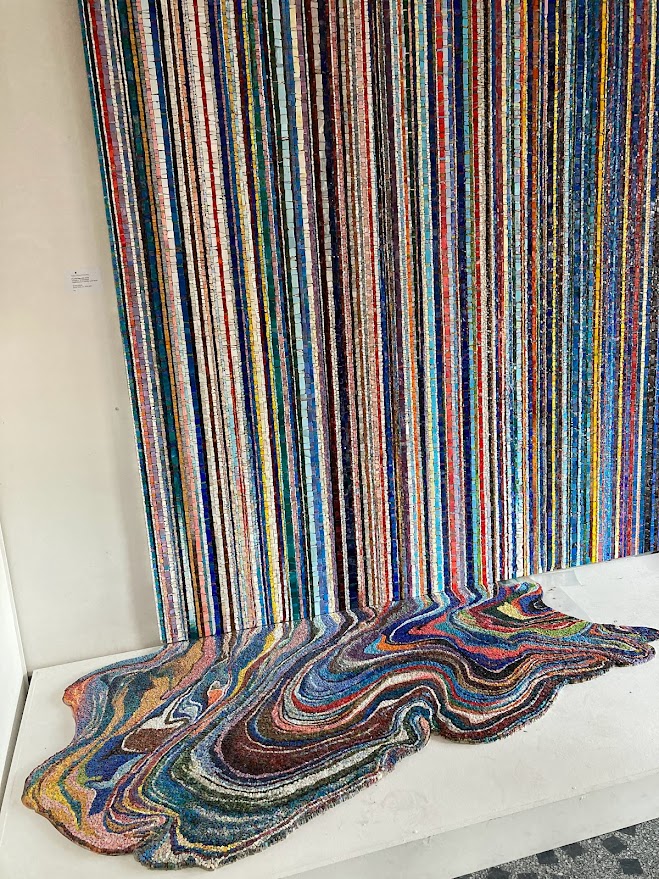
The last two mosaics I’ve chosen are the beautiful rendition of Papa Francesco (Pope Francis) which I adore. For me it captures perfectly the kindness and humility of this gentle and compassionate man. Lastly there’s the modern mosaic (above right) depicting the dripping colour palette of a Missoni fabric. I’ve got to remind myself that this is a mosaic and not actually a curtain of dripping paint. Again I have to remember that these images are created out of hundreds of tesserae.
The impact of the Spilimbergo mosaic school is felt far and wide. On graduation students from Spilimbergo can find themselves working in Australia, America, all over Europe, Latin America and the Far East. Mosaics created by Spilimbergo craftsmen and women can be found in The Library of Congress in Washington DC and Paris Opera House. Not all graduates disappear overseas. Alessandra di Gennaro, from Rome and her husband and business partner Romuald Mesdagh, from Belgium graduated from Spilimbergo, both as Master Mosaicists. They have set up a mosaic business in Venice called Artefact. They offer mosaic-making classes and they accept commissions. Alessandra is a passionate and creative artist. If you are thinking of a mosaic class in Venice I’d strongly recommend Artefact.
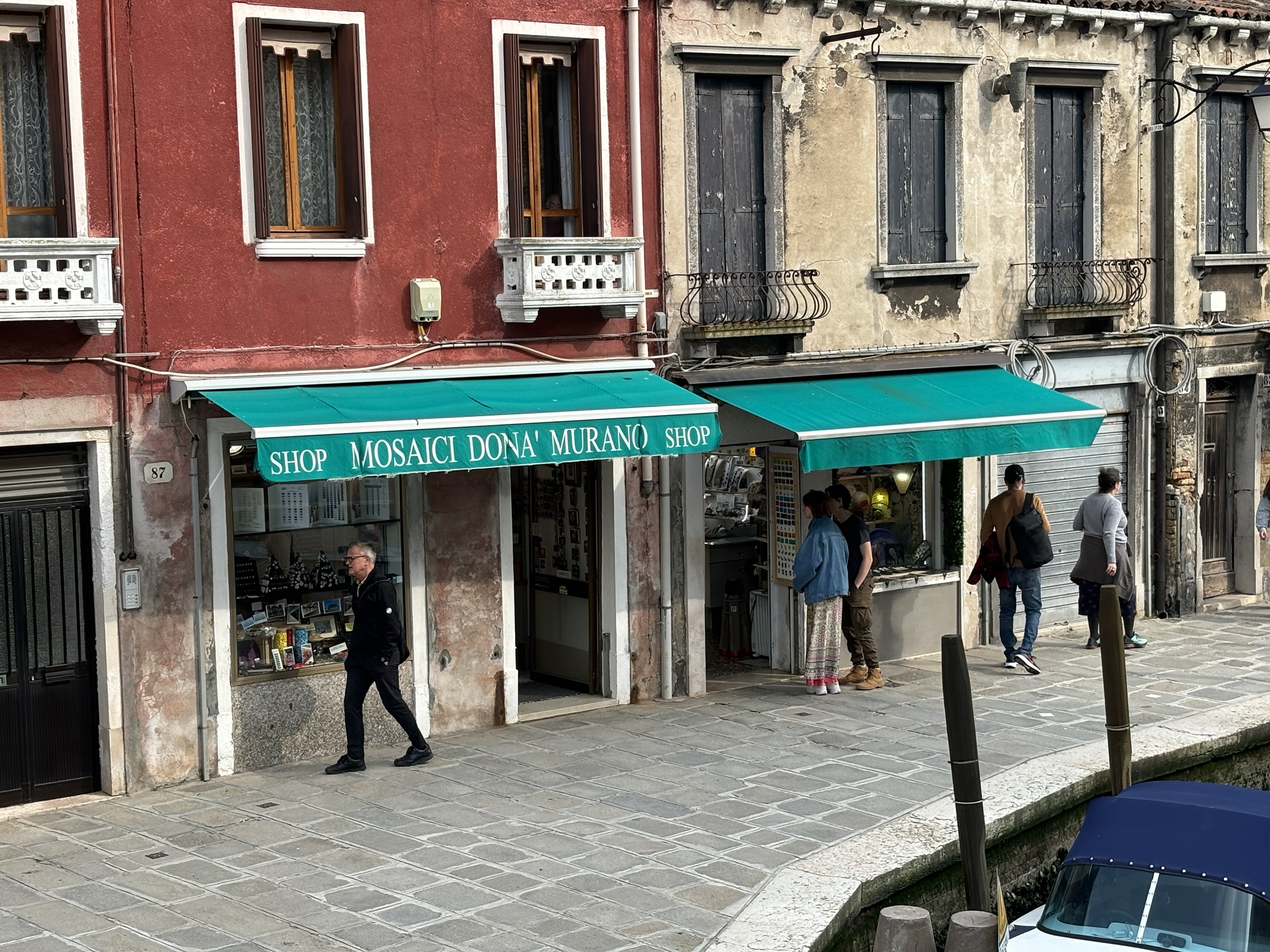
Lastly I’d suggest a visit to a small shop on Murano called ‘Mosaici Dona’ Murano’. This shops is filled with tesserae and smalti to buy. Every colour, every quantity. They do mail order too. The team at Dona’ Murano make the smalti in their workshop on Murano and then sell them from their shop – prices are reasonable and the people are very nice.
The decision to open a mosaic school in Spilimbergo in 1922 has had long lasting and very positive consequences. Mosaic skills and talents have been recognised, nurtured and developed. The school has built on an incredible historic foundation stretching back to Roman mosaic makers of the 4th Century AD, spanning the centuries to the present day. The mosaic heritage of Italy just in this north-eastern part of the peninsula encompasses Aquileia, Murano, Torcello, St Mark’s Basilica in Venice, and a little further afield Trieste and the mosaics of San Giusto and of course Ravenna and the exceptional Byzantine mosaics of Sant’Apollinare Nuovo, Sant’Apollinare in Classe and San Vitale.
To be offered the opportunity to walk through the halls, corridors and classrooms of Spilimbergo is a privilege and an honour. To observe the next generation of craftsmen and women at work is truly humbling. So next time you are in Italy, I strongly recommend a bus or a hire car up to Spilimbergo, you won’t regret it. For the really hands on experience why not sign up for a week of lessons. Who knows, it might change your life.
Notes:
- Exciting news! Our sister company www.grand-tourist.com is offering a special mosaic-making and mosaic study journey in 2026. We are thinking we’ll operate the tour in May and September, 2026 – here is the outline programme: Mosaic making and discovery, Venice, Aquileia, Spilimbergo
- Artefact, Venezia – is the mosaic studio of Alessandra di Gennaro and Romuald Mesdagh. It is my favourite mosaic workshop in Venice. Alessandra is just a delight. She’s a mosaic ‘maestro’ quite literally. Artefact web site – www.artefactmosaic.com
- The tesserae and/or smalti shop on Murano that I love is: www.mosaicidonamurano.com/
- I’ve written quite a few articles about mosaics in Italy – I’d suggest the following:
- Murano – mosaics and arches in the lagoon….
- Torcello – a detailed look at the ‘Last Judgement’ mosaic
- Sant’ Apollinare in Classe – my favourite 6th century mosaics
- Ravenna – mosaics from the east…
- A note on the author – Janet Simmonds is an Art Historian and a Geographer. A graduate of the University of Oxford, she has a special interest in Venice and the history of tourism – especially The Grand Tour. She works as a guest lecturer in Italy for university groups and private individuals. She also works in Oxford, London and throughout Italy. Blog: www.educated-traveller.com
- She offers specialist travel services in Italy and Greece especially relating to art, history and culture. Her company is appropriately named Grand Tourist. www.grand-tourist.com
- Janet is a Venice expert, although the occasional Ferrari Tour in Tuscany or a petrol-head trip to Maranello sometimes slips into the programme.
- December, 2025
- January 2026
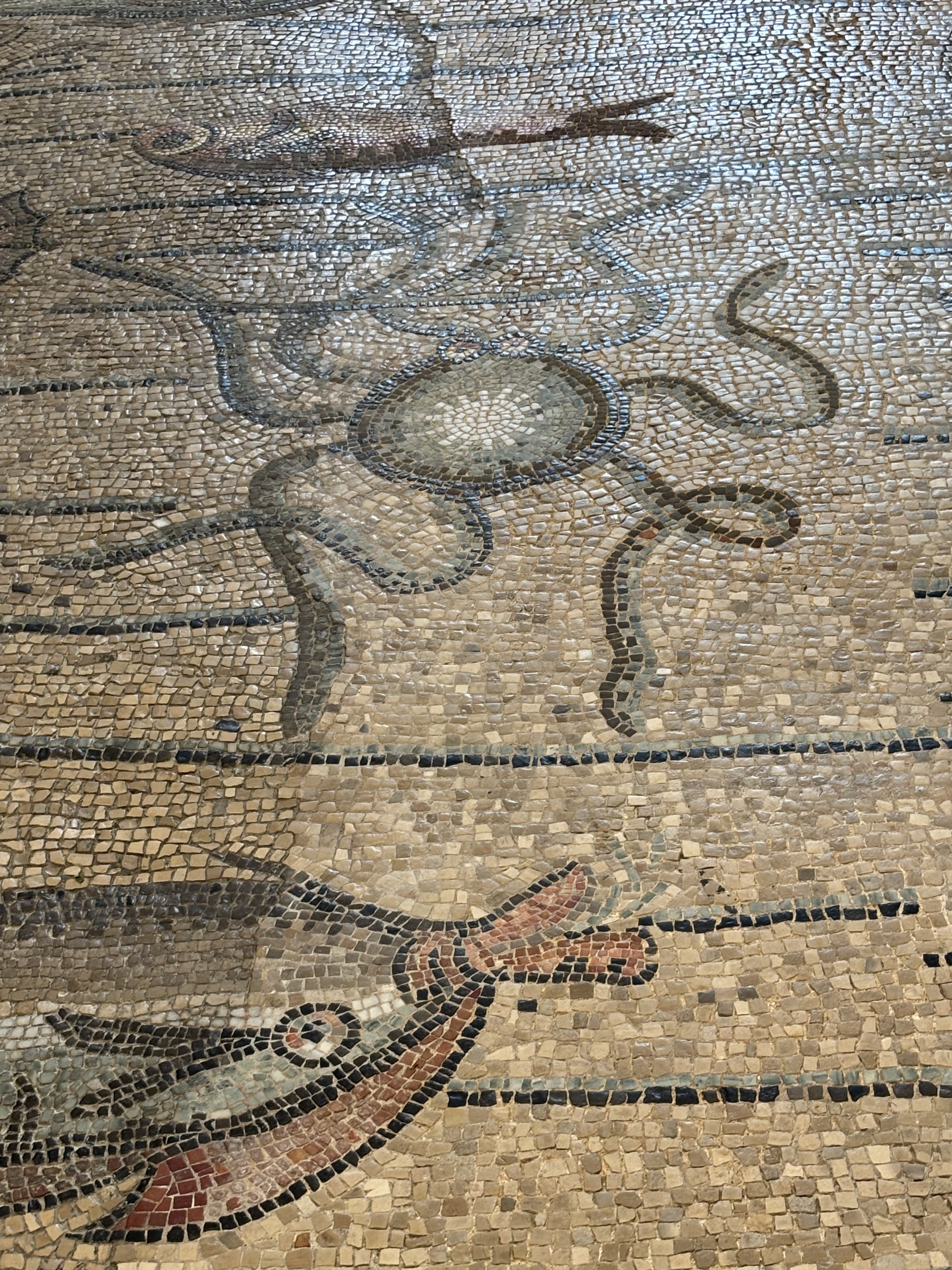
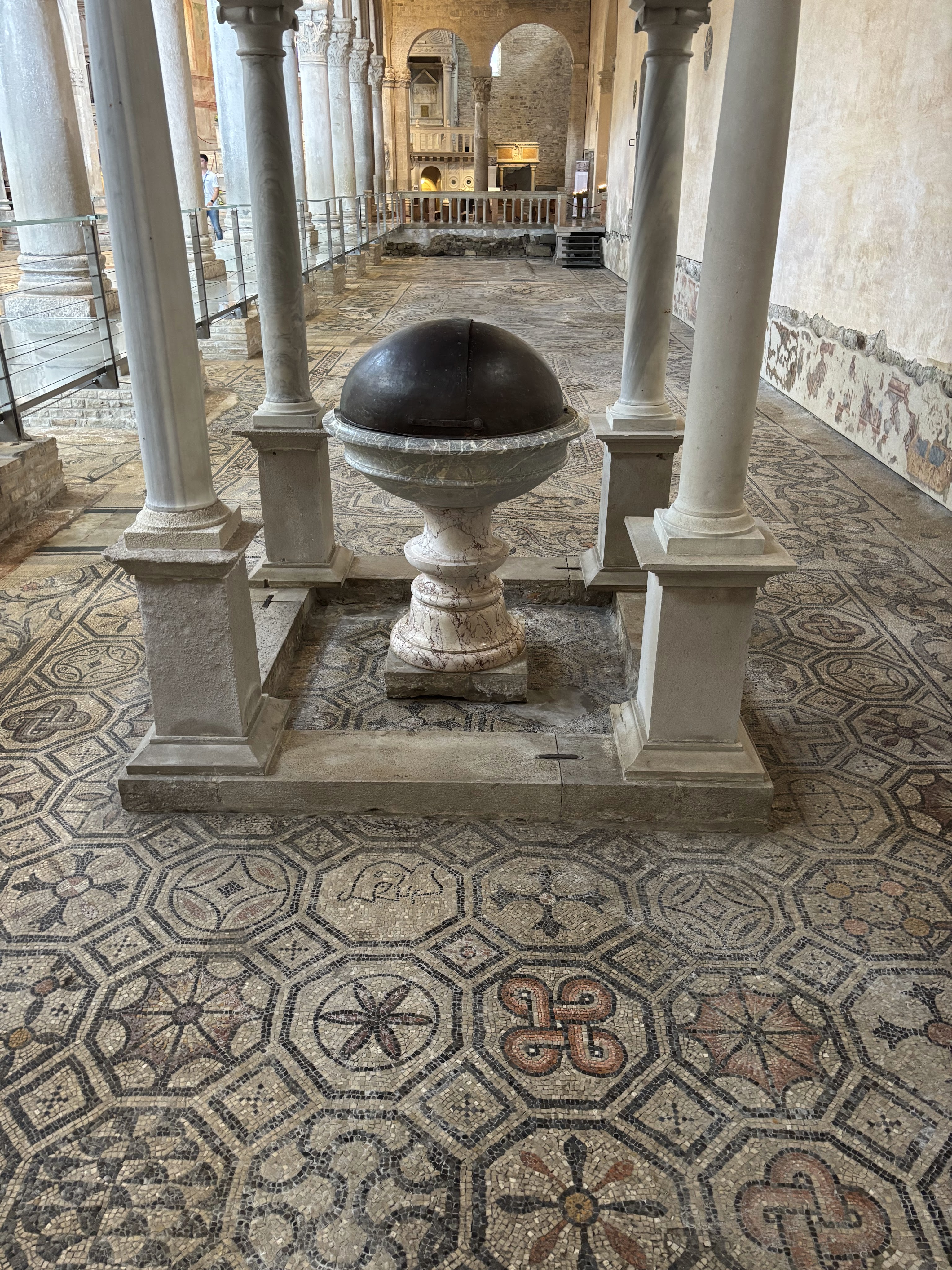
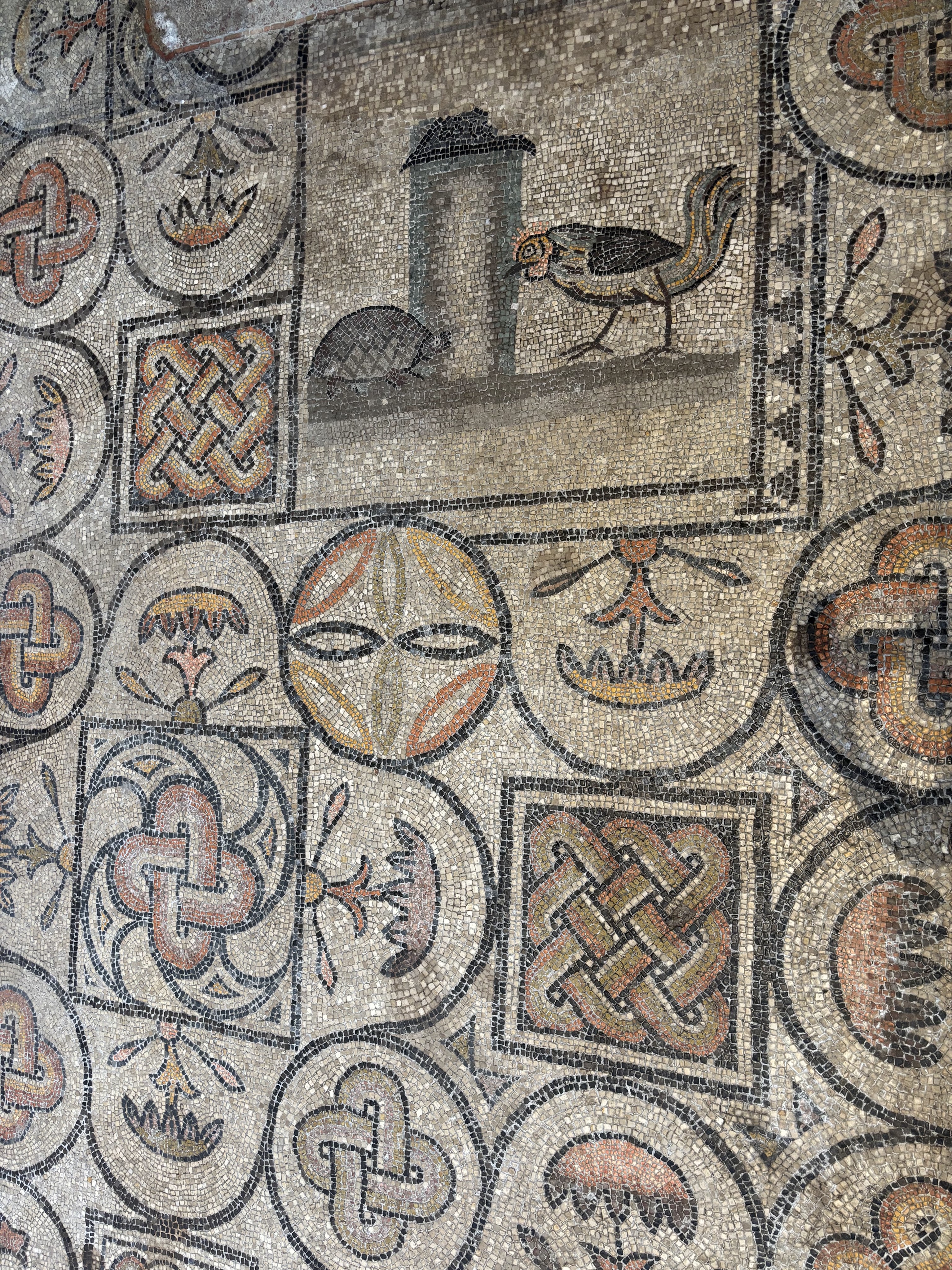
Aquileia – medieval basilica with exceptional Roman mosaic floor inside. Dating from around 350 AD – note the detail of the tesserae and the complexity of the images.

 The Educated Traveller
Fascinating as always. The map of Spilimbergo is wonderful – it reminds me of the map of Jerusalem in Madaba, Jordan. One of my favourite art media.
LikeLiked by 1 person
Ann. Very interesting piece about Mosaic School, near Venice. John.
LikeLiked by 1 person