Imagine a large park, surrounded by a very solid wall, and inside the wall there’s an archaeological site dotted with trees and flowering shrubs, grassy slopes and dappled shade. This magical garden is called Paestum. It’s a place where three Greek temples rise from lush green meadows, standing tall and solid as they have done for around 2500 years. These huge structures look very similar to the Parthenon in Athens except that they are older and better preserved.
PAESTUM – A visit to the archaeological site at Paestum is always an absolute treat. It is rarely crowded and visitors can wander freely in and around the temples. The site offers curious travellers the best preserved Greek temples in Southern Italy. On a warm, sunny day in October with the sea breeze cooling our faces, a morning exploring the extensive ruins at Paestum was a complete joy. The three enormous Greek temples dominate the area, but there’s far more to see besides.

Early visitors to Paestum thought the temples towering above them were Roman. These visitors were the ‘Grand Tourists’ usually arriving from Rome or Naples, often fresh from touring the Colosseum or the Roman Forum. They knew a little bit about Roman architecture and often arrived with an expert local guide known as a ‘cicerone’. It never occurred to these pioneering visitors that the temples before their eyes were Greek and that the footprint of ‘Magna Grecia’ extended into Southern Italy.
It was in the late 1750s that antiquarians and intellectuals arriving in Paestum began to look closely at the temples and to realise that they didn’t look very Roman. In 1758 Johann Joachim Winckelmann, an art historian and archaeologist visited the temples of Paestum. He claimed to be the first German to arrive at the site “come primo tedesco” in his own words. He noticed that the temples and their columns did not conform to the construction patterns he had seen in Rome, nor did they confirm to the style of Vitruvius, the Roman architect who was the acknowledged expert of Roman architecture. Vitruvius lived in the first century BCE. He was the author of ‘De Architectura’ which was the seminal guide used by early travellers to help them understand and interpret ancient remains in Italy and Greece.
Winckelmann observed that the columns of the temples at Paestum were of the Doric order. Doric columns are the simplest and most massive of the Greek classical orders, they are sturdy and plain, with little decoration. They give an impression of strength and solidity. The shaft of the column is often slightly swollen in the middle, this thickening was a peculiarly Greek feature, known as ‘entasis‘. All these Doric features could be clearly seen in the temple columns of Paestum. Winckelmann concluded that the temples of Paestum were in fact Greek, which was a significant and exciting discovery that he documented in his 1762 publication ‘Observations on the Architecture of the Ancients‘. At about the same time another ‘Grand Tourist’ James ‘Athenian’ Stewart from London, travelled to Athens and carefully documented many of the ancient buildings that he saw there. The news of the similarities between the temples at Paestum and the Parthenon in Athens spread quickly across Europe.
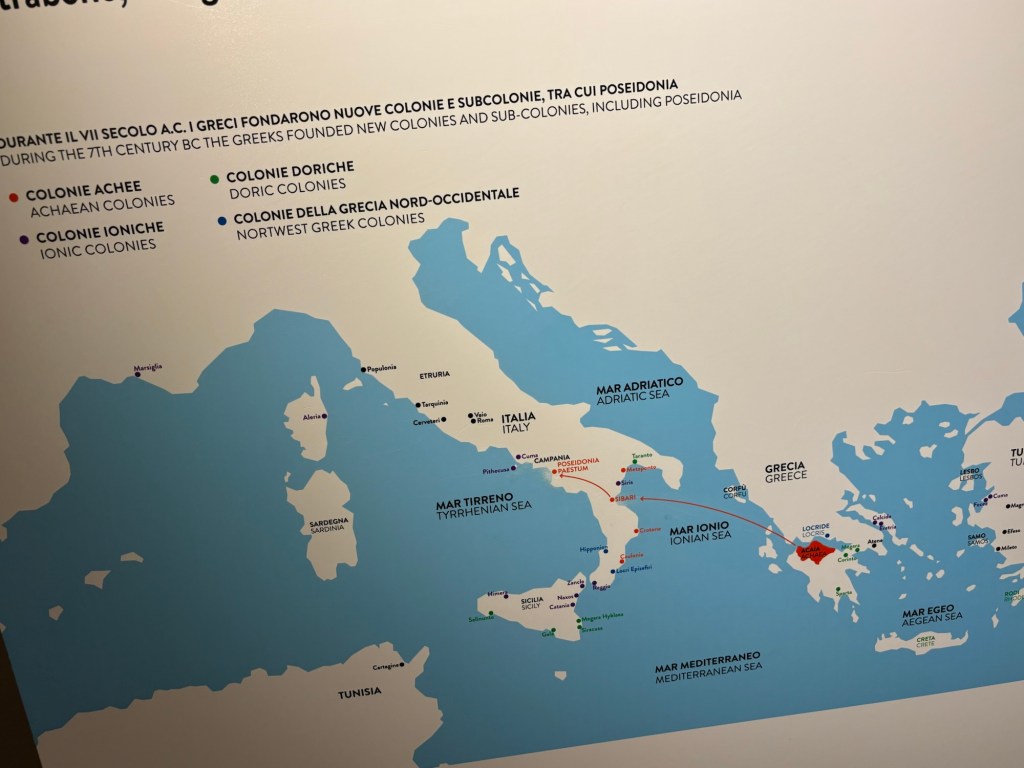
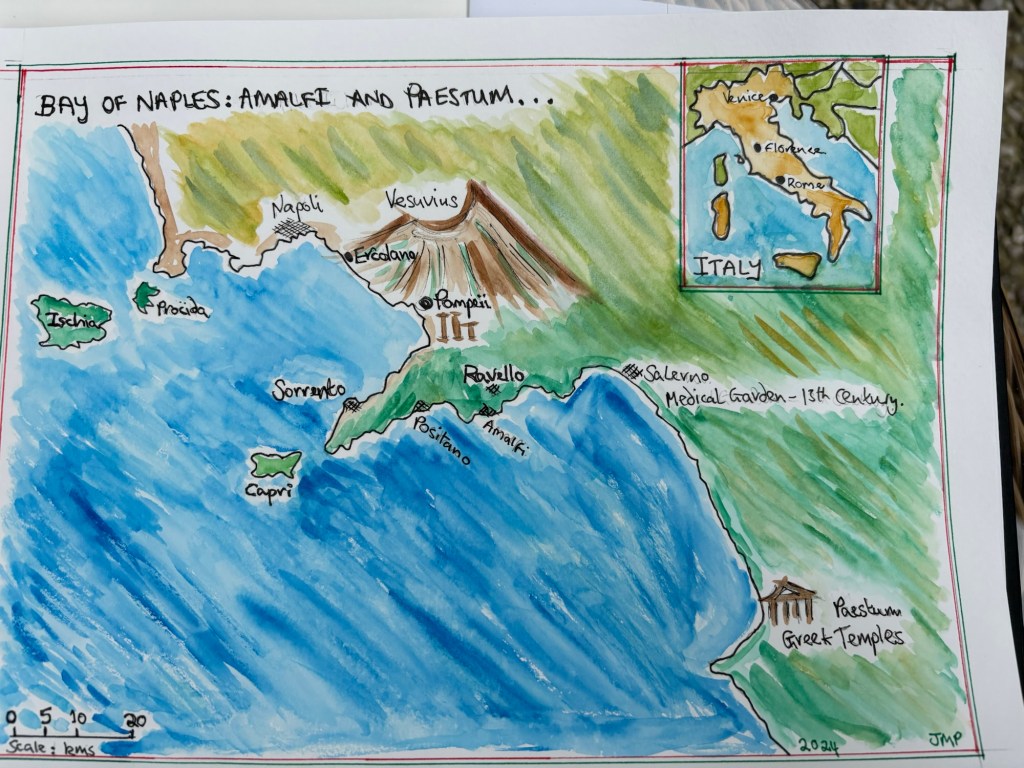
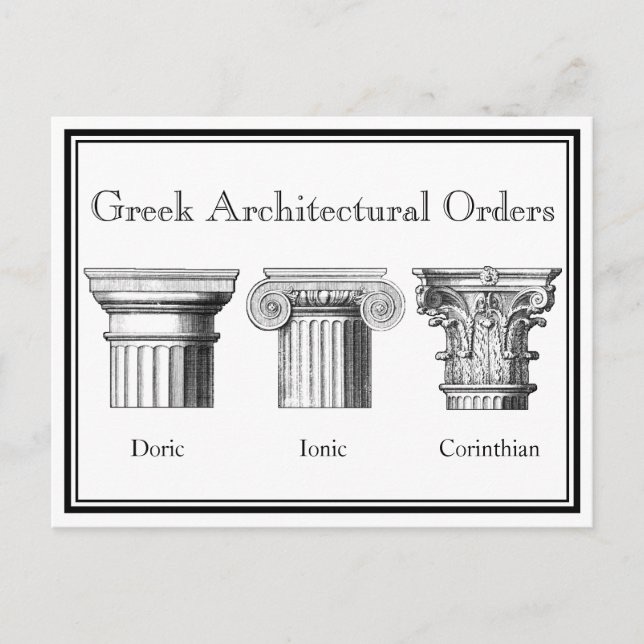
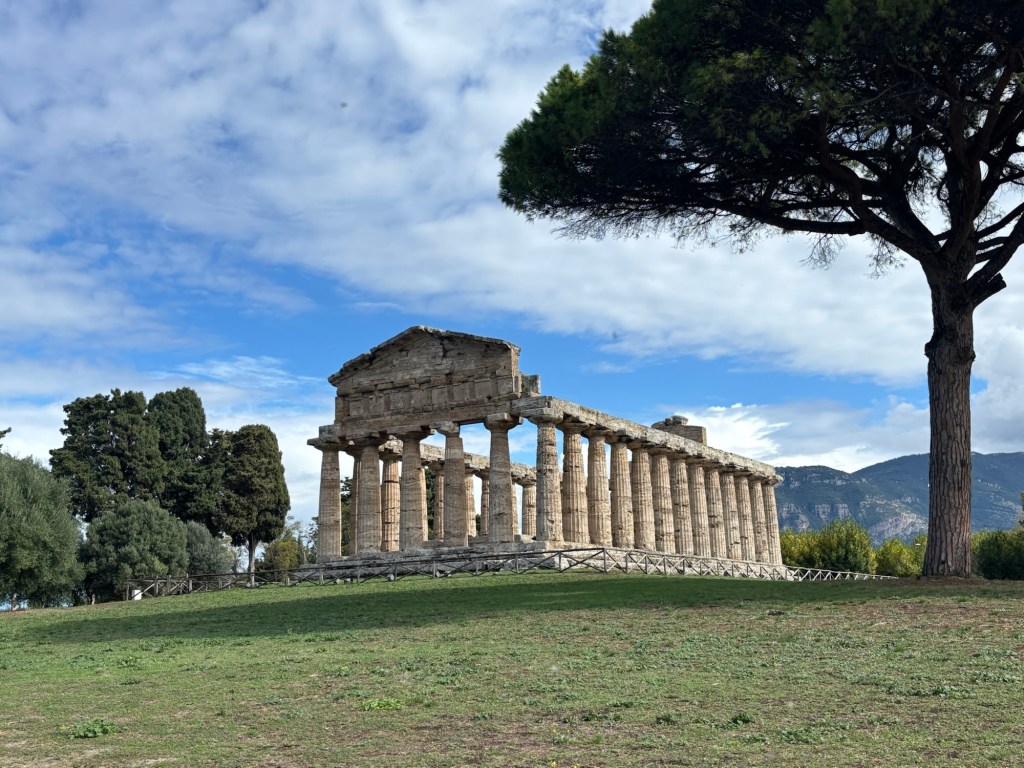
Colonies of Greece in S.Italy + Sicily. Sketch map – location of Paestum, Doric Columns & Temple of Athena.
So why were the Greek temples of Paestum so important, why did they matter?
Firstly the Paestum site gave 18th century visitors physical proof that Southern Italy and much of Sicily were colonies of ‘Magna Grecia’ the Empire of Greece, from around 600 BC to the middle of the 3rd century BC. The Paestum site was like the golden key unlocking the treasure chest. It enabled sharp-eyed visitors to understand the extent of ‘Magna Grecia’ as an important and large empire that extended from Athens west across the Mediterranean to Siracusa and Agrigento in Sicily and as far north as Naples (Neapolis) in Italy. Secondly, Paestum demonstrated that the Greek Empire preceded the Roman Empire and that the Romans adopted and adapted Greek styles and techniques in both architecture and construction. Thirdly, the Greek temples at Paestum gave historians the context to consider how the Romans had fused their own architectural styles with those of the Greeks to create new and innovative buildings and designs.
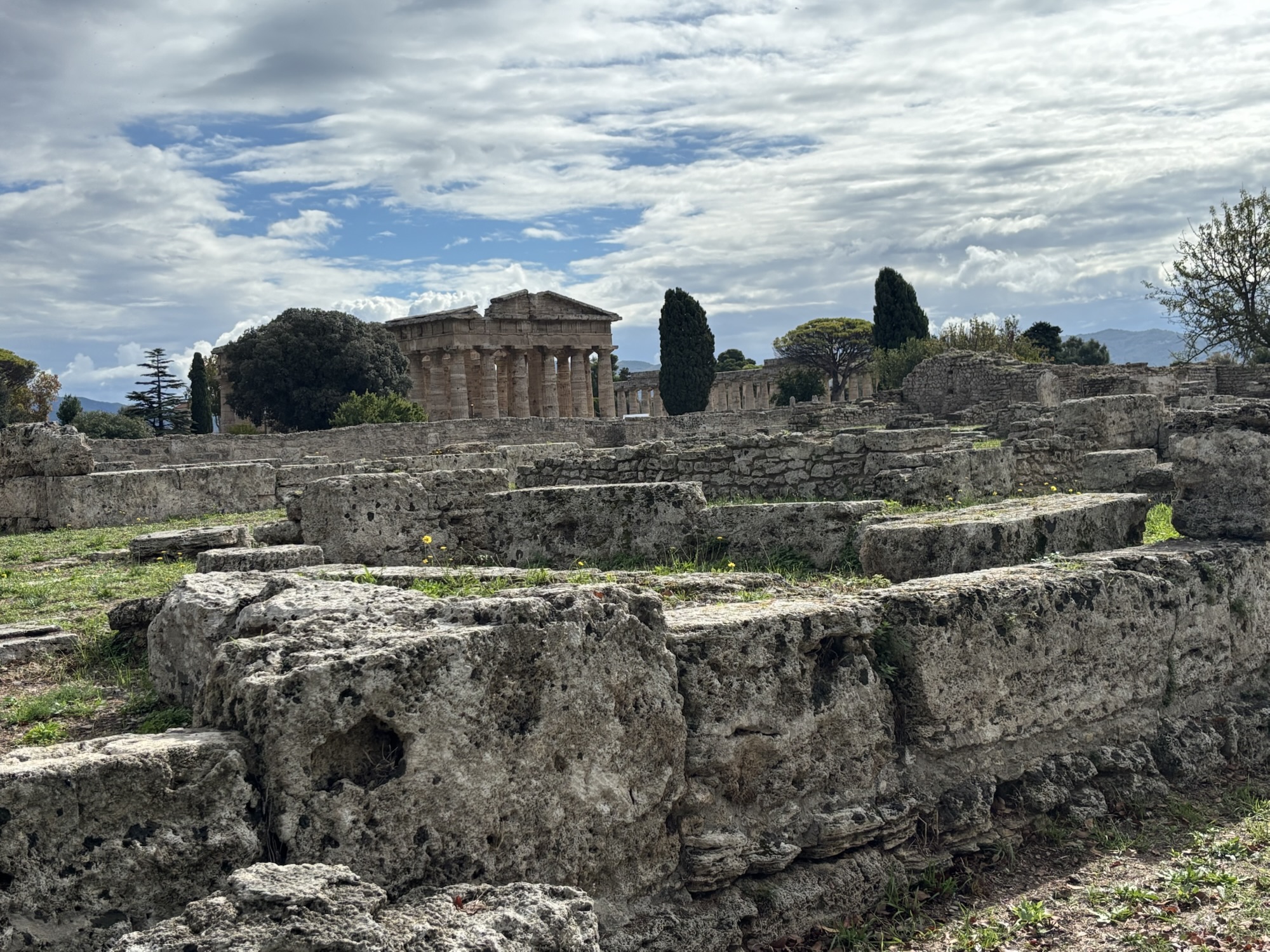
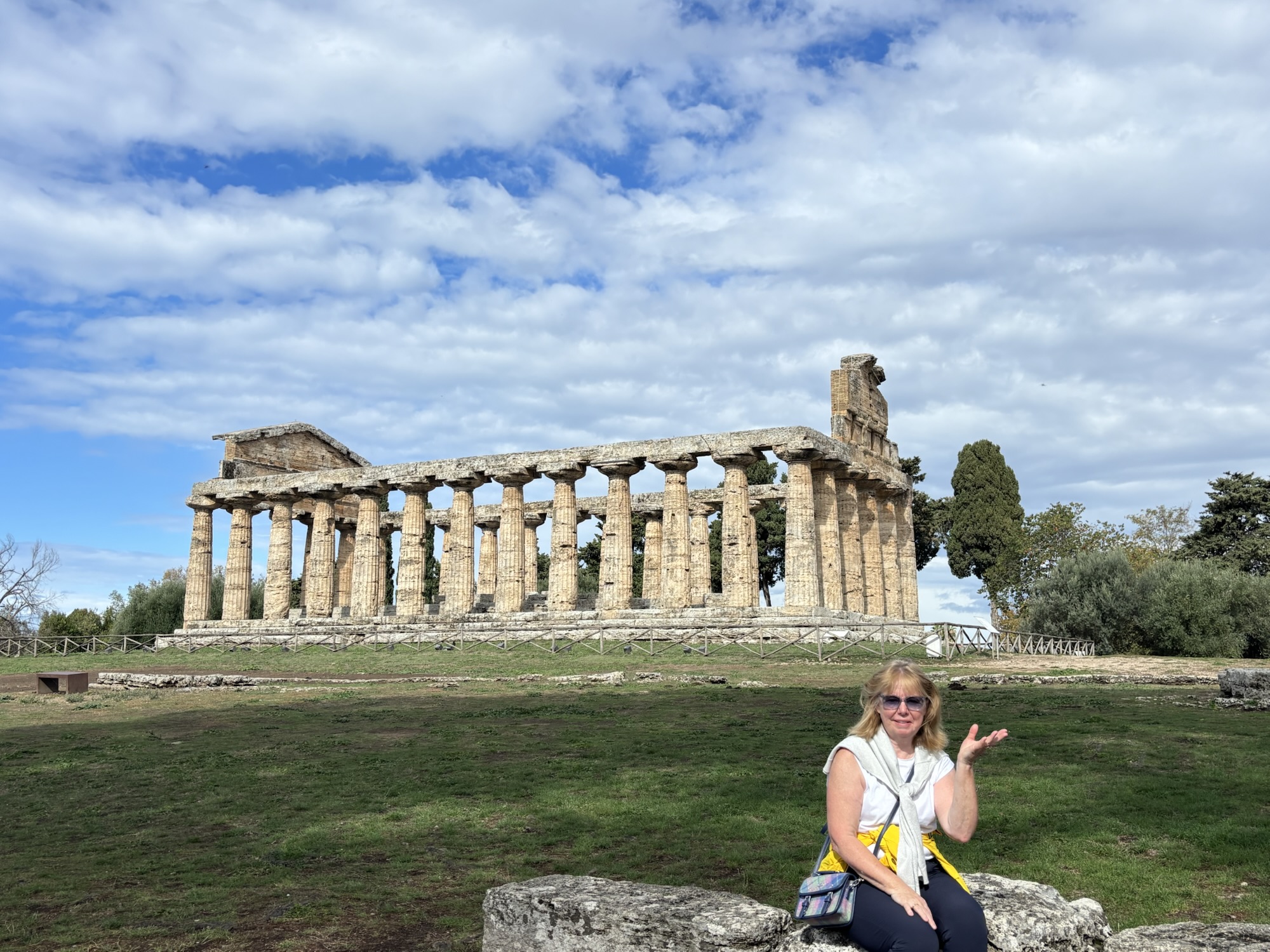
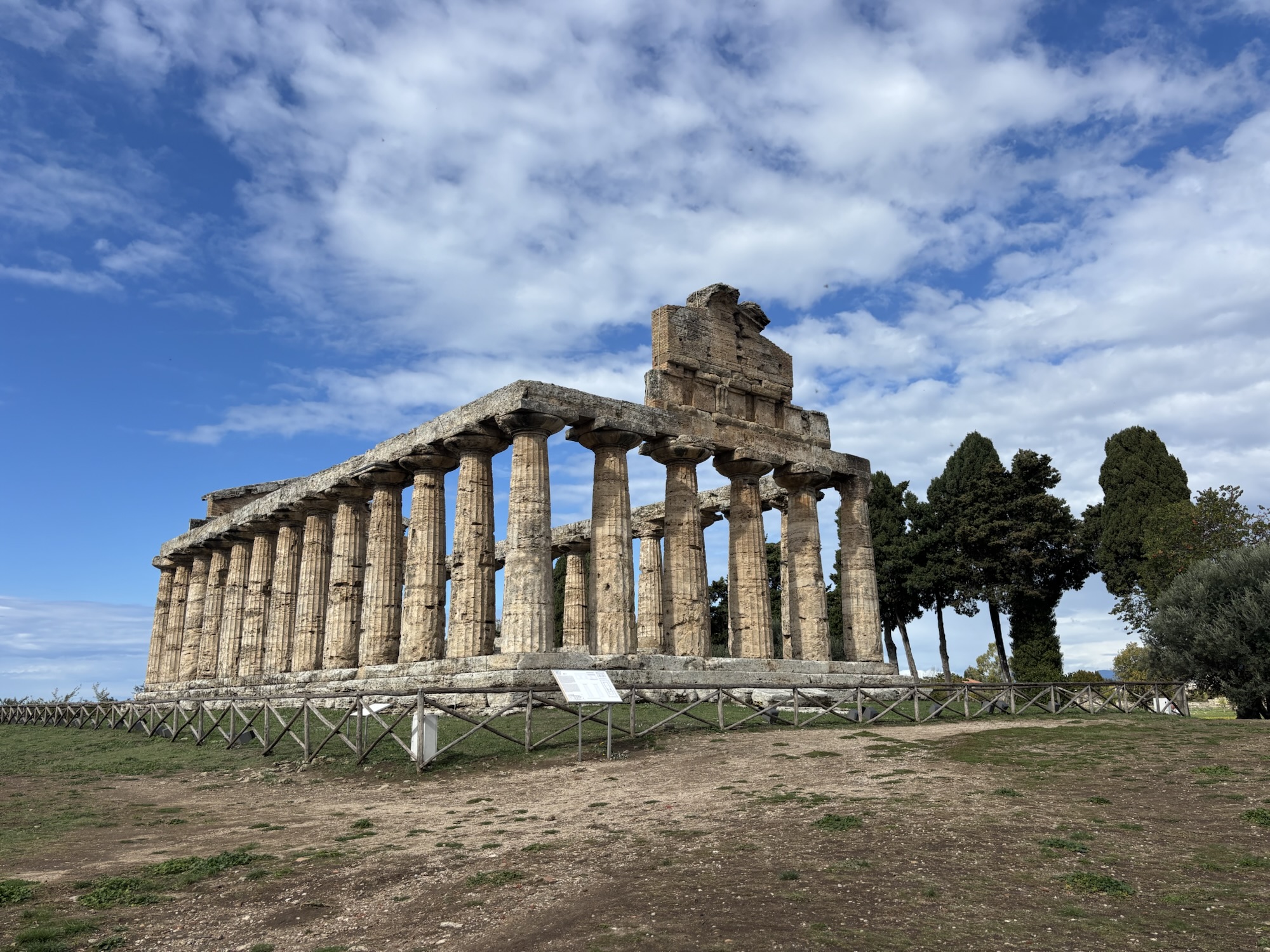
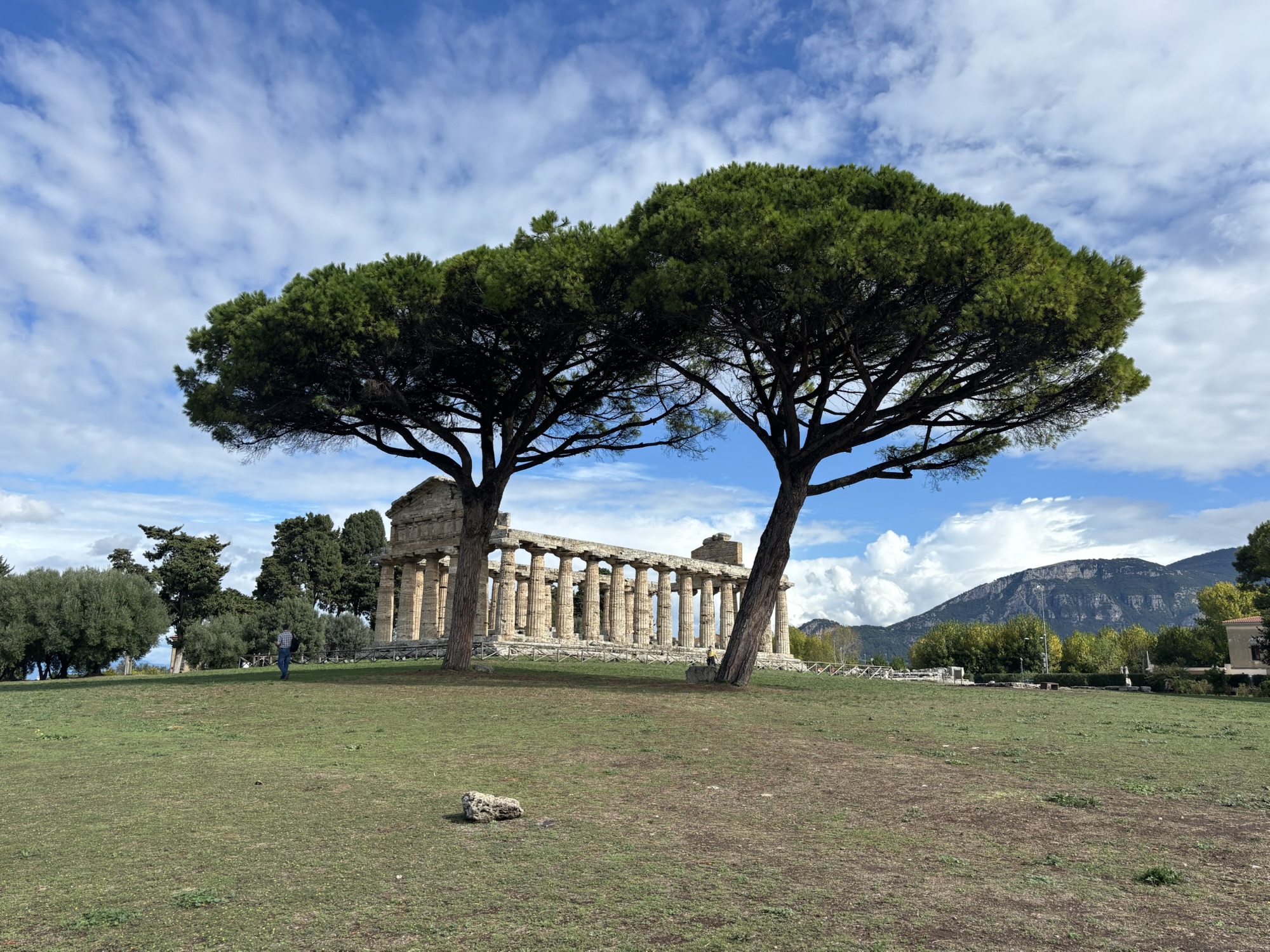
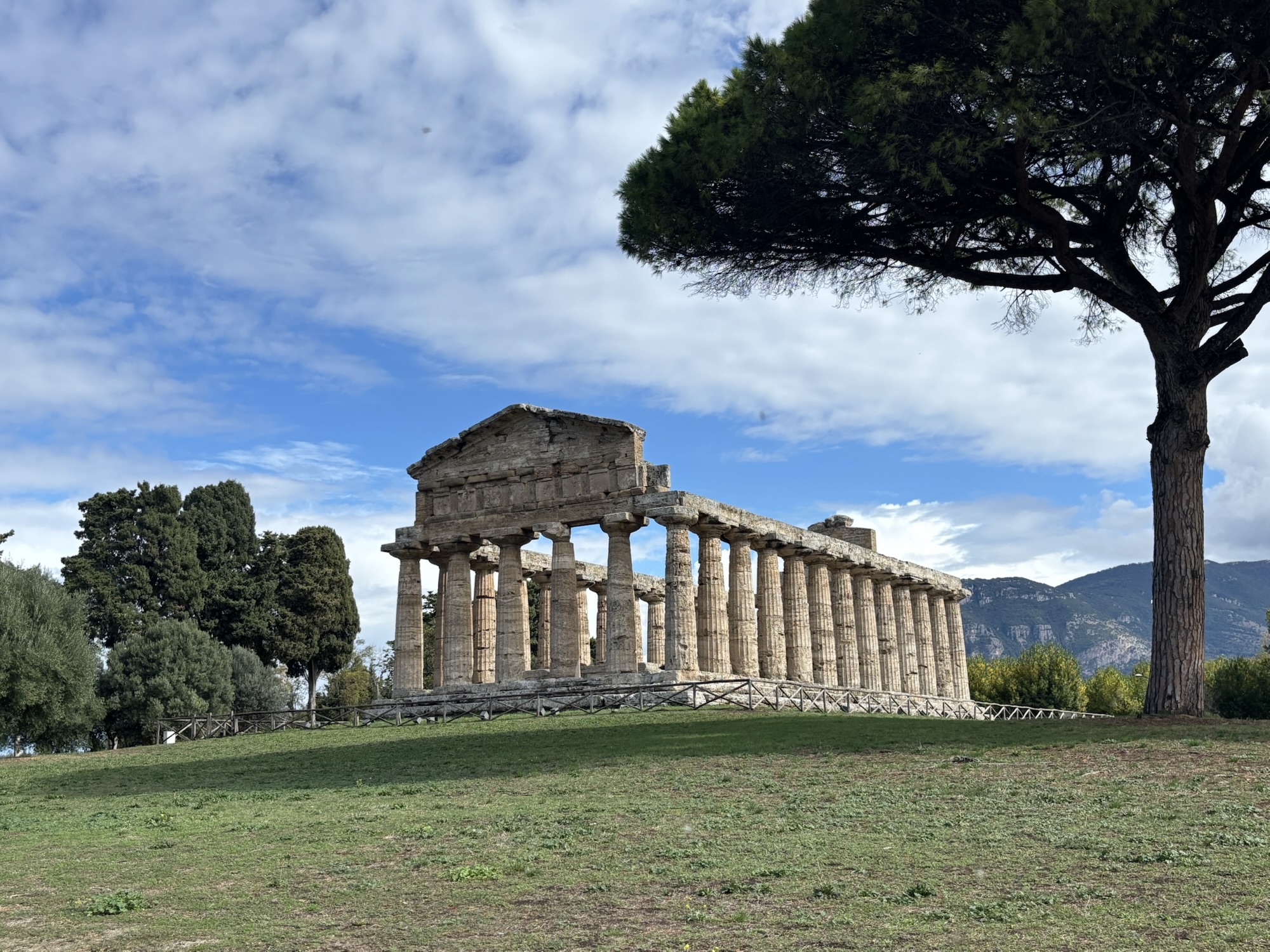
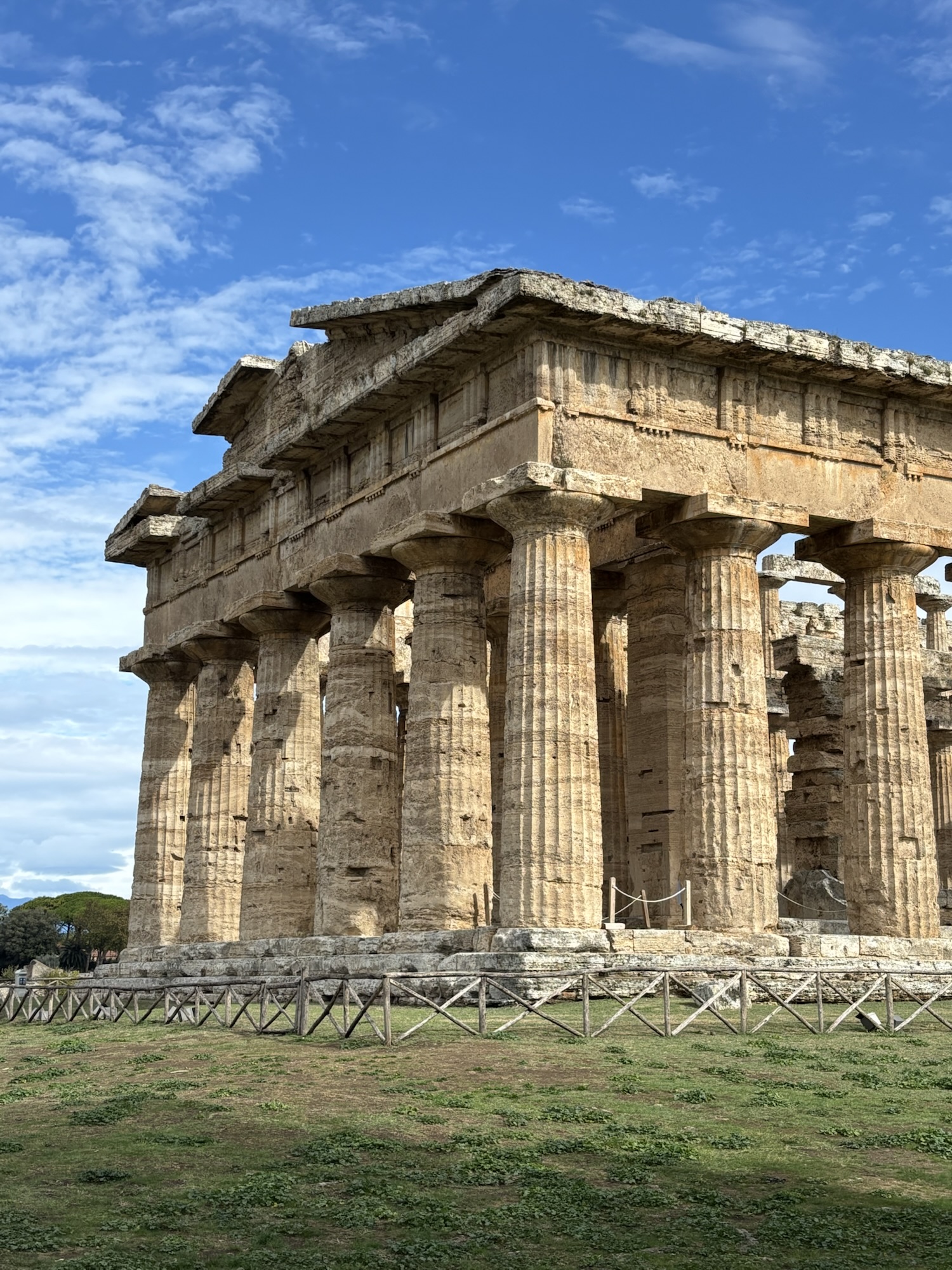
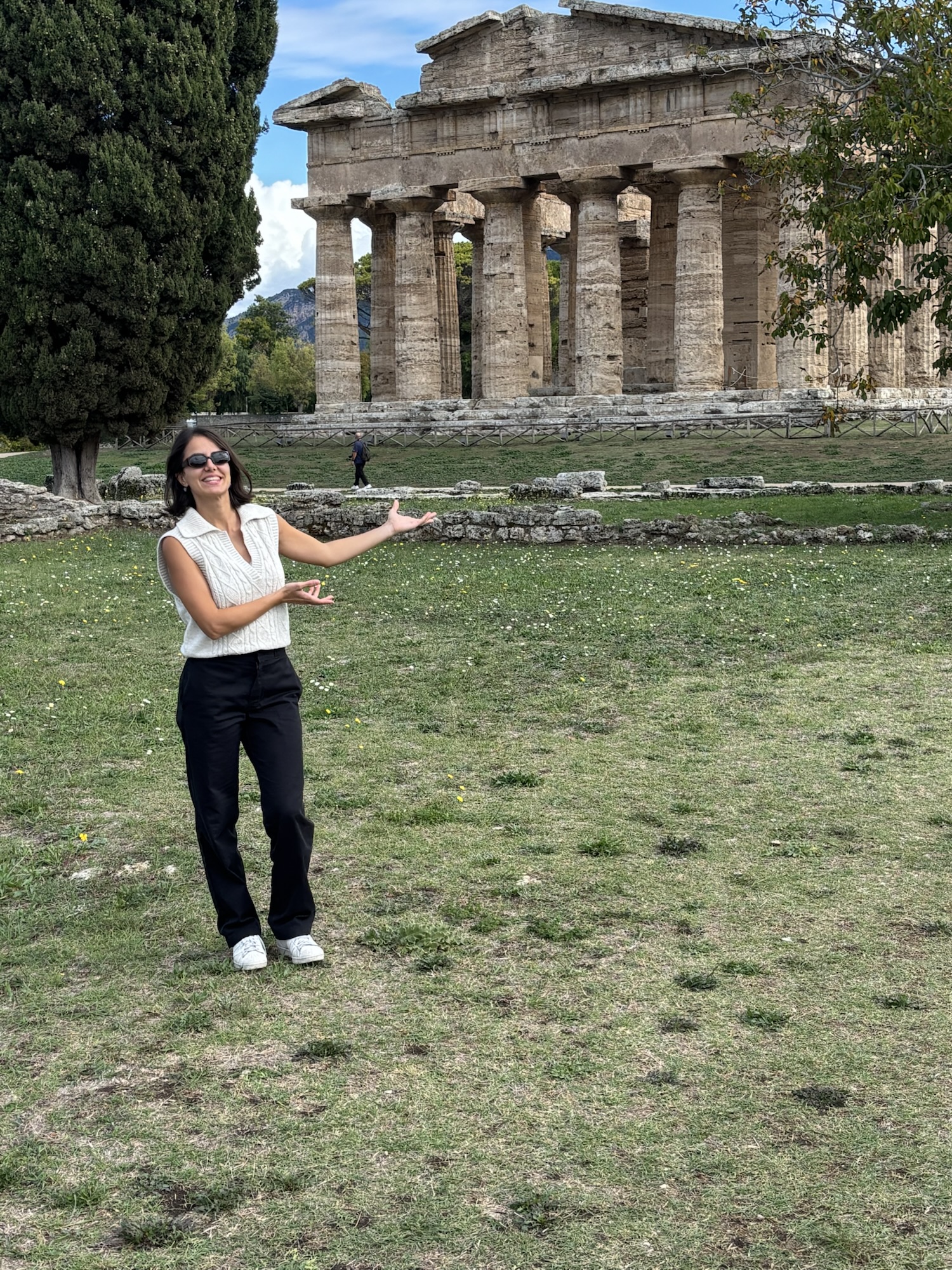
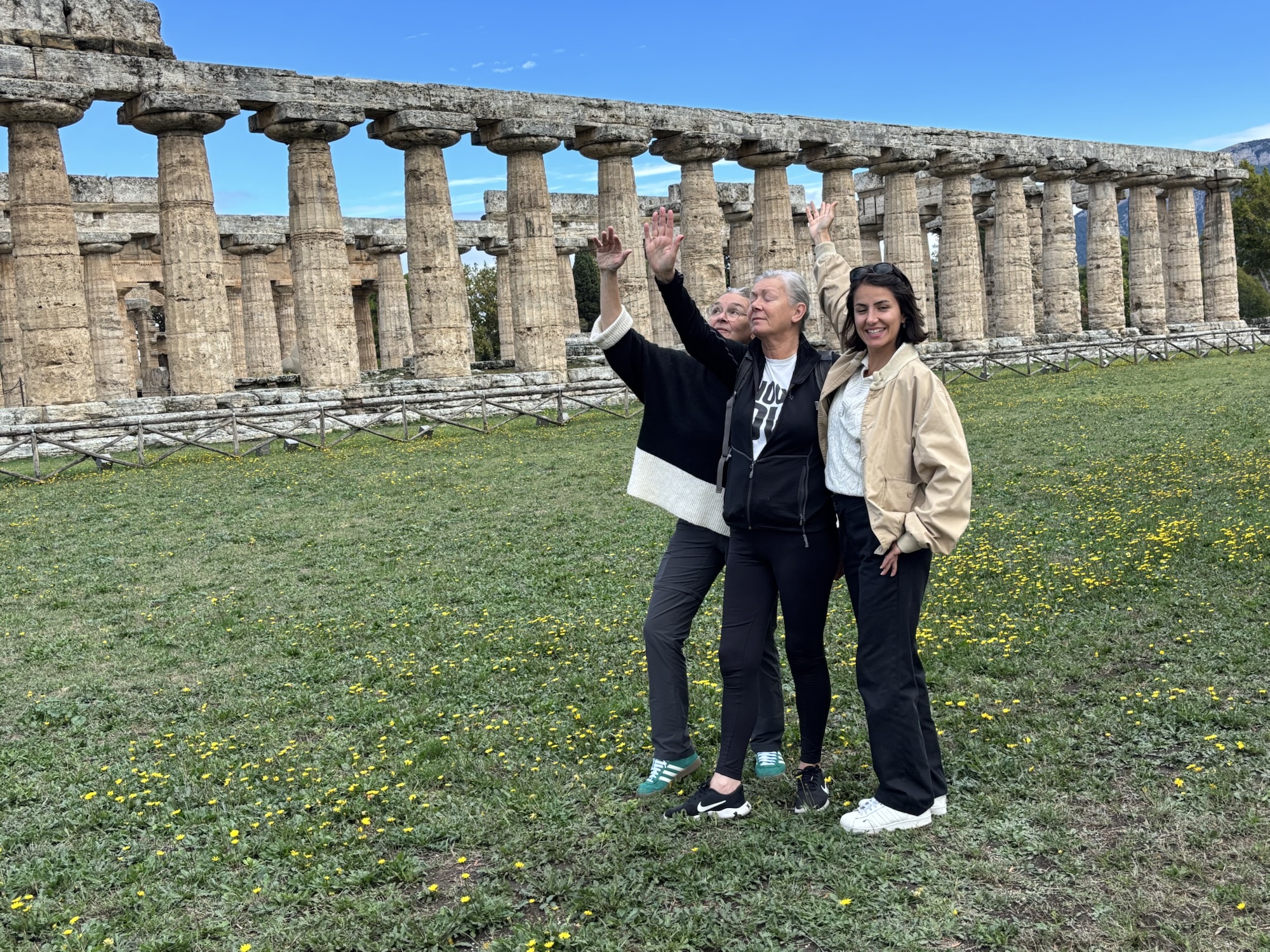
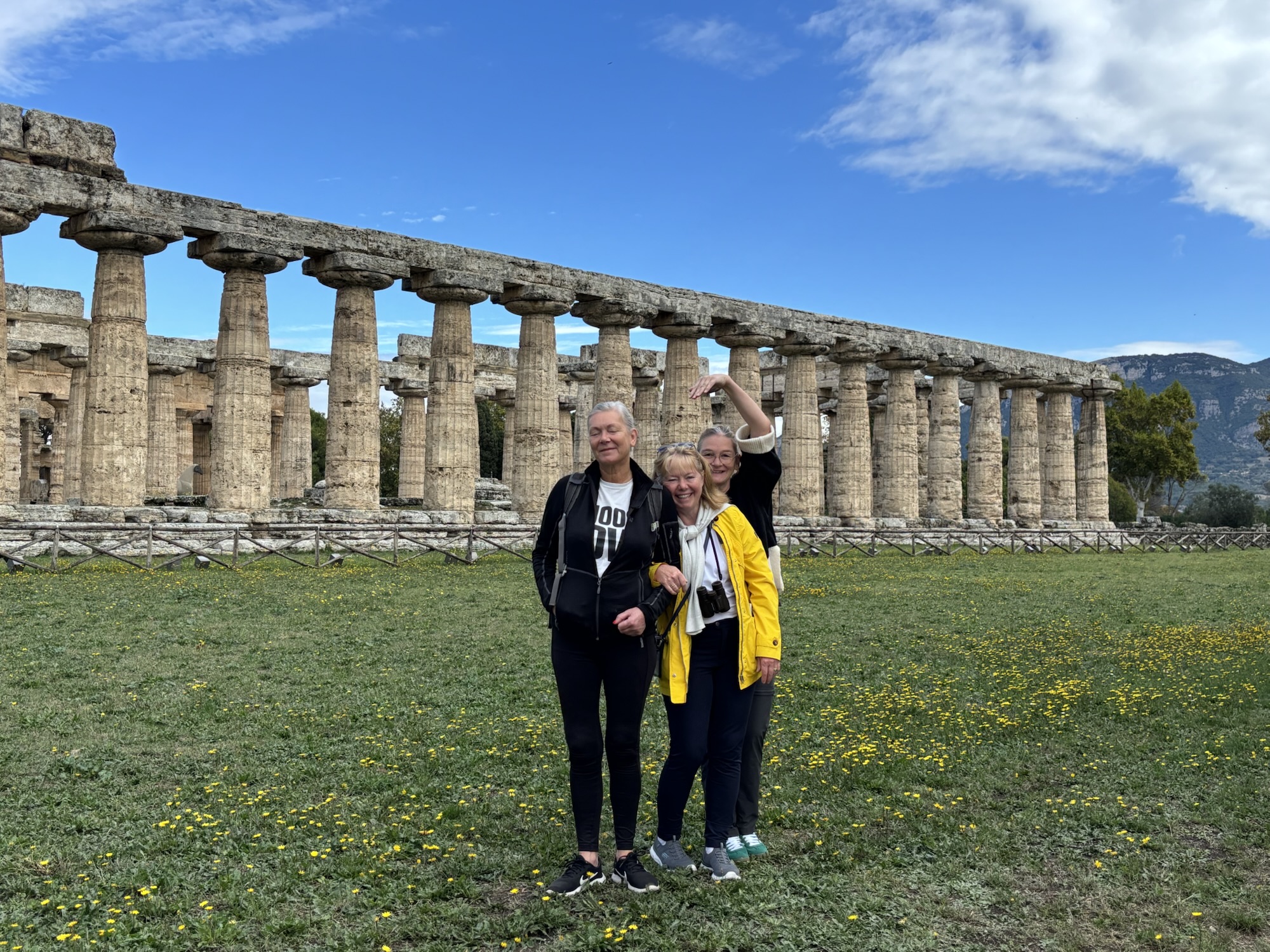
The three temples at Paestum are unique because they have remained standing for more than 2500 years.
A very brief biography of each temple:
1/ Temple of Hera built around 550 BCE by the Greek colonists of Poseidonia – it is the oldest surviving temple in Paestum and the one farthest south. It was referred to as ‘The Basilica’ by 18th century visitors who incorrectly assumed it was Roman. They didn’t realise it’s Greek origins.
2/ The second Temple of Hera was built around 460–450 BCE just north of the first Hera Temple. It was originally called the Nettuno Temple after Neptune (Roman god of the sea) and was a reference to the name of the Greek colony of Poseidonia and it’s protective god Poseidon. The Roman equivalent of Poseidon was Neptune.
3/ The “third temple” of Paestum is the Temple of Athena (also known as the Temple of Ceres). It was built around 500 BCE in the northern part of the archaeological site and is the smallest of the three main temples. We now know this temple was dedicated to Athena, the goddess of war and wisdom, statuettes of the goddess have been found in the temple precincts.
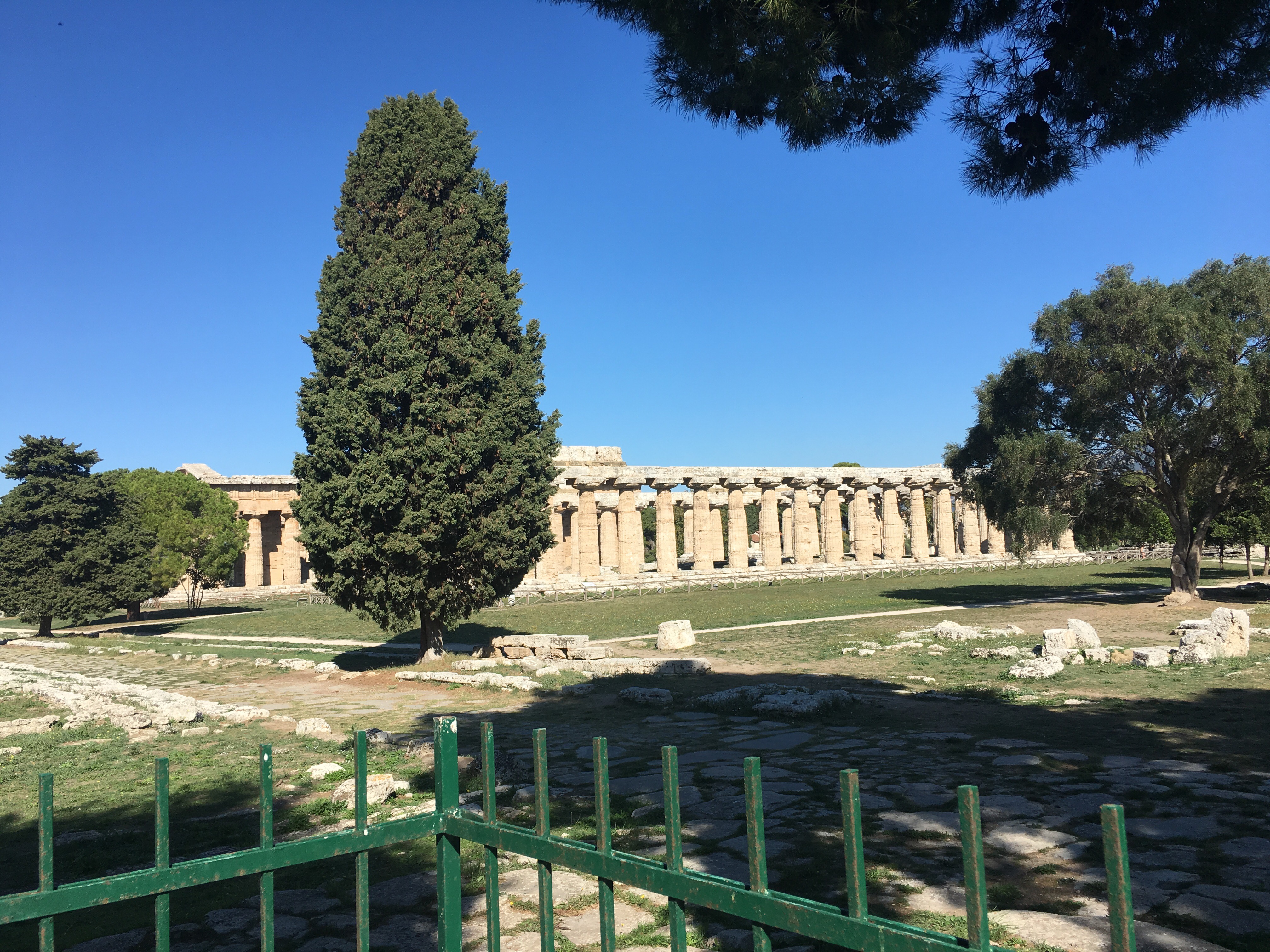
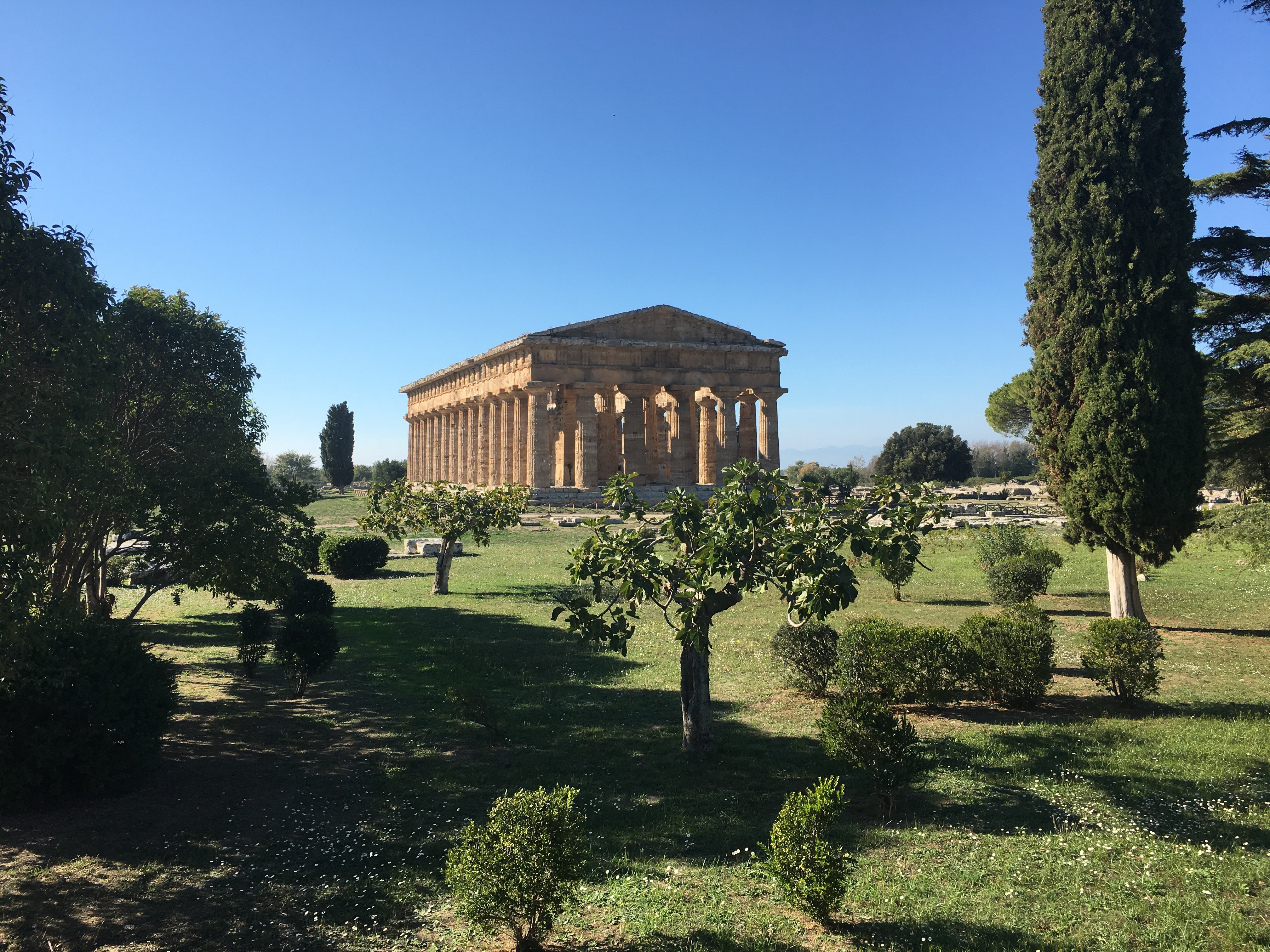
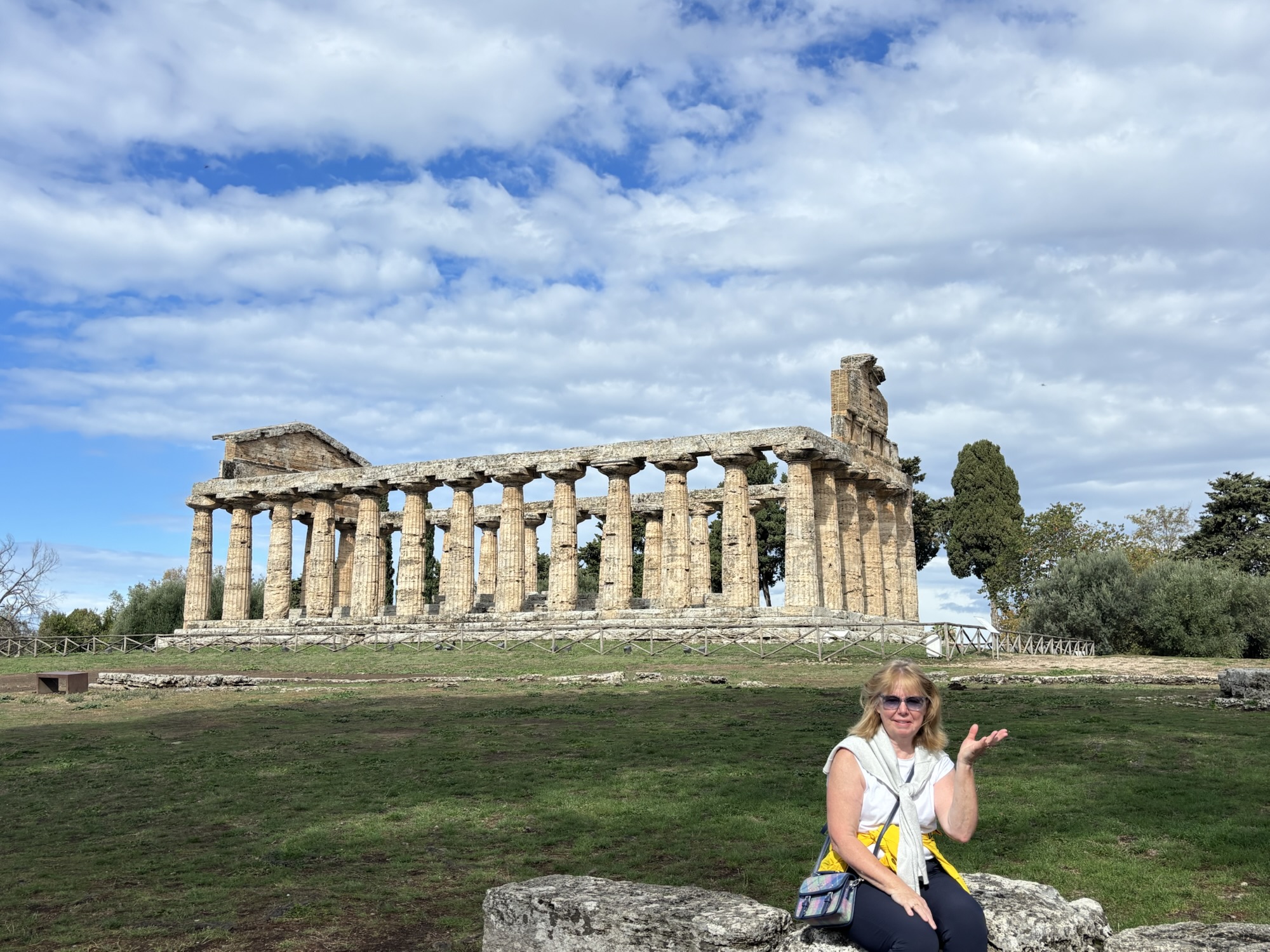
Temple of Hera 550 BCE, Temple of Hera (Nettuno) 460 BCE and Temple of Athena 500 BCE
I mentioned earlier that the ‘discovery’ of Paestum in the 18th century was like finding the golden key to a treasure chest. It gave the ‘grand tourists’ information about Greece and Grecia Magna that they didn’t have before. When Winckelmann and others arrived at Paestum they found an incredible site, three Greek Temples with a Roman city superimposed on and around the ruins. Effectively this was an architectural palimpsest of Greek and Roman remains. Soon the role of the Lucanian people in this area was also discovered. The Lucanians were contemporary with the Etruscans. So effectively there is a record here at Paestum of three groups of people; Greeks, Lucanians and Romans. In the 1750s the science of archaeology was very new – it had only really started with systematic excavations at Herculaneum and Pompeii in 1738 and 1748 respectively. There was so much for archaeologists to discover at Paestum. The Greeks left us the temples and the ‘Ekklesiastiron’ and one superb tomb painting ‘Tomba del Tuffatore’ whilst the Lucanians left us many, many painted tombs. The Romans left us a Roman road, amphitheatre, forum, temple and numerous, houses, shops and warehouses. We now know that the artistic styles of these different groups of people evolved gradually over time, each being influenced by what had gone before.
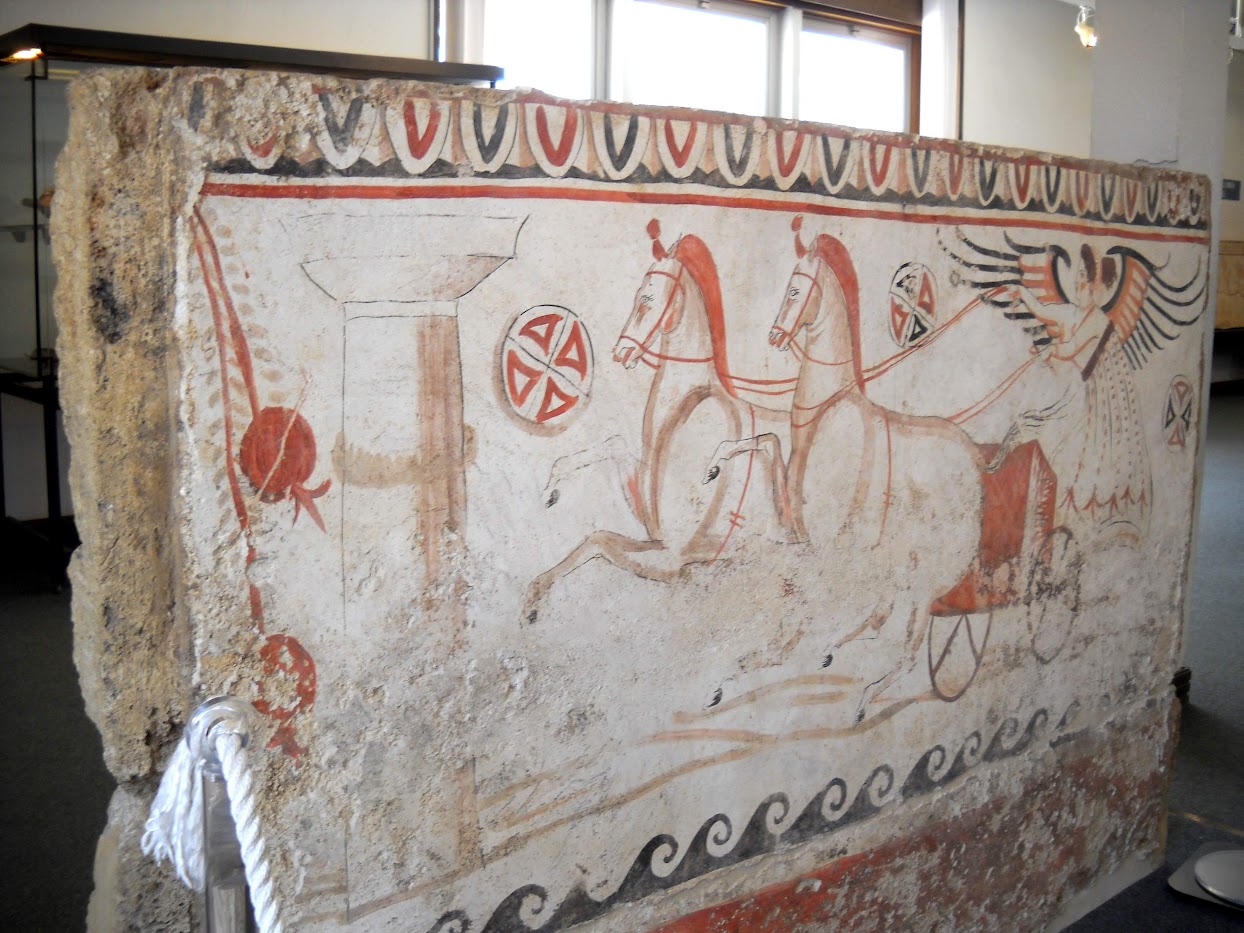
Lucanian Tomb 86, Paestum excavated near Andriuolo (330-320 BC). Winged victory. Paestum
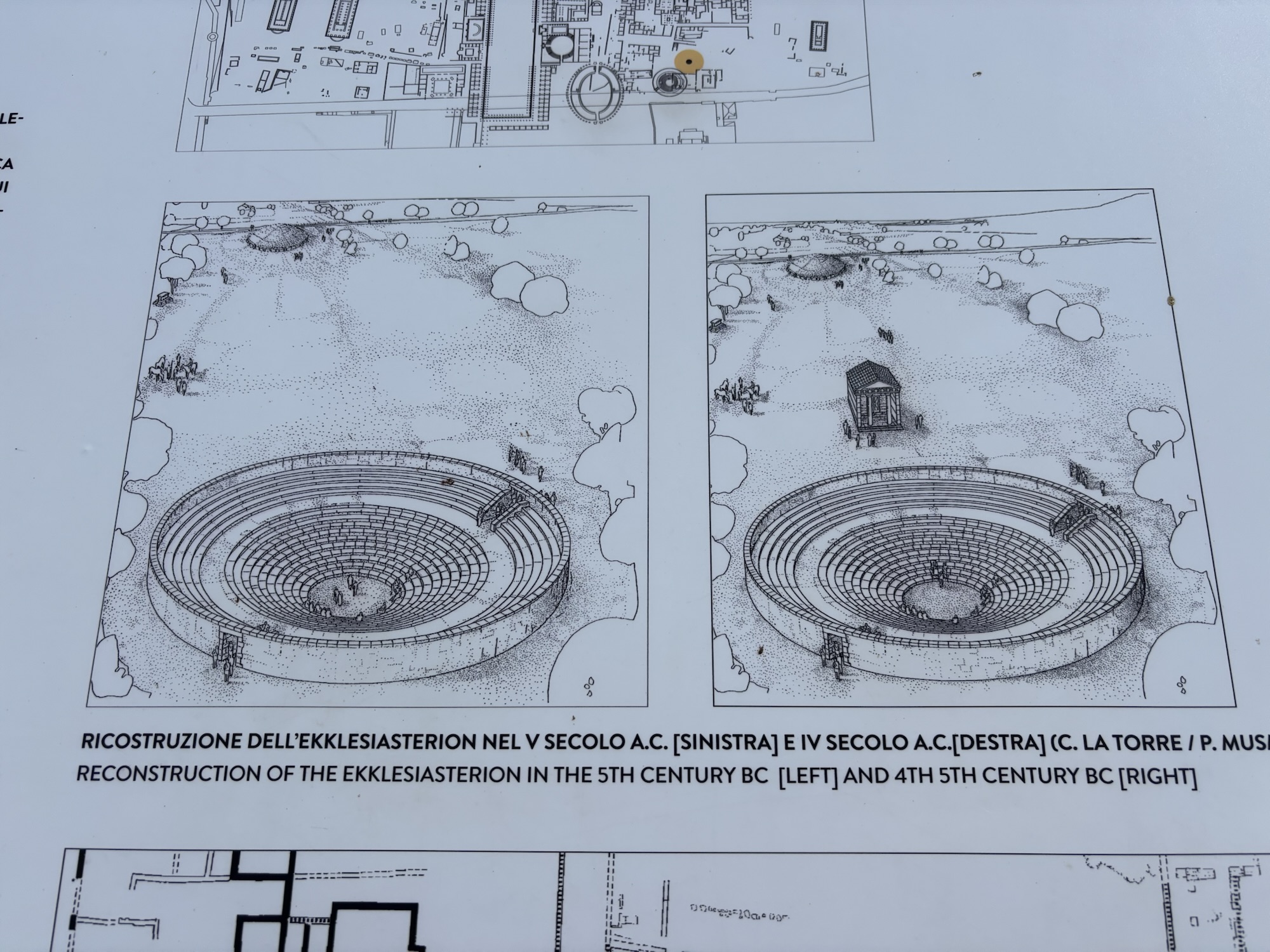
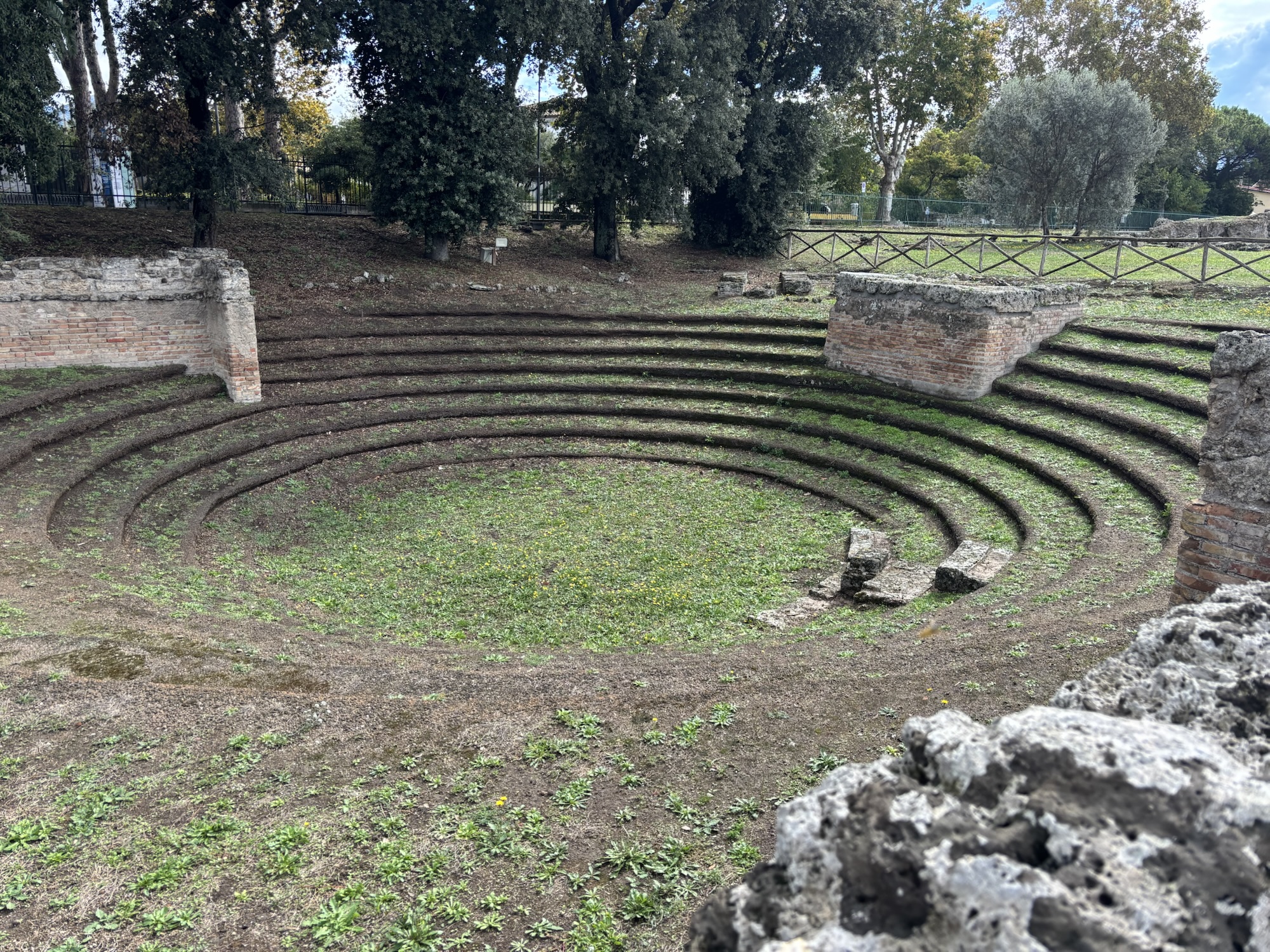
Ekklesiastiron – 5th Century BC (Greek) this was a public discussion space for all free men.
A PALIMPSEST – This veritable palimpsest of buildings was a source of great inspiration to the travellers and thinkers of the 18th century. It also happened to coincide with the ‘Romantic Movement’ which was a new way of thinking, based on emotion, imagination, an appreciation of nature and a new sense of individualism. Key figures in this movement were writers like Goethe who travelled in Italy from 1786-88 and wrote his influential ‘Italian Journey’ memoir which was published in 1816-17. In the early decades of the 19th century poets including Shelley, Keats and Coleridge all travelled to Italy and were inspired by their journeys.
PIRANESI – Giovanni Battista Piranesi a well known artist and printmaker arrived in Paestum in 1777 with his son Francesco. Piranesi was already well known for his ‘Vedute di Roma’ views of Rome. A popular souvenir to take home with the ‘grand tourist’ set. Piranesi set about sketching and recording the temples of Paestum and numerous views of the site working in a ‘capriccio’ style which was a fantastical mixture of reality and imagination. Piranesi died the following year and the sketches were completed by his son, Francesco, and published in 1788. The etchings were hugely popular and sold many copies. The Piranesi etchings were also significant in popularising the Paestum temples. In 1817 the English architect Sir John Soane, who had met Piranesi in Rome shortly before the artist’s death, acquired fifteen of the seventeen surviving Paestum drawings. These are preserved at The Soane Museum, London.
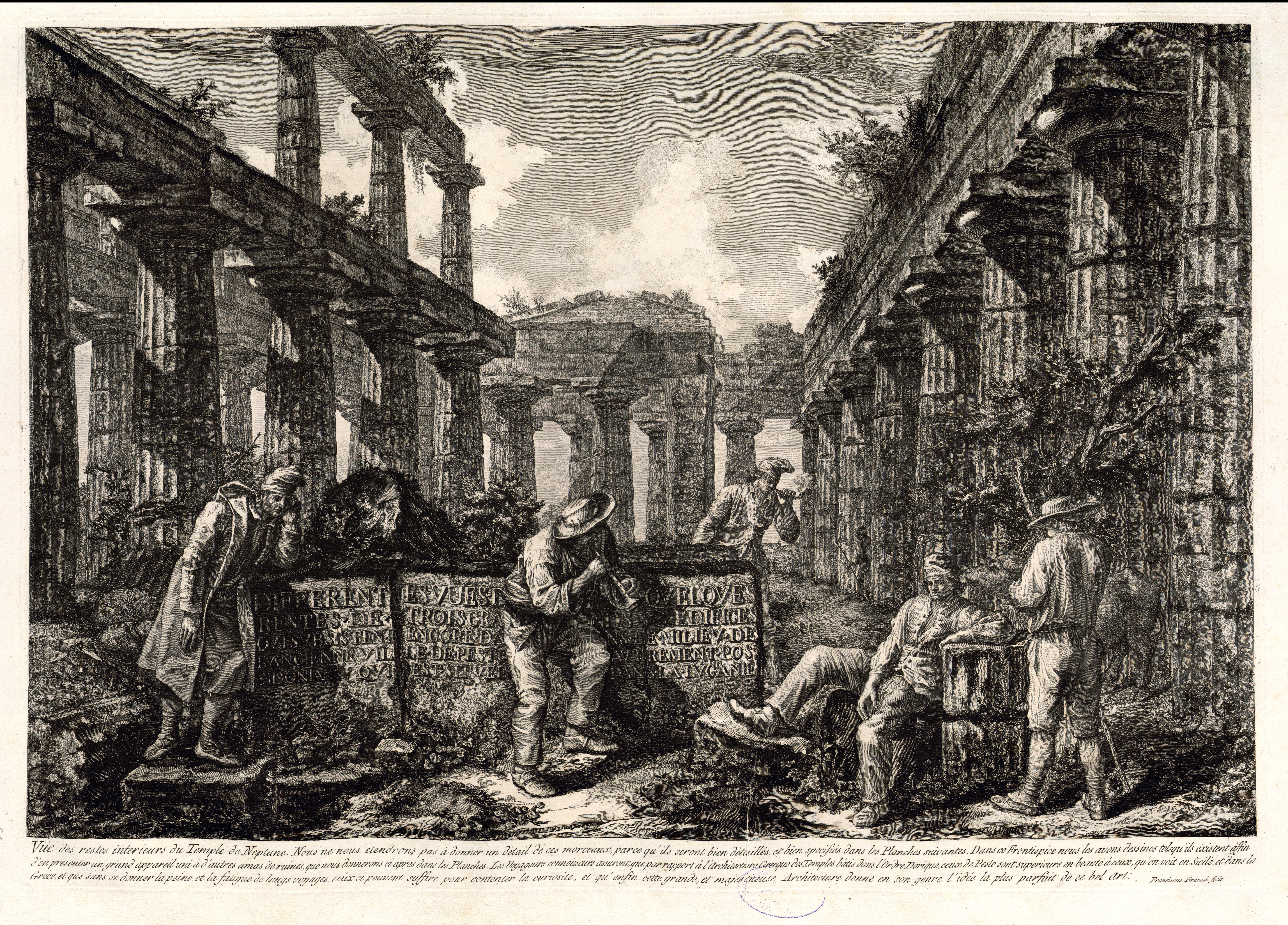
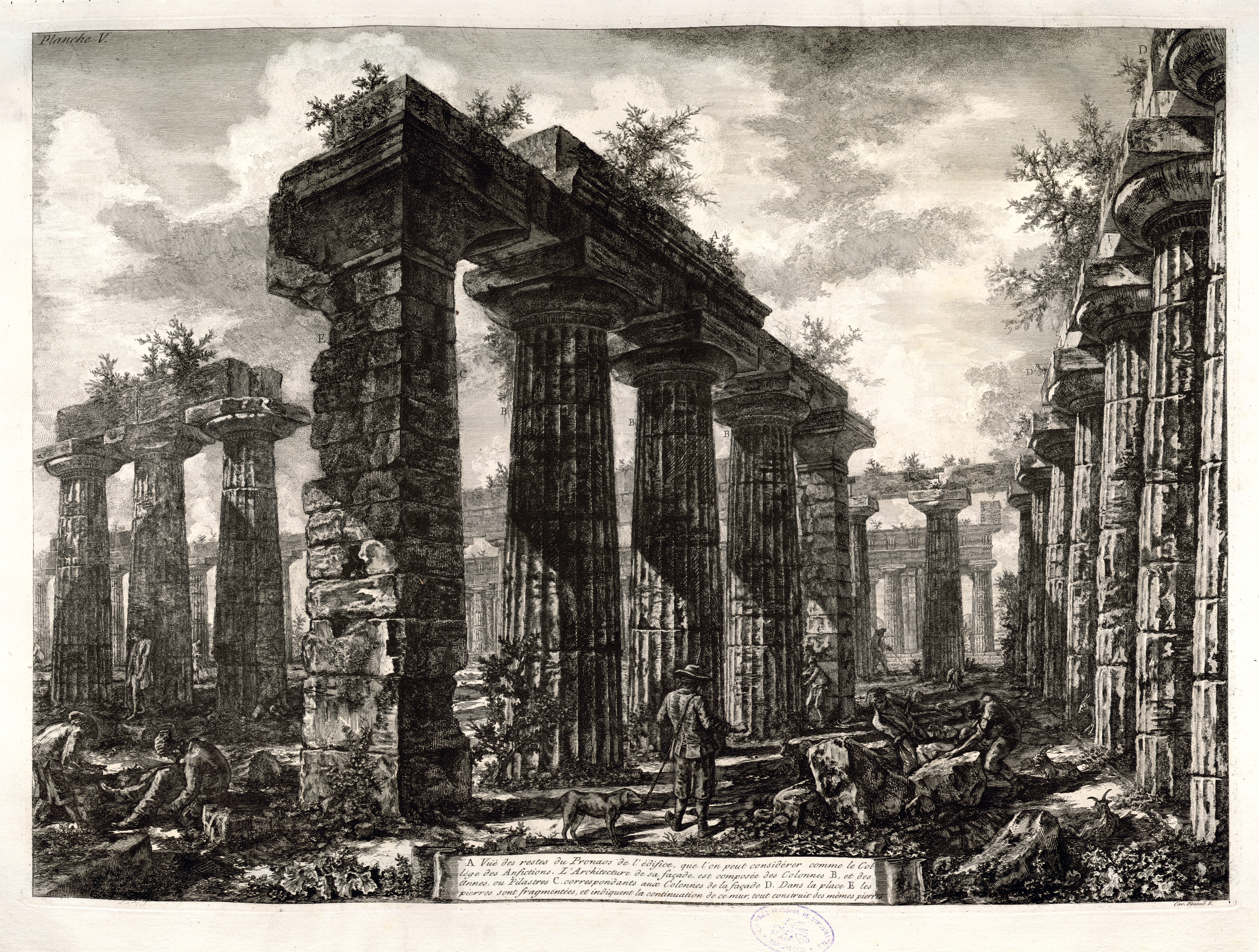
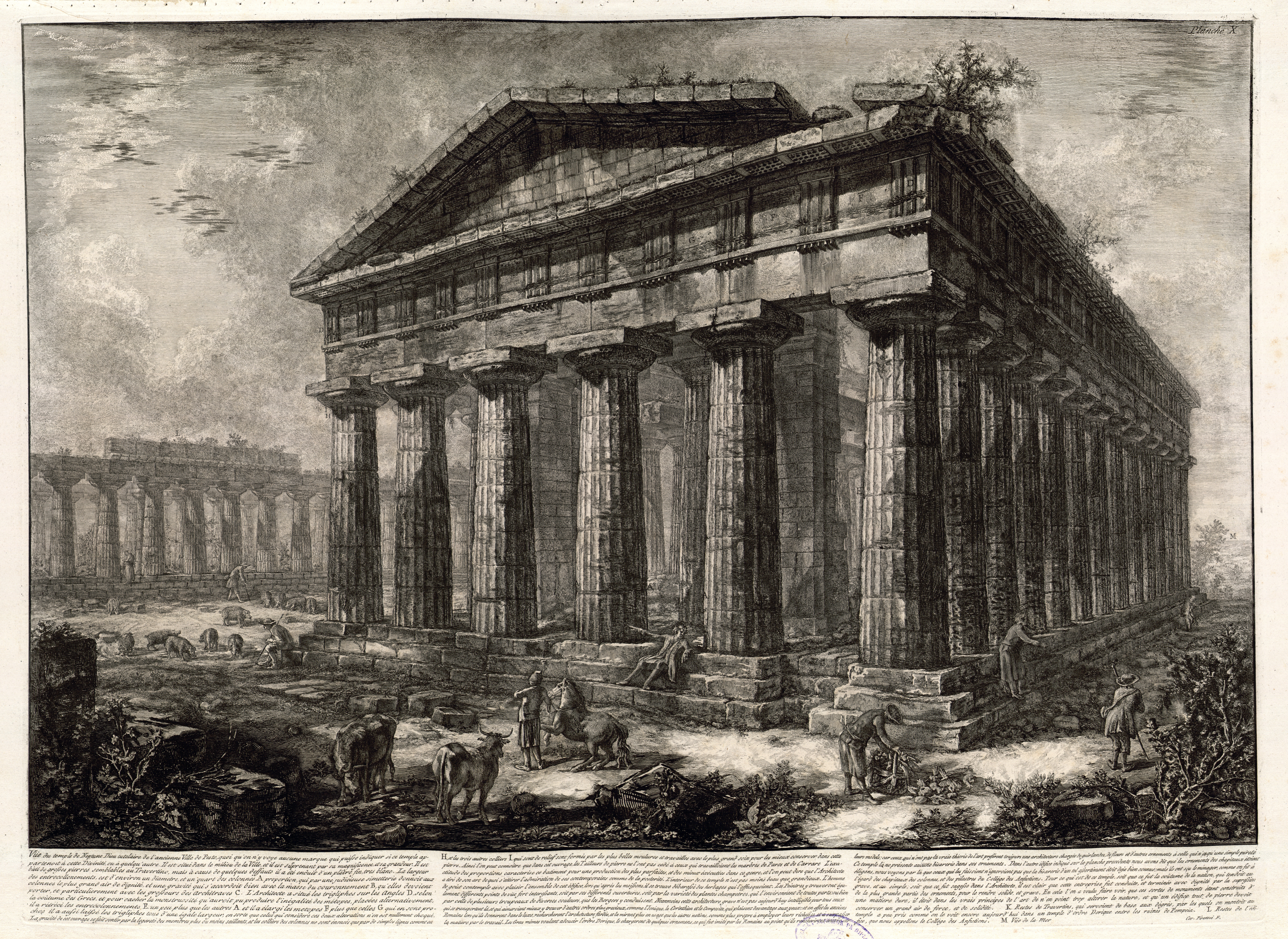
Fantastical views of the Temple of Neptune (now know as Temple of Hera) at Paestum – 1770s, Piranesi
Piranesi and his son provided a precise and highly detailed set of images of the incredible temples at Paestum. These drawings were then reproduced as etchings, making hundreds if not thousands of copies which were sold to a general public anxious to learn more about the classical world of Rome and Greece.
Here are just some of the ‘Grand Tourists’ who arrived at Paestum from 1758 onwards. Collectively these artists, writers, poets and thinkers embedded Paestum and the Greek temples into European aesthetic consciousness for ever!
- JJ Winckelmann (1758) – archaeologist and art historian
- James Adam (November, 1761) – designer, architect, brother of Robert Adam
- Sir John Soane (1779) – architect
- Goethe (1786) – writer, philosopher
- Shelley (1818) – poet
- JMM Turner – artist, sketching for Robert’s Italy, 1820s
- Carl Spitzweg – Artist painted ‘English Tourists in the Campagna’ c. 1835
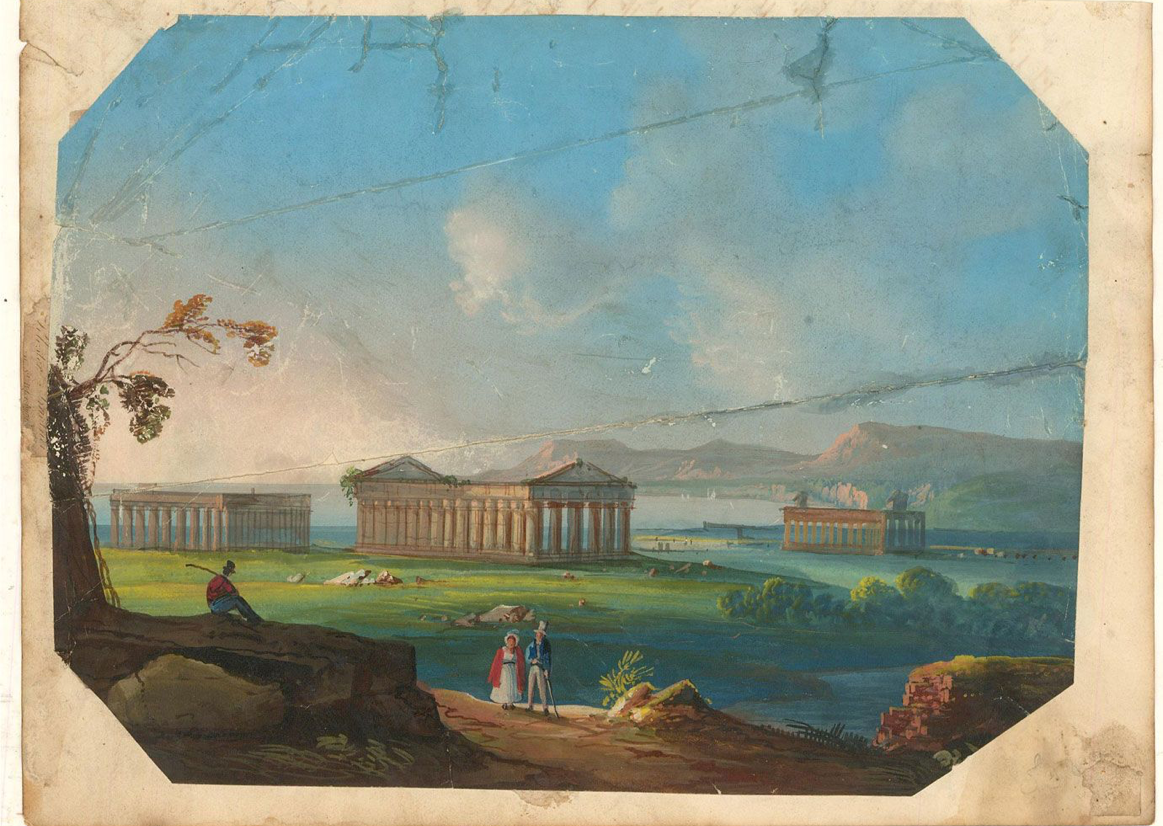
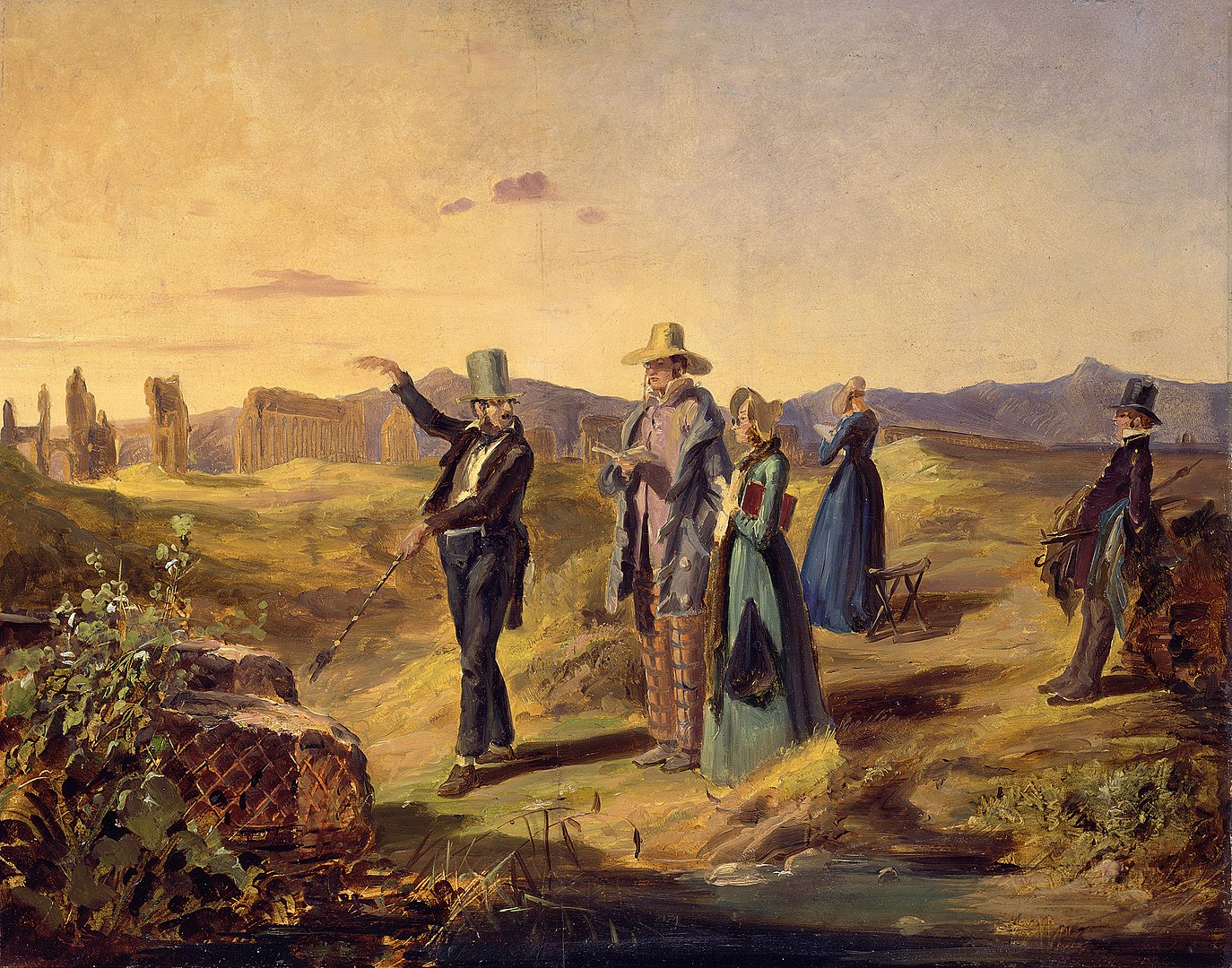
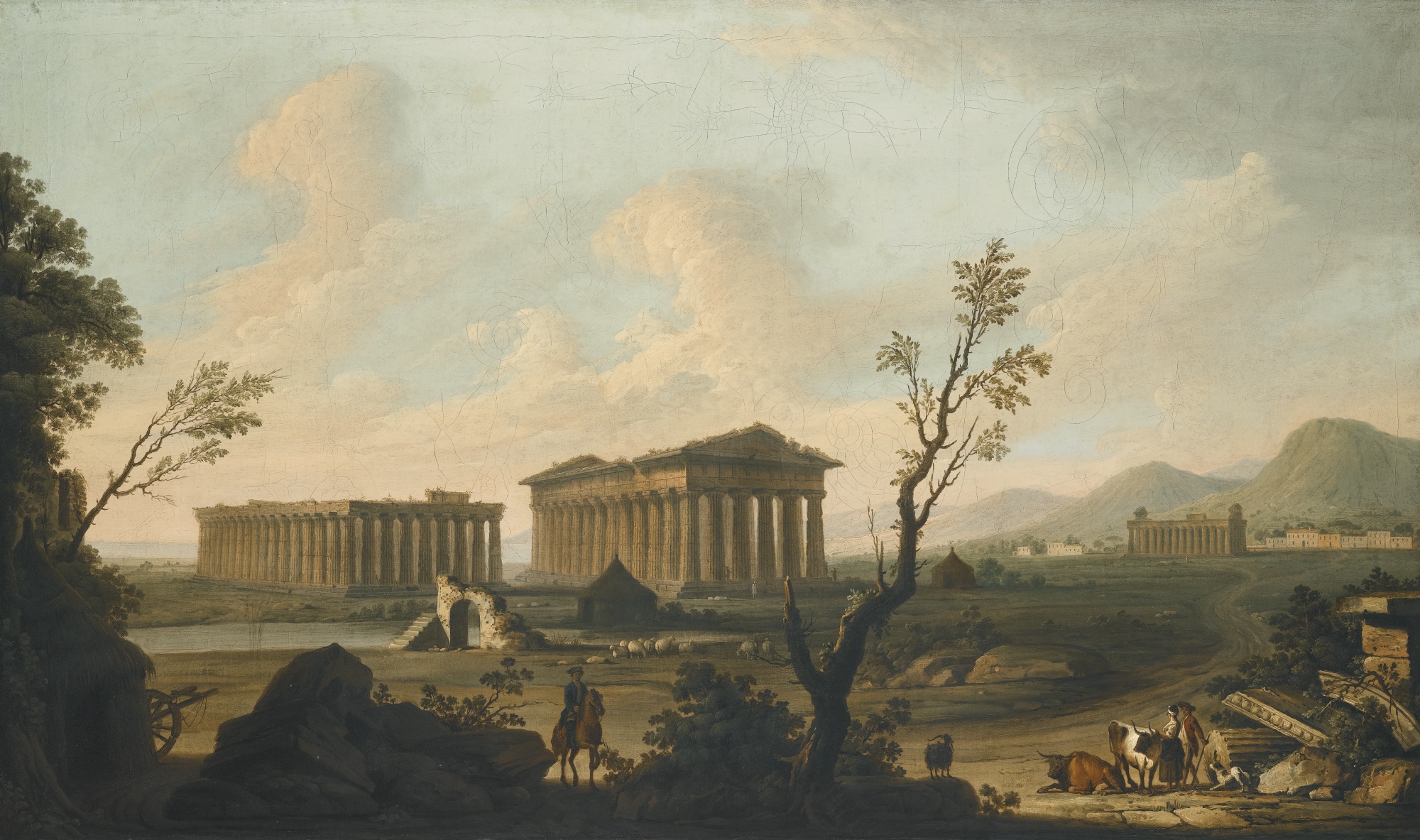
Visitors to Paestum sketched, painted and wrote about the temples.
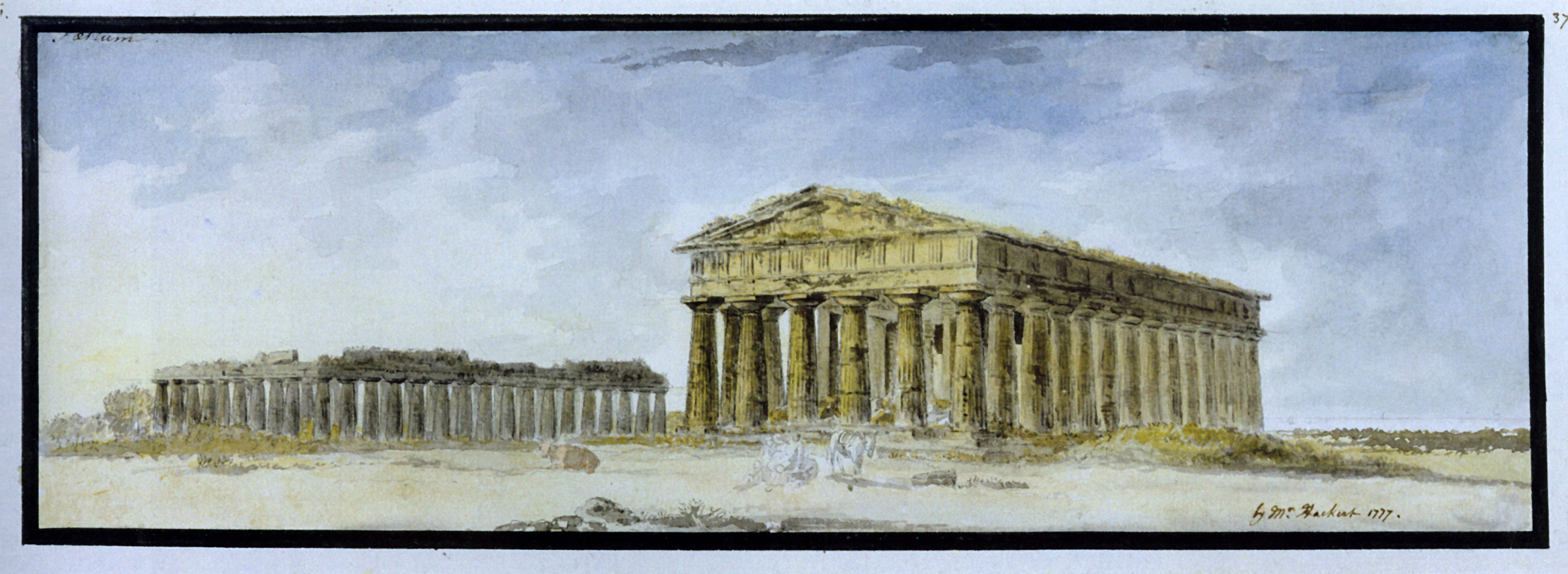

John Robert Cozens (1782) Small temple at Paestum
A NOTE ON THE AUTHOR – My name is Janet Simmonds, I am a tour guide, travel writer and Italy expert. I have Master’s degrees from Oxford University and Manchester University in Geography and History of Art. I write a blog about travel called ‘The Educated Traveller’ where I consider journeys in Europe, especially Italy, The Alps, Greece and the British Isles. I have written hundreds of articles over the last ten years covering history, culture, art, geography, film, food, wine and life. I’m especially interested in the philosophy of the journey. I am the founder and owner of www.grand-tourist.com a specialist travel company with a focus on unique journeys in Europe, especially Italy and the Alps. To discover more about my travel philosophy I invite you to visit my blog: www.educated-traveller.com
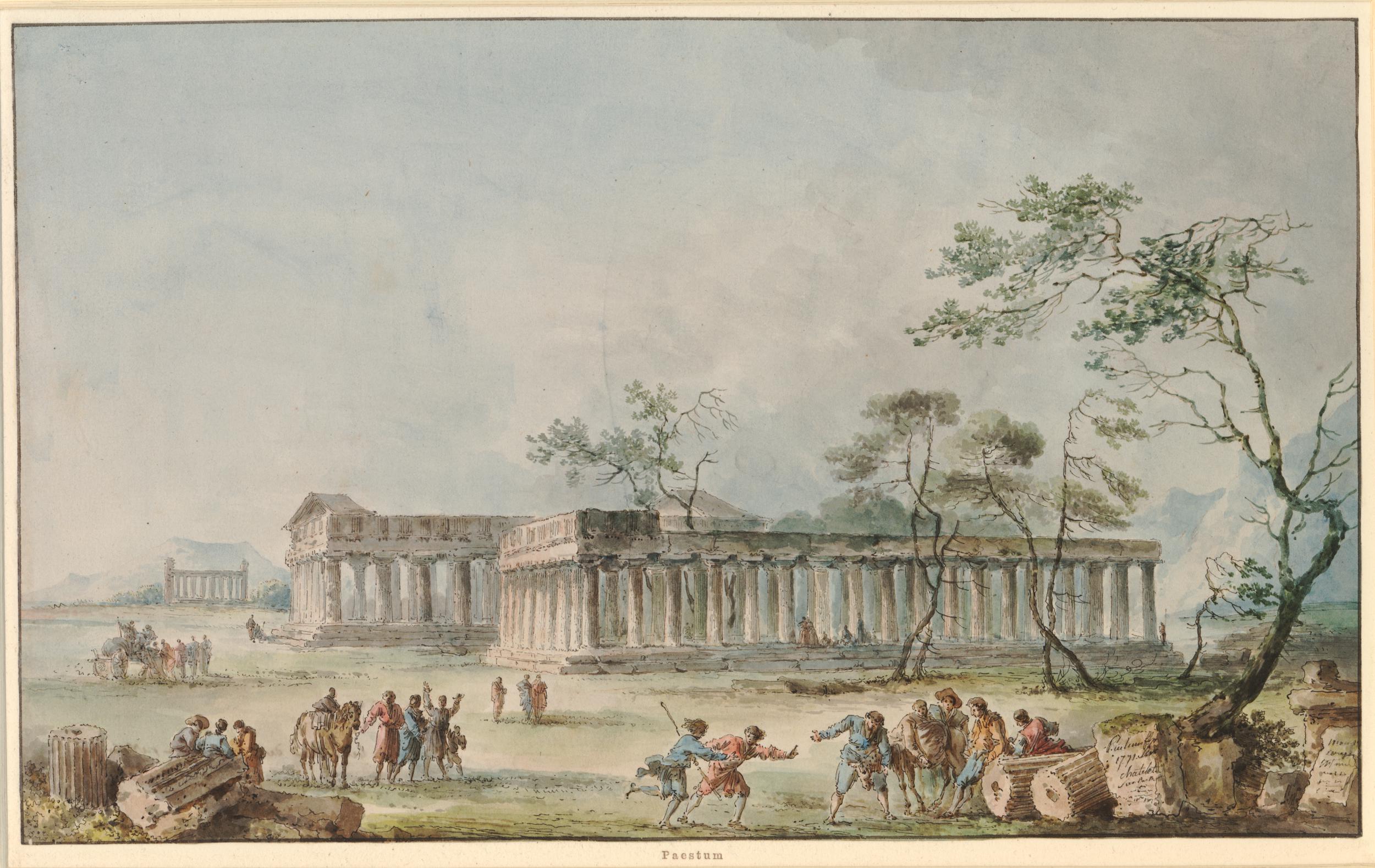
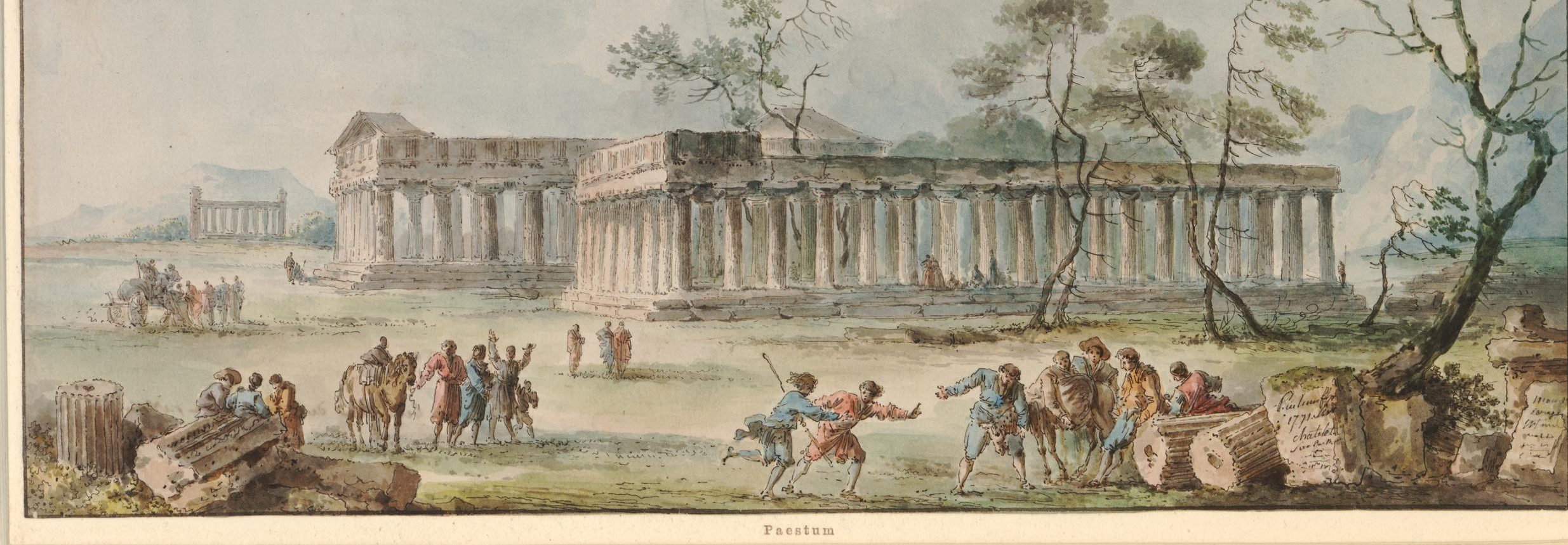
This illustration is shared thanks to © The Trustees of the British Museum. Shared under Creative Commons Attribution-NonCommercial-ShareAlike 4.0 International (CC BY-NC-SA 4.0) licence. (see note below: BM)
MORE RECENTLY – There’s another chapter to the Paestum site, which started in the 1960s. This more recent chapter was the discovery of a large number of painted tombs excavated in the vicinity of the temple site. The finest example of which is the ‘Tomb of the diver’ or ‘La Tomba del Tuffatore’. This exceptional painted Greek tomb was excavated by Mario Napoli in 1967-8. It was found about 2 kilometre south of the Paestum temples. The tomb was intact. It has been dated to 480-470 BC. The tomb consists of six slabs of travertine stone, two long sides and two short sides, a lid and a base, coffin-shaped, only deeper. The tomb was similar in appearance to the Lycian tombs of the eastern Mediterranean or the Roman sarcophagi of the Appian Way.
All the internal sides of the tomb were frescoed, photos below. The internal sides of the tomb were decorated with frescoes of a ‘symposium’ or dinner party, with guests reclining on sofas whilst eating and drinking, often to excess. The diver fresco was painted on the lid of the tomb and depicts an individual diving, perhaps from this world to the next.
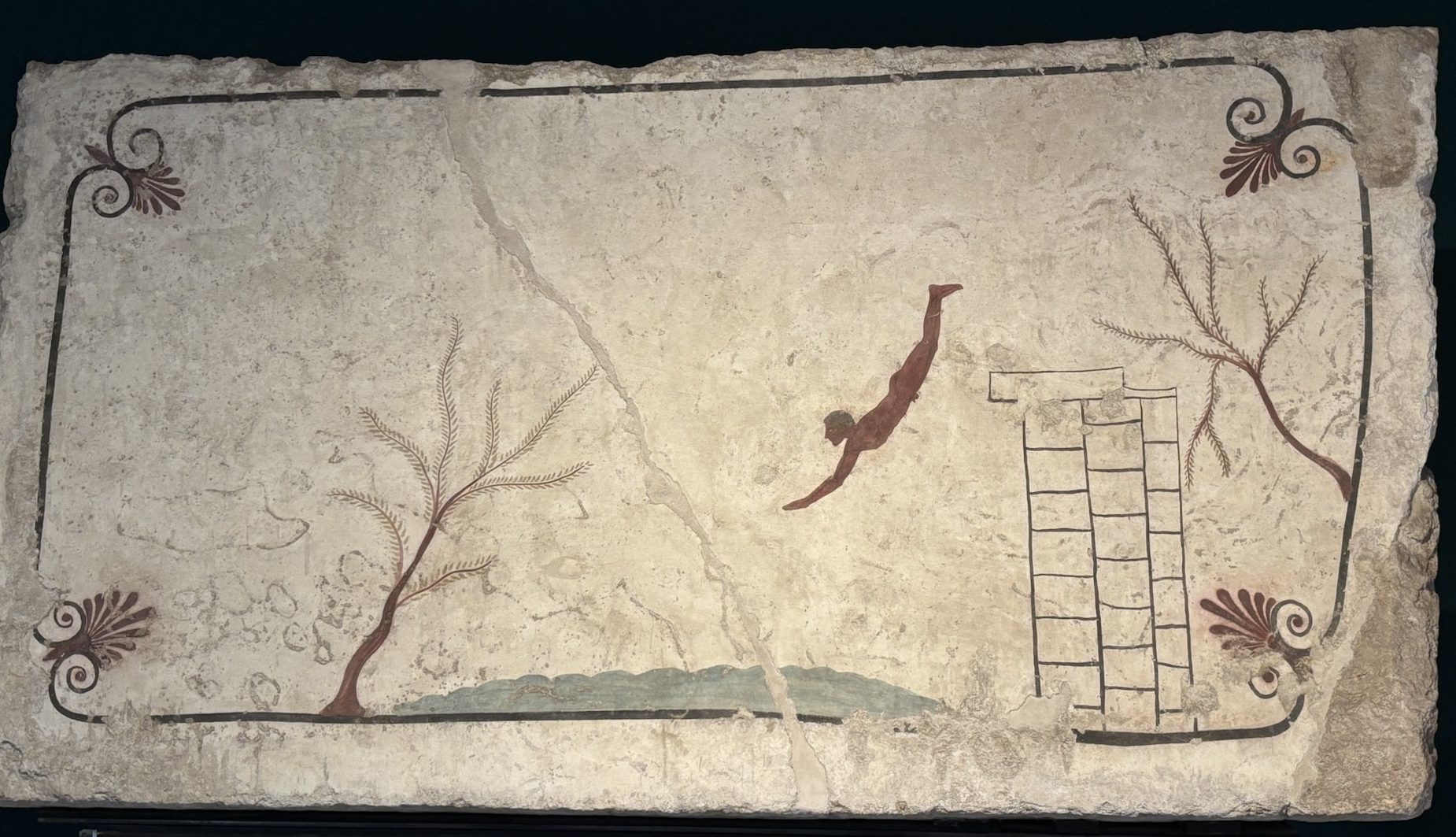
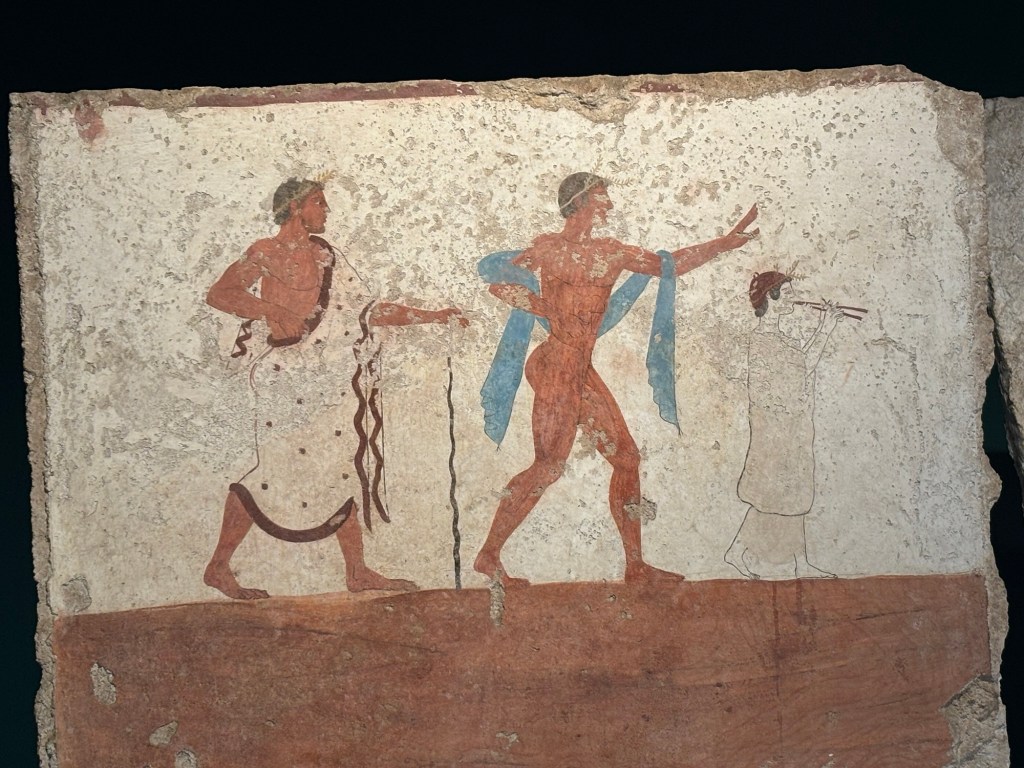
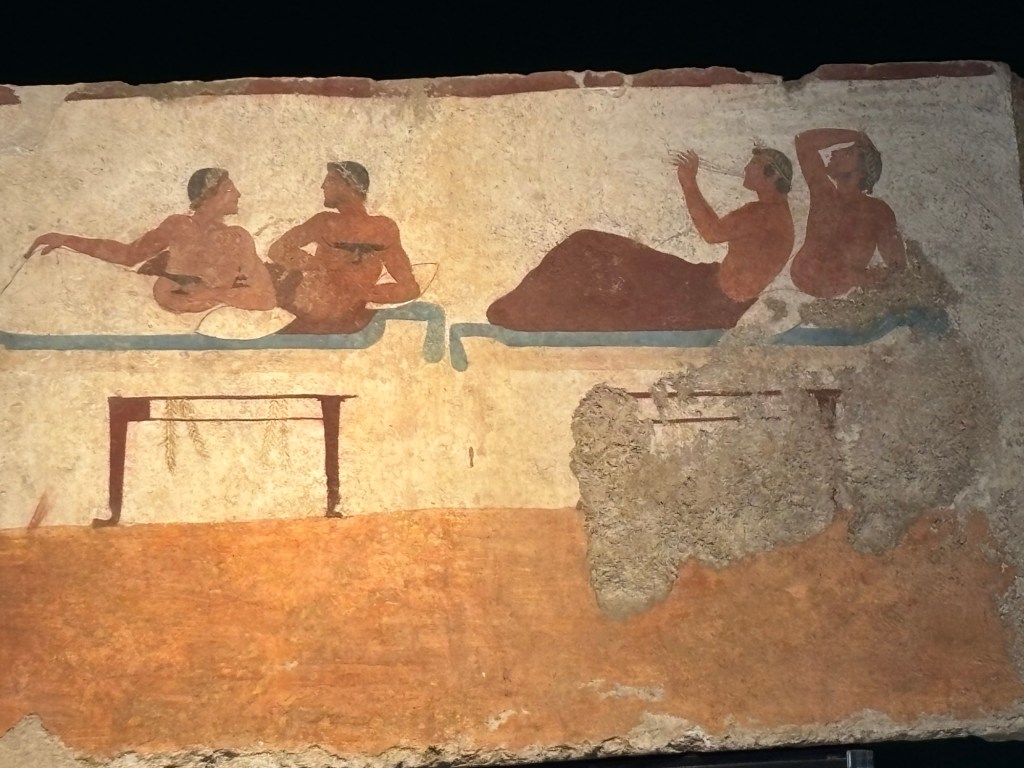
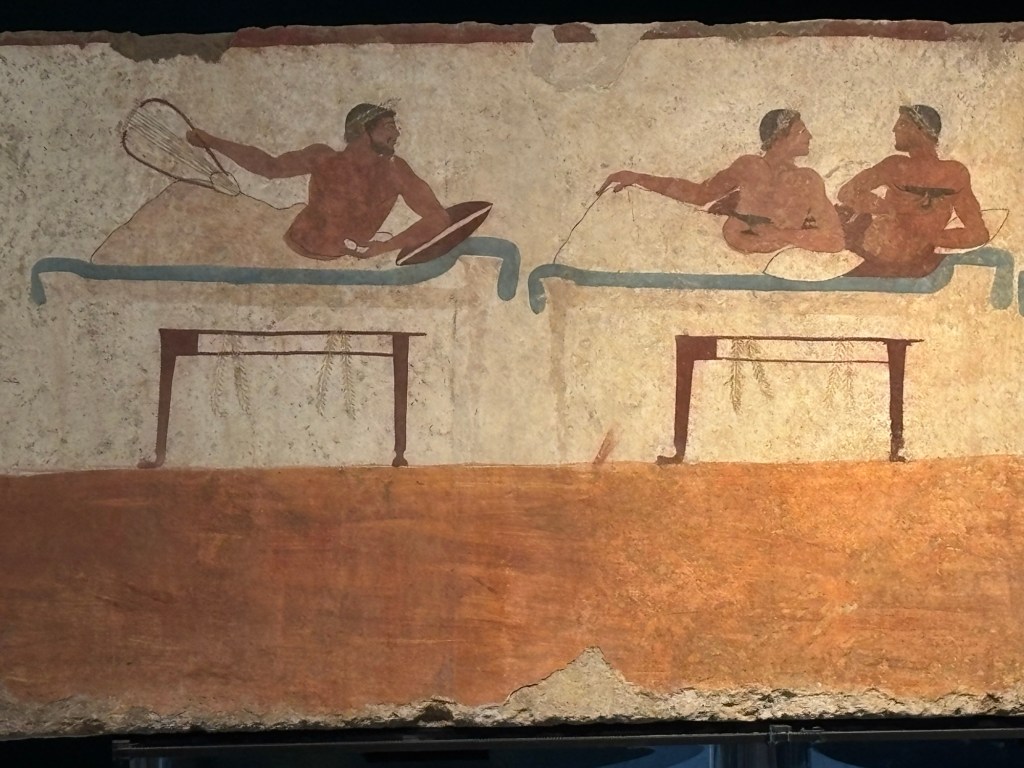
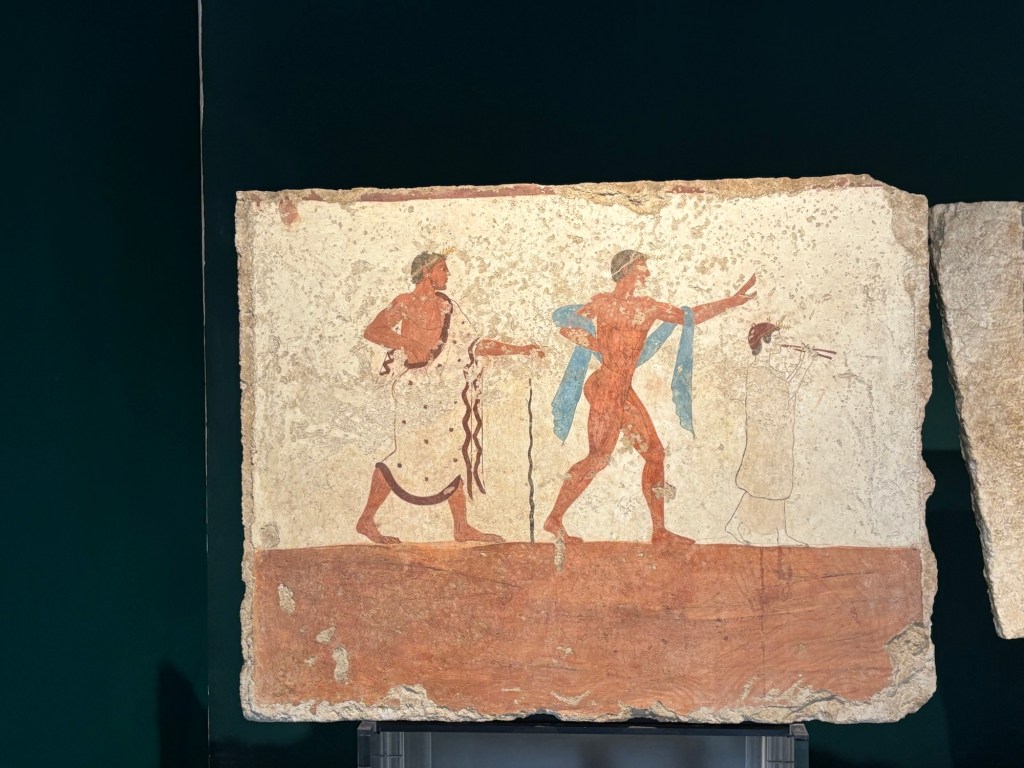
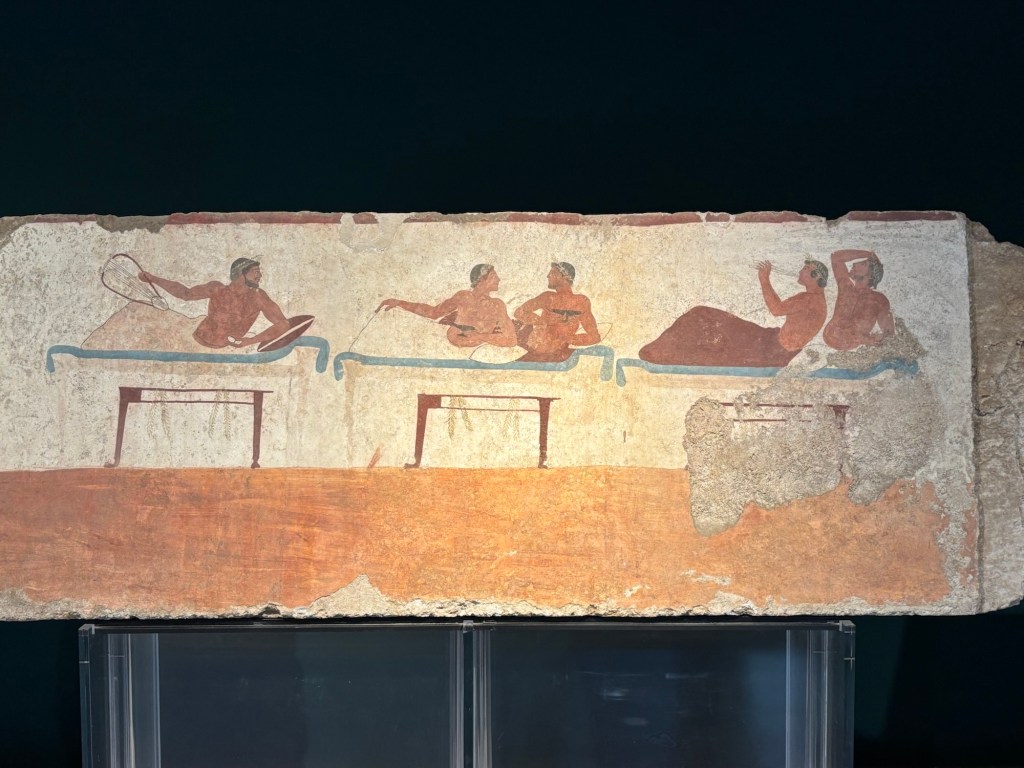
The Tomb of the Diver is on display in the museum at Paestum. Photos: www.educated-traveller.com
In addition to the ‘Tomb of the Diver’ there have been numerous other painted tombs excavated in and around the Paestum site. Most of these are from the Lucanian period and are a little bit younger. The richness of the treasure discovered in this area is hard to comprehend. Unfortunately treasure attracts treasure hunters and one of the problems in Paestum over the years has been looting.
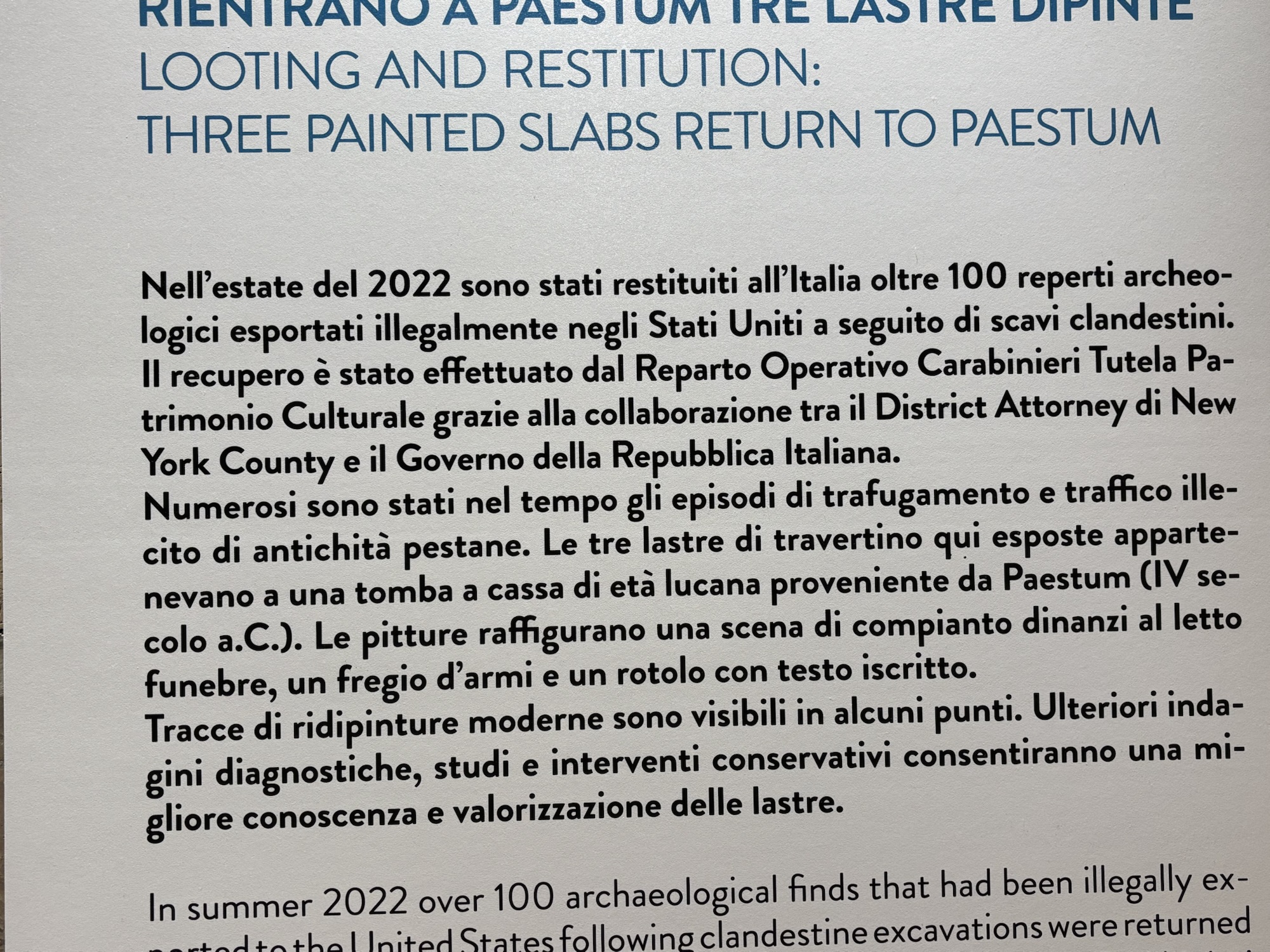
In 2022 over one hundred items of archaeological significance were found in a warehouse in New York. A joint operation between the District Attorney’s Office of New York and the Italian Government ensured the return of these items to Italy. One of the most important items was a Lucanian tomb painting now on display in the Paestum Museum (see photos below) dating from the 4th century BC. Often the thieves and grave diggers break up the ancient slabs of stone to make them easier to transport, so they are wilfully vandalising this priceless heritage which is often several thousand years old.
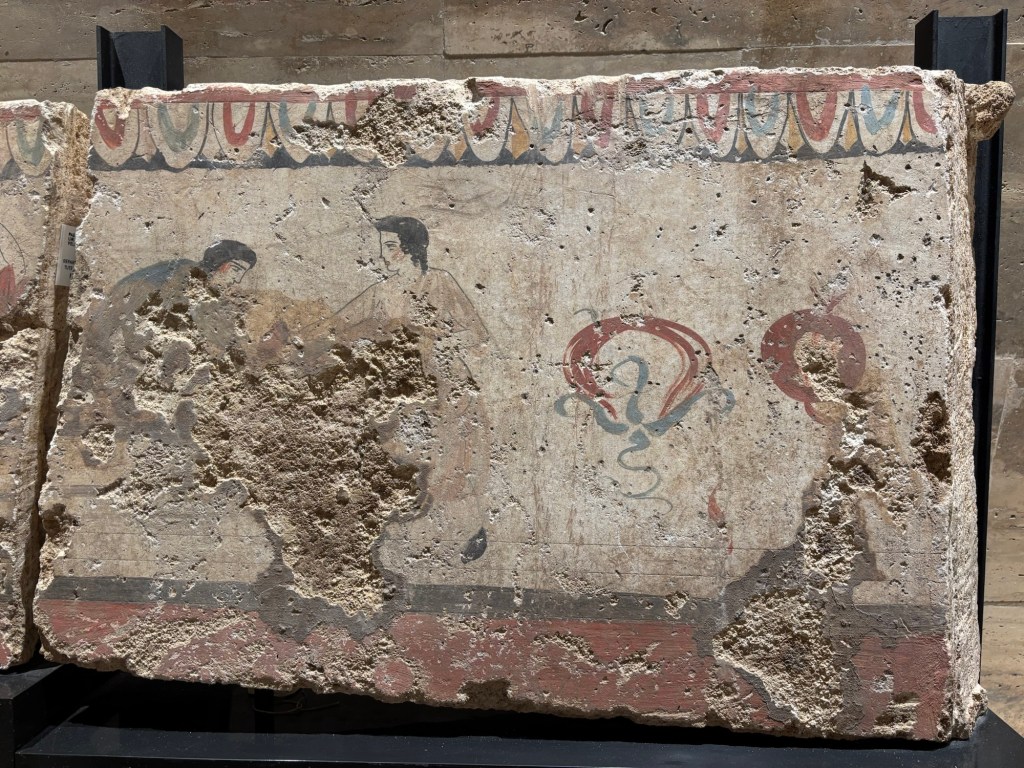
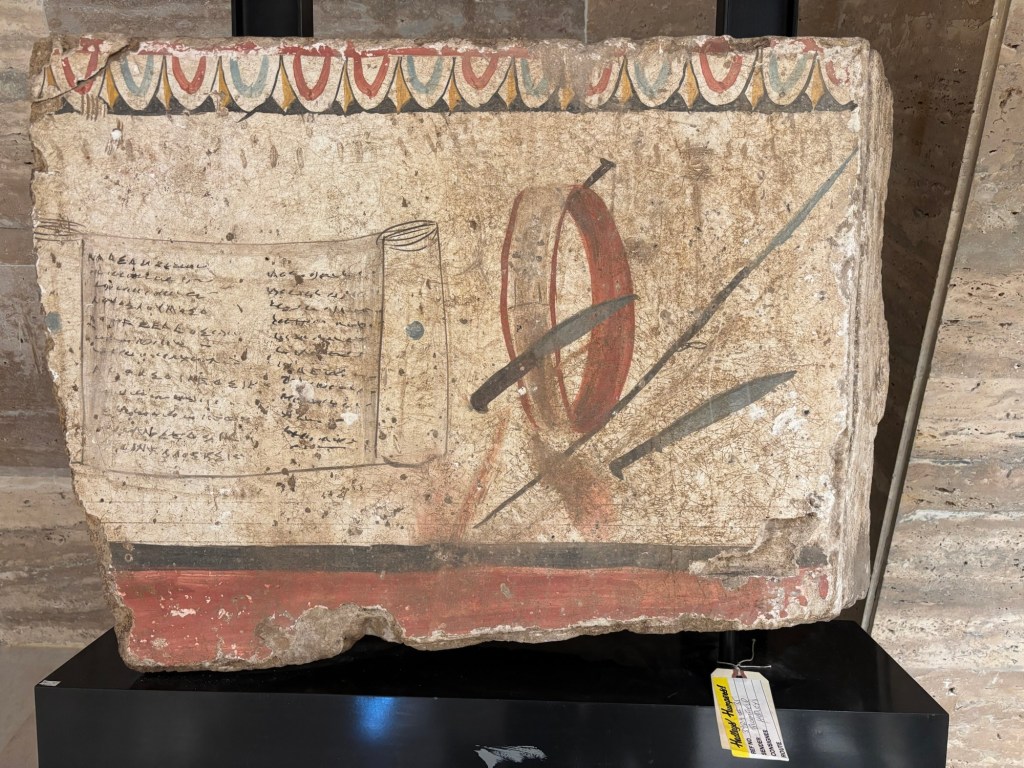
Two of the frescoed tomb fragments are now on display in the Paestum Museum (above).
TODAY – Let’s now consider Paestum today. What is happening at the site in 2025? Well, quite a lot actually. The rather beautiful on-site museum has just been refurbished and houses a wealth of fantastic finds from the temples and the surrounding areas. The interior of the museum is modelled on the ‘cella’ of a Greek temple. Visitors can see reconstructed Greek temple friezes, in all their colourful glory, numerous statuettes, vases, pots and ceramics can also be seen. The museum also houses the spectacular ‘Tomb of the Diver’ and numerous Lucanian painted tombs.
Since 2019 excavation has been going on just to the west of the Paestum site, where a small temple ‘tempietto’ has been brought to light. The excavations supervised by the former Director of Paestum Gabriel Zuchtriegel are continuing and have already revealed the floor plan of a small temple and numerous small offerings to the gods, including ceramics and terracotta. Last year the footprints of two further temples were discovered. Excavation is continuing at both sites.
The story of Paestum continues as it has done for at least three thousand years. It is a dynamic and constantly changing site. The current ‘Direttrice’ of Paestum is Tiziana d’Angelo – she follows in the footsteps of Gabriel Zuchtriegel, who is now at Pompeii. It’s a real game of musical chairs in the ‘archaeological’ boardroom with directors moving around every couple of years. There’s money in the kitty and a huge surge in visitor numbers in the last couple of years. Who knows what will be excavated next. Meanwhile the treasure chest is large and the lid is only half open, there’s still more to discover as we delve into the past and the millennia are revealed before our eyes.
Notes & Links to my other articles on the subject of The Grand Tour and Paestum:
- Paestum – Greek Temples, Tomb Paintings & Ristorante Nettuno
- History of the Grand Tour
- Vesuvius – volcanic eruption, Herculaneum & Pompeii
- Herculaneum – a very bright future…..
- Herculaneum & Vesuvian Wines
Key points:
- Johann Joachim Wincklemann (1717-1768) was a German art historian and archaeologist. He was a pioneering investigator of architectural ruins and one of the first to observe the differences in Greek, Greco-Roman and Roman architecture. His visit to Paestum in 1758, and his publication of ‘Anmerkungen über die Baukunst der Alten’ in 1762 was crucial to our understanding of art history. Translated into English in 1765 by Henry Fuseli (himself a competent painter, poet and romantic).
- The idea of an architectural palimpsest, where different generations build on top of existing buildings is referred to in architecture as a palimpsest. This can be seen at Paestum and also at the Basilica of San Clemente, Roma. My article on the subject: Rome – Basilica of San Clemente
- Artists like Piranesi, Carl Spitzweg, Turner and De Fabris all played a vital role in spreading the word about the archaeological sites of Italy through their drawings and paintings.
- Note: Charming view of Paestum temples (above) is in the British Museum. An illustration to Saint-Non’s ‘Voyage Pittoresque’ III, Paris 1783. Pen, ink, watercolour (1771) artist: Claude Louis Châtelet
- Artribune – Temples at Paestum – for more on the recent finds at Paestum (in Italian).
- Artribune (in italian) is an excellent magazine – covering art & culture in Italy
Useful web sites:
- www.paestumsites.it
- Instagram: @parcoarcheologicopaestum
- www.grand-tourist.com – our sister company and purveyor of tailor-made journeys in Italy
- www.educated-traveller.com – my blog and repository of more than 500 articles!
It’s not all hard work, when we are on our journeys of discovery (see below)……
October 2025

 The Educated Traveller
Very learned, thorough, educational and fascinating! What more can I say!
Congratulations, Janet and thanks once again!
John
LikeLike