The Festa di Santa Lucia is celebrated in Italy and Sweden on 13th December every year. Lucia or Lucy in English was an early Christian martyr – she was killed by the Romans because she would not give up her Christian faith. Here is Lucy’s story….
Lucy was a young woman from a noble family who lived in Siracusa, Sicily. Sicily had been a very important Greek colony for hundreds of years. It was the home of Archimedes the celebrated Greek mathematician and engineer. When Lucy was growing up Siracusa was a Roman city. Lucy was a Christian at a time when being Christian meant that you could be persecuted for your faith. One day she went on a pilgrimage to visit the tomb of Saint Agatha, a very important holy woman. Here according to legend Lucy had a special visitation from the saint, who promised to cure her mother of a life-threatening blood disorder. On her return home Lucy saw that her mother had in fact been cured. As a thank you to Saint Agatha she decided to dedicate her life to Christ by living a modest life of prayer and helping the poor of Siracusa.
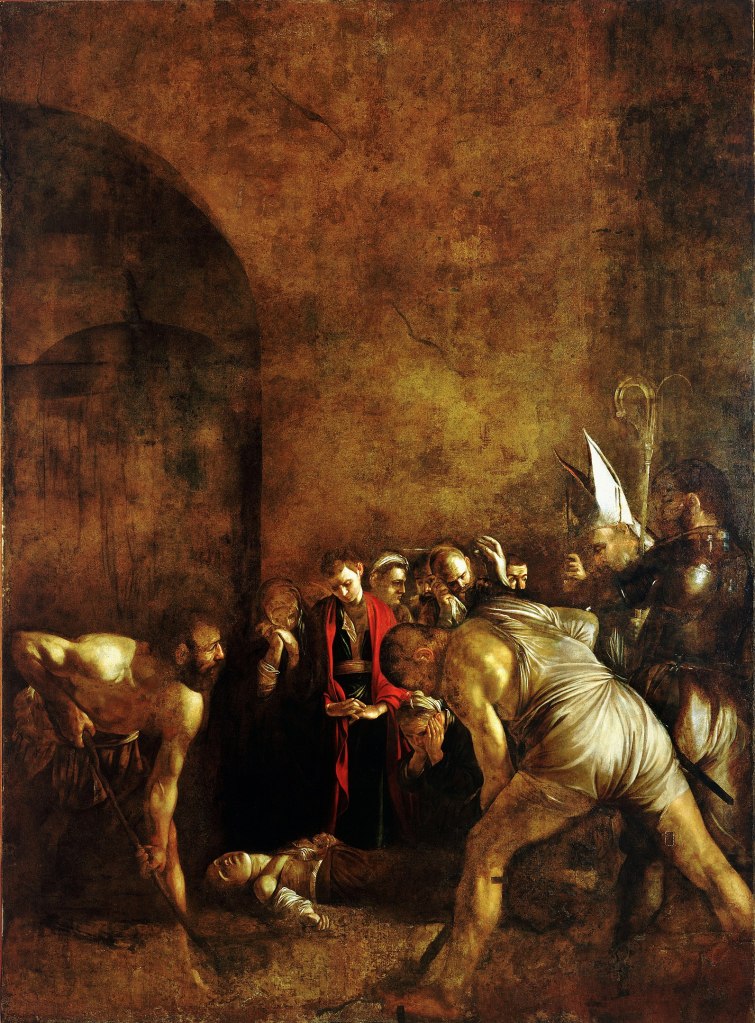
News of Lucy’s generosity and kindness spread rapidly through Sicily and people would visit her asking for help. She became very well known as a person of great integrity and honesty. The young man to whom she was betrothed was furious that Lucy was giving away all her possessions and money to the poor. A dowry that he felt was rightfully his! So he betrayed her to the local Roman officials, announcing that she was Christian and should therefore be punished. The Romans tried Lucy and found her guilty of being a Christian. They prepared a large fire to burn her at the stake. However, when they lit the fire, the flames moved away from her body, refusing to touch her, physically avoiding contact with her flesh, as if they recognised that she was a saintly person. She emerged from the fire unscathed. She spoke eloquently about her faith and predicted that the persecution of Christians would not continue for much longer. In fact she was quite right – less than ten years later the Edict of Milan was passed by Emperor Constantine giving Christians the ability to worship freely throughout the Roman Empire. Sadly, it was too late for Lucy. The Romans felt angered and humiliated by Lucy’s ability to survive their huge bonfire and a young soldier was ordered to kill her, which he did by cutting her throat. She died on 13th December, 304 AD. Many years later, the place where she fell in Siracusa, became the exact location for the Basilica of Santa Lucia, a magnificent church dedicated to the worship of St Lucy and the Christian faith. The Feast Day of Santa Lucia is celebrated annually on the day of her death. In Siracusa there is a huge and colourful procession worthy of a Dolce and Gabbana Fashion Show!
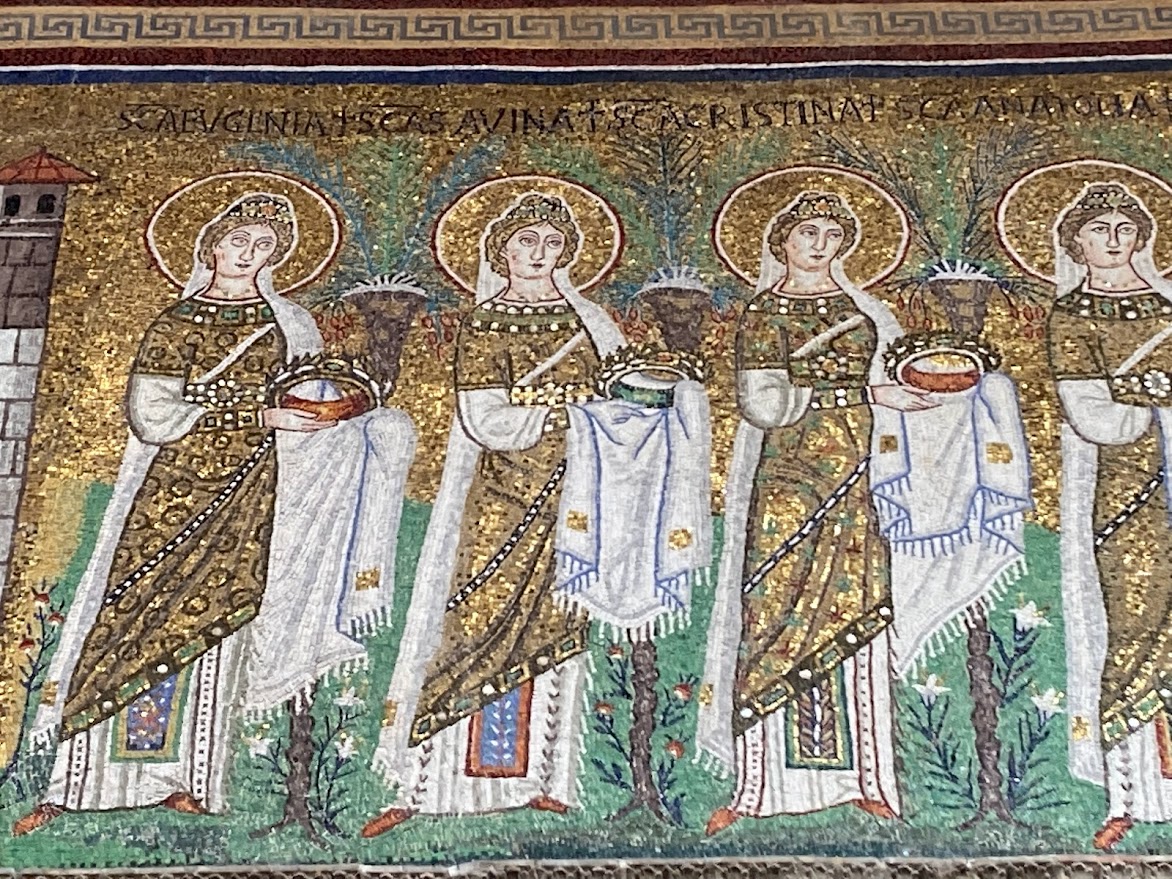
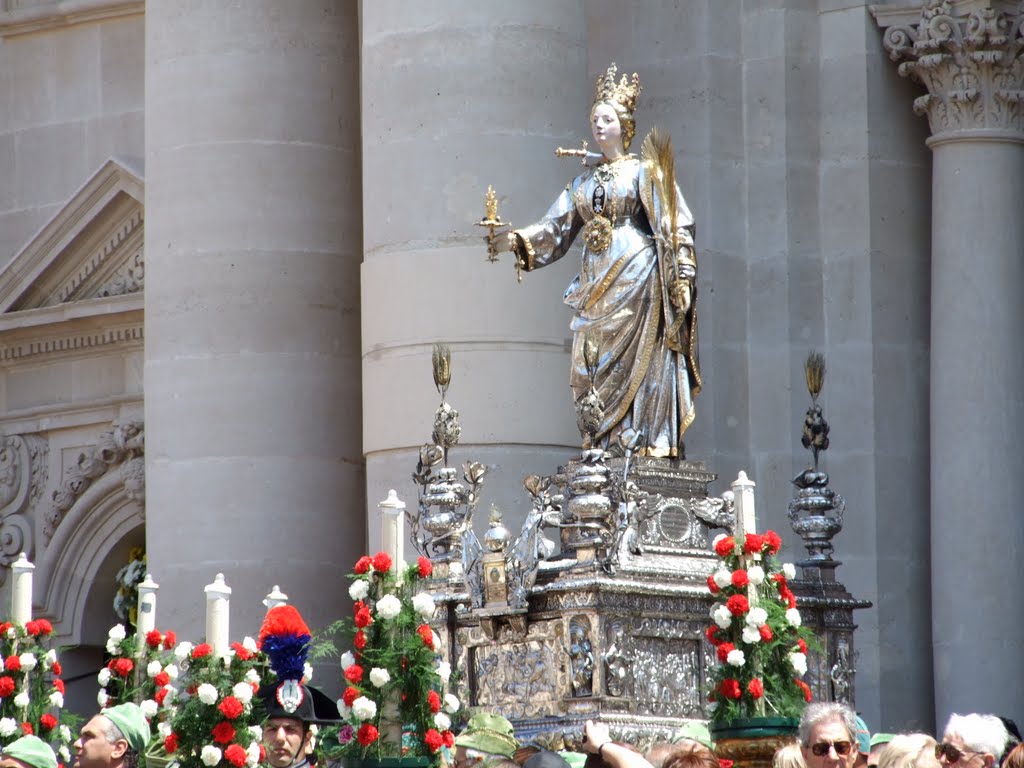

Santa Lucia (Ravenna), 6th Century, Santa Lucia, Siracusa and Santa Lucia in Sassoferrato, Palazzo Chigi, Italy
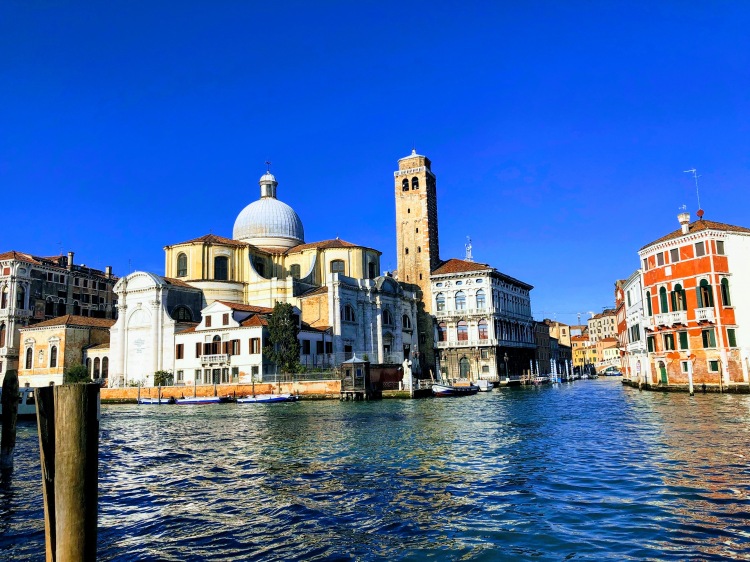
THE MARTYRDOM OF LUCY – As often happens with saints and martyrs, their story grows and is embellished over time. Lucy’s story was no exception. After her death her remains were placed in the catacombs of Siracusa. However the number of visitors was so great that the relics had to be moved. By the beginning of the sixth century Lucy’s fame was so great that a huge church (a basilica) was built for her in Siracusa. Around the same time, she was sufficiently well-known to feature in the special prayers of Pope Gregory. When Siracusa was invaded by the Saracens in the eighth century her body was moved again, firstly to Abruzzo and then later to Constantinople. Here the Venetians enter the story. In 1204, during the Fourth Crusade, Doge Enrico Dandolo of Venice decided to transport the relics of St Lucy back to Italy, specifically Venice. They were placed in the Church of San Giorgio Maggiore, on an island just across the lagoon from St Mark’s Basilica. However, the island was too small for the great number of worshippers and visitors that wanted to pay their respects to this admirable woman. In 1279, on St Lucy’s Day, a tragedy occurred when several pilgrims drowned in the lagoon, after their boat capsized. After this accident the Venetian Senate decided that the relics of St Lucy should be moved to the centre of Venice. So, Lucy’s remains were moved once again – and laid to rest in a church built especially for her in Cannaregio, adjacent to the Grand Canal.
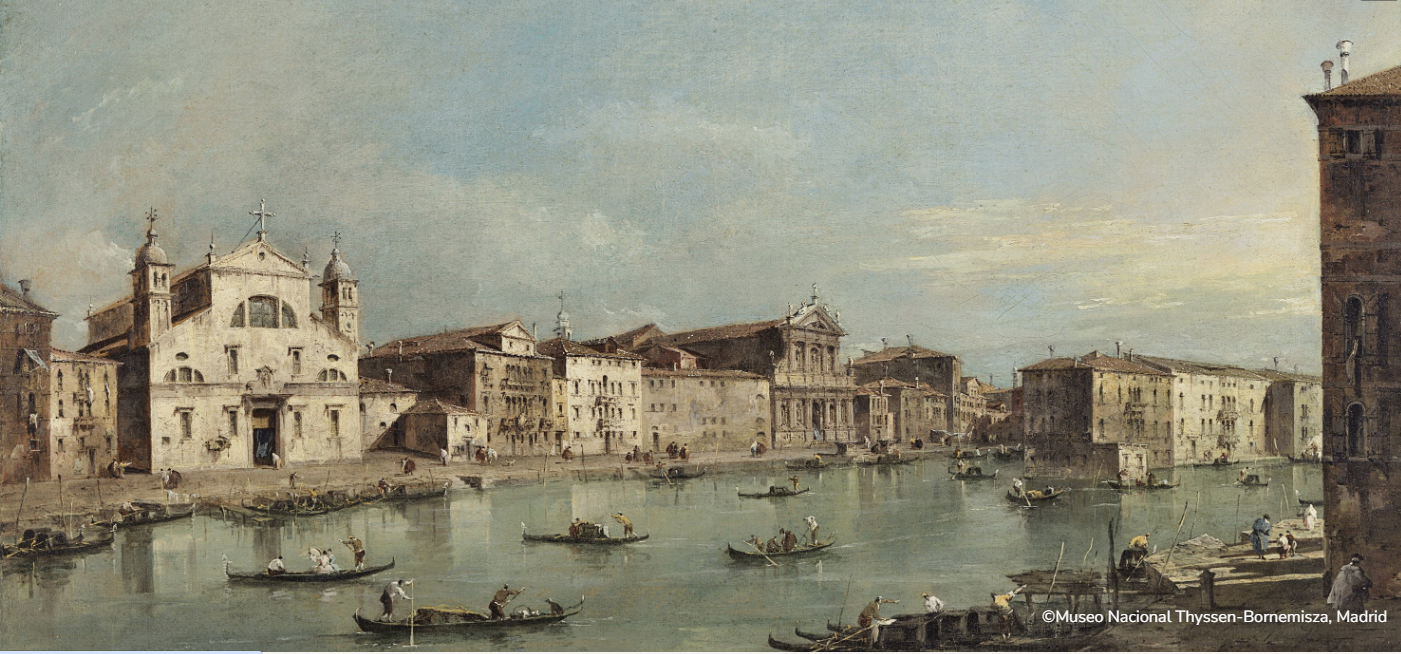
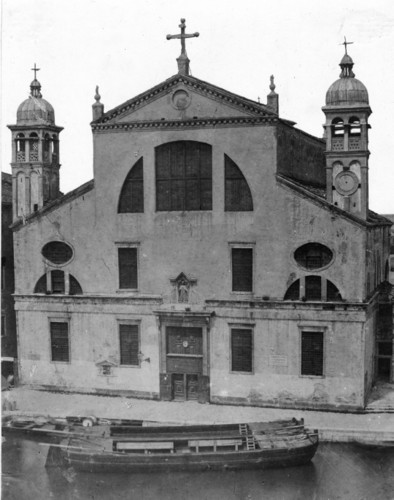

Church of Santa Lucia painted by Guardi c.1760. Santa Lucia Church 1861 (Bonaldi) + Santa Lucia in today’s church.
THE STORY OF ST LUCY was recounted in detail by Jacobus da Varagine in his book ‘The Golden Legend’ of the 13th century. Jacobus was the Archbishop of Genova and a religious scholar. He compiled a book about the lives of the saints. Originally written by Jacobus in Latin, it was later translated into English, French and Spanish. It was one of the first books to be printed by William Caxton in England, when the brand new technology of the printing press had just arrived. The first ‘Golden Legend’ edition in English appeared in 1483. It was so popular that it was reprinted nine times over the next twenty years. It was a best seller of the medieval era!!
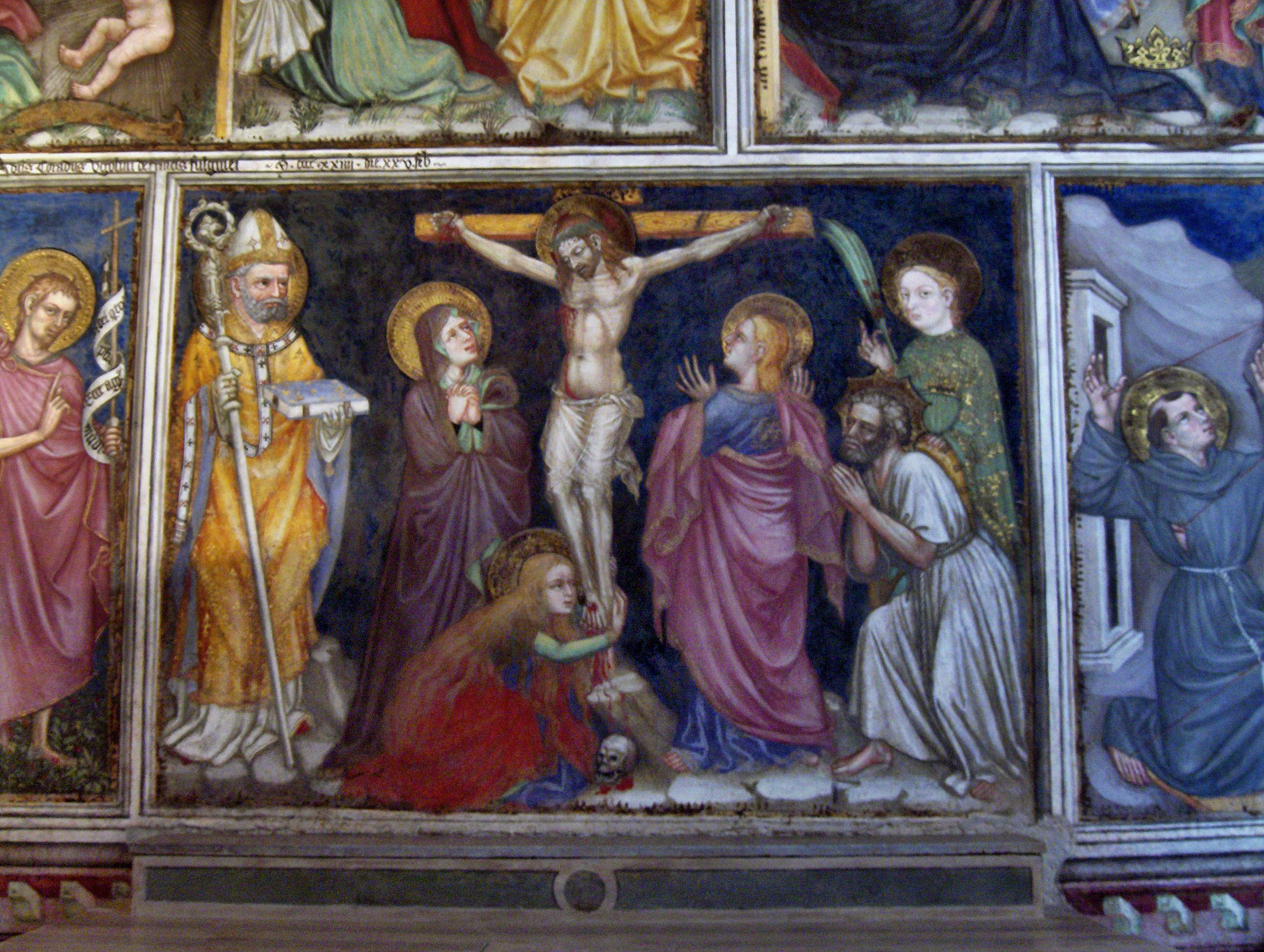
Jacobus da Varagine – pictured in gold (above left) – wrote ‘The Golden Legend’ history of the saints.
AS TIME WENT ON the story of St Lucy and her brutal death at the hands of the Romans captured the imagination of many Christians, who flocked to worship her relics and her memory. Lucy, as her name suggests, is synonymous with light, hope and goodness. In Latin the word ‘lux’ means light or brightness. There is also a second iconic image of Lucy, which has fascinated artists over the years. This is St Lucy depicted holding a golden plate, containing a pair of human eyes, she seems to be offering the eyes to the viewer. This derives from a story that her suitor complimented her on her beautiful eyes. Hearing this sentiment, Lucy plucked out her eyes and offered them to him – not wanting anything to come between her and her devotion to her religion. This addition to the Lucy story, however, was not included until around about the fifteenth century. Although it has had a huge influence on artistic representations of the saint ever since. A perfect example can be found in Venice, in the Sanctuary of Lucia, where you can see a famous version of St Lucy by artist Palma Il Giovane.
As a result of her association with eyes and therefore sight, Saint Lucy has become the patron saint of the blind. She is also considered as a protector of the eyes, and many people with eye disease pray to her. Dante, the father of the Italian language is said to have prayed to Saint Lucy to save his sight, and when his prayers were answered, and his sight was saved, he included her as a character in his great literary work ‘The Divine Comedy’. Lucy is also the patron saint of opticians. She is also the patron saint of electricians, glaziers and writers. In my opinion she should be the patron saint of thinkers, artists and surveyors. Sight and perspective for all of us is everything!
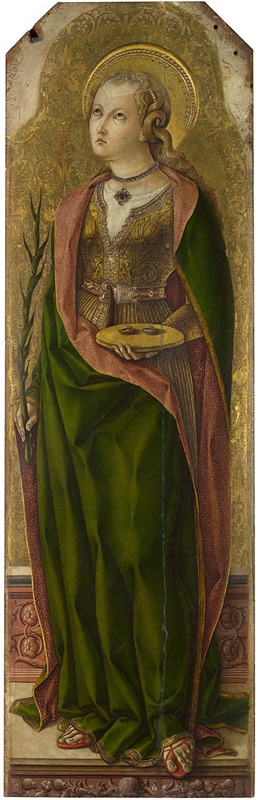
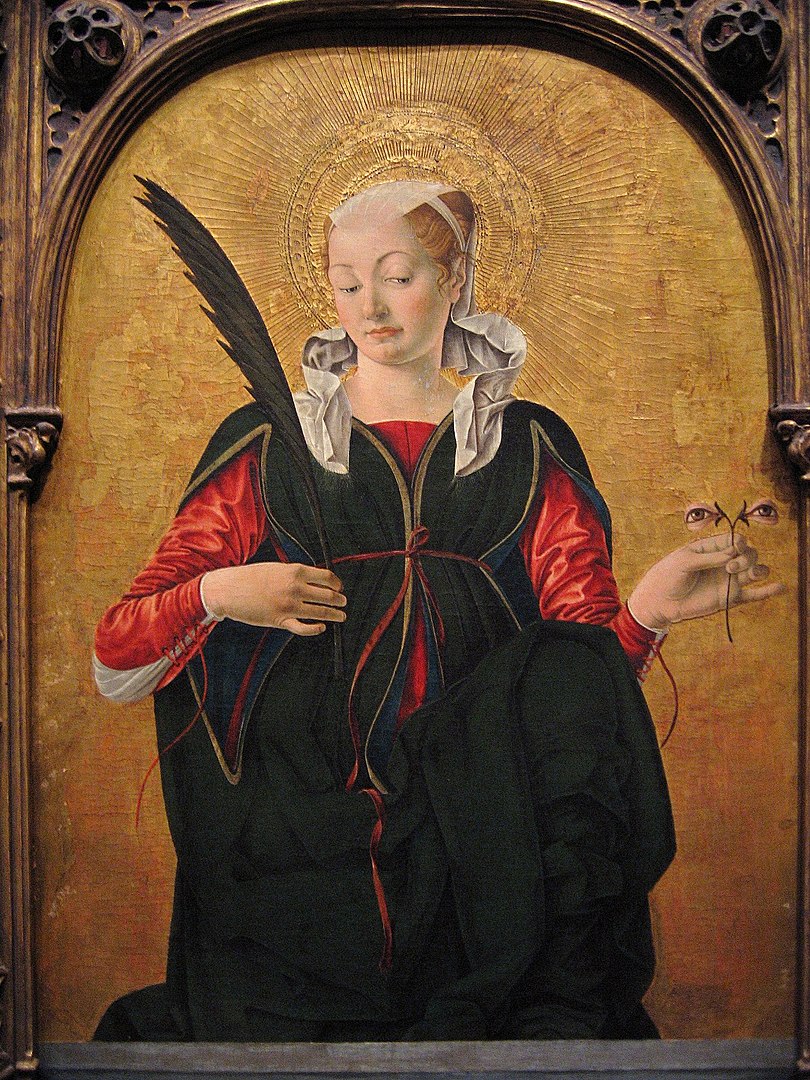
Santa Lucia by Carlo Crivelli c. 1476 – National Gallery, London (left). Santa Lucia by Francesco del Cossa c. 1470
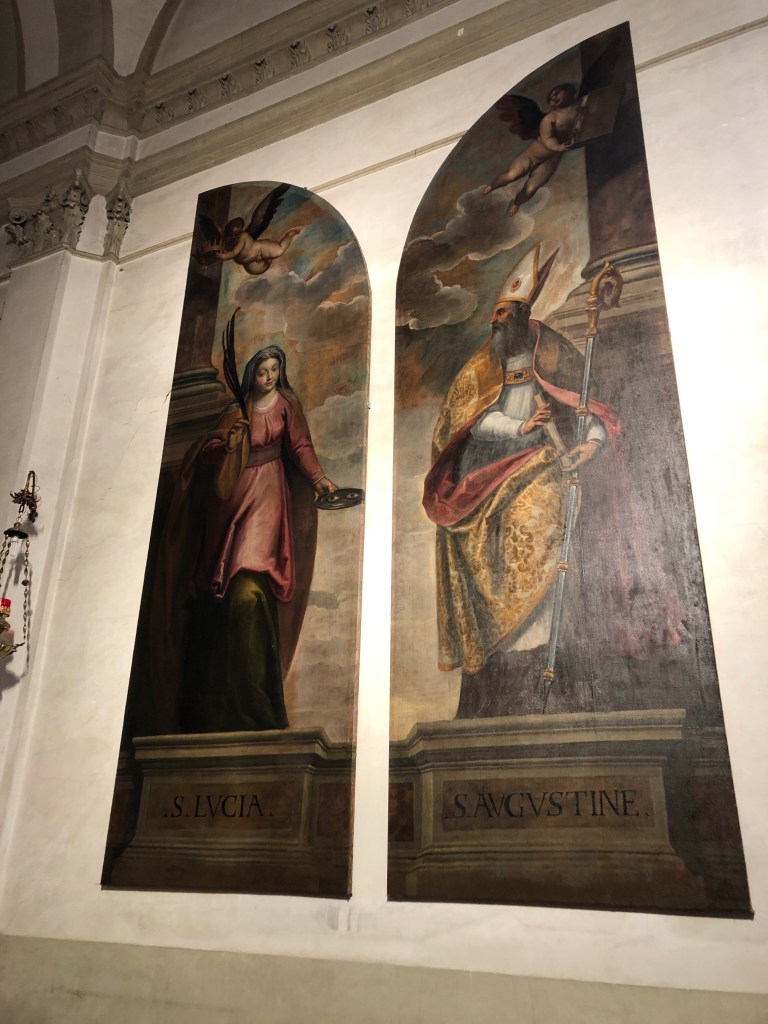
THE SANCTUARY OF SANTA LUCIA in Venice is not in its original location. When a church was built to house the relics of Lucy in the Cannaregio district of Venice, a site was chosen overlooking the Grand Canal. The church may have been partly designed by the famous architect Andrea Palladio. Certainly this black and white photograph from the early 1860s (below) shows Palladian features. The outside of the church features the half circle (demi-lunette) windows often used by Palladio in his villa design – a classical architectural reference to the windows of Roman bath houses. Just a few miles away on the Naviglio di Brenta, the Villa Malcontenta, a Palladian masterpiece, has almost identical windows. However the church was demolished in 1862 to make way for the Venice railway station, which was named Santa Lucia, in honour of Saint Lucy and the church that was destroyed.
There is a plaque embedded into the terrace that separates Santa Lucia train station from the Grand Canal, it marks the spot where the Church of Santa Lucia once stood. It’s a poignant reminder to all of us that times change, that buildings and people come and go, and nothing stays the same forever. However Lucy’s presence in Venice is guaranteed by the existence of ‘Santa Lucia’ the train station that bears her name to this day. Today the ‘Santuario of Santa Lucia’ is located a few minutes walk from the train station in the Church of SS Geremia and Lucia. This is now the place that visitors and pilgrims head for to worship Santa Lucia, in what we hope will be her final resting place.
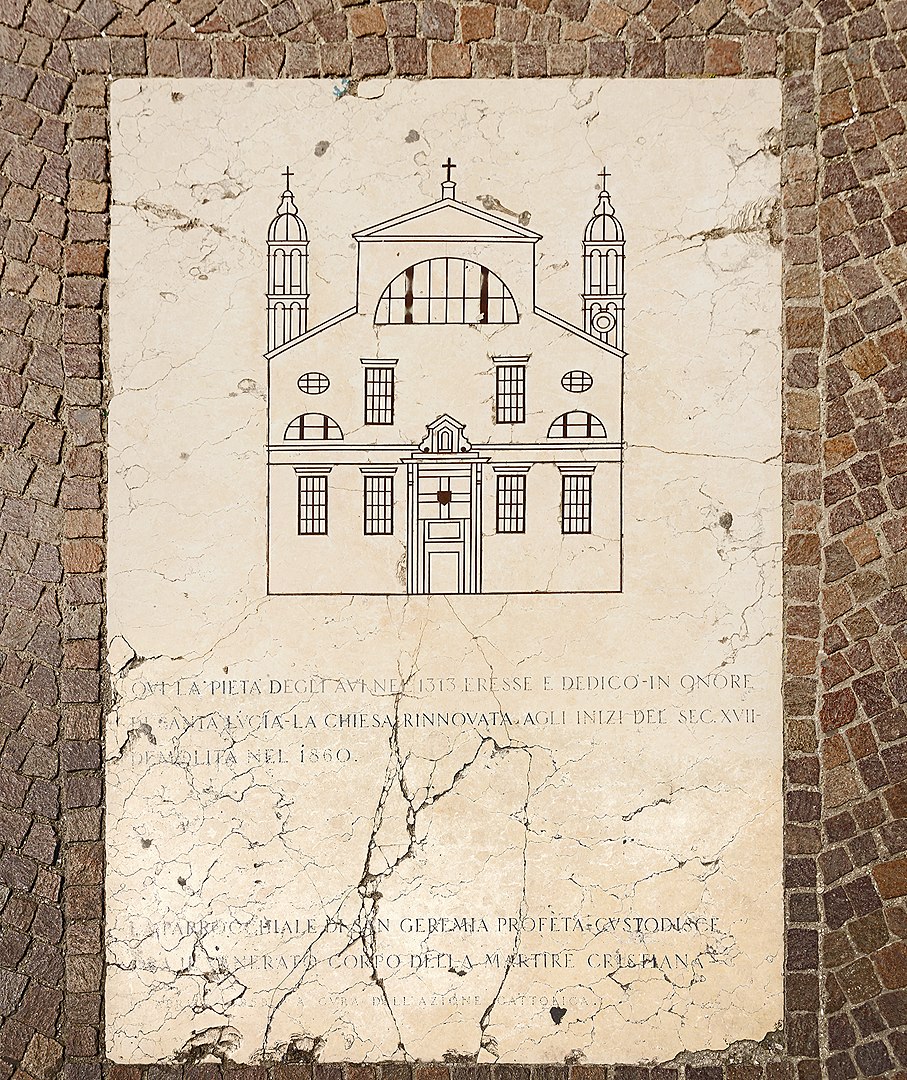
Church of Santa Lucia – 1861 (Bonaldi) demolished 1862-3. The plaque showing where the church once stood (above)
Portraits of Santa Lucia (left and centre) – Sassoferrato and Venezia, Italy. Right Jacobus presents his ‘Golden Book of the Saints’
NOTES:
For a little extra reading:
- Saint Lucy’s Day is celebrated most widely in Scandinavia and in Italy, with two different aspects of her story being emphasised.
- In Scandinavia Saint Lucy or Santa Lucia is represented as a young girl in a white dress wearing a crown of candles on her head. The girl brings light and hope in the darkest days of winter.
- In Italy Santa Lucia is seen as a heroine – an early Christian martyr who died for her faith – she is the patron saint of sight, vision and wisdom.
- Whilst Santa Lucia is venerated and respected in Venice, she is the patron saint of Siracusa (her home town) in Sicily. Every year there is a huge procession through the streets of Siracusa with a huge, life size model of the saint, in silver carried through the town.
- I wrote about Lucy – Santa Lucia – a year ago here’s the link: Santa Lucia – bringer of light
- Further detail on ‘Santa Lucia di Siracusa’ and her history (in Italian). Taken from ‘Siracusa Oggi’ newspaper, on the Feast Day of ‘Santa Lucia’ 13th December, 2019…….. tutto pronto per la Festa di Santa Lucia. La giornata speciale di Siracusa si è aperta, alle 8.00, con i tradizionali “botti”. La città si prepara ad abbracciare la Patrona, con l’emozionante momento dell’uscita del simulacro e delle reliquie sul sagrato della Cattedrale previsto alle 15.30. All’uscita del Simulacro il coro degli studenti degli Istituti Comprensivi di Siracusa, guidato dalla maestra Mariuccia Cirinnà, canterà in onore di Santa Lucia. Confermato il percorso della processione che percorrerà via Picherali, Passeggio Aretusa, via Ruggero Settimo, Porta Marina, via Savoia, largo XXV Luglio, piazza Pancali, corso Umberto, viale Regina Margherita, via Arsenale, via Piave, via Ragusa e piazza Santa Lucia…….
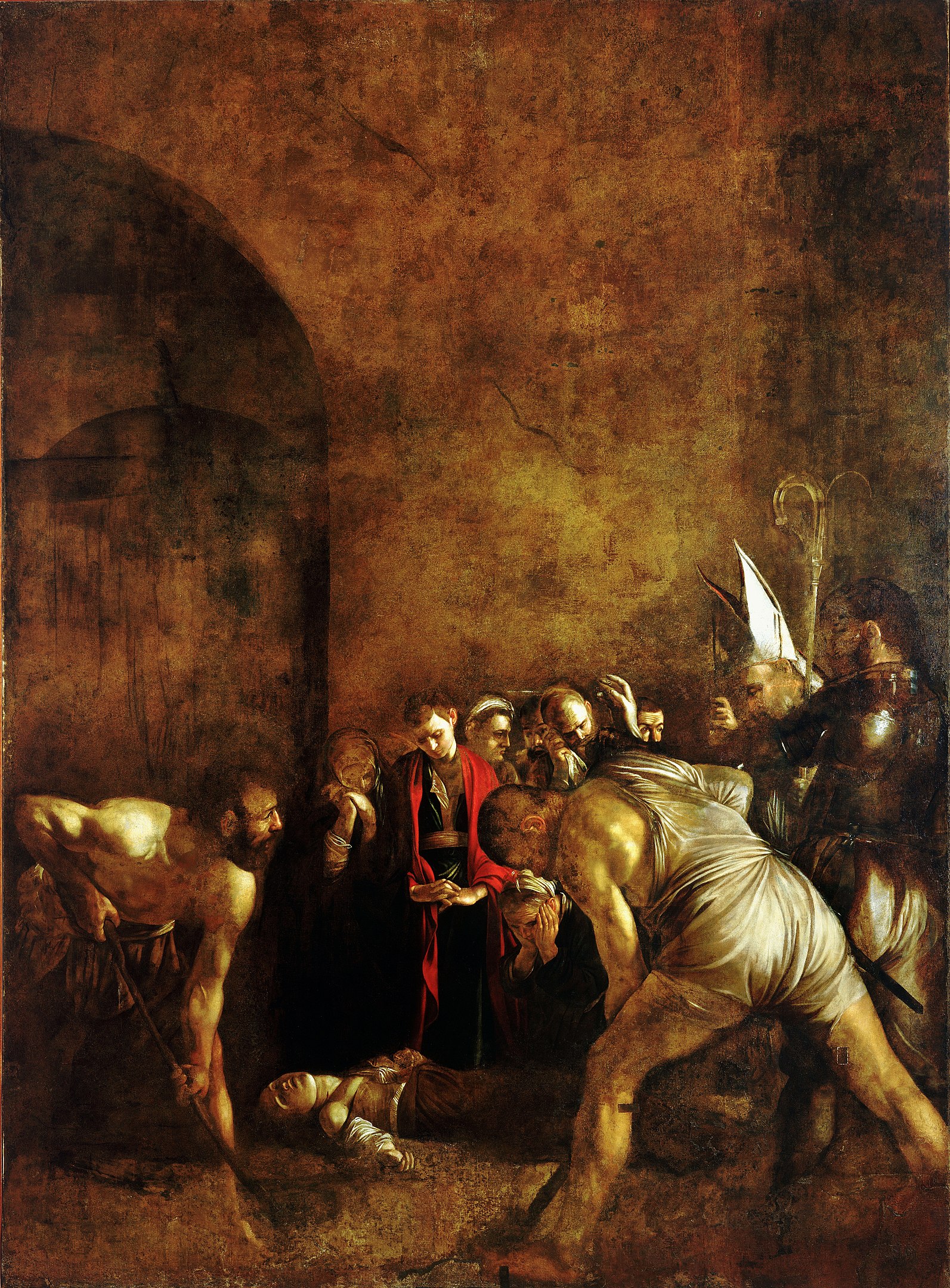

Images of Lucy, Siracusa, Caravaggio, Courtesy of Charles Schultz !
Note – When the train station was built in Venice, this is what a local reporter wrote: ‘Nel 1841 si iniziò a costruire la nuova ferrovia; poiché serviva terreno per la stazione e il suo piazzale, la chiesa e il convento furono demoliti dal nove cento. In ricordo della chiesa, la nuova stazione ferroviaria prese il nome di Venezia Santa Lucia. Il corpo della santa fu invece trasferito nella chiesa di San Geremia, situata non lontano, dove ancor oggi è collocato.‘
- A visit to the Santuario di Lucia, Venezia is strongly recommended.
- Sanctuary of Santa Lucia
- It’s impossible to over-estimate the importance of saints in Italian culture – here are just a few examples of saints I’ve written about over the years:
- St Catherine of Alexandria
- St Christopher – St Christopher
- Sant’ Apollinare in Classe
- The importance of saints and angels: Saints and Angels in Venice…
- Lastly, San Martino – a personal favourite – and how he became a saint: Festa di S. Martino – Venezia
Why not explore my blog: www.educated-traveller.com for numerous articles on Italy!
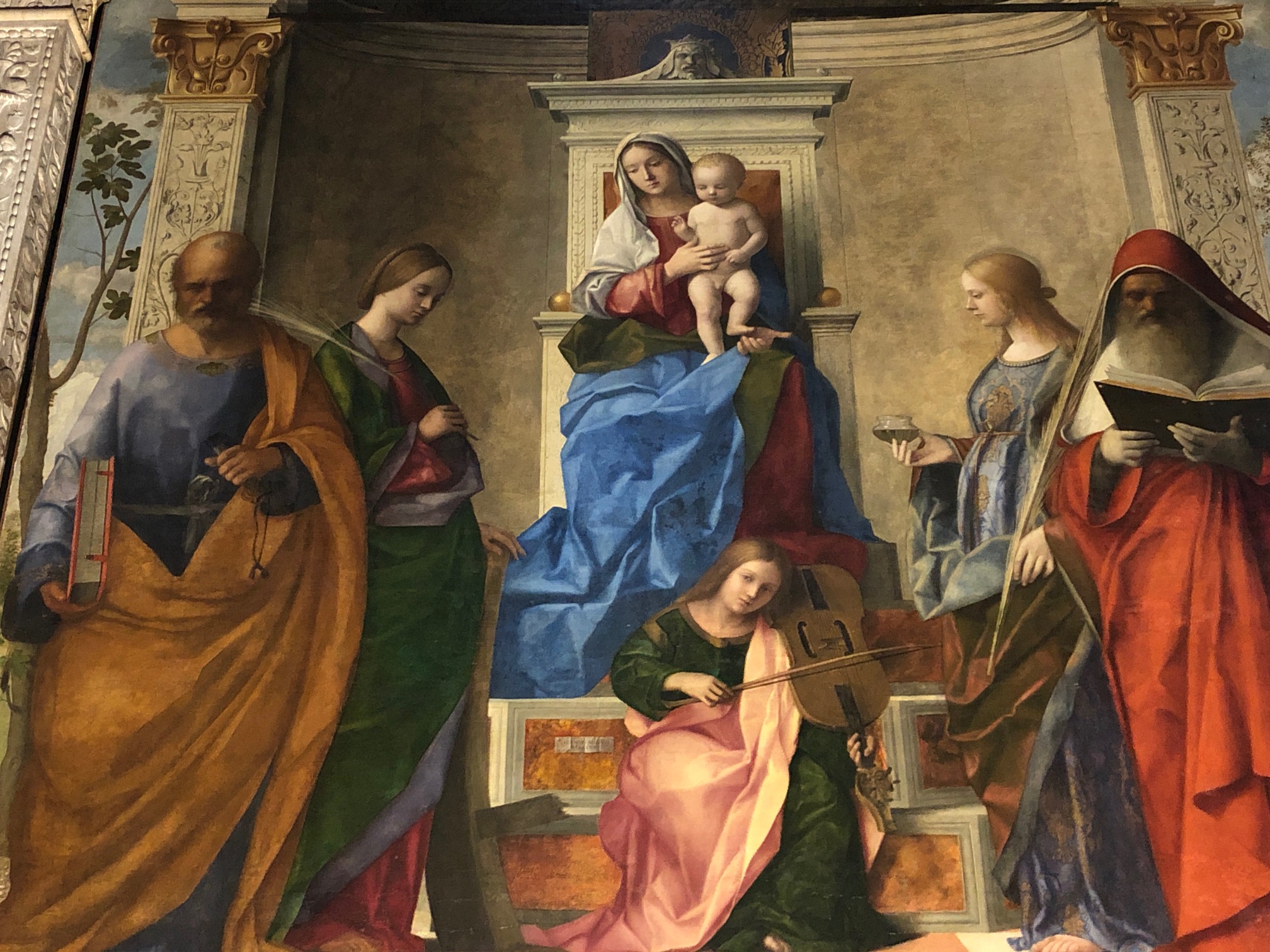

Bellini Masterpiece – San Zaccaria, Venezia c. 1505 – left, SS Peter + Catherine, SS Jerome + Lucy (right) – then above right my own Lucy – bringer of light!
- March, 2020.
- Updated annually on or around Lucy’s Feast Day: 10th Dec, 2021, 10th Dec, 2023, 11th Dec, 2025
- Dedicated to my own bringer of light: Ms Lucy Simmonds

 The Educated Traveller
Why is St. Lucy’s Day such an important day in Sweden and why is she venerated so much in that country?
LikeLiked by 1 person
Lucy is the bringer of light – venerated in Sweden on the darkest of days (december).
LikeLike
An enlightening tale! And I love that you suggest St. Lucia should be the patron saint of artists! I’ll consider her as such from now on!
LikeLiked by 1 person
Your new patron saint, the bringer of light, watches over you xxxx
LikeLiked by 1 person
As always, a very erudite, informative, interesting and readable article, Janet – for which many thanks. However, it is no surprise that, as the mother of a Lucy you should be so much “on top of“ the history of Santa Lucia, in which case, I would be grateful for your further enlightenment of the connection between your daughter and the devil?!
I know that “Lucy“ derives from “Lucifer“ which in turn derives from the Latin words “Lux“ and “ferre” meaning “light“ and “to bring“ respectively; Lucifer apparently originally referred to the morning star, Venus – the “bringer of light“ – but how did that come to mean the devil? Or was this all Dante’s fault?!
Yours
Curious of Cottingley
LikeLiked by 1 person
Dear Curious of Cottingley,
A very good question indeed. Lucifer was the holiest of the angels, he was at ‘God’s right hand’ however he turned his back on God and chose a different path, one of evil, debauchery and sin! Well as we all know, no religious group tolerates deviant behaviour. Lucifer was catapulted to the antithesis of Paradise, he was sent literally and later figuratively to hell!
Lucifer in hell becomes Satan (Dante, 13th century) he is a miserable, masticating blob, an inanimate being. This is the key – he is without soul – in-animate – the implication here is ‘a fate worse than death’…So Lucifer, bringer of light, goes from the most elevated position to the lowliest position in the Christian church. In that sense it follows all folklore tales which are usually stark contrasts of light and dark, good and evil, rich and poor, kindness and avarice. His descent is also a message for the masses (us) to behave ourselves, otherwise who knows what terrors lie ahead…
Apparently Saint Augustine was one of the first western thinkers to suggest that evil is the perversion or distortion of good. A novel idea at the time perhaps that evil was the antithesis of good (an idea that continues into modern culture with the goody and the baddy in most movies)!! Paradise Lost, Milton’s epic 17th century poem categorises Satan as the fallen angel (Lucifer), but even in the 1660s Lucifer’s godly/saintly start in life has serious waned.
Thank you for asking such an excellent question ‘Monsieur Curious’
Greetings to all!!
LikeLike