St Catherine of Alexandria – early Christian Martyr
- Born: 287 AD
- Died: 305 AD
Catherine was an early Christian martyr. She was born in Alexandria, Egypt around 287 AD. At this time Christians were commonly persecuted. The Roman Empire did not recognise Christianity as a valid religion. In fact Christianity did not become the official religion of the Roman Empire until 380 AD with the Edict of Thessalonika. The Edict of Milan passed in 313 AD under the Emperor Constantine gave Christians a legal status, however this was not uniformly observed through the Roman Empire. Catherine was viciously persecuted by Emperor Maxentius.
Catherine was an intelligent and educated young woman who converted to Christianity. For this she was beaten and imprisoned. She was scourged so cruelly and for so long that her whole body was covered with wounds. According to legend blood flowed from her body and yet she did not flinch or indicate any pain. Instead she kept her eyes raised to heaven. The Emperor Maxentius ordered her to be imprisoned without food and water. Whilst in prison angels tended her wounds and she was fed daily by a dove. Christ also visited her, encouraging her to fight bravely, and promised her the crown of everlasting glory in heaven.
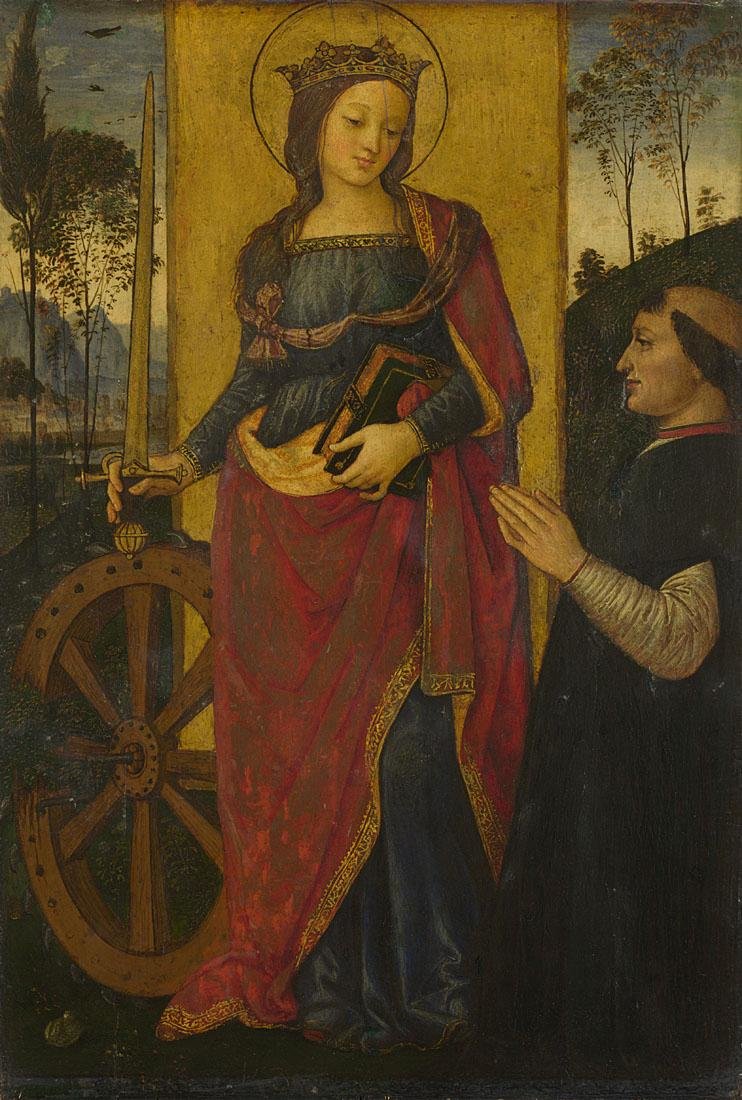
Saint Catherine of Alexandria, with a donor. Painting from c. 1490 by Pintoricchio
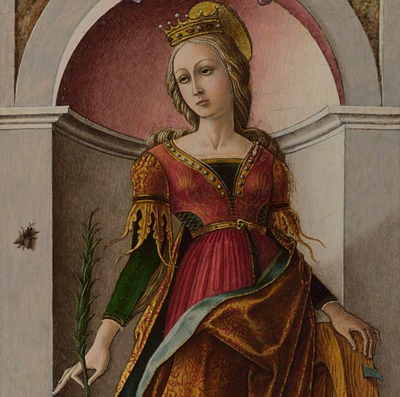
Carlo Crivelli’s superb painting for an Ascoli Piceno altarpiece c.1490 – National Gallery, London
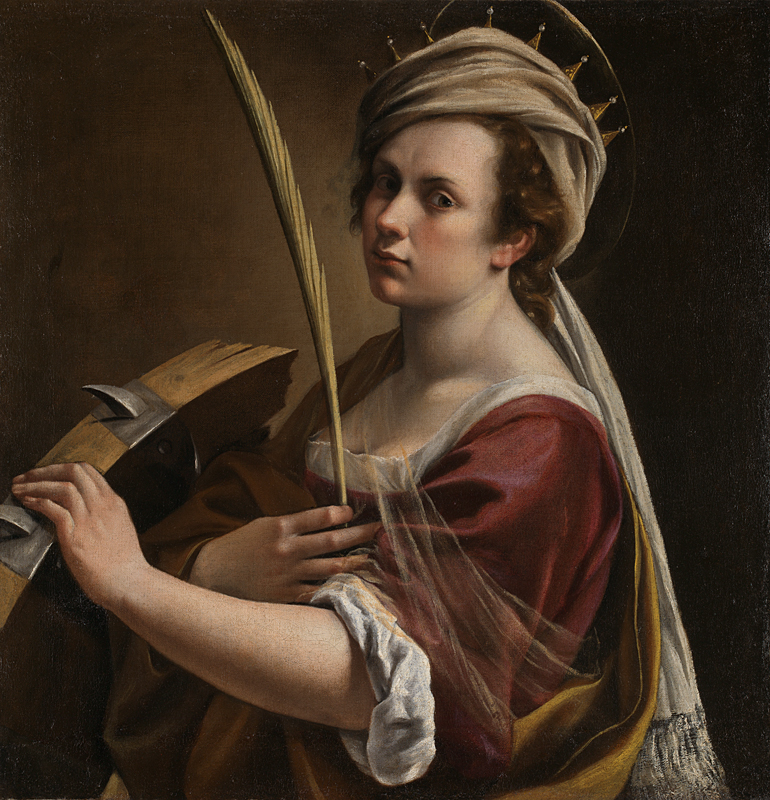
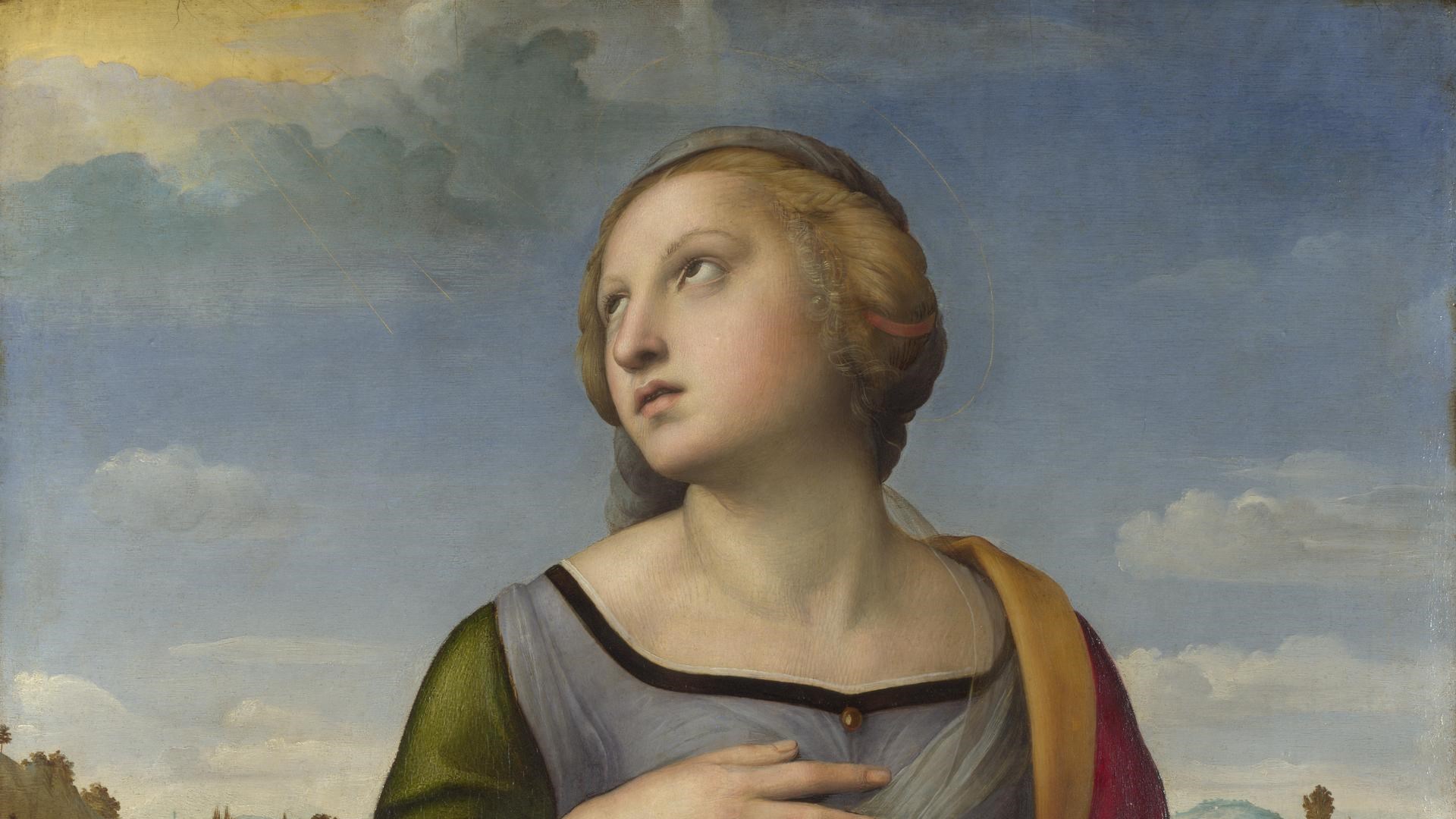
During her imprisonment many people came to see her, including Maxentius’ wife Valeria who had herself converted to Christianity. Twelve days later, when the dungeon was opened, a bright light and fragrant perfume filled the chamber. Catherine emerged more radiant and beautiful than before. Next the even angrier Maxentius tried to win the beautiful and wise princess over by proposing marriage. The saint refused, declaring that her husband was Jesus Christ. The furious emperor condemned Catherine to death on a spiked breaking wheel but, at her touch, the wheel shattered. It is this part of Catherine’s tragic story that has inspired generations of artists. Catherine is frequently portrayed either with a wheel or a broken fragment of a wheel. A direct reference to the method of death that Maxentius had chosen for her. This makes her satisfyingly easy to spot in paintings. Raphael, Pintorrichio, Caravaggio and Artemisia Gentileschi have all painted portraits of Catherine of Alexandria.
To return to Catherine’s sad demise…. Eventually Maxentius ordered her to be beheaded. Catherine herself ordered the execution to commence. It is said that a milk-like substance rather than blood flowed from her neck. The story continues that angels transported her body to the highest mountain in the Sinai Peninsula close to Mount Sinai. In 850, her body was discovered by monks from the nearby monastery. The monks found an impression of the form and shape of her body on the granite rock where she lay. Her hair was still growing, and a constant stream of the most heavenly fragranced healing oil issued from her body.
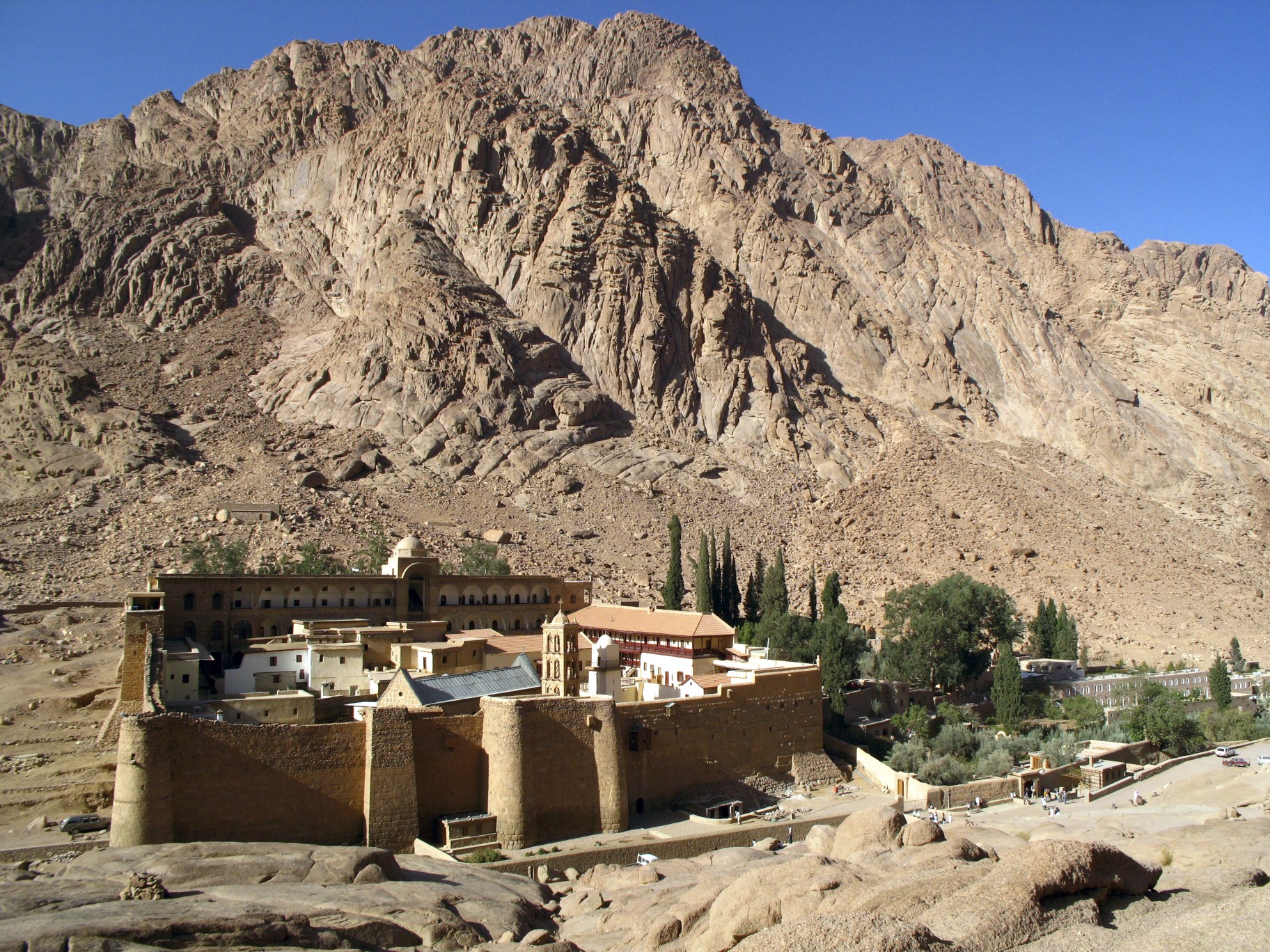
In the 6th century, the Eastern Roman Emperor Justinian established what is now Saint Catherine’s Monastery in Egypt. Her relics including her left hand remain at the monastery. Some pilgrims claim that her hand is warm to the touch. Many people make the pilgrimage to St Catherine’s Monastery in the hope of receiving miracle healing from the saint. Catherine’s sad story is both tragic and mesmerising.
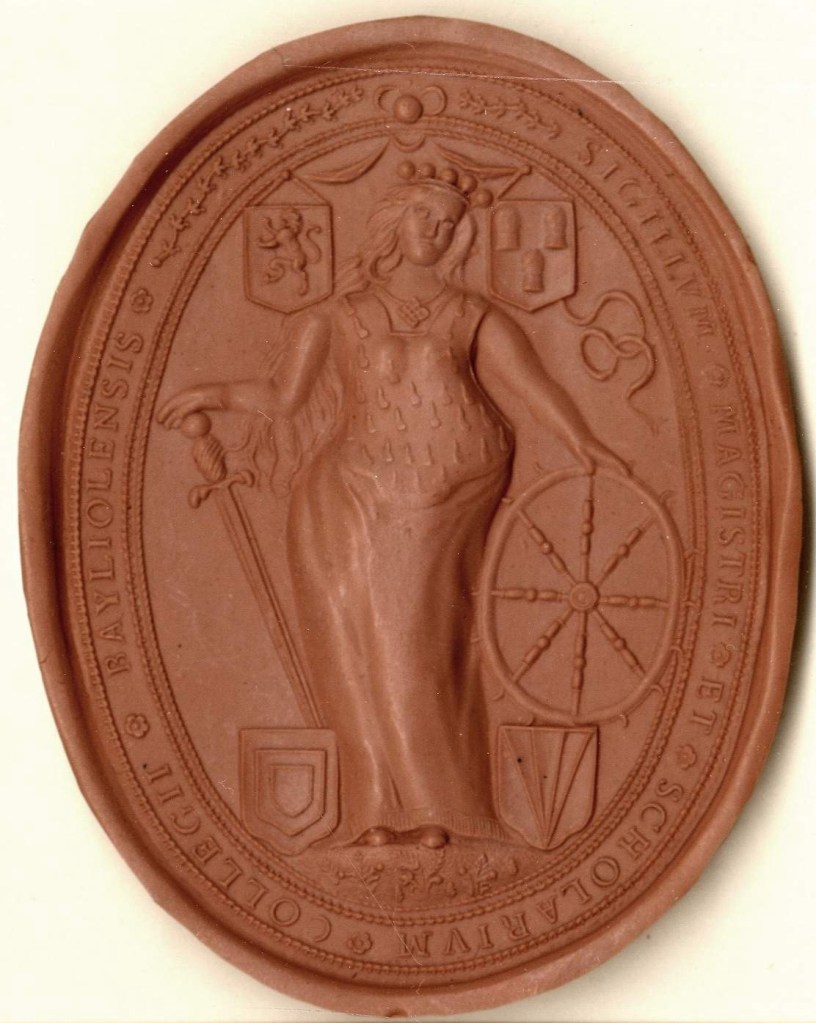
Catherine is the Patron Saint of Balliol College, Oxford. Every year they have a St Catherine’s Day dinner for college members. In 1668 Henry Savage published the first history of the College entitled Balliofergus. He discusses the etymology and proper pronunciation of the name Catherine, and describes in detail the new wax seal for the college made in 1588,
….a new Seal was Fabricated, with the Image of St. Catherine in it, having her Sword in one hand, her Wheel in the other, and her Crown upon her head, with the several Coats of Arms placed, around her….. The new seal’s legend curves around the edge of the medallion and reads (in Latin) SIGILLVM – MAGISTRI – ET – SCHOLARIVM – COLLEGII – BAYLIOLENSIS Which translates as ‘The Seal of the Master and Scholars of Balliol College’. The seal would have been used on official correspondence of the college and features, very clearly St Catherine, with her sword and the breaking wheel that led to her death (see below).
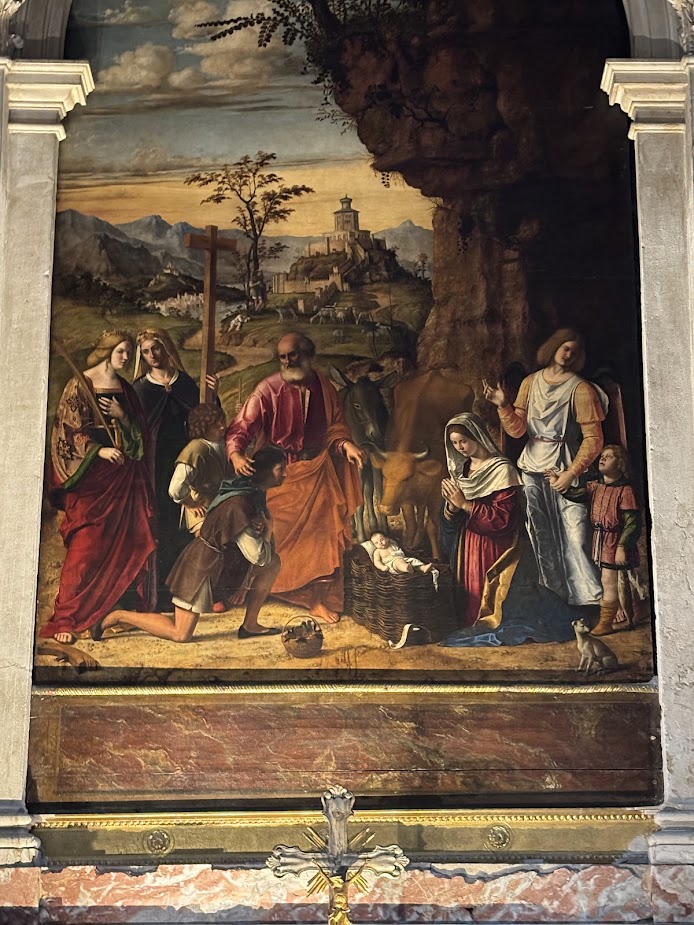
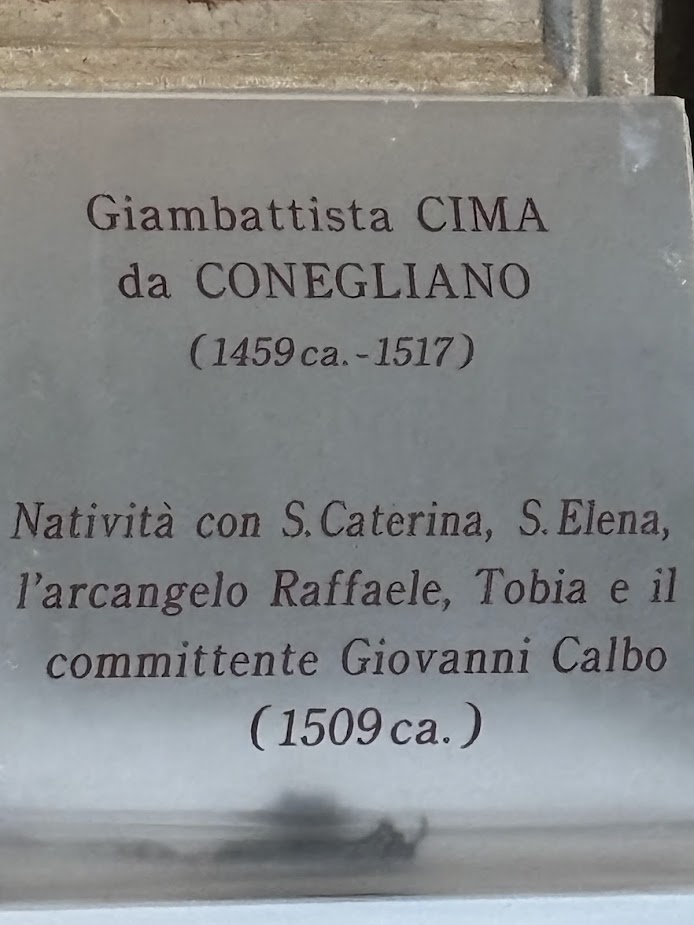
Cima da Conegliano – Nativity Scene with St Catherine standing to the left of the Holy Family. Painting c. 1509 (Carmini Church)
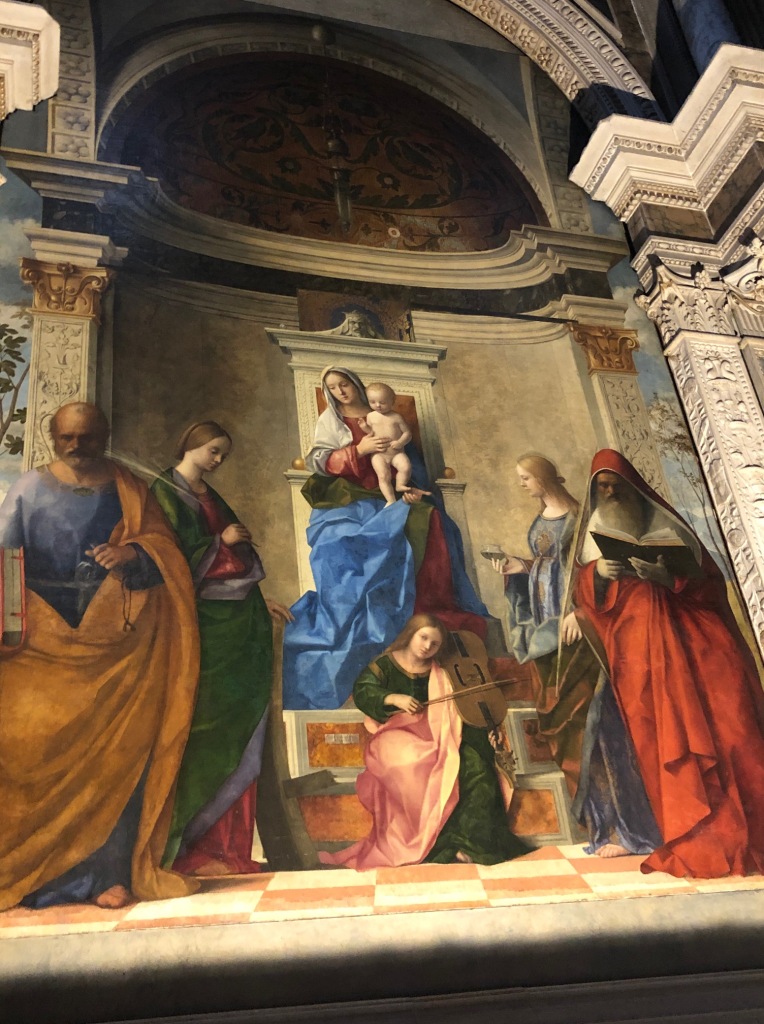
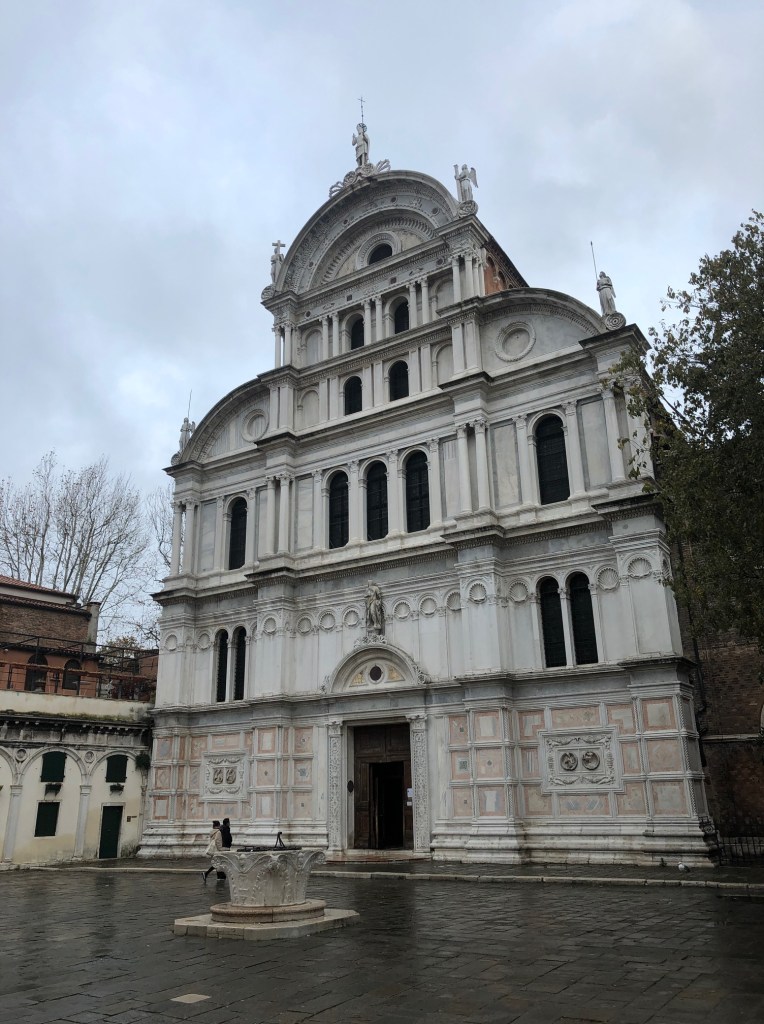
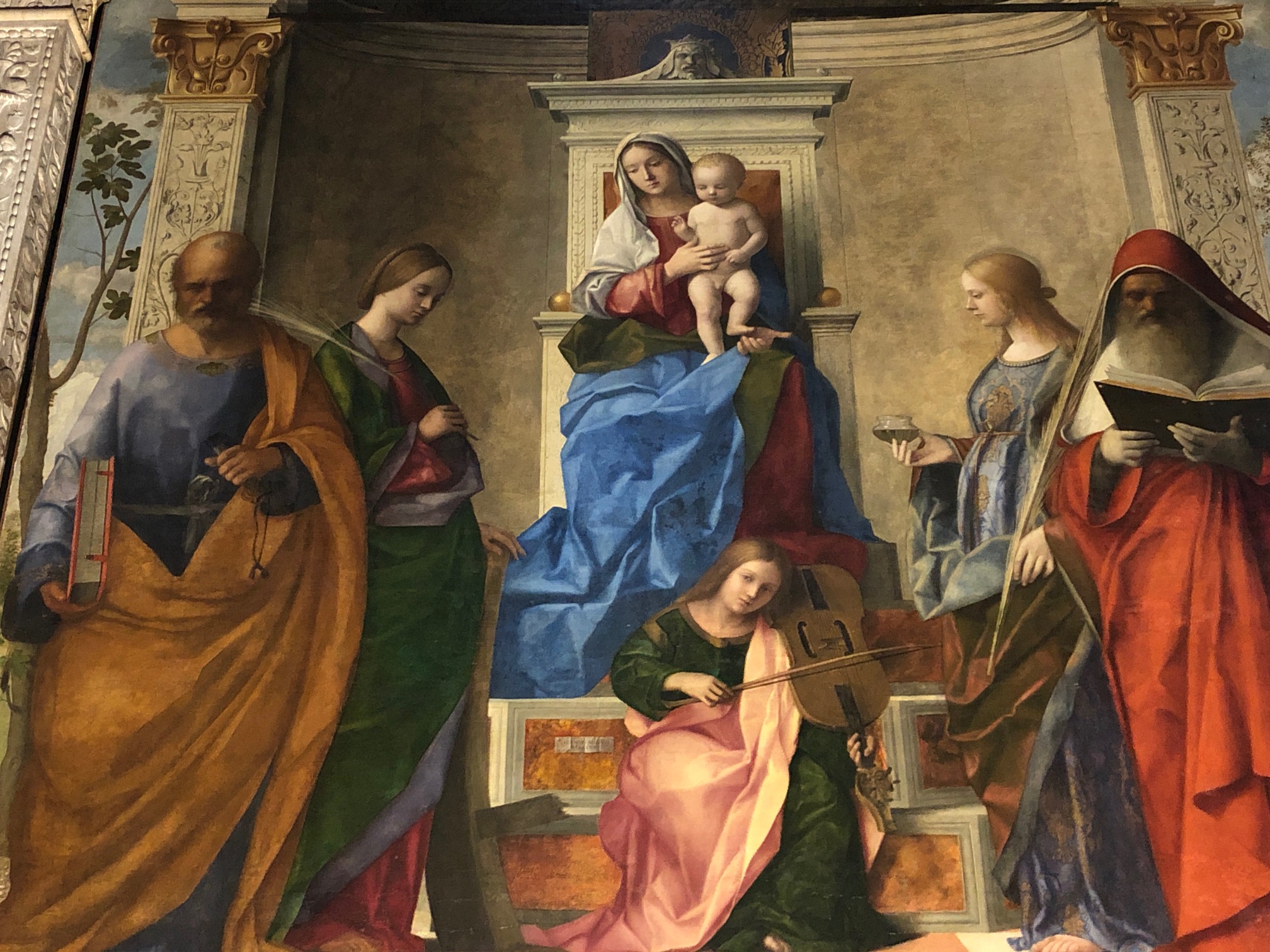
St Catherine stands to the right of St Peter (with his keys), the breaking wheel is to her right – San Zaccaria, Venezia
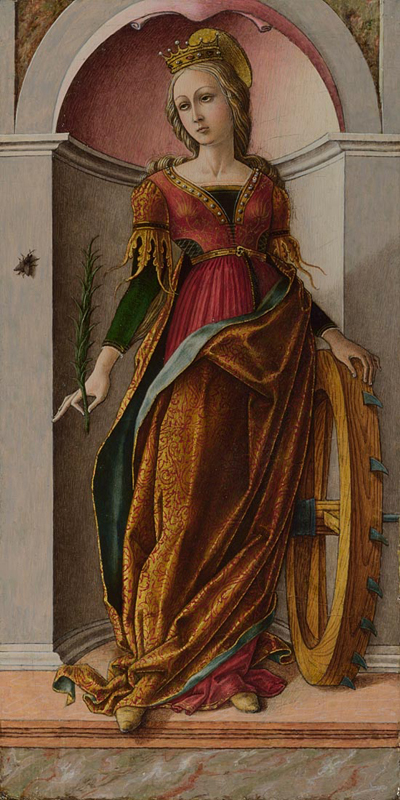
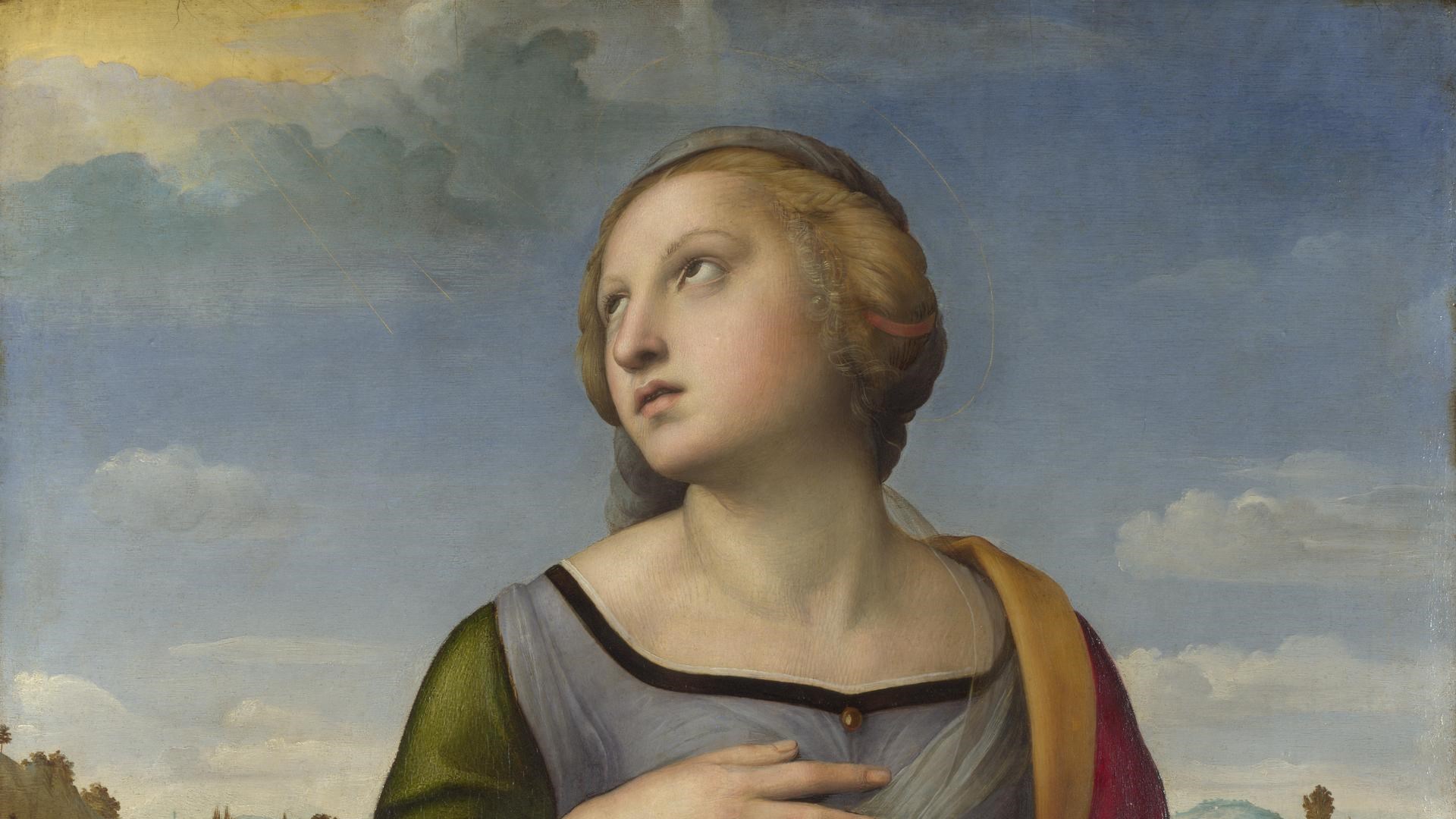
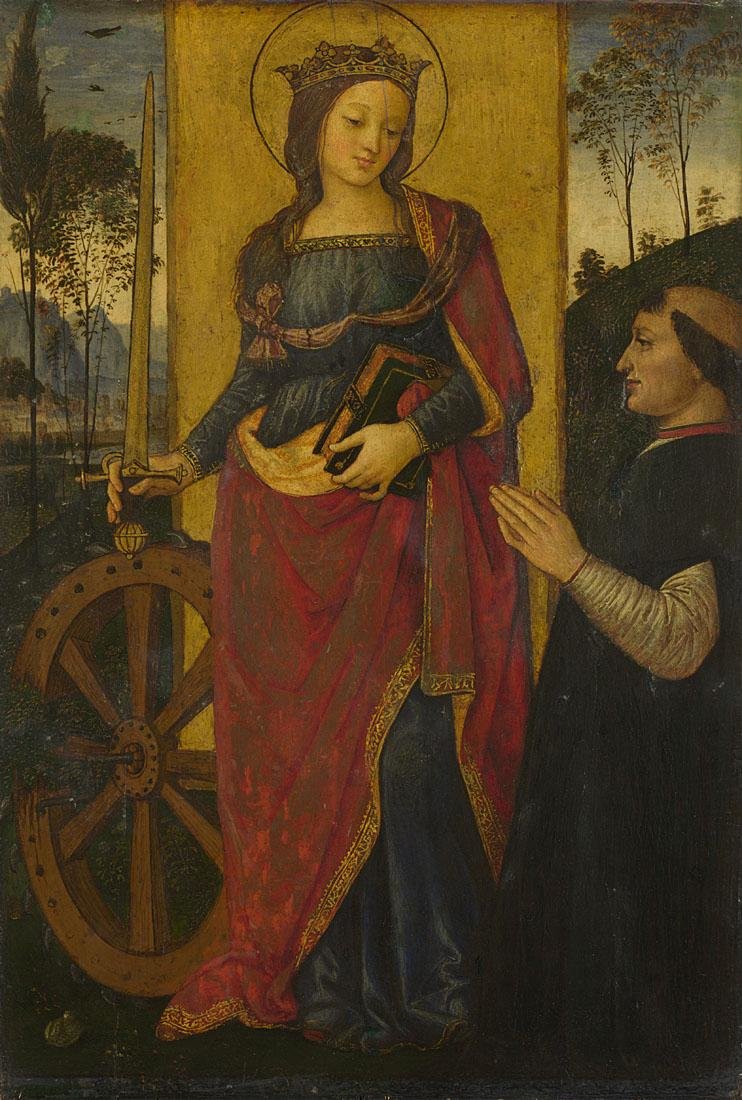
Saint Catherine of Alexandria painted by Carlo Crivelli, Raphael and Pintorrichio
Notes:
I became interested in Catherine of Alexandria when I was looking at 16th century paintings in the National Gallery, London. The National has at least five paintings of Catherine – probably more. These are as follows:
- Pintorrichio: 1480-1500 (painted on wood)
- Raphael: 1507 (oil on poplar wood)
- Caravaggio: 1598 (oil on canvas)
- Artemisia Gentileschi: 1616 (oil on canvas)
- Carlo Crivelli: 1490s tempera on lime (wood)
I was reminded of St Catherine again when I saw her in Giovanni Bellini’s altarpiece in the Church of San Zaccaria, Venice – here’s the full article: Venice – there’s treasure in every church
You can discover more about The National Gallery here National Gallery, London
Balliol College references come from the college web site which quotes:
- J. Jones, Balliol College: A History. 2nd ed. rev. OUP 2005, p. 7
- H. Savage, Balliofergus. 1668, pp. 81–2
- www.balliol.ox.ac.uk
Santa Lucia – St Lucy has a fascinating story too: The legend of St Lucy – that’s Santa Lucia in Italy
UPDATE – A recent discovery by me! This fascinating painting of Catherine evading her persecutors – painted by Palma the Younger, hanging in the Frari Basilica, Venice – painted in the 1590s….. just look at the drama and action in the painting. Catherine is seen to be rising above the chaos and fighting going on around her – her posture and composure are truly saintly. She is wrapped in a crimson cloak signifying a regal or royal presence, perhaps as she has God as her protector. The broken remains of the ‘breaking wheel’ can be seen in the painting and the details below.
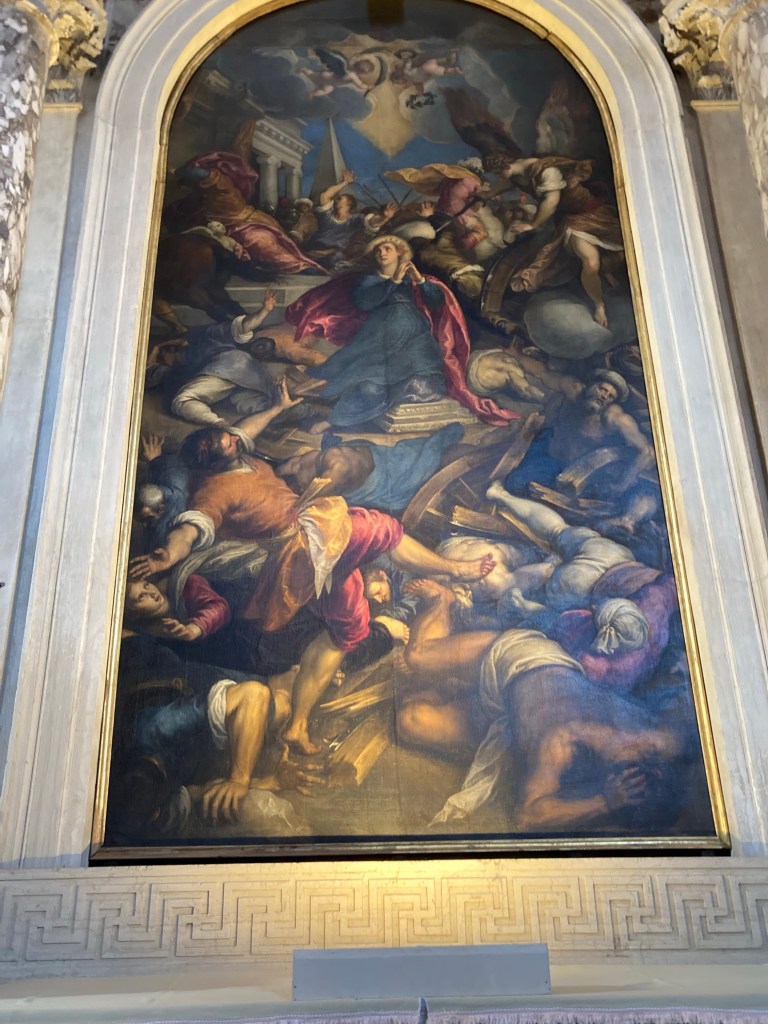
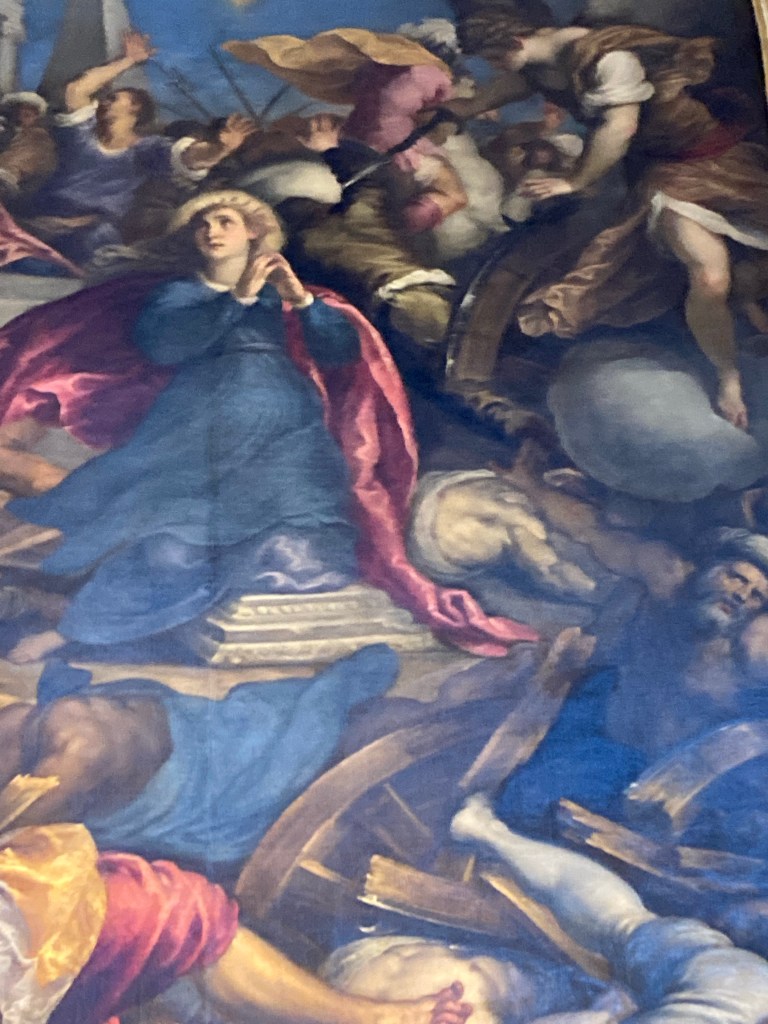
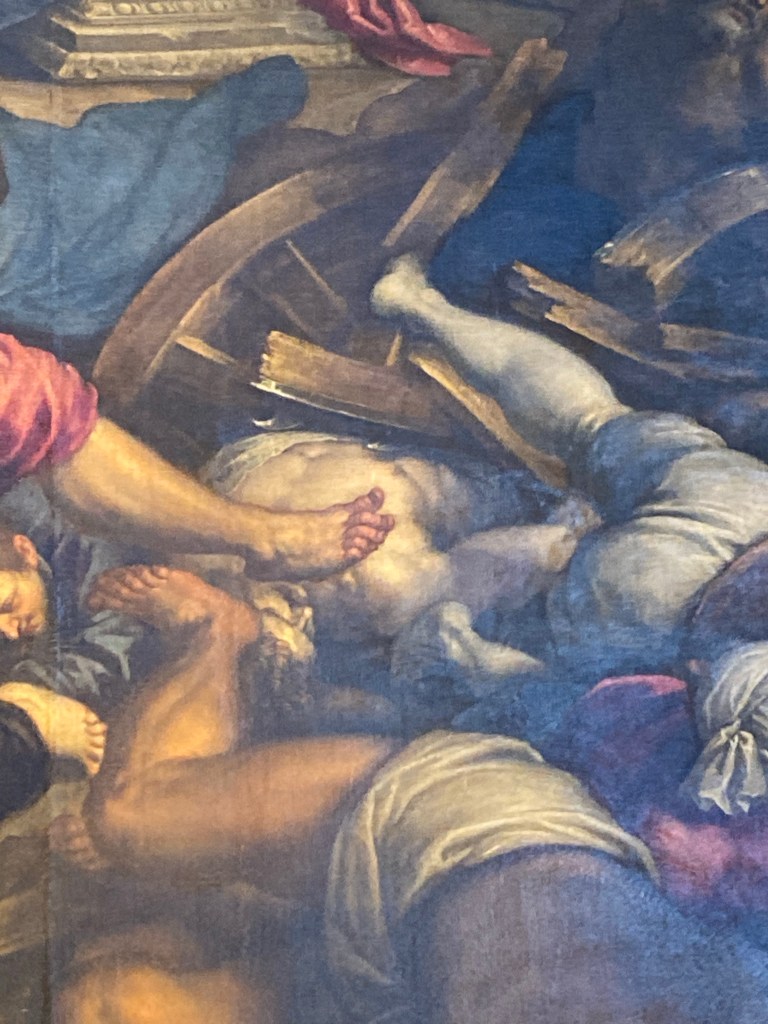
This painting is by Palma the Younger – 1590s. St Catherine of Alexandria is seen ascending into heaven. Photos by: www.educated-traveller.com
My motto – Never stop learning.
You can discover the stories of other saints (known as hagiography) in the other articles that I have written over the last couple of years – perhaps starting with:
- Christopher – patron saint of travellers (a personal favourite of mine)
- Santa Lucia – St Lucy has a fascinating story too: The legend of St Lucy – that’s Santa Lucia in Italy
- Santa Lucia – bringer of light …
- Festa di San Martino – Venezia
- Sant’ Apollinare in Classe
- #discovery
- #journeys
- #grandtourist
- #educatedtraveller
- Written: 21-11-2019
- Updated: May 2022 / Dec 2024 / Nov 2025 / March 2026
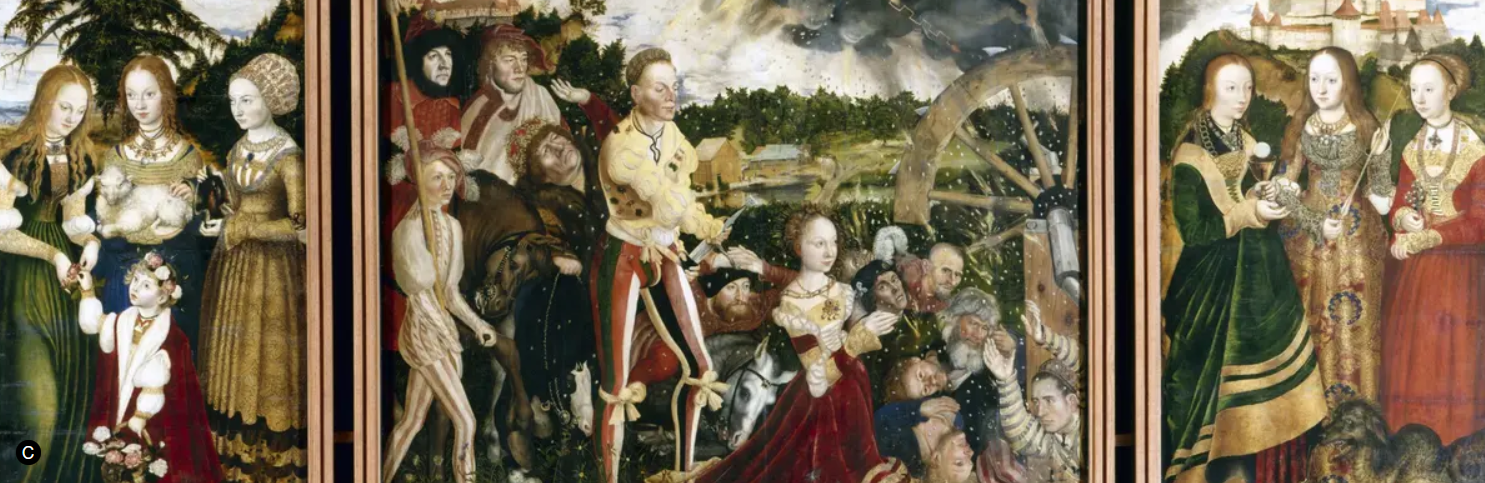
The Martyrdom of St Catherine by Lucas Cranach, 1506 – Dresden.

 The Educated Traveller
You’re right, Janet–so fascinating! Thank you for sharing this story!
LikeLiked by 1 person
Wonderful research, thank you Janet. I feel like I know her now.
LikeLiked by 1 person
Thank you Annmarie – I found her story very inspirational! X
LikeLike
EAFAA, Janet!
*Erudite And Fascinating As Always)
Many thanks
John
LikeLike
In the home of Catholicism (Italy) you are learning a lot about all aspects of The Church in history. It’s all so interesting, and thank you for passing it along to your readers.
LikeLiked by 1 person
I think I might become addicted to St Catherine of Alexandria x
LikeLike