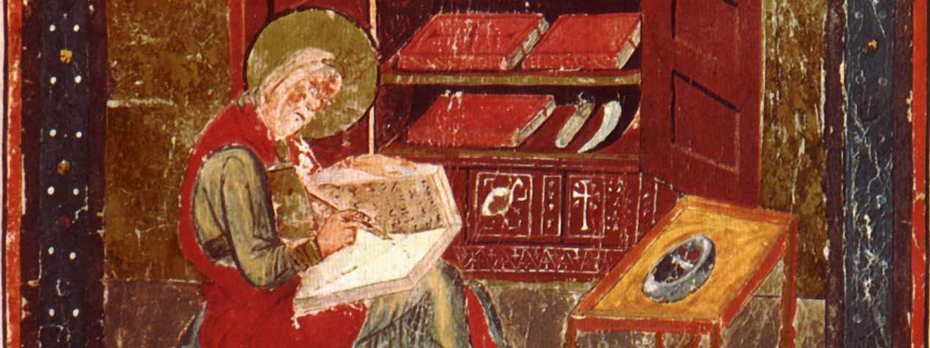
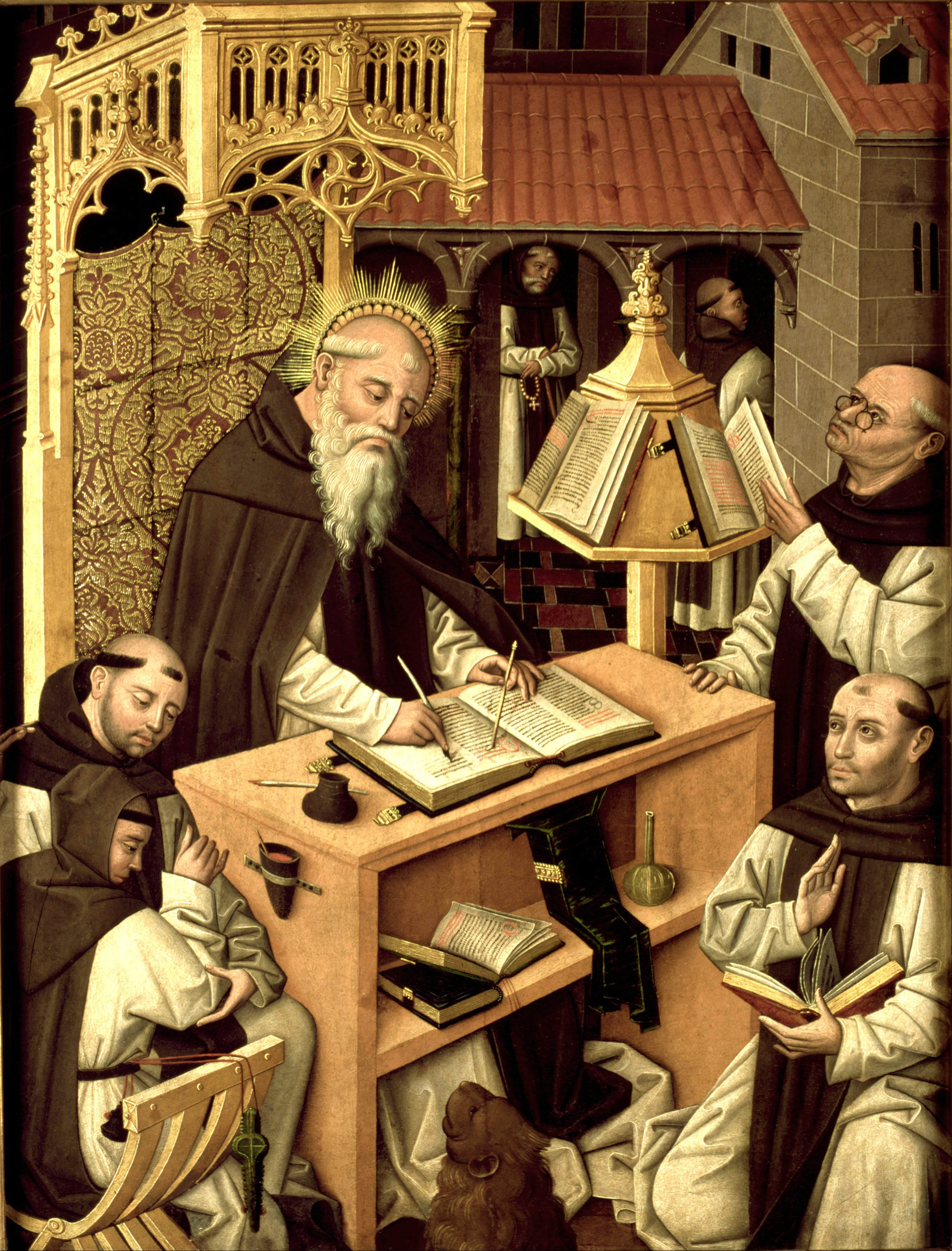
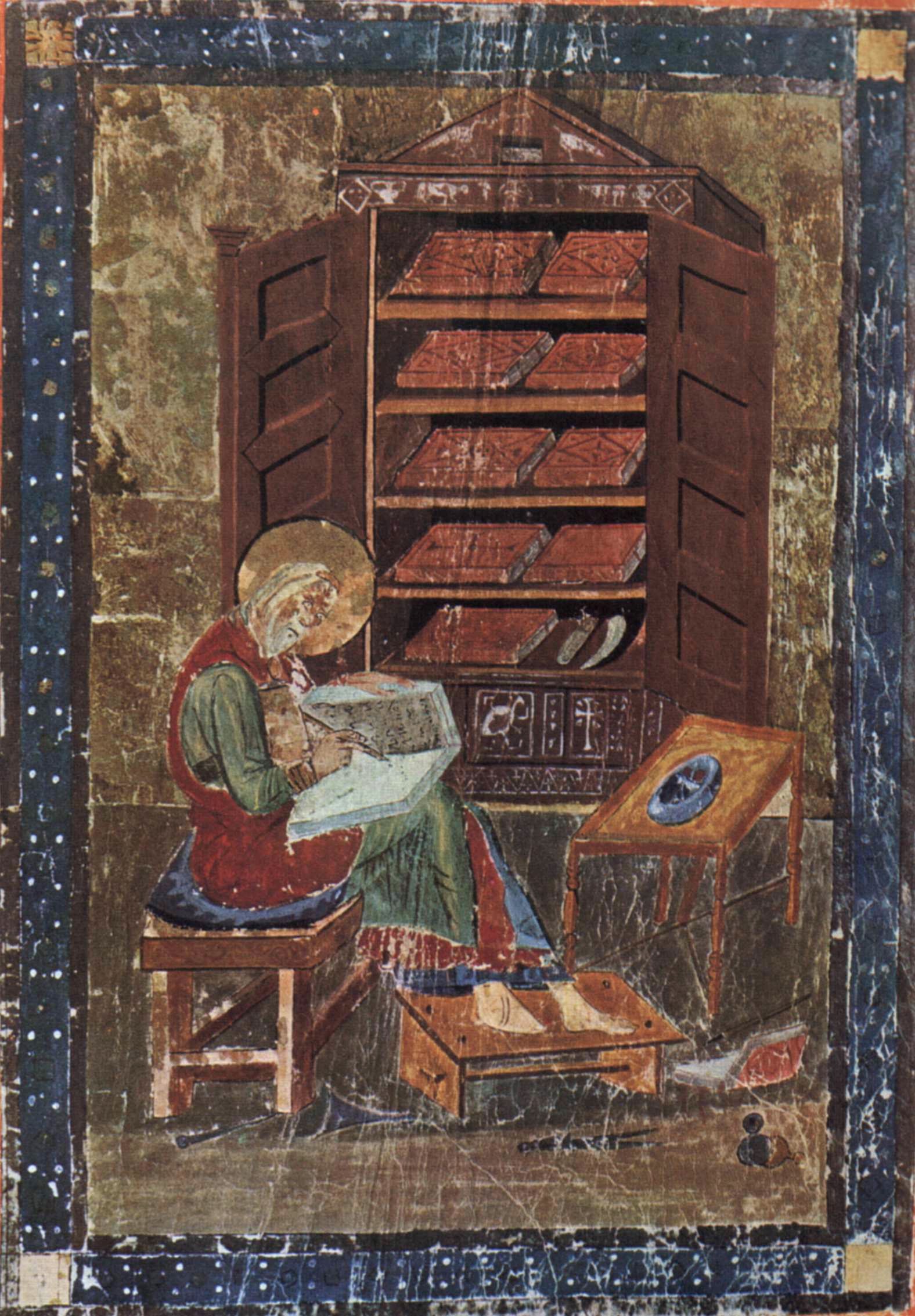
Before the invention of the printing press books were written by hand, usually by monks working in a room called a ‘Scriptorium’. The ‘Scriptorium’ was a small space, in the monastery, next to the library. Here the scribes (writers) would write, illustrate and copy manuscripts. In England the most famous historian, writer and translator was ‘The Venerable Bede’ a monk who lived from 673-735 AD. He is regarded as the first English historian – he wrote or translated more than 40 books.

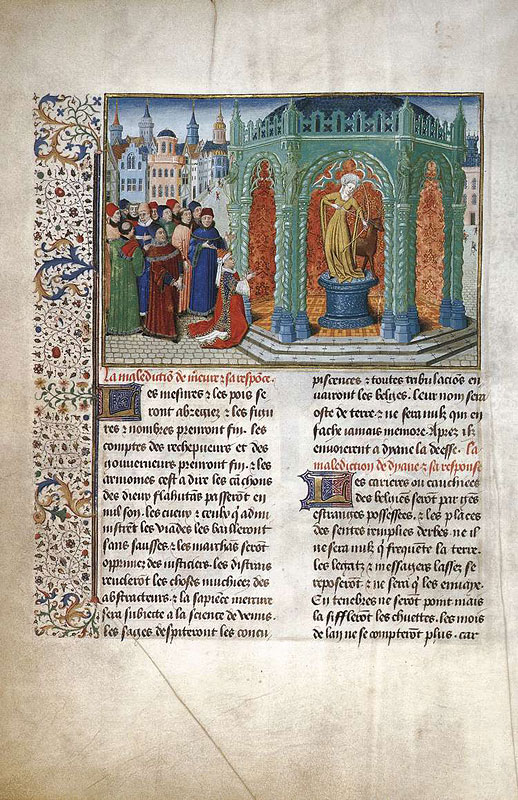
In Roman times writers like Pliny working in the middle years of the 1st century AD would send his notebooks to a ‘librarius’ a book seller who owned a ‘Scriptorium’ literally a writing room. The ‘Scriptorium’ was staffed by dozens of literate, skilled men (probably slaves). These scribes would copy out (or transcribe) Pliny’s words onto long rolls of papyrus (usually from Egypt). At some point some of these copyists might have decided to improve the flow of the words to create more elegant arguments or more coherent ideas…..thus the job of editor was born!
When the printing press arrived in the late 15th century the need for a scribe or a scriptorium was suddenly obsolete. The printing press was invented in Mainz, Germany by Johannes Gutenberg in 1439. However it was not in use commercially until the 1450s and it was almost thirty years later when William Caxton set up a printing press in London. One of the first books that Caxton printed was Chaucer’s Canterbury Tales.
By the 1520s cities across Europe had numerous printing presses in operation. Venice was one of the most important printing cities in Europe with hundreds of presses printing books in Latin, Greek, Hebrew, Armenian and Italian. Aldus Manutius established The Aldine Press in Venice, he was very influential in directing the reading habits of the Venetian nobility.
Scriptorium – The monastic libraries of St Gallen, Switzerland and Reichenau, Germany both had a room for a whole team of scribes, located next to the library, where hundreds of manuscripts and incubula (early books) were copied out by hand.

To read more about early libraries – may I suggest:
- St Gallen – Switzerland a Baroque Library where there is an incredible collection of manuscripts and early books (incunabula) housed in a spectacular Baroque library.
- We also refer to Reichenau in another article by Lucy Simmonds: Reichenau
- Other articles that I’ve written that may be of interest:
- Printing in Venice
- Lord Byron and the Armenians in Venice….
Updated: 10th January, 2022 / May, 2026


2 thoughts on “Scriptorium – the writing room”