In June of 2025 I discovered the artist Gabriel Bella. An artist I’d never heard of before. There is a room dedicated to his paintings at the Querini Stampalia in Venice. Imagine my surprise and delight when I saw that the Querini is hosting an exhibition of the works of Gabriel Bella opening on 13th December, 2025. Here’s what I wrote about Gabriel Bella just four months ago. I always like to be ahead of the curve!
Gabriel Bella carefully and assiduously painted the pomp and ceremony of Venice from about 1750 to 1780. He’s probably the most important chronicler of the city of Venice that very few people know. This was the age of the Grand Tour in Italy, a time when the first waves of tourists were arriving to discover for themselves the art, beauty and entertainment opportunities of the Serenissima. Visitors found a vibrant cultural hub of artists, musicians, theatres and concerts. A stroll through St Mark’s Square might have included a chance encounter with Vivaldi, Casanova or perhaps Tiepolo or Canaletto. The Caffe Florian opened its doors twenty years earlier and was the place for a delicious hot chocolate drink, all the rage at the time. It was in this environment of elegance and social engagements that the artist Gabriel Bella was active. He lived in Venice from 1730-1799.
Almost nothing is known about this prolific artist. However we do know that he was a contemporary of Canaletto and Guardi, and painted in a similar, precise manner. We can deduce from the subjects that he painted, that most of his canvases were created between the late 1740s and 1782. He left behind a social commentary that is invaluable in our understanding of the city of Venice and its day to day life. His canvases are a detailed record of the social events of the day, ranging from the Women’s Rowing Regatta to a noble Woman’s Wedding.
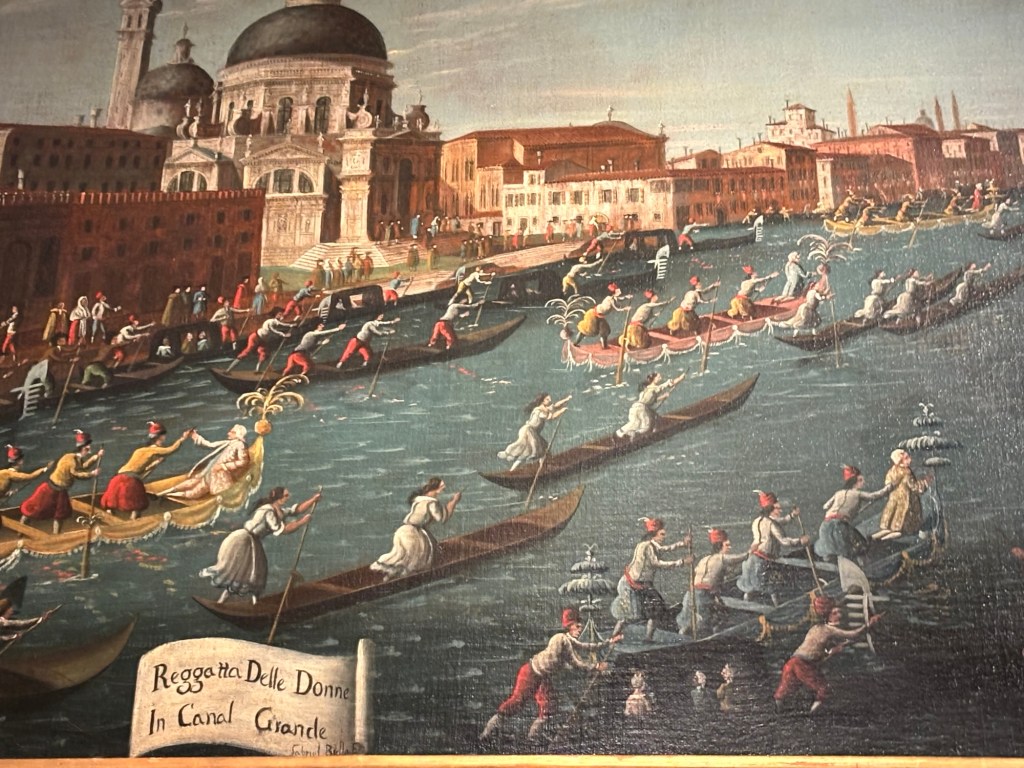
The beautiful and rambling Palazzo Querini Stampalia holds more than sixty of Gabriele Bella’s paintings. They hang in their own dedicated room on the second floor – although they may have been moved for this exhibition. The artist primarily painted events and activities in the city. These superb historical documents show us a vast range of snapshots of Venice in the mid-1700s. Let’s start with a favourite of mine, a painting of the Women’s Regatta – possibly in 1760 (see below).
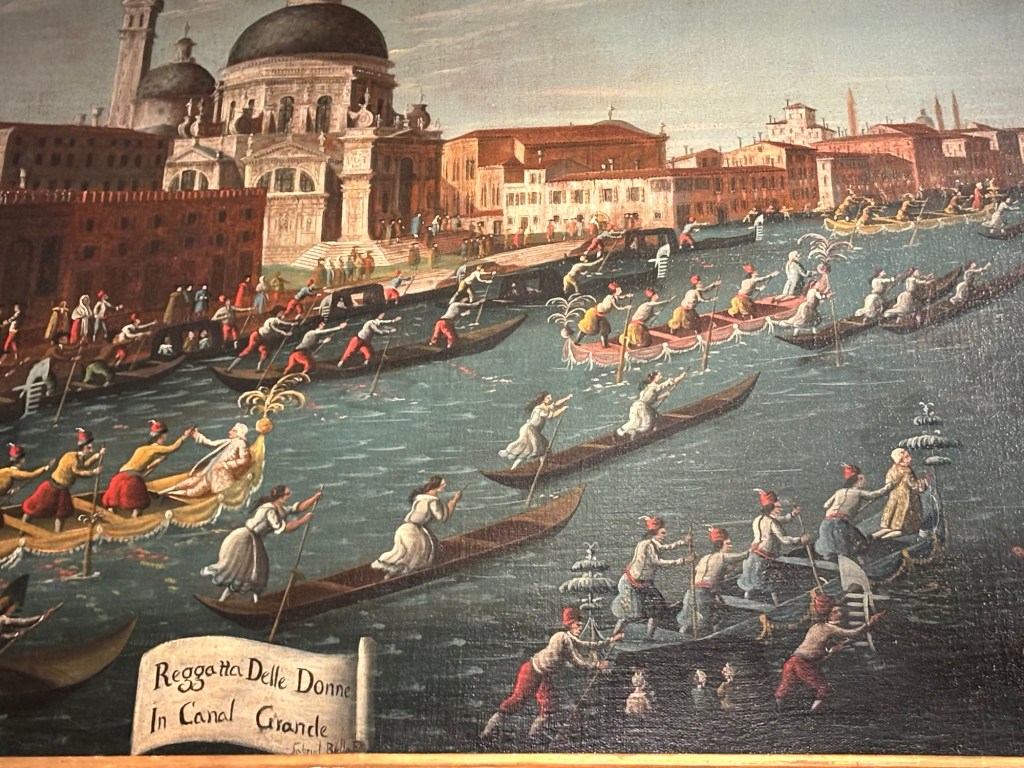
Women’s Regatta on the Grand Canal – Gabriel Bella
I particularly like this painting showing the Women’s Rowing races in the mid 18th century. I’m a little less keen on the voyeuristic ‘Casanova characters’ lasciviously watching the races from their private boats. However the detail of the boats, colour of the costumes and exceptional depiction of the scene is captivating. Gabriel Bella manages to achieve movement, determination and a dynamic racing spirit in the rowers. Four boats each rowed by two women compete on the Grand Canal to win their race. The flat bottomed boats look like a typical Venetian ‘sandolo’ still used in Venice today for racing and fishing. These boats are light weight and easy to manoeuvre in the shallow waters of the lagoon.
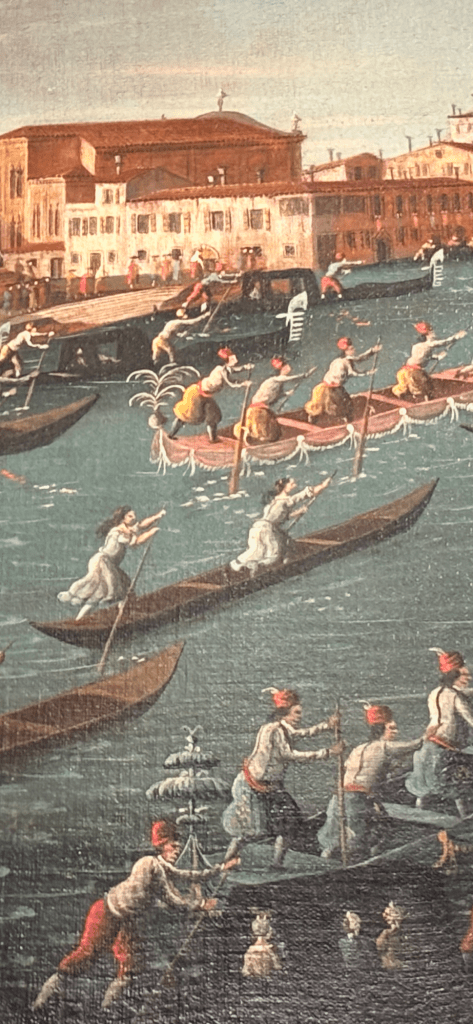
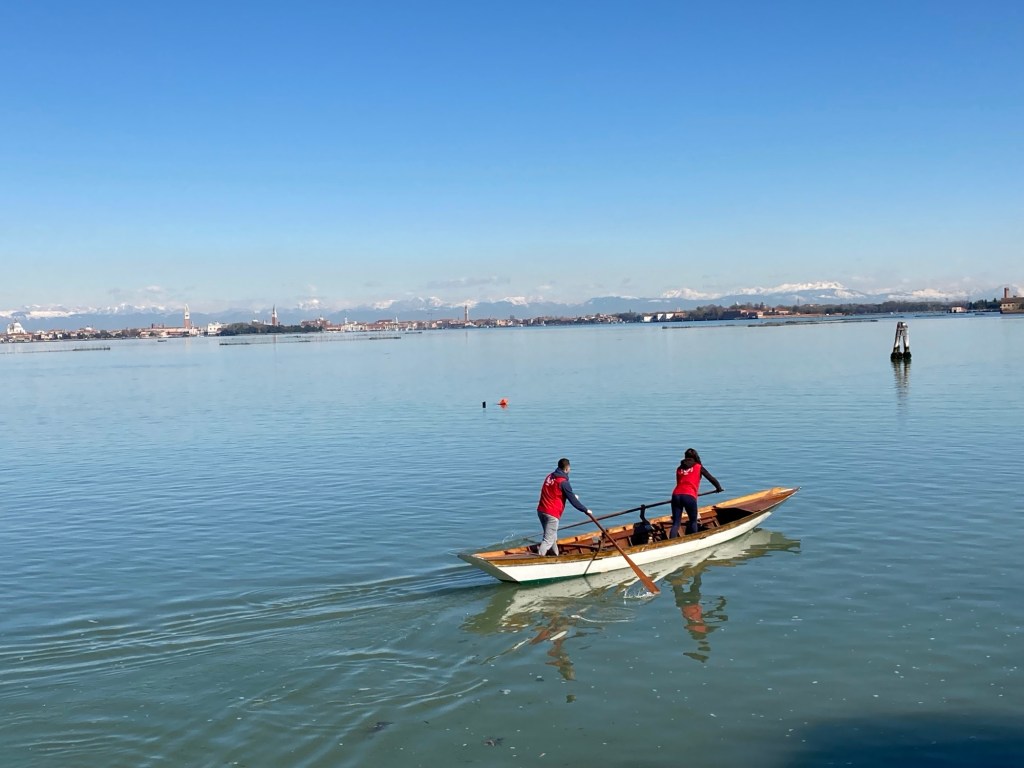
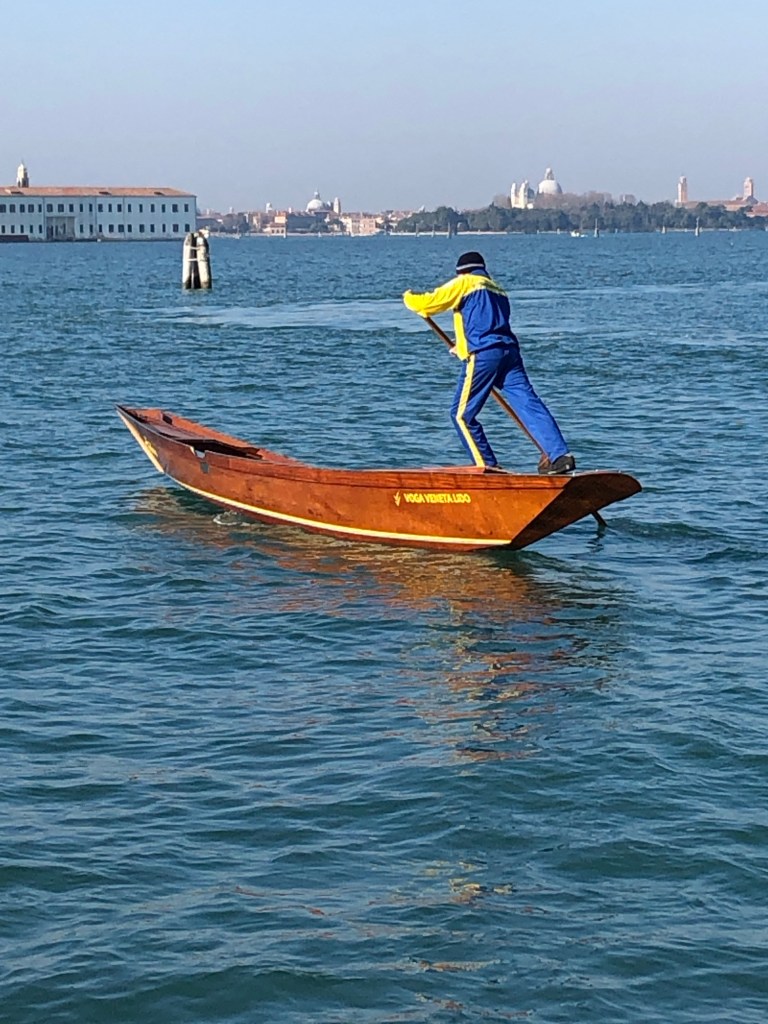
Detail of Women’s Regatta – Gabriel Bella and other examples of Venetian sandolo boat
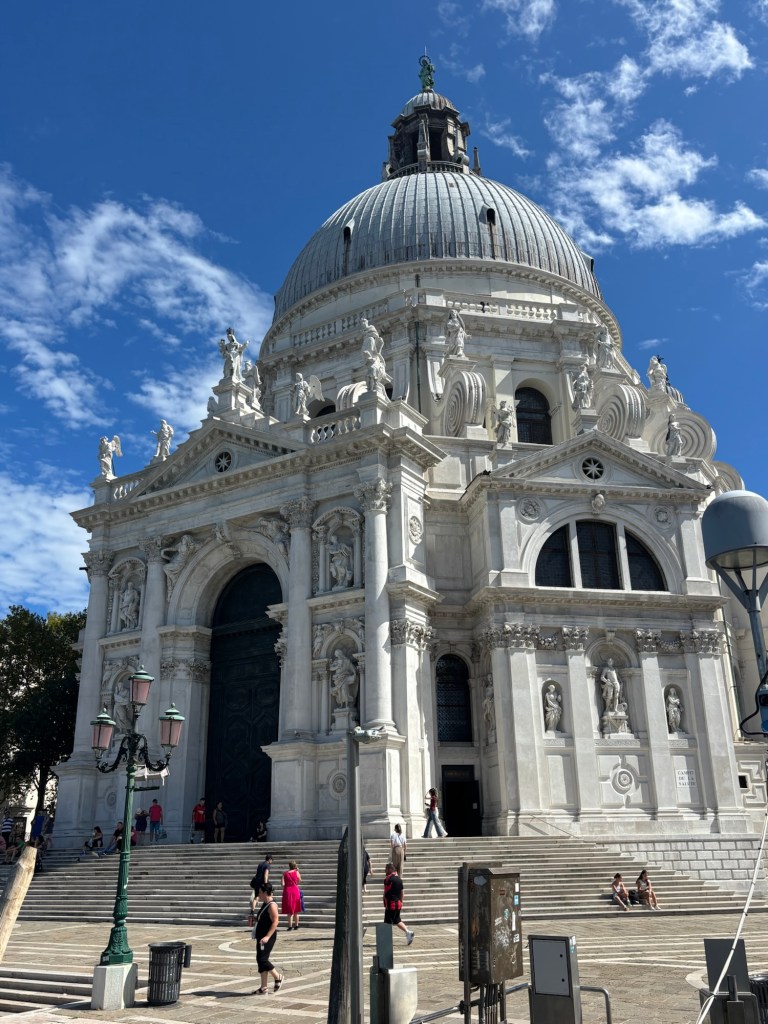
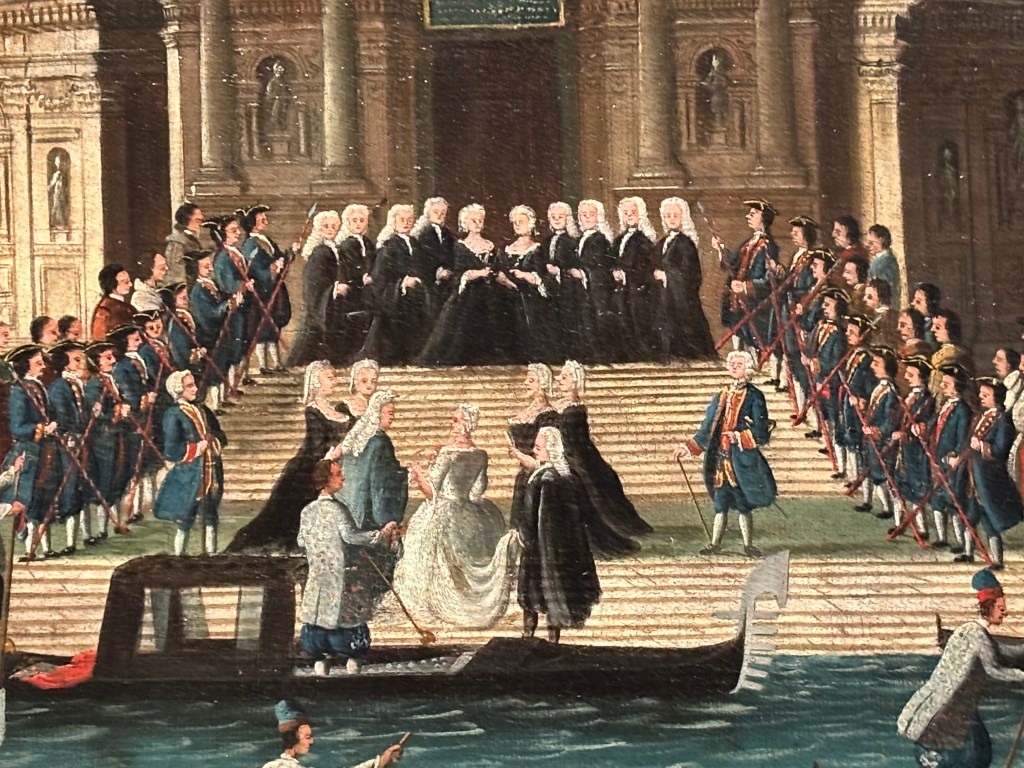
Next let’s look at ‘Wedding of a noble lady’ by Gabriel Bella. The scene is the fondamenta in front of the Basilica of La Salute. The church was built in the 1630s to celebrate Venice surviving the plague. Construction was finished in 1687. So when Bella painted this picture the church was fairly new on the Venetian skyline – only about 50 years old. The architect Baldassare Longhena created a modern ‘Baroque style’ church in the heart of Venice – reminiscent of the churches of Rome. The artist paints a detailed scene of the lady arriving by gondola at the steps of the basilica. The great and the good of Venice await her arrival on the top step of La Salute. Venice’s magnificent new basilica is front and centre of the painting with the winged lion of St Mark, the city’s patron saint, clearly visible above the entrance.
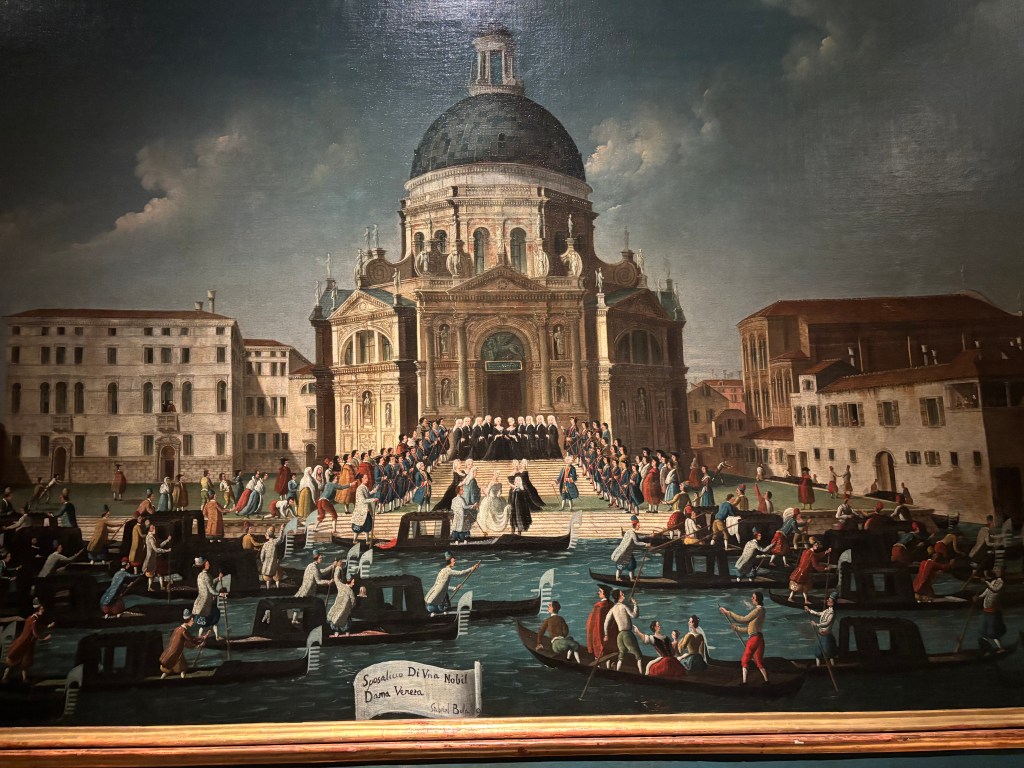
Meanwhile a gaggle of gondolas jostle for position, some unloading their passengers, others already empty. The painting creates a vibrant scene, an important social event that everyone wants to attend. The choice of venue is significant, the family have chosen the new and imposing Basilica of La Salute. Soldiers line the steps in a guard-of-honour, whilst black-robed gentlemen wearing wigs wait at the top of the steps. The appearance of the church remains unchanged to this day.
We can work out the dates of other paintings by Gabriel Bella by looking at historical events that occurred in Venice around that time. For example, in 1782 Pope Pius VI visited Venice and blessed the population of the city. Bella painted a canvas representing this event which we can independently date as being around 1782.
However this methodology doesn’t always work. One of Bella’s most famous paintings depicts the freezing over of the Venetian Lagoon in 1708. This delightful picture shows people skating on the lagoon. But Bella wasn’t born until 1730. Let’s assume that his painting career began when he was 18 years of age, that would have been 1748, 40 years after the Venetian lagoon actually froze over. So this painting must have been done partly from imagination and partly using accounts of parents and perhaps grandparents.
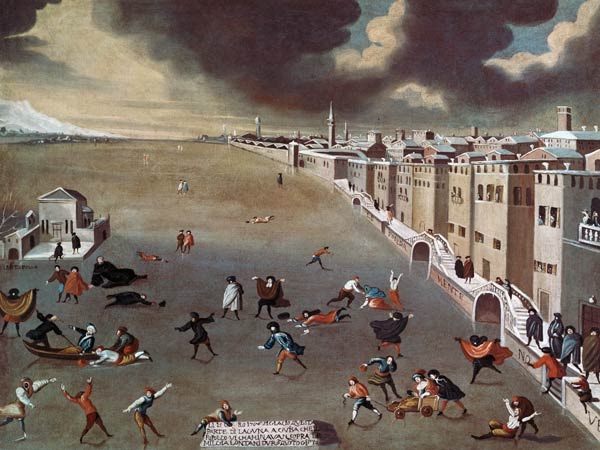
The Querini Stampalia has more than 60 paintings by Gabriel Bella – I’ve included a small selection below. Every single canvas merits close attention and consideration. The similarity to contemporary artists like Canaletto, Guardi and Longhi is striking. I particularly like looking for the endless range of hats including millinery of every kind. Dashes of red often denote a cap, scarf or even a red stocking, similar to the paintings of Canaletto.
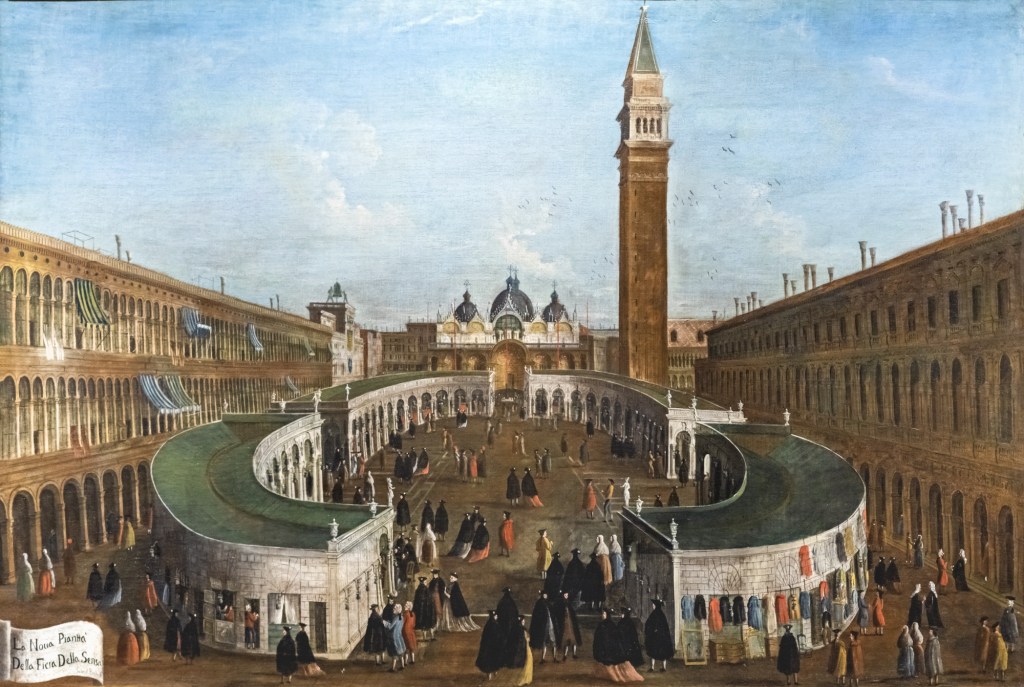
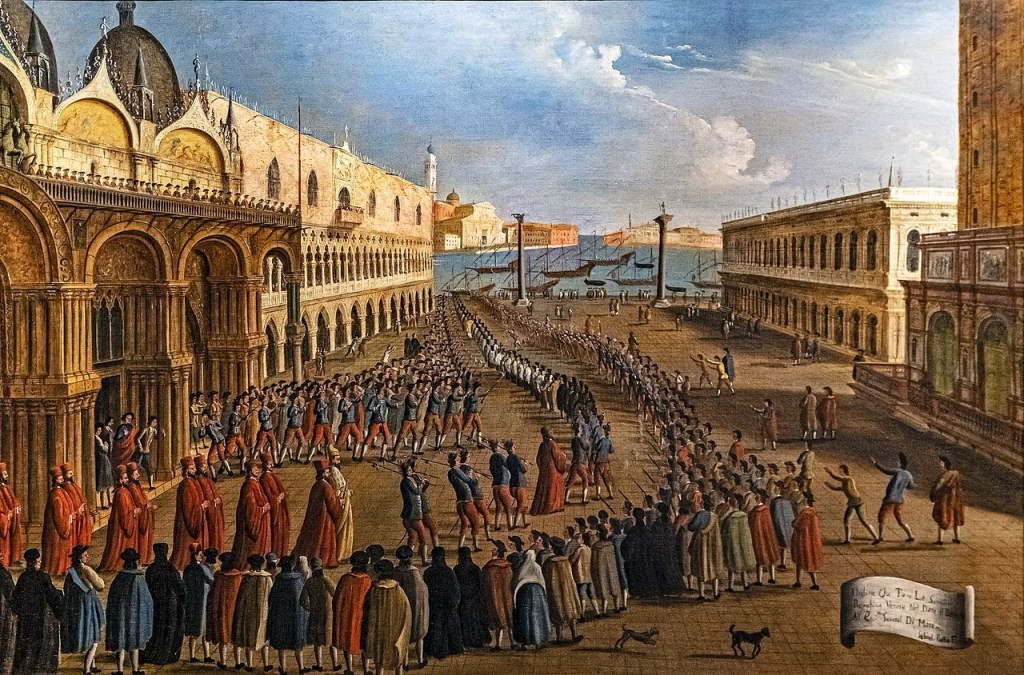
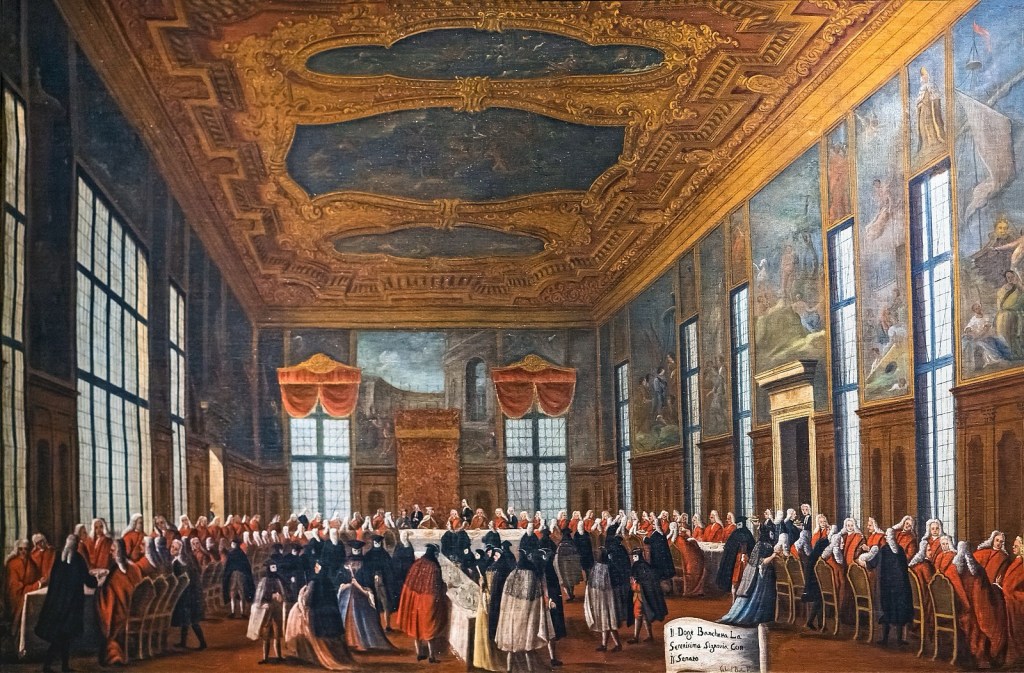
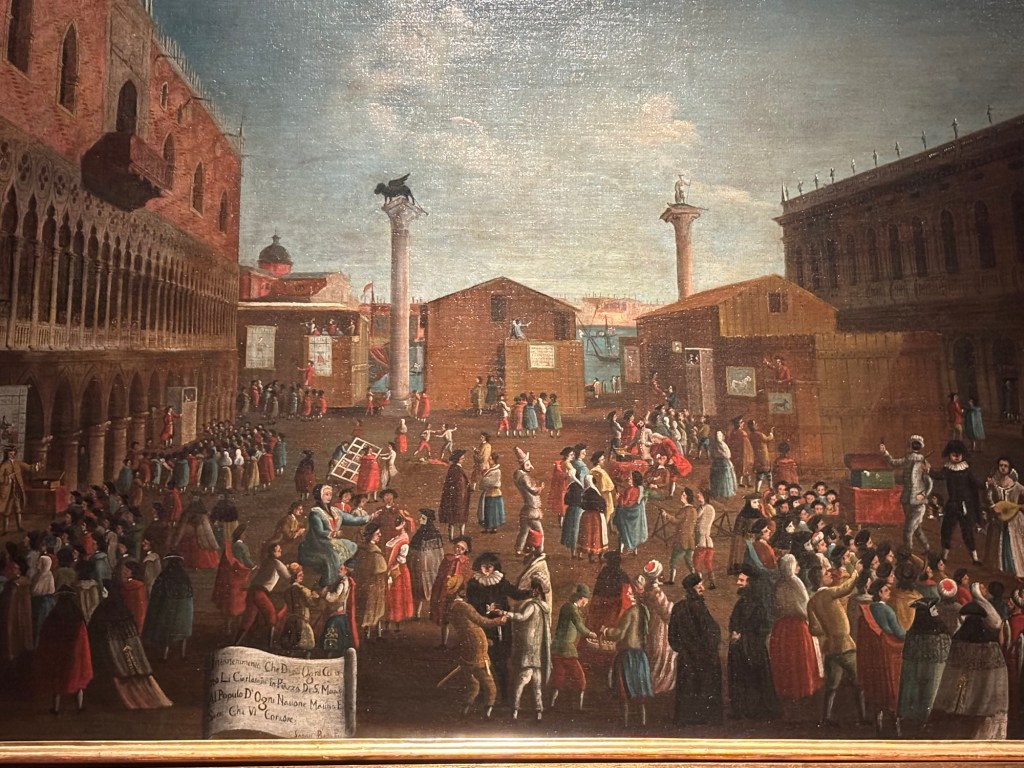
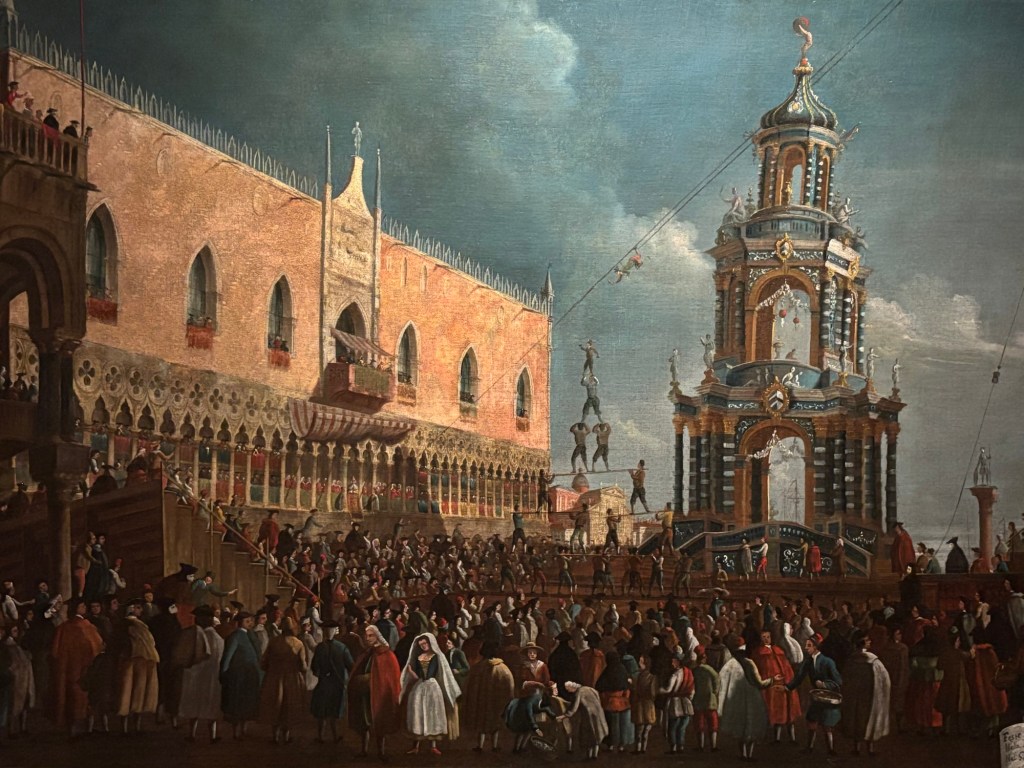
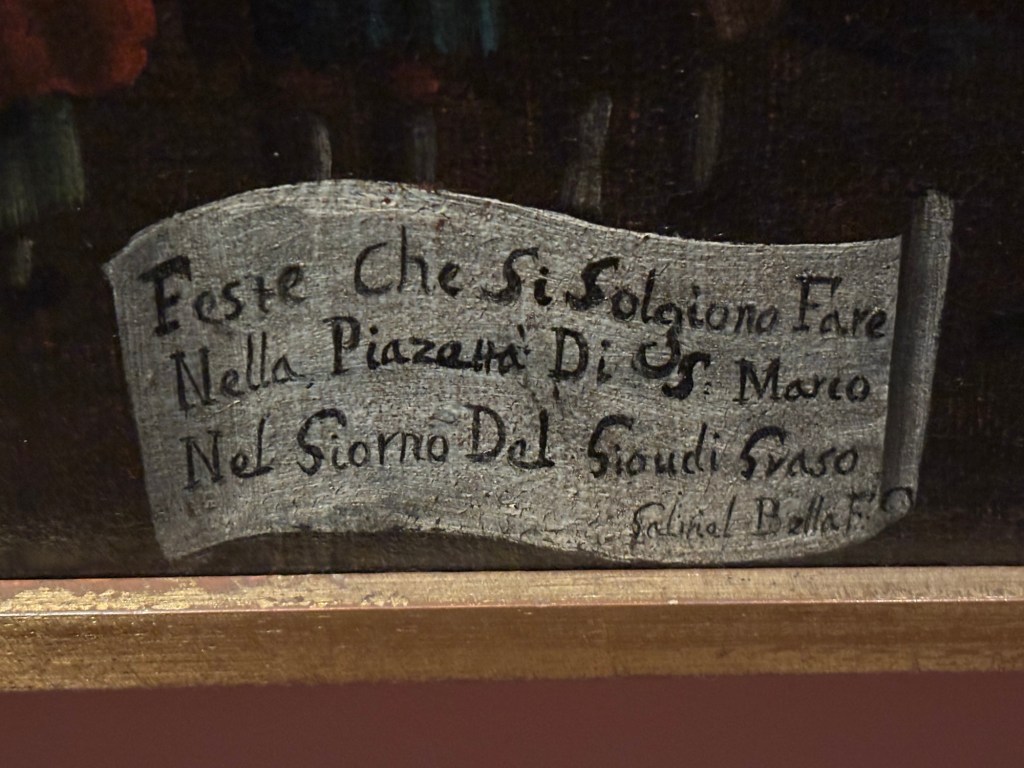
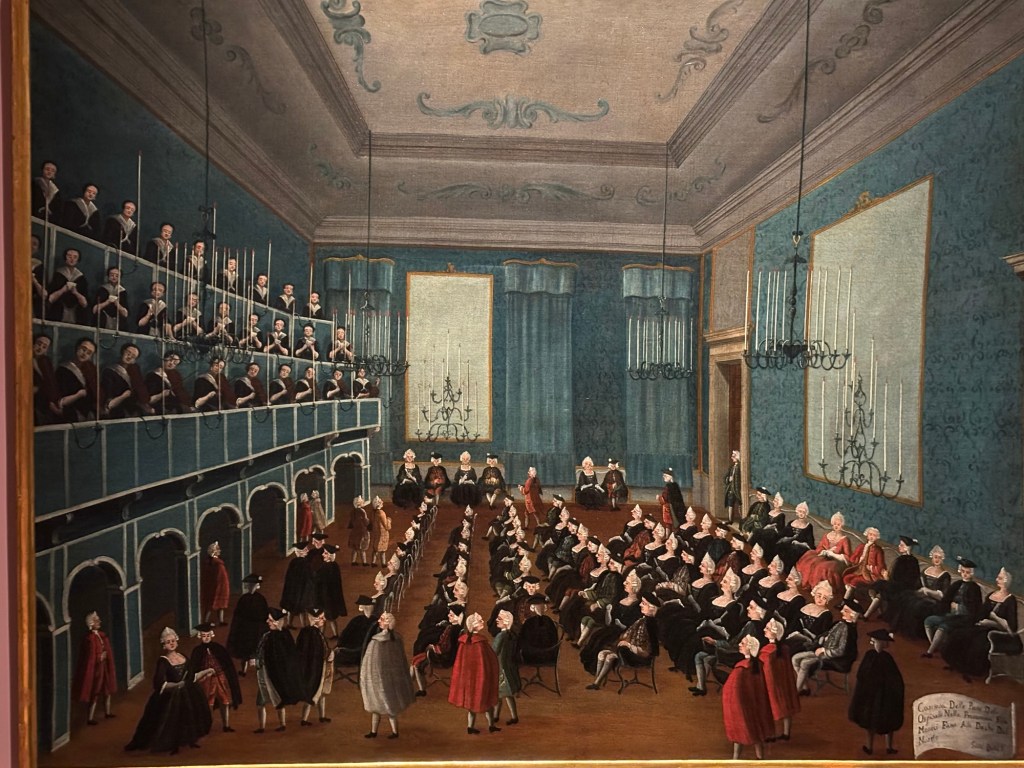
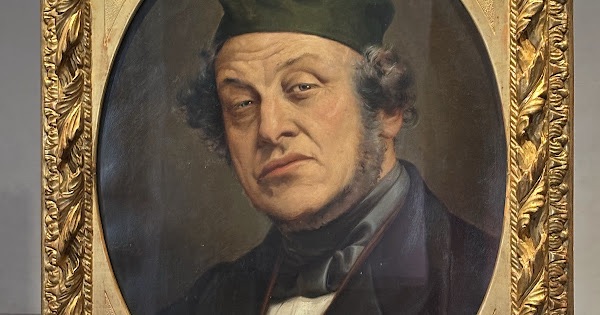
The Fondazione Querini Stampalia is a very special and important cultural centre in Venice. The Palazzo Querini Stampalia was given to the city in 1869 by the owner Giovanni Querini Stampalia, as a centre of learning, education and culture. His generous legacy included the vast palazzo which sprawls over several buildings, a garden and courtyards and Querini’s personal library and art collection.
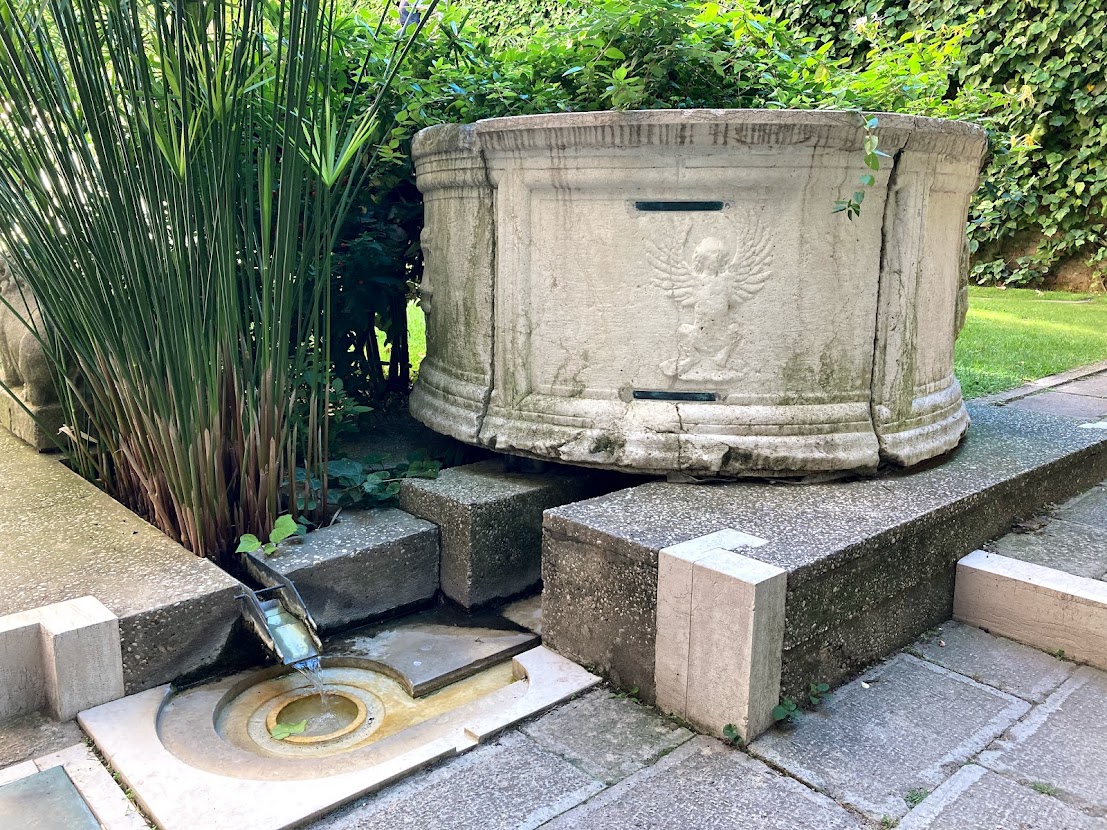
Today the Querini Stampalia is a hub of learning, study and research. Venetian students come here to use the library, the cafe and the atmospheric garden created by Carlo Scarpa in the 1960s. The mission of the ‘fondazione’ is to ‘promote the habit of rigorous study of all useful subjects’. It sounds more elegant in Italian, “promuovere il culto dei buoni studi, e delle utili discipline”
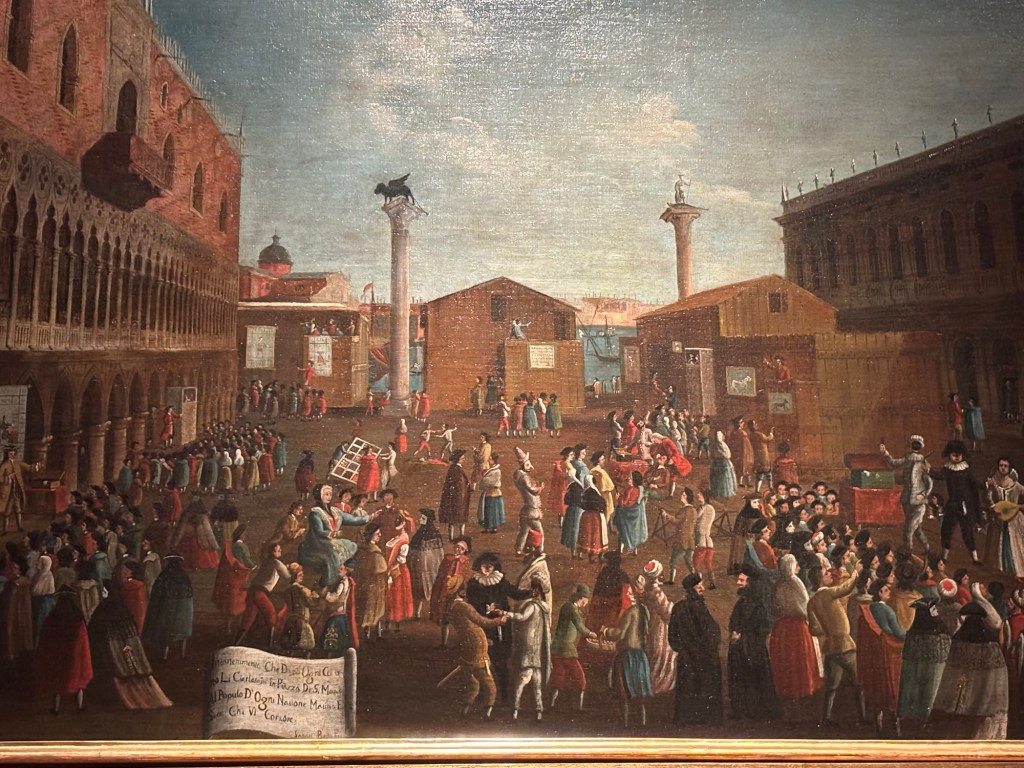
Next time you are in Venice I strongly recommend a trip to the Querini Stampalia. Leave plenty of time for the Gabriel Bella room and the Carlo Scarpa modernity of the ground floor and gardens.
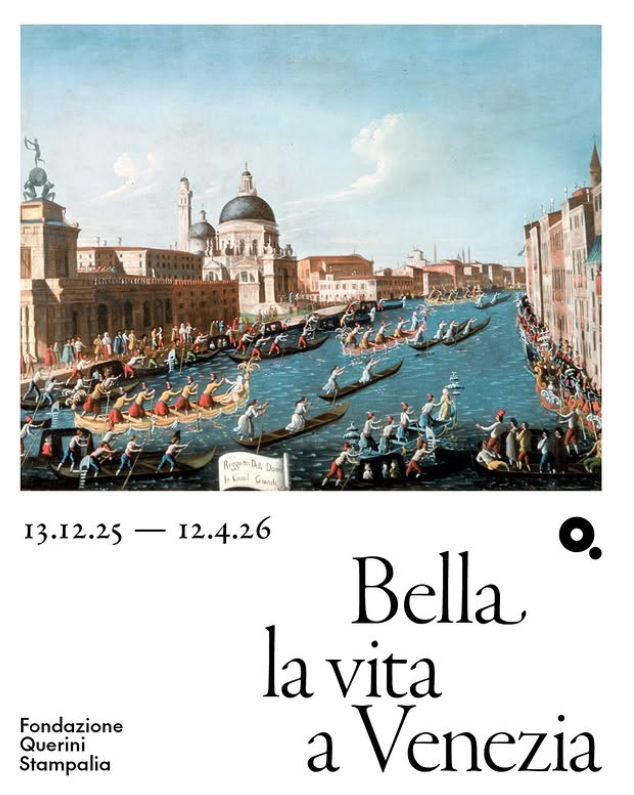
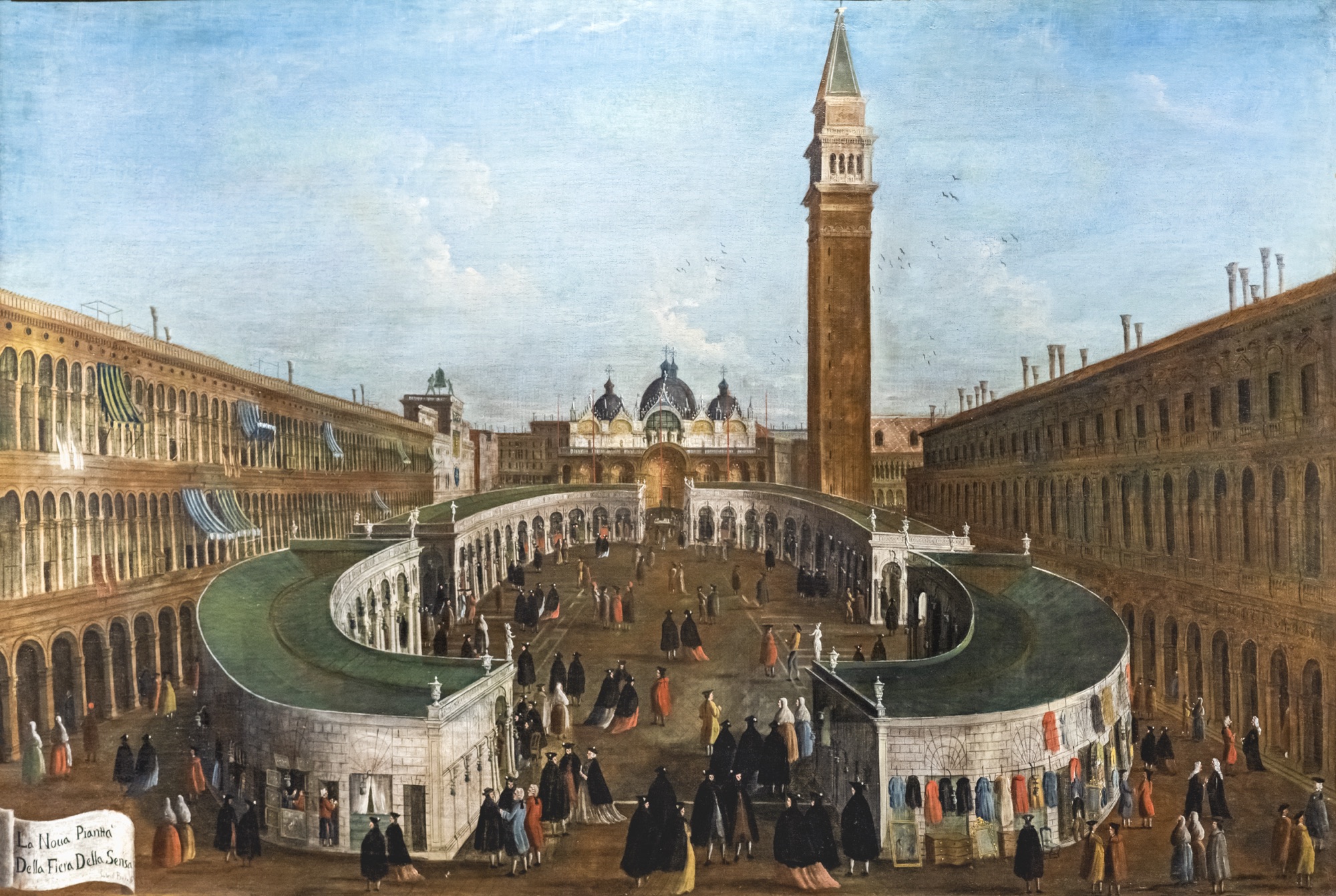
Querini exhibition poster (left) Festa della Sensa (centre) and Carlo Scarpa detail (right)
Notes:
- The Querini Stampalia is hosting the Gabriel Bella exhibition from 13th Dec until 12th April, 2026
- For more on Palazzo Querini Stampalia: Palazzo Querini Stampalia
- Also – and importantly – the 20th century architect Carlo Scarpa redesigned the ground floor of the palazzo in the 1960s creating a unique juxtaposition between old and new. He also created a Japanese-style garden – for more: Carlo Scarpa.
- The Querini Stampalia holds frequent temporary exhibitions. A favourite of mine was a few years back: The Art of Da Romano
- My original article about Gabriel Bella was published here: Gabriel Bella – Chronicler of Venice….
- See the: Educated Traveller for more articles on Italy, Art, Life, The Universe
I mentioned artists working at the same time as Gabriel Bella in Venice – these are their dates:
- Canaletto – 1697 – 1768
- Francesco Guardi – 1712-1793
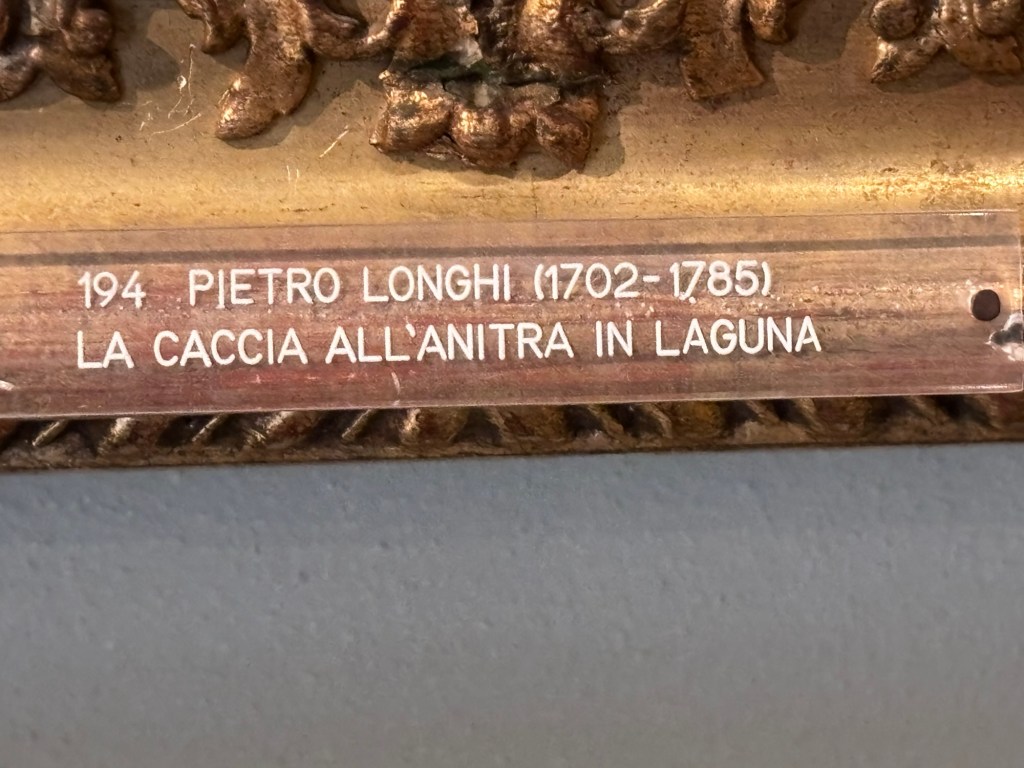
- Pietro Longhi – 1702-1785
- Gabriel Bella – 1730-1799
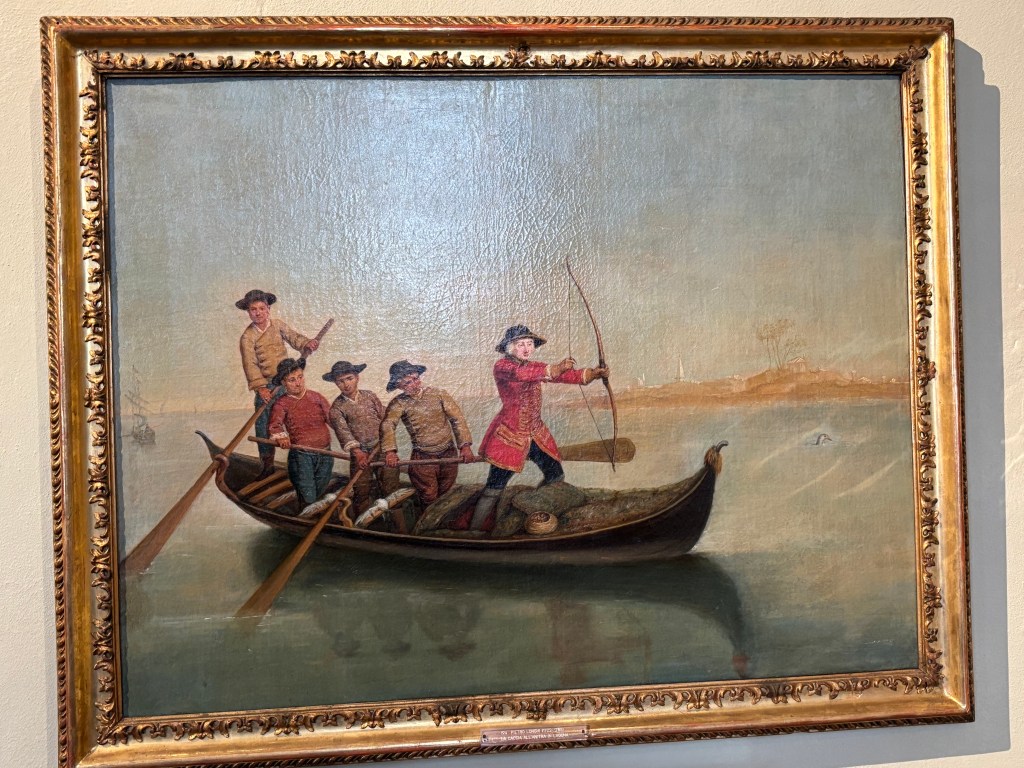
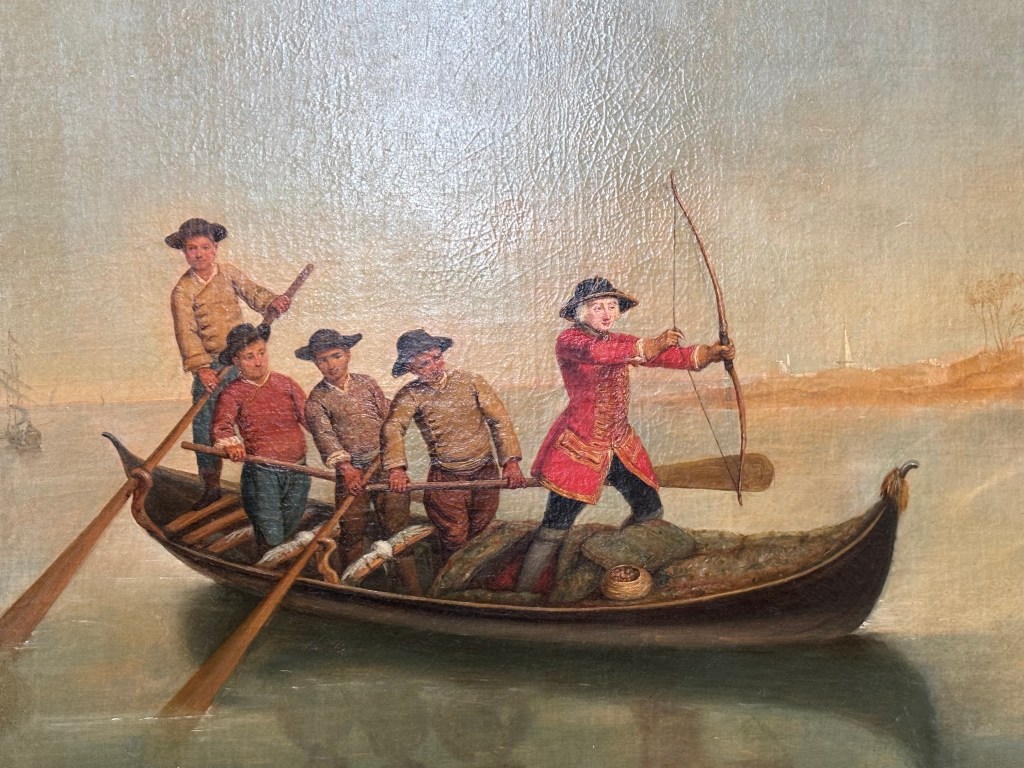
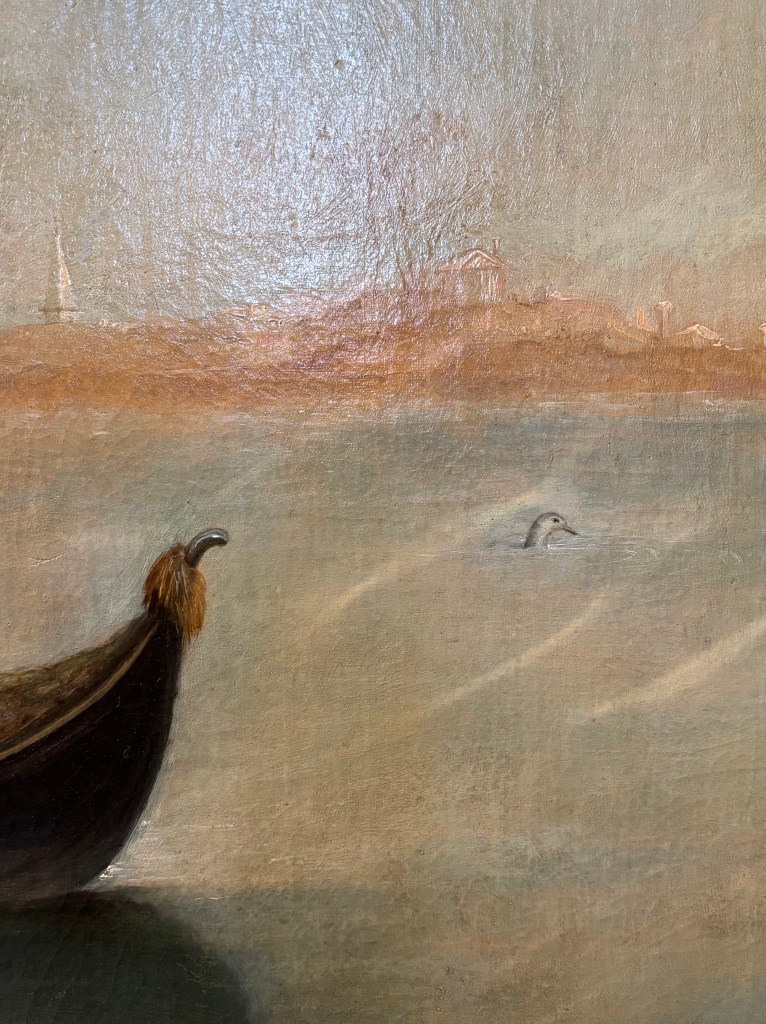
AND FINALLY – A favourite painting of mine – also at the Querini – by Pietro Longhi ‘Duck Hunting on the Lagoon’ is a joy. Look carefully in the third photo – it’s the unfortunate duck!
A note on the author – Janet Simmonds is an Art Historian and a Geographer. A graduate of the University of Oxford, she has a special interest in Venice and the history of tourism – especially The Grand Tour. She works as a guest lecturer in Italy for university groups and private individuals. She also works in Oxford, London and throughout Italy.
She offers specialist travel services in Italy and Greece especially relating to art, history and culture. Although the odd Ferrari driving trip has been known to slip in!
- Janet’s blog: The Educated Traveller
- Janet’s travel biz: www.grand-tourist.com
December 2025

 The Educated Traveller