A great deal is the answer if we are talking about Raphael.
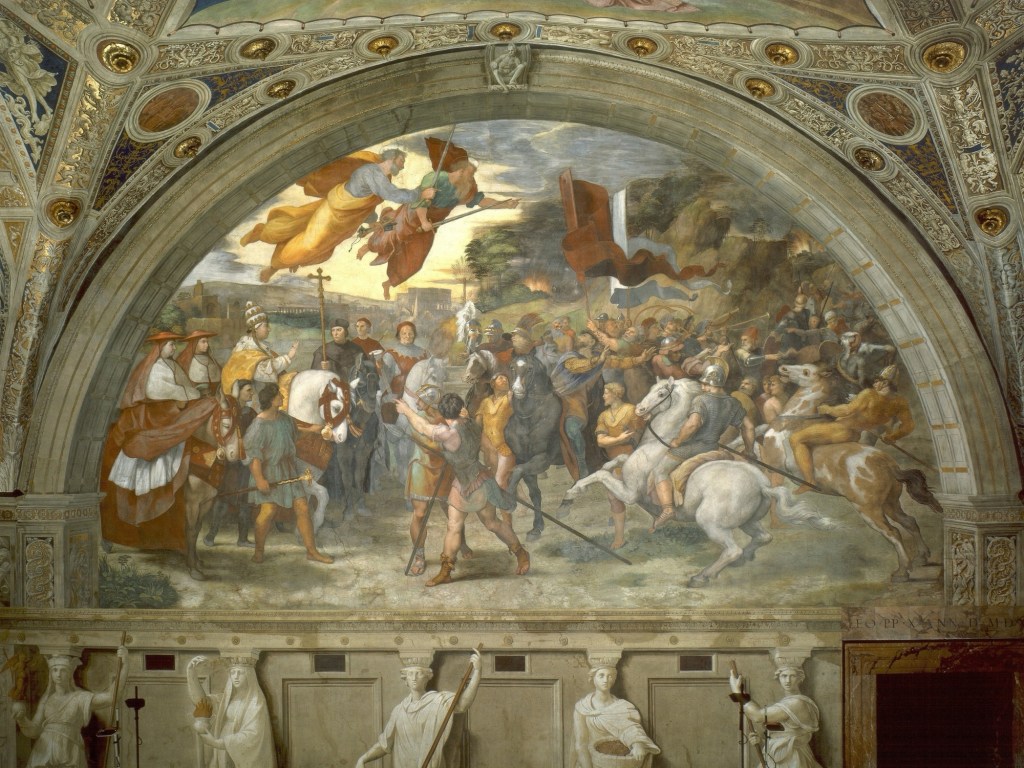
The painting above is Raphael’s fresco of the meeting between Pope Leo and the infamous marauding chieftain Atilla the Hun. The painting was part of a commission given to Raphael and his studio, by the Vatican to decorate the so called Stanze di Raffaello completed in 1514.
Atilla the Hun terrorised Central Europe and threatened to conquer the Italian peninsula in 452 AD. He besieged and sacked the cities of Aquileia and Milan. Pope Leo arranged a meeting with Atilla, near the city of Mantova, to attempt to negotiate peace. The painting shows the Pope, on a white horse, peacefully negotiating with the infamous Attila and persuading him not to invade Rome. The Pope is successful and Atilla retreats. Atilla is seen in the painting (centre right) on a dark horse, he is looking up at the sky where St Peter (holding the keys of Rome) and St Paul – beseech Atilla to withdraw.
This is a wonderful use of art to gently convey an important spiritual message. The fresco is a masterpiece by Raphael and his studio (1513-14). I particularly like the divine presence of St Peter and St Paul, top left of the fresco, both original disciples of Jesus. Peter then goes on to become Bishop of Rome and the first Pope.
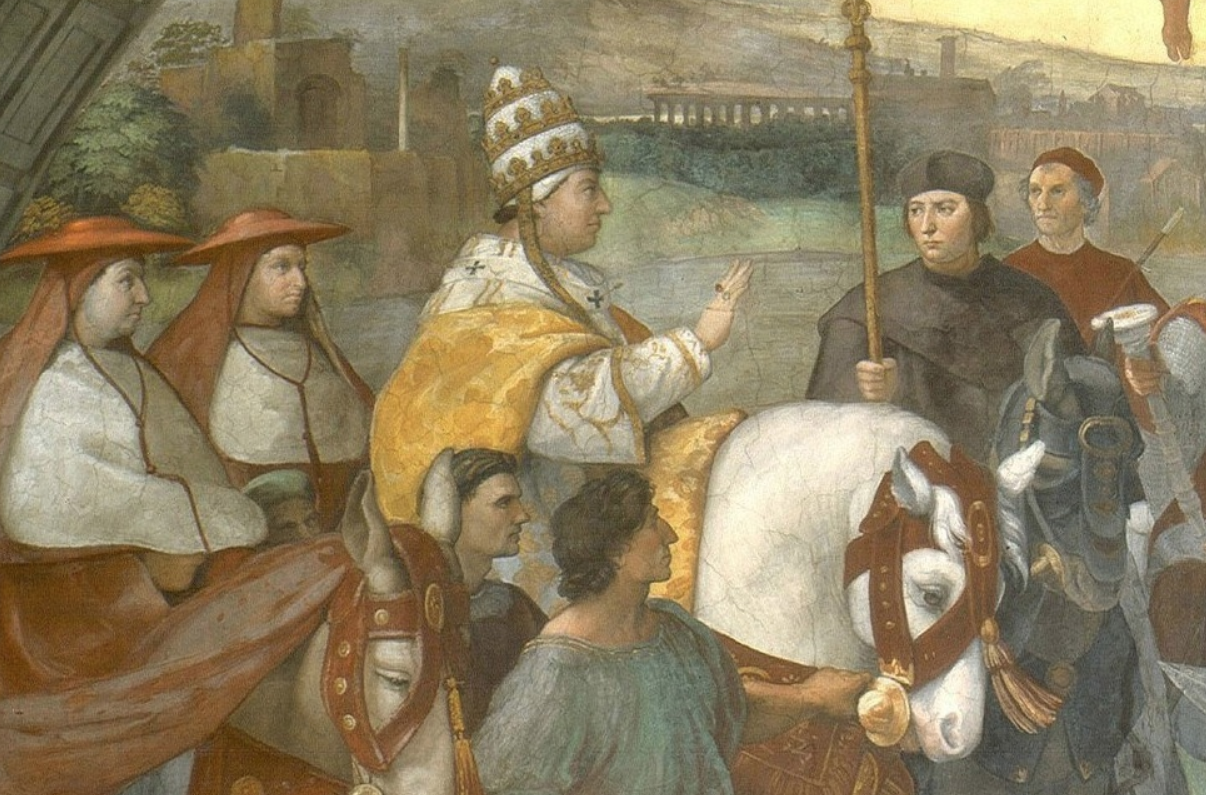
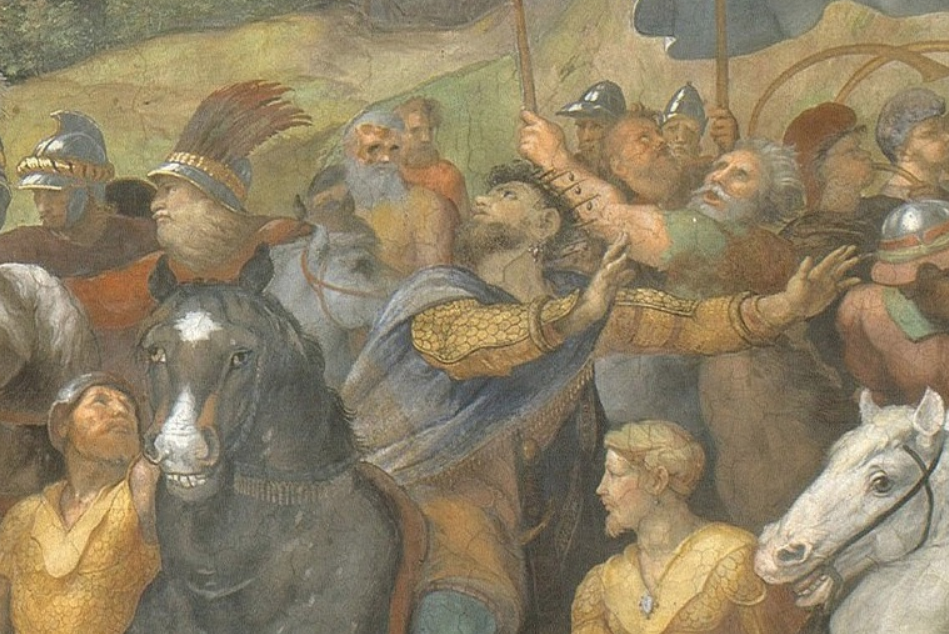
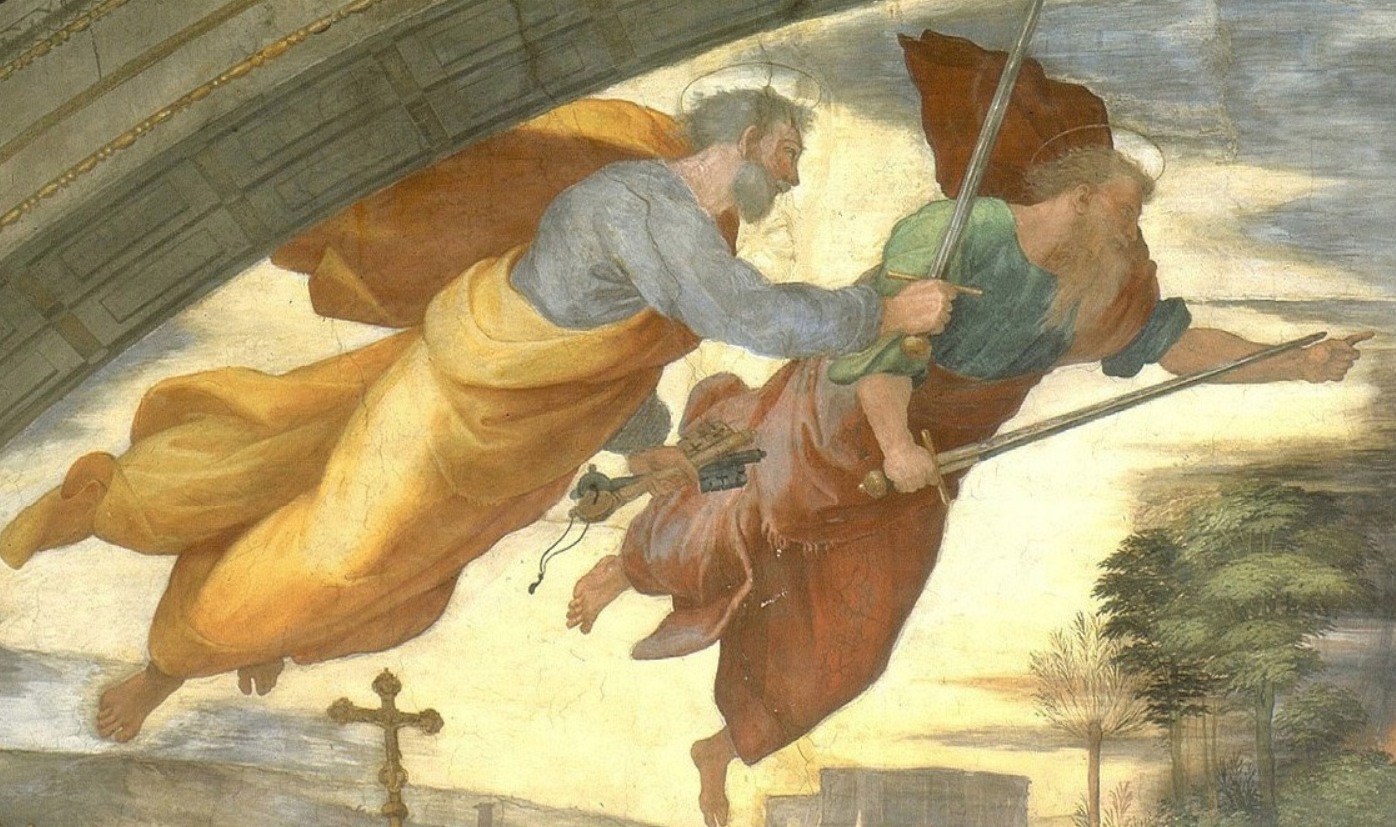
Details from Raphael’s ‘Meeting of Pope Leo and Atilla’ fresco in the Stanze di Raffaello in the Vatican.
Notes:
- Raphael was born in 1483. His father was the court painter in Urbino. He moved to Rome in 1508. He worked in Rome at The Vatican until his death in 1520. He was known for his brilliant technique and clarity. Michelangelo, Leonardo da Vinci & Raphael were the masters of their day.
- Aquileia, an important Roman town in the north-eastern part of the Italian peninsula was attacked and sacked by Atilla the Hun in 452 AD. Later the same year Pope Leo met Atilla to try to avoid the invasion of Rome. Thanks to divine intervention he was successful.
- In the fresco above note the exceptional detail of the frame of the fresco (top) and the caryatids (figures of women in classical clothing) holding up the painting. Also remember that the fresco is a trompe l’oeil – a trick of the eye – painted onto a flat surface but giving the impression of perspective and depth.
- It’s a work of genius!
- I write about art, history, travel, Italian culture at www.educated-traveller.com
You might like other articles I’ve written about art including:
- A Painting as a historical document
- Orientalism in Venetian Art
- Was Fortuny influenced by Lord Leighton?
- Carpaccio in Venice
November 2025


Grazie, Janet, for this moment of art history this Friday. I so enjoyed reading it.
LikeLike