GIUDECCA – THEN:
A little tale from 1976……
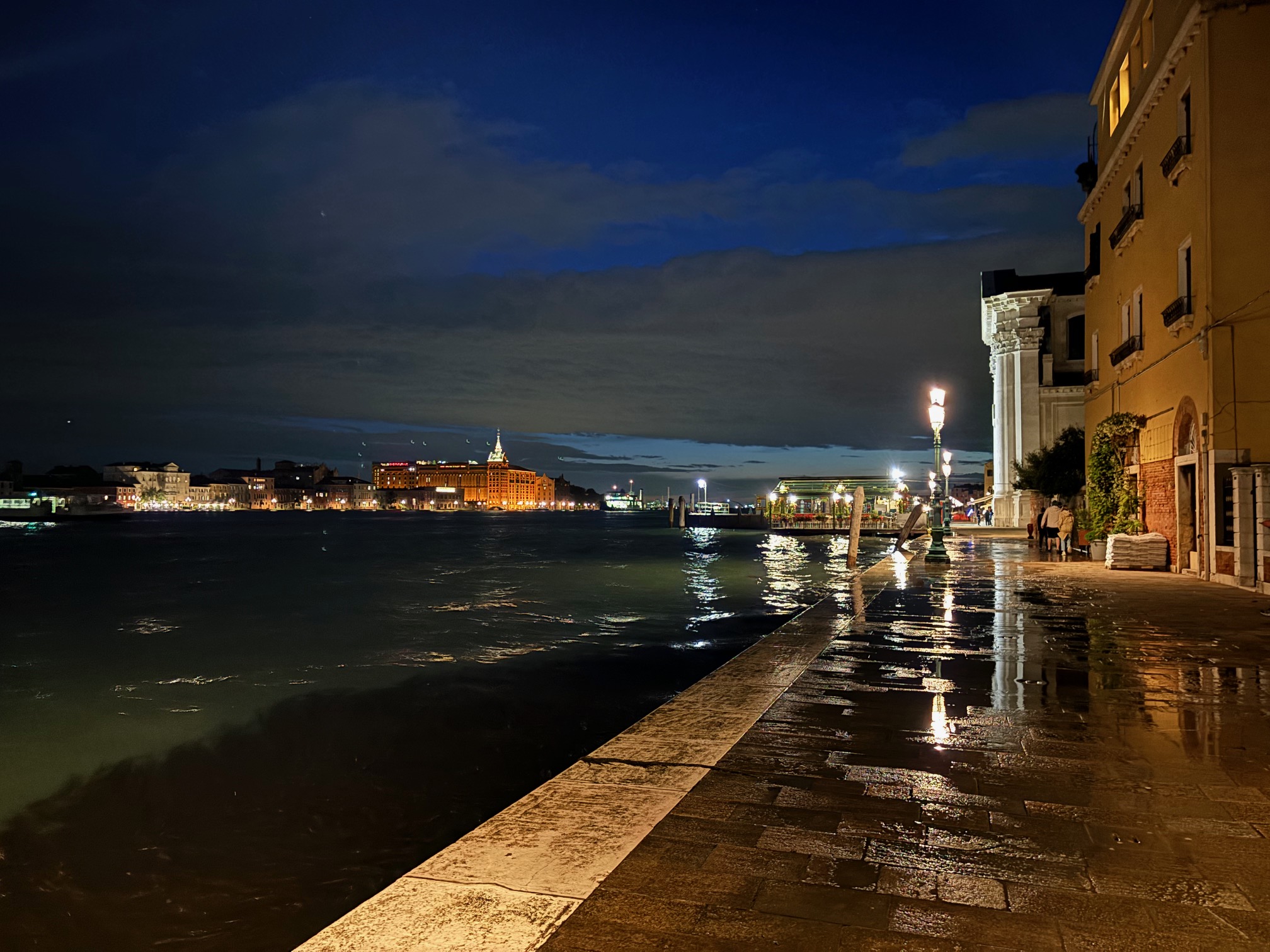
It was the darkness that intimidated me the most, everything was black. Even the water lapping on the edge of the pavement was shiny and black. There was a light in the distance giving out a dull halo of yellow, like an out-of-focus detail in a Hopper painting. But mostly it was black.
Cross three bridges, then after the third bridge take the alley way on the left and you’ll see it. There’s a light above the door. It’s easy to find.
It’s always tricky navigating a new place, where the locals think it is straight forward and easy but the ‘forestiera’ like me finds it intimidating and actually down right scary. As I forced myself to continue into the darkness the wind began to pick up, the hem of my coat lifted in the breeze and I shivered in the cold, damp air. I’d crossed one bridge now and I could just make out the second. Just keep walking I told myself, you’ll be fine. I pulled my coat tightly around me and breathed in slowly, trying to stay calm and controlled. A small barge passed by on the canal, the driver stood at the stern smoking. I could see his silhouette and the red glow of his cigarette.
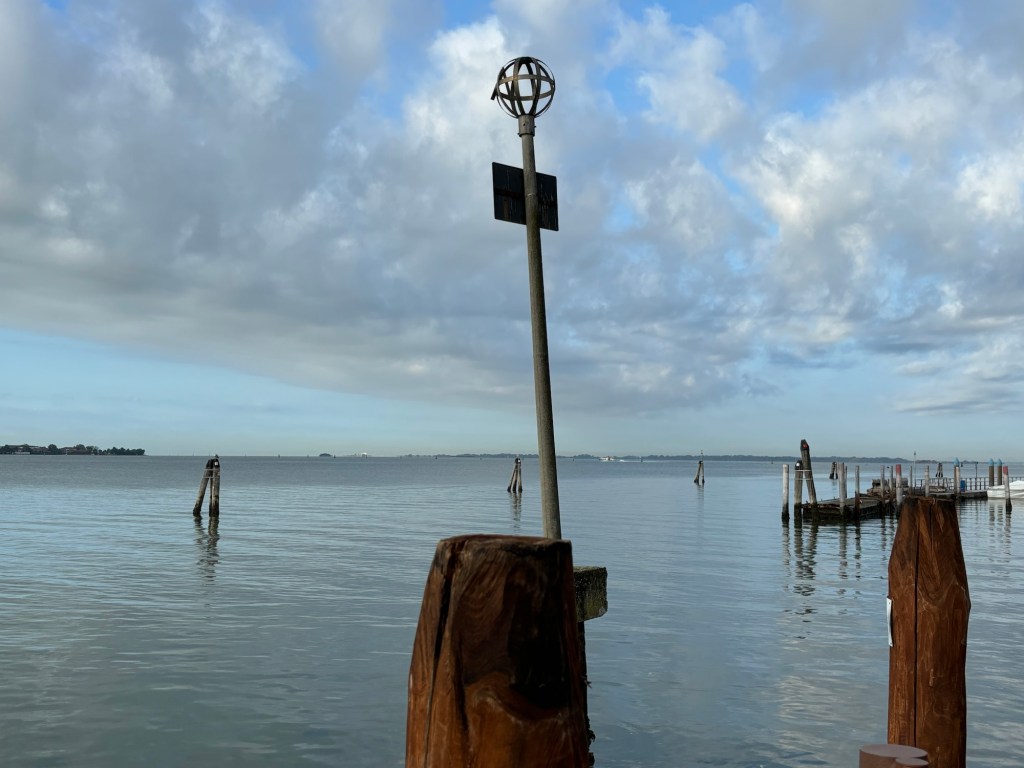
It was quite a long walk – it seemed interminable, although it was probably only 30 minutes. Finally I came to the third bridge, a long iron structure linking two islands. A small group of nuns were coming towards me, perhaps they’d just been to an evening service at The Redentore. They ignored me. Remembering my instructions I looked for the first alley on the left after the bridge. I found it quite easily, it was very narrow. I proceeded cautiously. Ahead of me I could see a lamp suspended from a metal flag pole. This was my destination. The only trattoria open in November on a cold winter’s night.
I opened the door and found myself in a small restaurant, it looked like the sitting room of a private home. It was full of people, eating, drinking and talking. As I walked in the entire room fell silent and the diners looked me up and down with a mixture of curiosity and disdain. I felt like the young man in a 1960’s horror movie, flinging open the door of the local hostelry to ask directions to Count Dracula’s Castle.
I stood motionless like a rabbit in the headlights of a car. Fortunately for me the restaurant owner came bustling over and shook my hand. He welcomed me and directed me to a table in the corner where I could sit and observe the room. I didn’t even have to speak, a glass of Prosecco appeared in front of me and as I sipped it and took in my surroundings a feeling of calm enveloped me.
This wasn’t the sort of place where you look at the menu, instead the owner suggested three choices; fresh fish, homemade pasta or a lasagne style ‘pasticcio’ of fish and vegetables. I eagerly accepted his recommendation of ‘schie con polenta’ followed by ‘branzino’. A couple of glasses of bianco and things were looking up. The evening ended with complimentary glasses of grappa (which I hate) and local biscotti biscuits and caffe corretto (black coffee with a dash of brandy). The bill was 8000 lire – about £4 at the time. I’ve never forgotten that evening and the torrent of emotions I experienced, from anguish and concern in the dark, to the euphoria of arriving and the satisfaction of good food and wine. Even the dark walk back to the ostello was pleasant, fuelled as I was by fresh fish and a decent amount of alcohol.
I’m not sure if I imagined this but I think the moon popped out from behind the clouds to light my way, rather like a benevolent guardian angel guiding me safely home.
Memories from 1979 – JMP
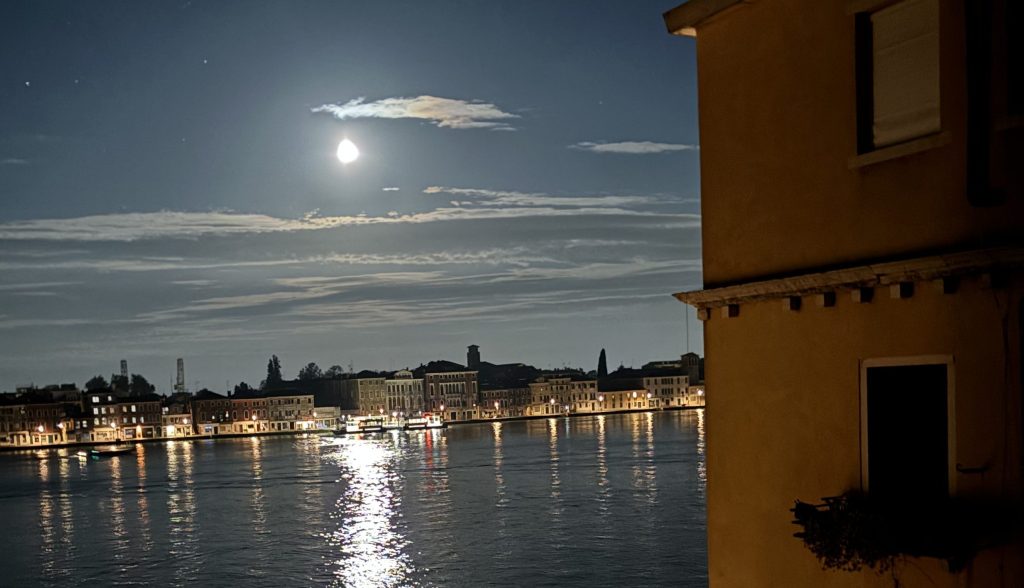
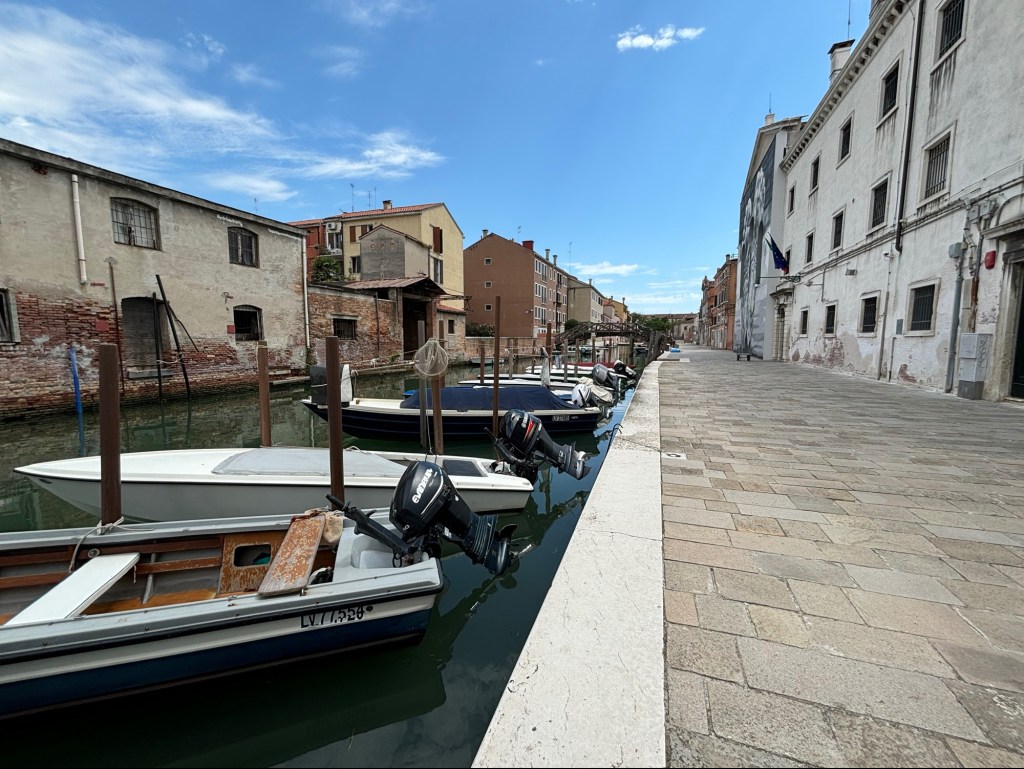
Views of Giudecca – The moon reflects across Giudecca Canal (left) and Fondamenta by Women’s Prison (right)
GIUDECCA – NOW:
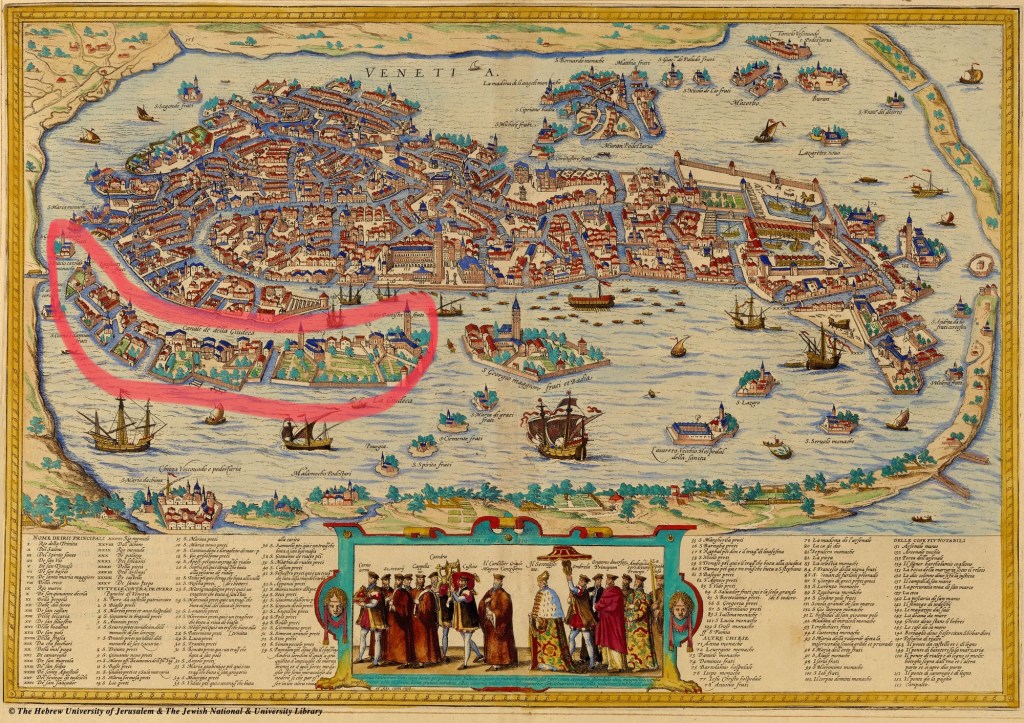
The Giudecca is a long thin island located across the Giudecca Canal from Venice and opposite the Venetian sestiere of Dorsoduro – I’ve outlined it in pink, on the map above. My reminiscences from 1976 took place on the Giudecca, at a time when very few people crossed the water to get to the island. In those days Giudecca was an island of workshops, factories and small shipyards, closed down factories and empty warehouses. In the 1970s and 80s there were two places that might have attracted tourists to Giudecca; Cipriani Hotel and the Redentore Church. The first of which a luxury hotel, synonymous with style and elegance, known throughout Italy as simply ‘Cipriani’. It had its own private boat whisking guests from the hotel to San Marco in James Bond style. The second place of significance on Giudecca was the Church of Redentore which was visited by every Venetian on the Feast of the Redentore every July. This was, and still is, a huge annual event when Venetians give thanks for surviving the plague. The plague arrived in Venice repeatedly through the centuries, in fact the term quarantine originates in Venice, and refers to the italian word for forty ‘quaranta’ the number of days infected people were kept on quarantine islands in an attempt to reduce the spread of disease. I’ve written about ‘Redentore‘ on several occasions. By coincidence the annual Festa di Redentore took place yesterday, 19th July, 2025.
A third landmark on Giudecca – known mainly for its looming, physical presence was the Molino Stucky, a massive red brick structure, said to be the biggest flour mill in Italy in the 1890s. The Molino lay derelict for decades, its doors boarded up and windows broken. The local children would climb through the broken windows into the deserted gargantuan mill and throw stones at any remaining glass that was still in tact. The building stood, decaying, a distant reminder that Giudecca’s ‘fabbrica’ days were over.
The satellite image of Venice (below) with Giudecca island at the bottom of the map shows the proximity to Venice, and yet at the same time the isolation of the island. It’s only possible to get to Giudecca by boat.
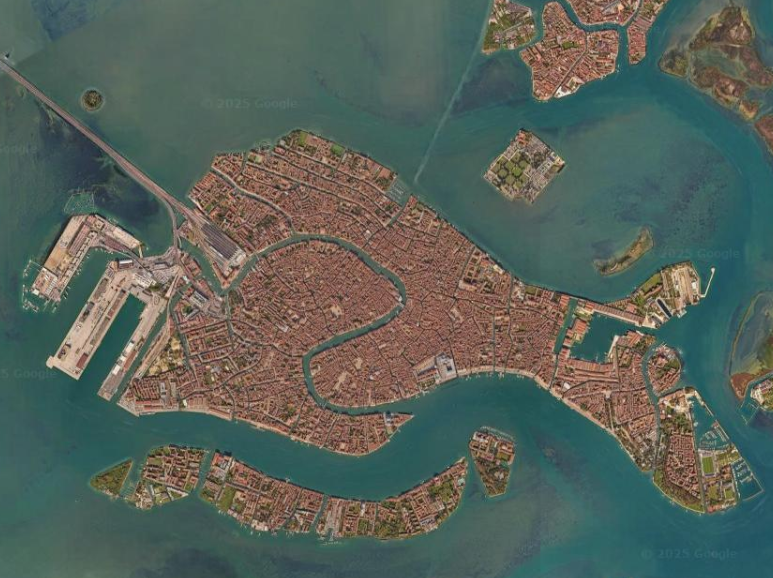
The map above shows Venice ‘ centro storico’ and the island of Giudecca (below)
Back in the late 1950s Giuseppe Cipriani the owner of Harry’s Bar (the world famous watering hole made famous by Hemingway and others) was invited by the Guinness family to establish a luxury hotel in Venice. It was called quite simply ‘Cipriani’. The site chosen for the hotel was at the end of Giudecca Island. At the point of Giudecca closest to San Giorgio Maggiore – with a wonderful waterfront and convenient proximity to San Marco. The hotel immediately attracted an international VIP clientele and to this day the hotel is, for many, the finest hotel in Venice. For many years ‘Cipriani’ was almost a private club, existing for the Guinness family, their friends and a handful of guests. It was the only hotel in Venice with extensive gardens and a swimming pool. However, I think it’s true to say, that ‘Cipriani’ existed independently of Giudecca. Guests arrived and left by private motor boat and rarely set foot on the rest of the island.
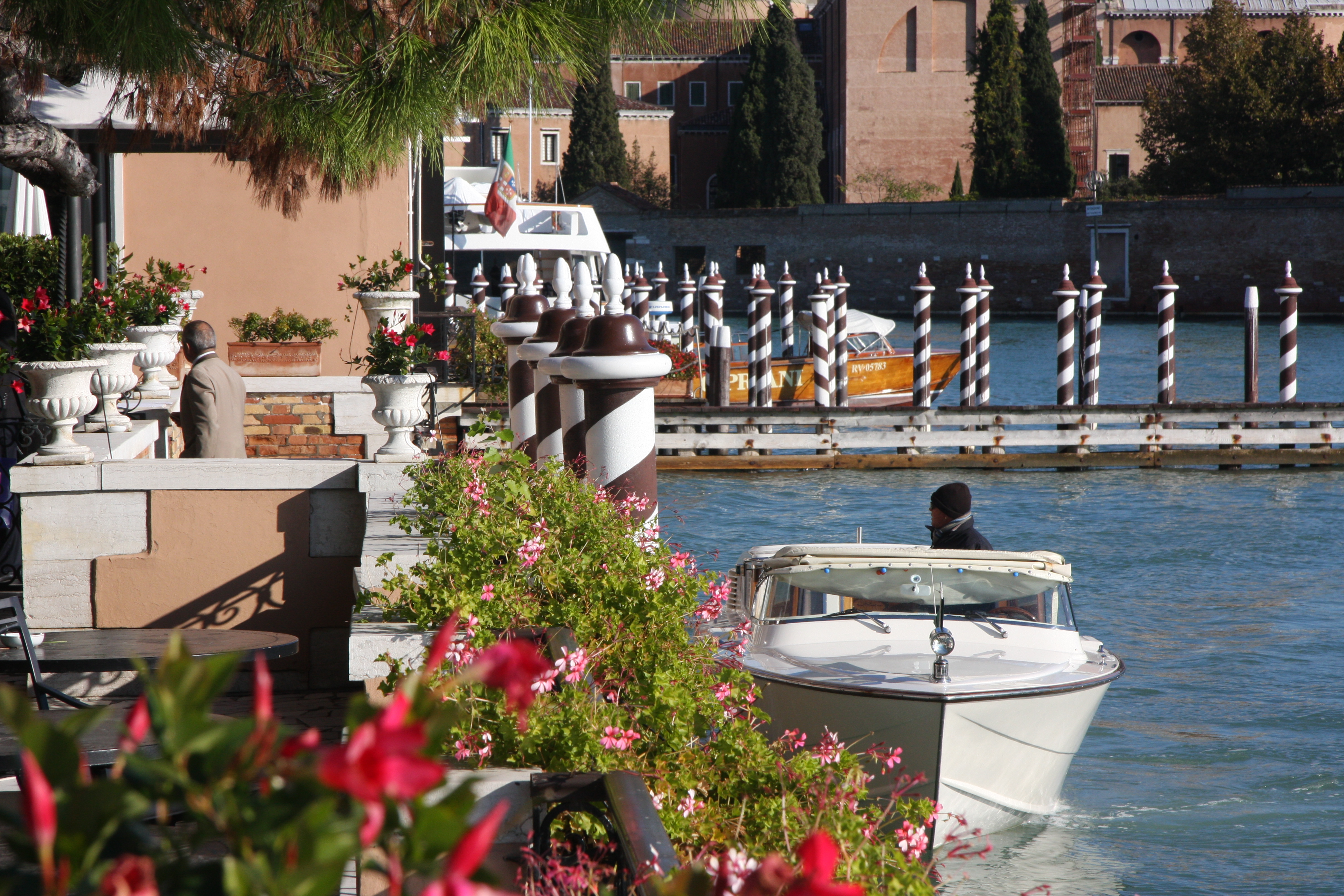
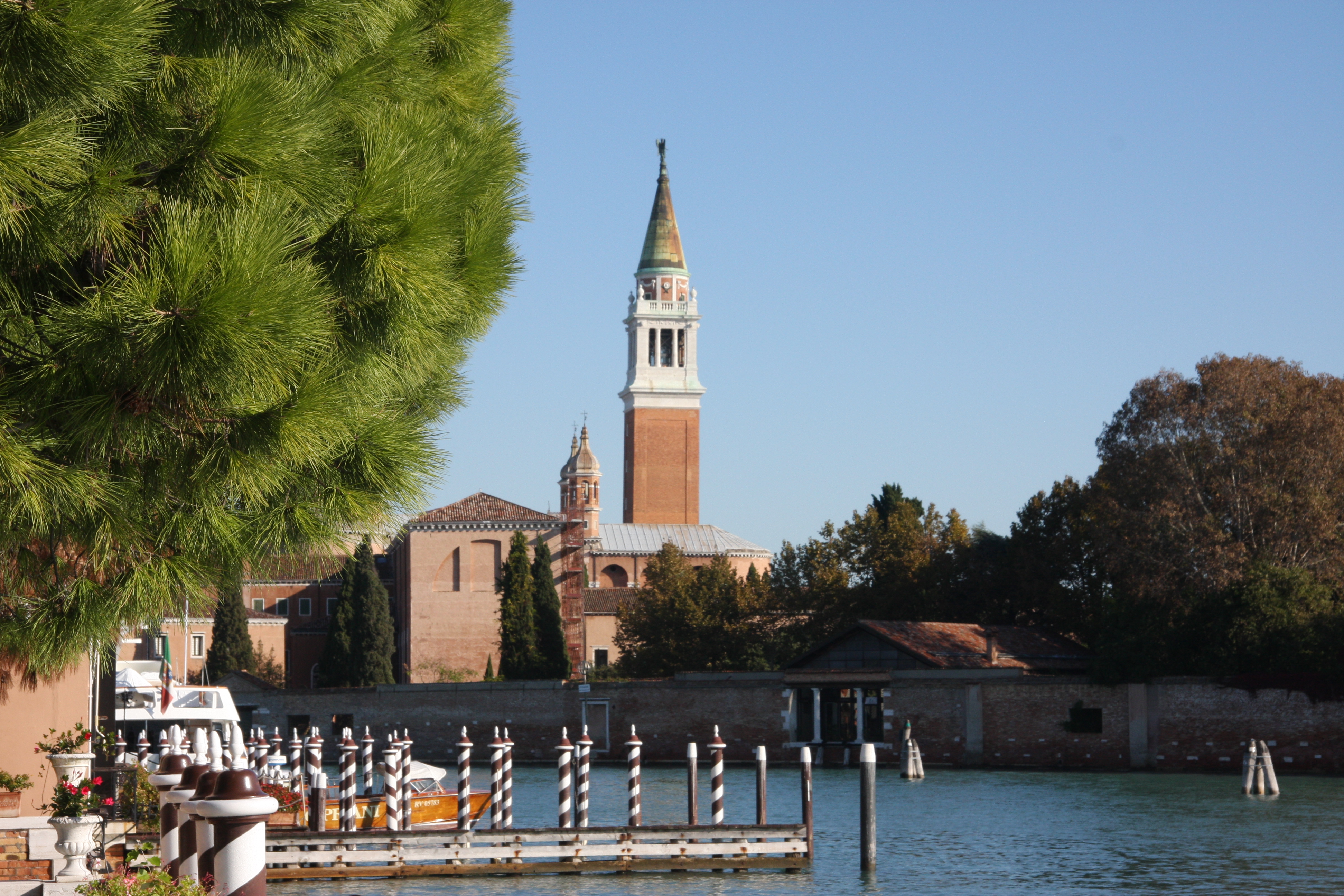
The view from Cipriani garden towards San Giorgio Maggiore – photos: www.educated-traveller.com
HOWEVER in 1981 Arrigo Cipriani, the son of Harry’s Bar founder Giuseppe decided to open Harry’s Dolce on Giudecca across from the little church of Sant’Eufemia. Harry’s Dolce was an outpost on Giudecca at that time. The locale was beautifully positioned on the water, with spectacular views, but completely overshadowed, quite literally, after 4 pm by the lurking, rotting skeleton of Molino Stucky. Despite this, the location and the Cipriani name attracted tourists and locals alike. Venetians would head across the water in their own boats from Venice to celebrate birthdays, christenings and anniversaries. The view from Giudecca back to Venice was and still is stupendous. Then in the early 2000s Hilton Hotels bought and redeveloped the ruined Molino Stucky site and after several years of renovations opened it as a luxury hotel. The former mill was transformed into a smart and elegant building, housing a hotel and apartments. The transformation of the Giudecca waterfront had begun.
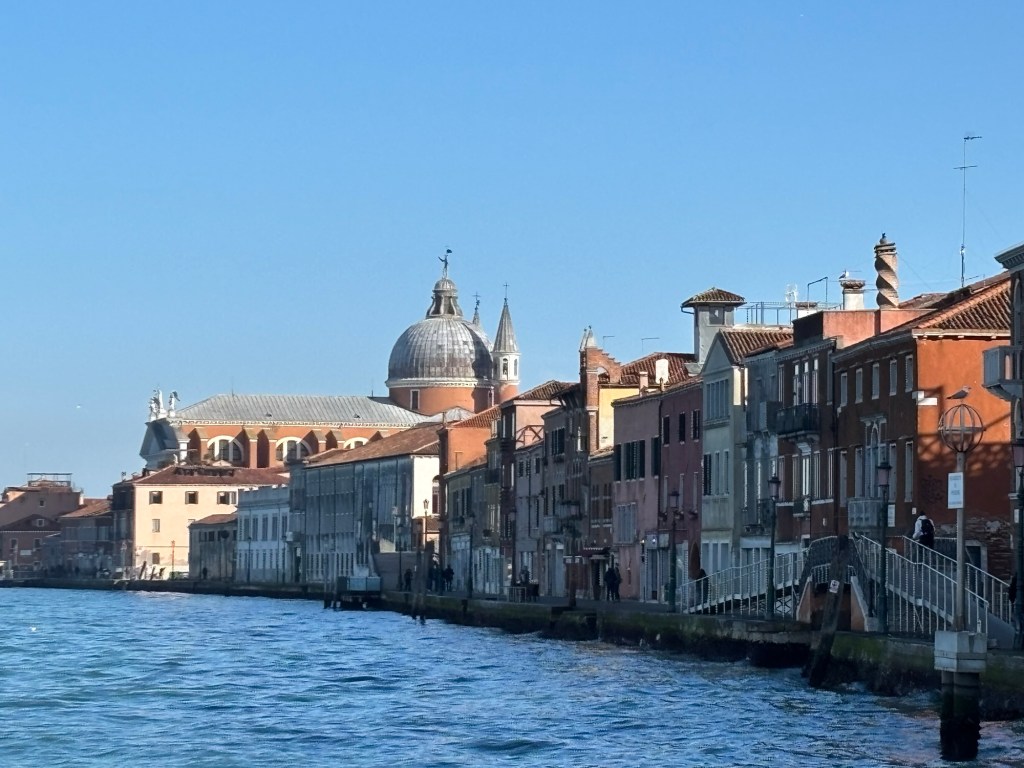
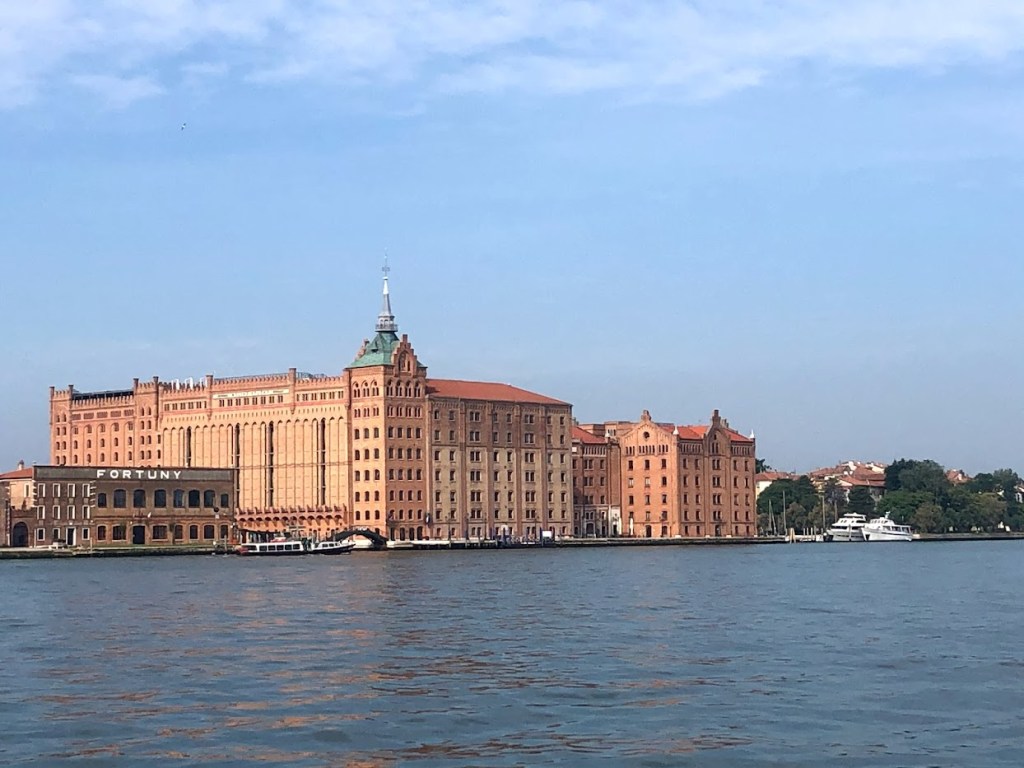
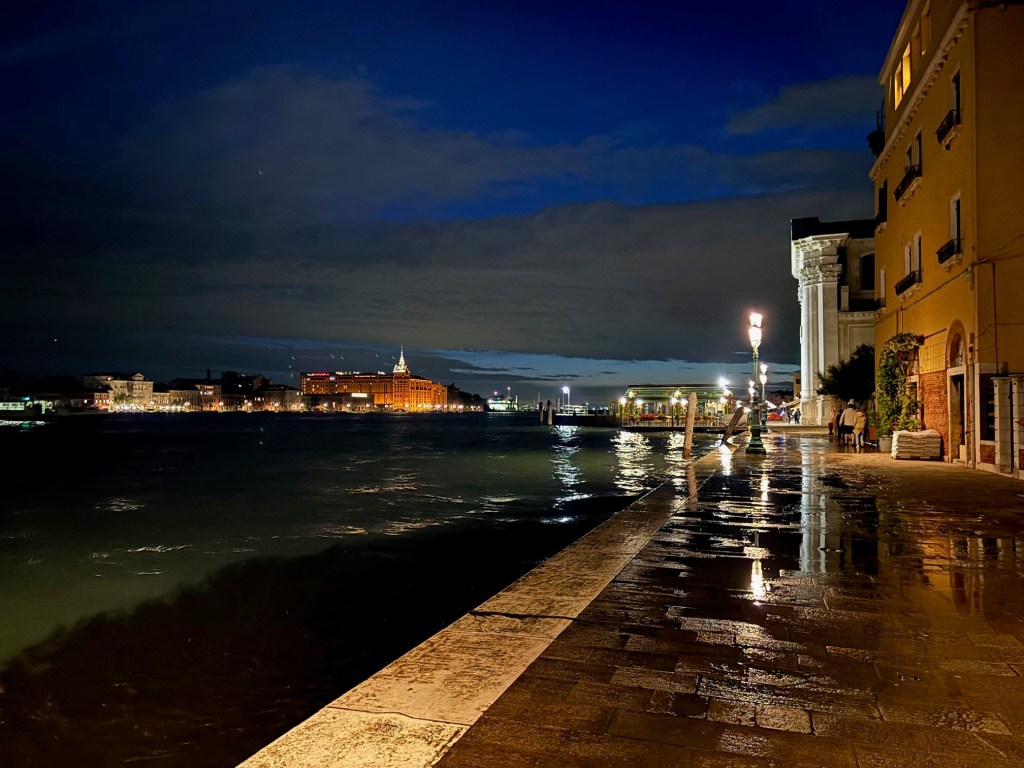
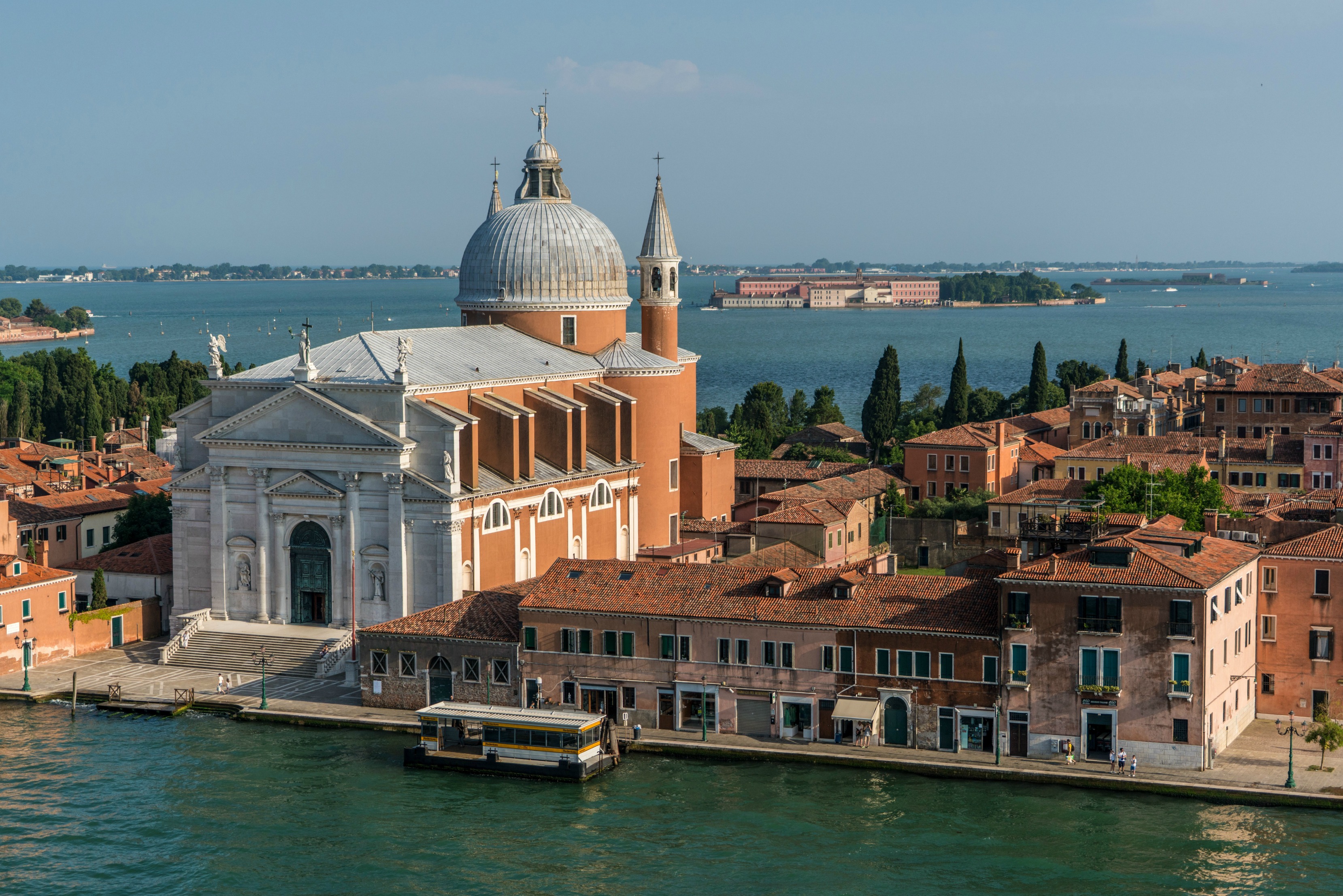
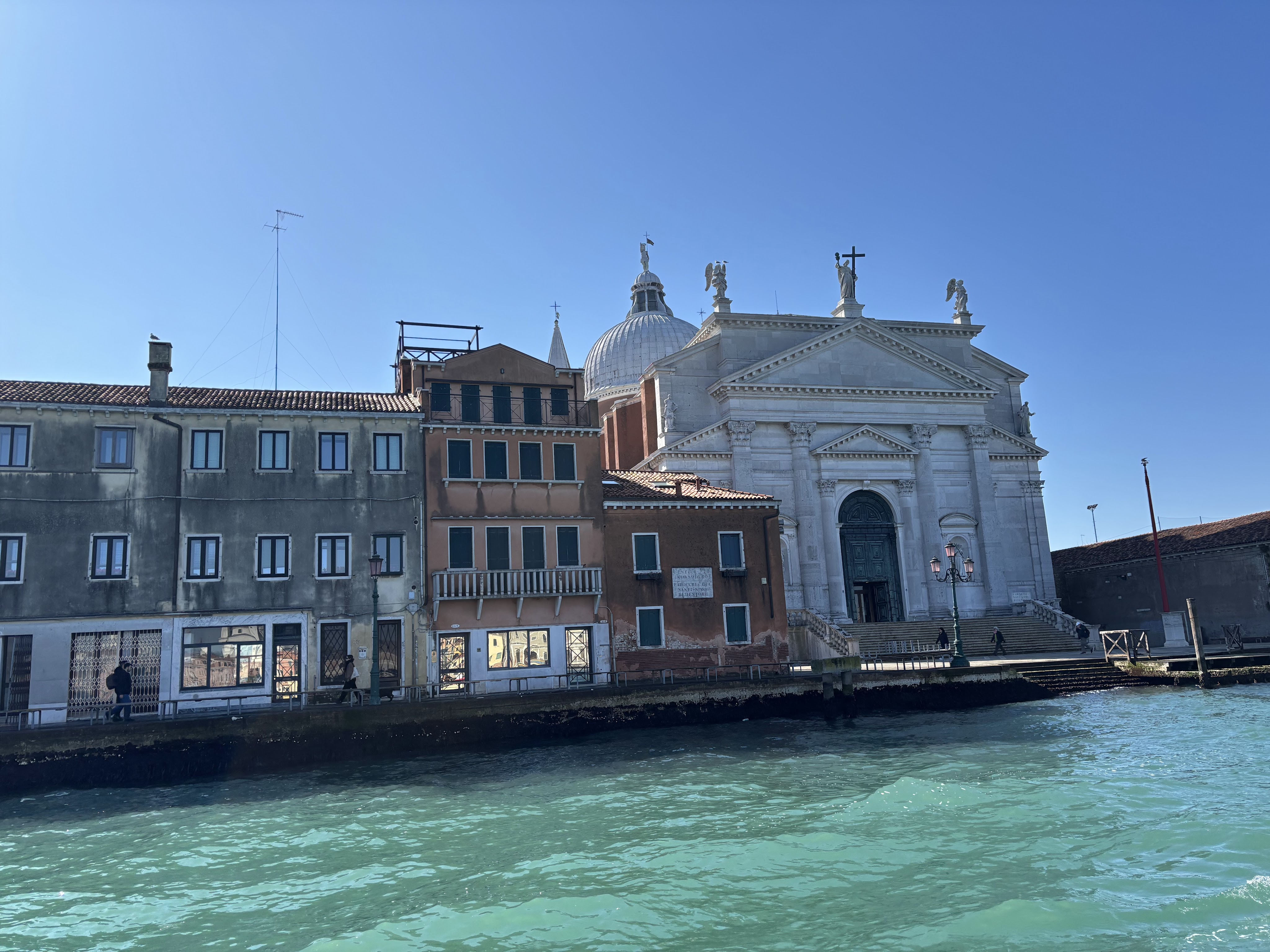
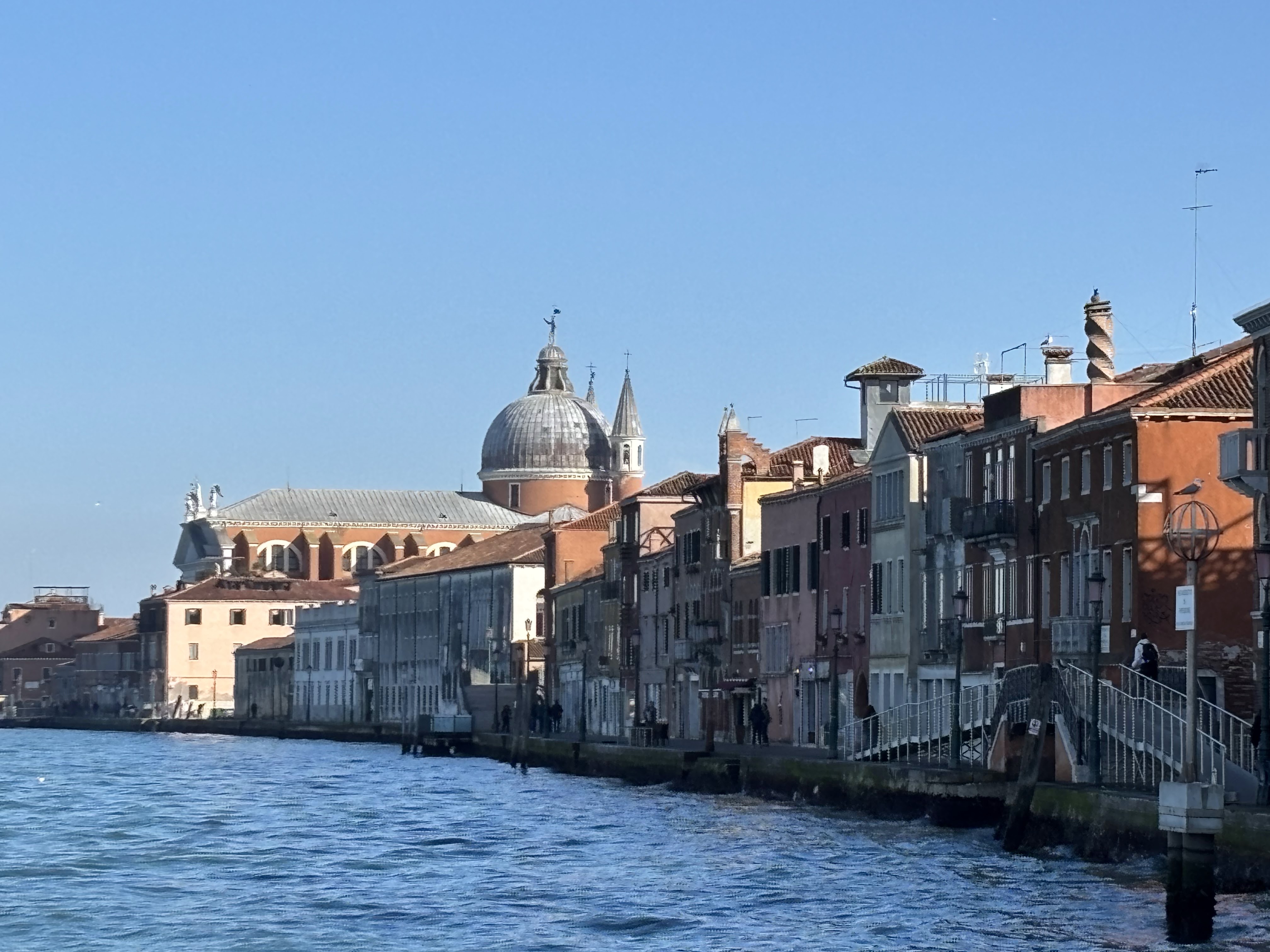
The Redentore Church, designed by architect Andrea Palladio dominates the skyline of Giudecca
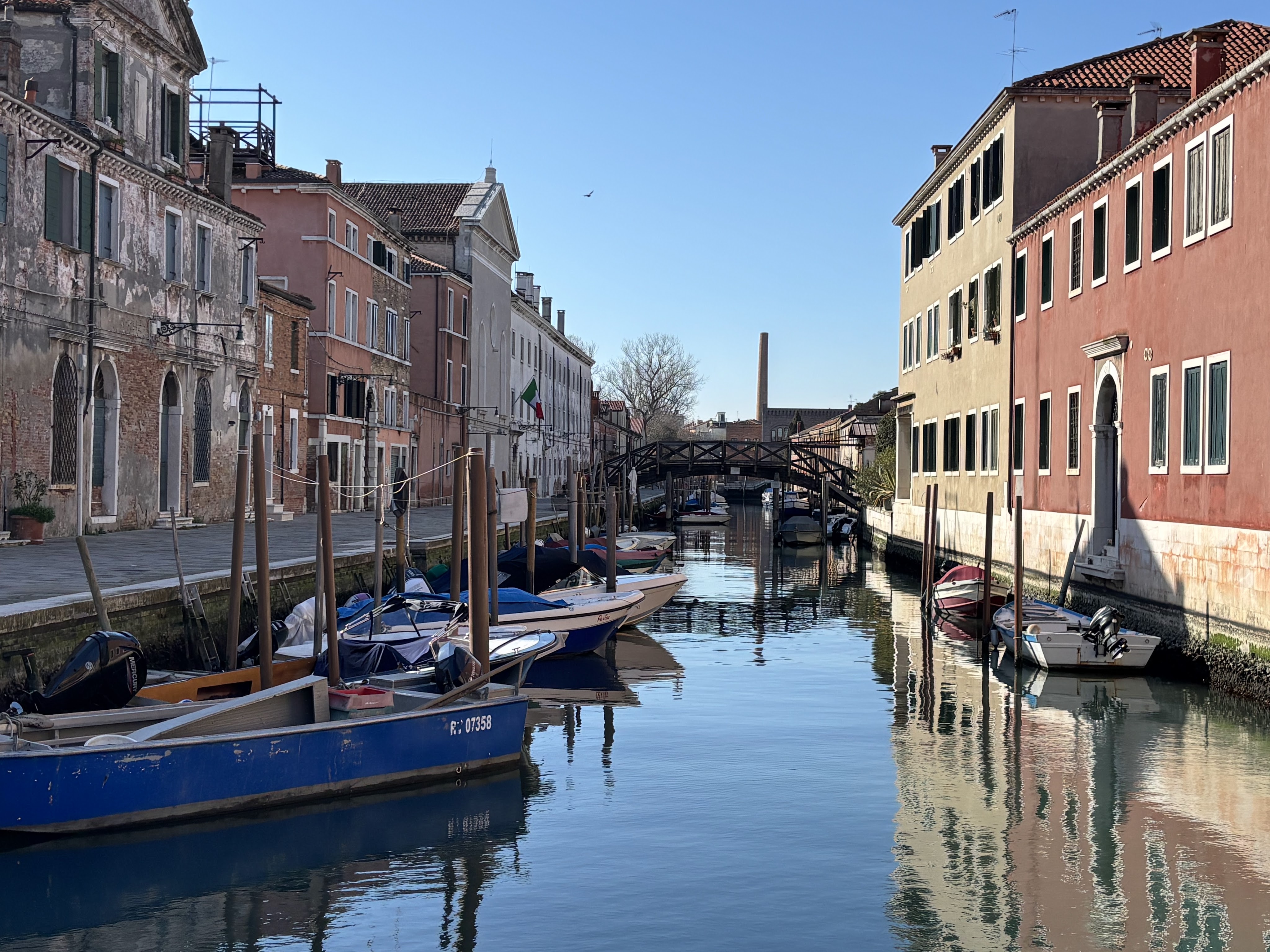
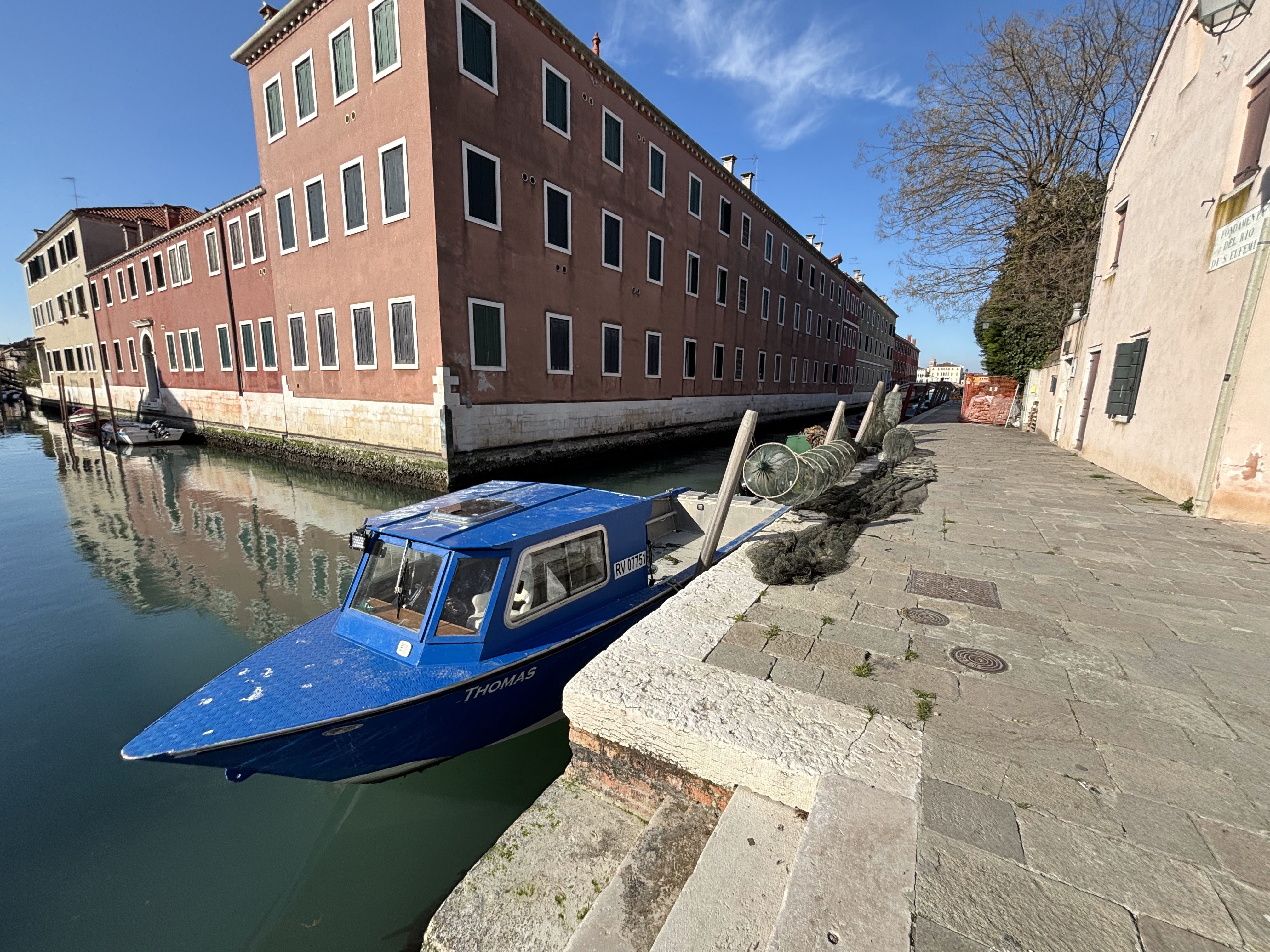
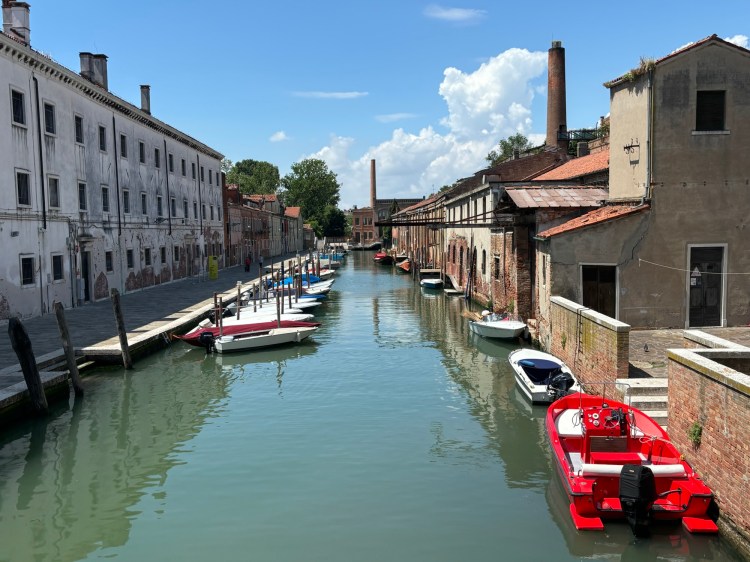
Today the population of Giudecca is about 5000 and the people of Giudecca are known as Giudecchini. Many of the Giudecchini work in Venice and take the boat across the Giudecca Canal every morning. Giudecca is the perfect place to observe the life of an island and how it has changed over time. In Campo San Cosmo, a five minute stroll from Palanca there are still moeche fishermen emptying and sorting their nets most mornings. Campo San Cosmo is a grassy square usually filled with cages housing ducks and rabbits. There’s a vegetable patch where the residents grow tomatoes. Years ago every campo in Venice had a vegetable garden and some grass, now San Cosmo is one of the few, perhaps the only one, that does.
On the corner of the fondamenta before you get to San Cosmo is the church of Sant’Eufemia. This is a proper local church, with a decent Sunday congregation and a really welcoming atmosphere. After the service on a Sunday morning everyone is invited for refreshments in the garden behind the church. During the summer the local children sell produce from the church garden; tomatoes, zucchini, herbs, salad greens.
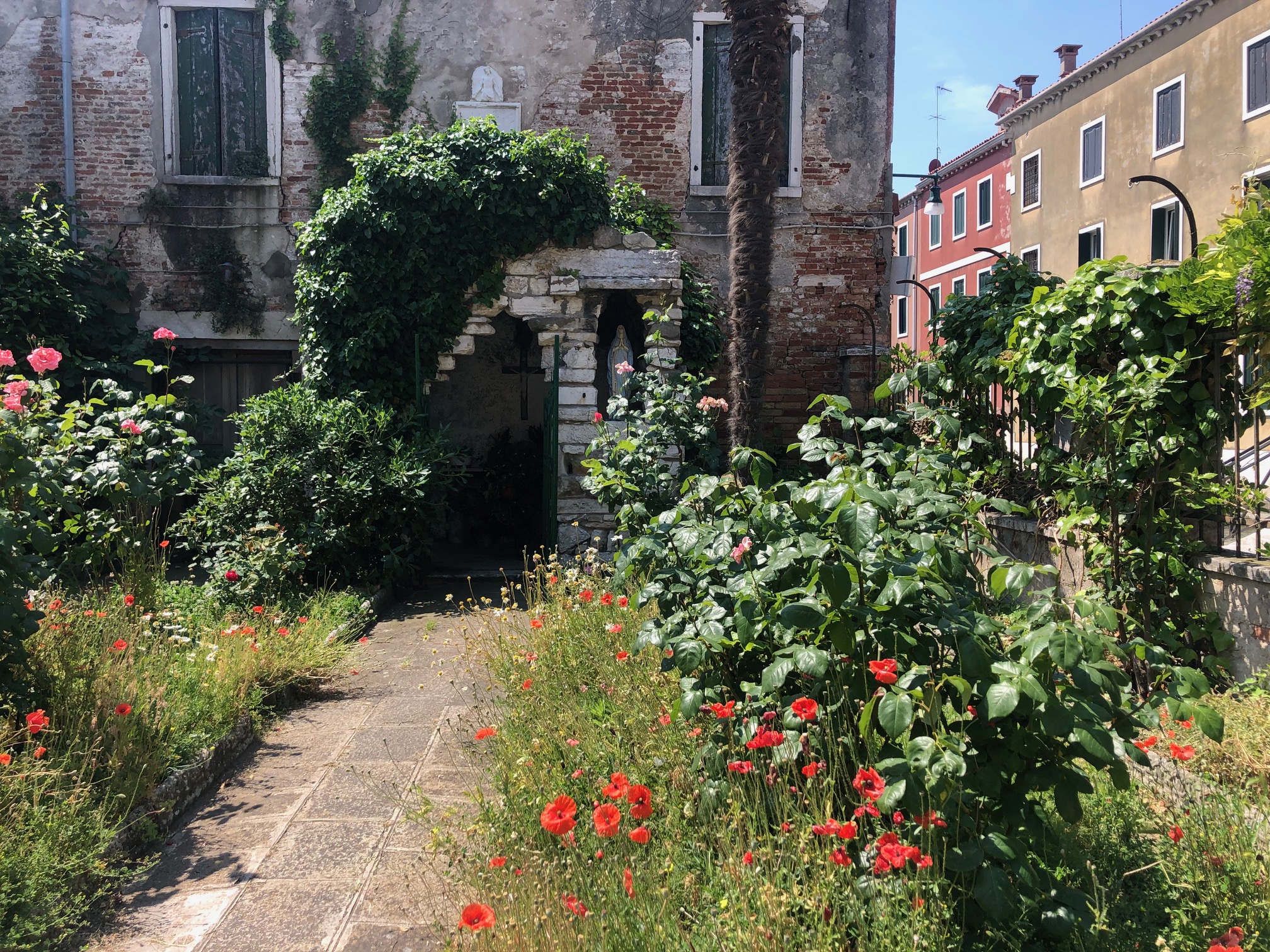
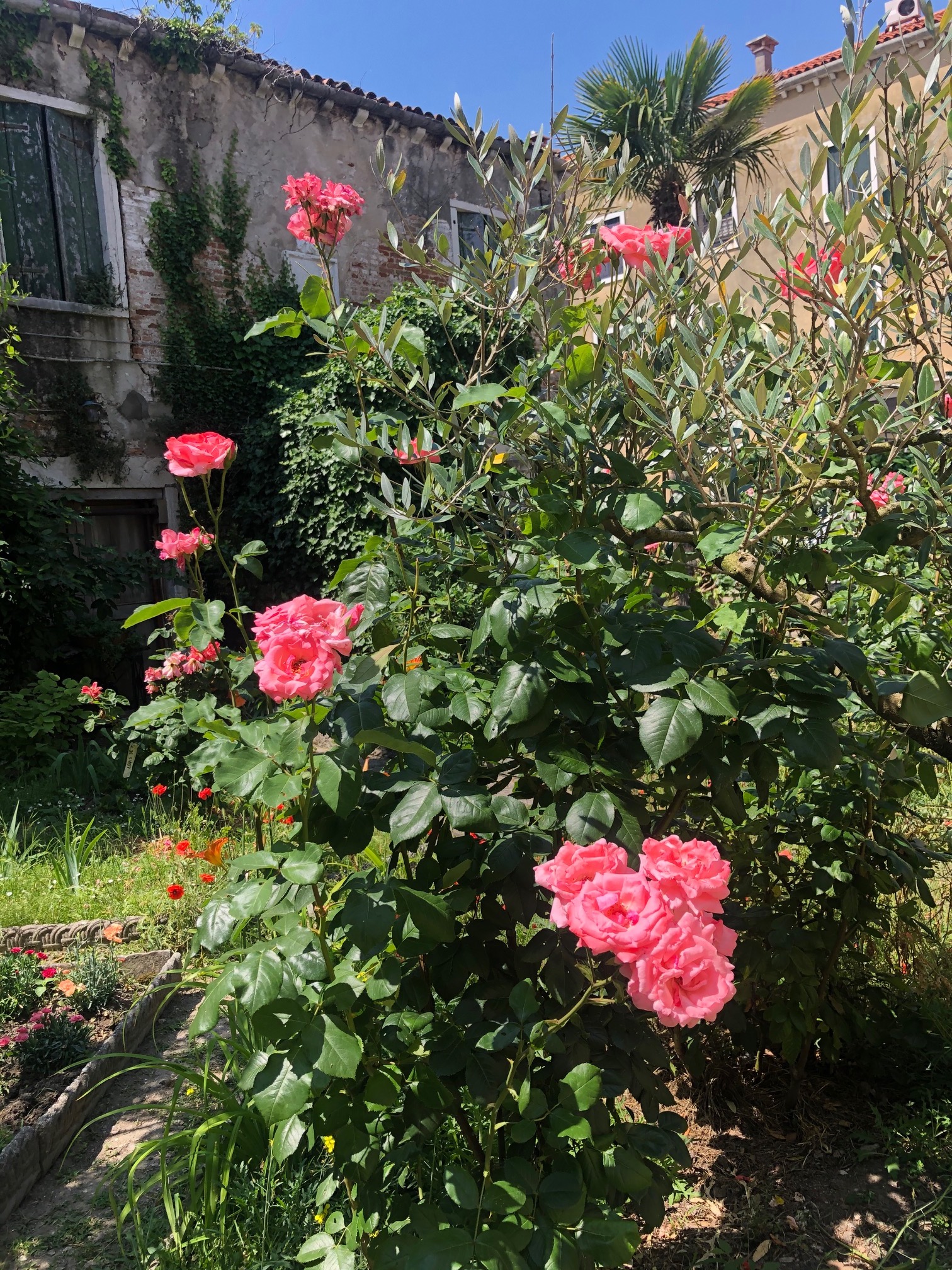
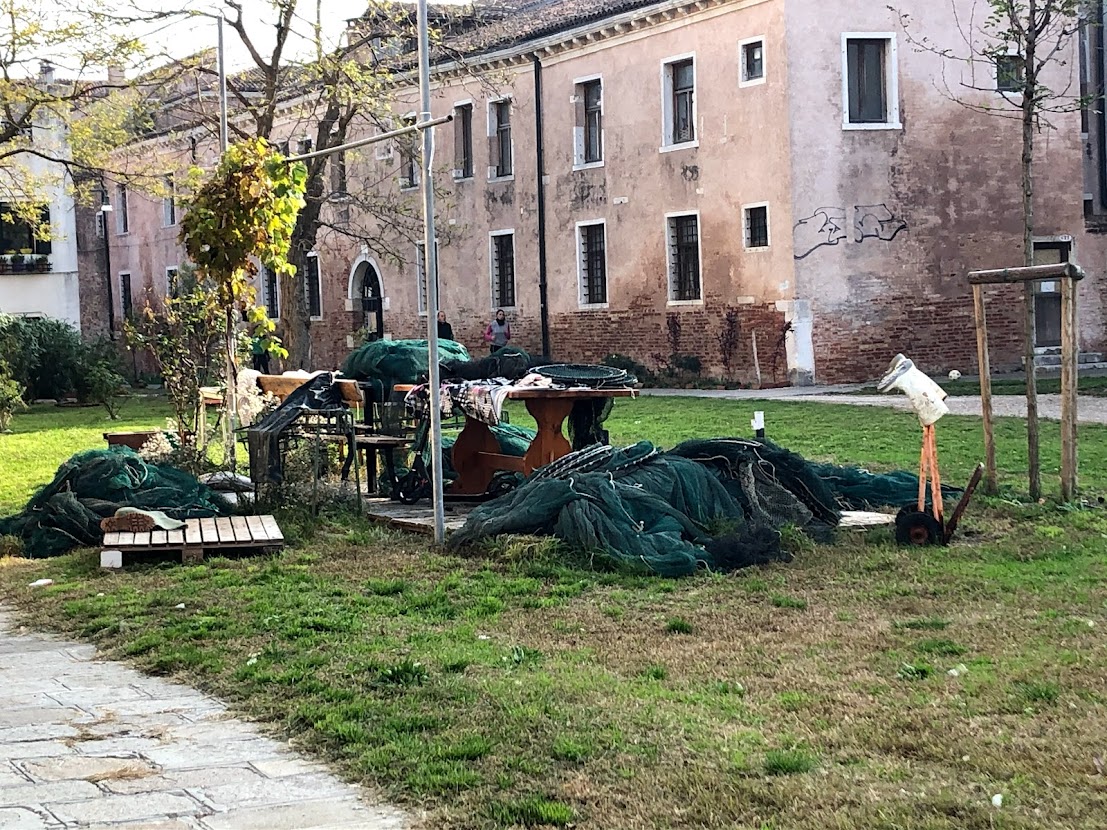
Giudecca – Venice Sant’Eufemia gardens and Campo San Cosmo (right) with fishing nets
Giudecca is filled with local heroes – I’ll start with the Capuchin monks based at Redentore Church. They run the churches of Giudecca, and they are wonderful! Dressed in simple brown cassocks tied at the waist with a rope, the monks are frequently seen walking between churches and saying mass at the Redentore or Sant’Eufemia. On regatta days they’ve even been known to enter a race (see below).
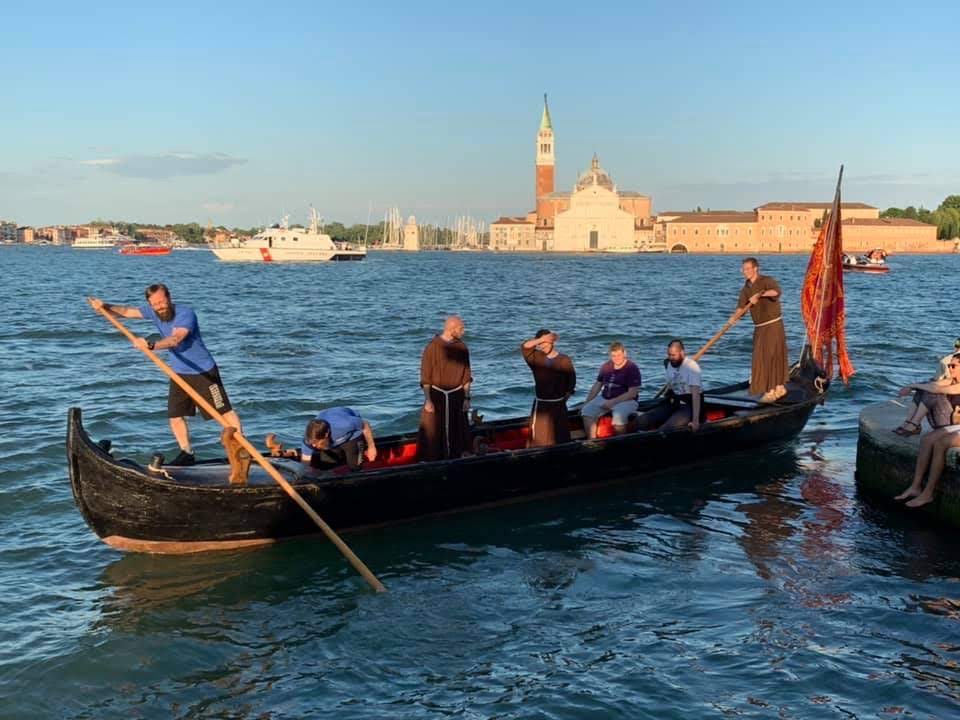
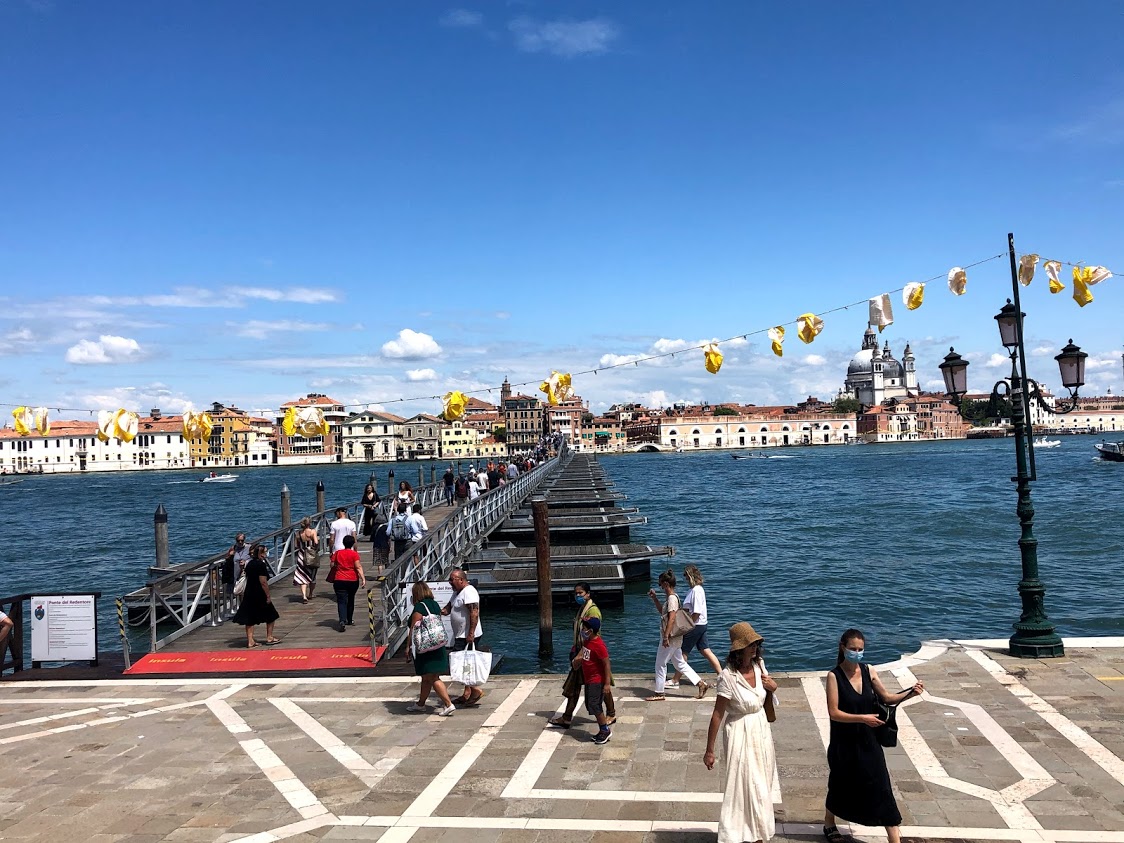
The fabulous Capuchin Friars of Redentore, Giudecca (left) + the floating bridge at Redentore time (right)
In the last few years Giudecca has blossomed as an artistic and creative centre. There’s CREA a Contemporary Art Space run by Pier Paolo Scelsi, offering studio space to visiting artists and regular exhibitions. There’s a co-working space for office nomads, housed inside the former Church of Saints Cosmas and Damian, next door to the moeche fishermen’s boats. Then further up the island towards Redentore there’s Villa Heriot a fantastic ‘technical school’ offering training and practical courses to students learning the skills of restoration, cleaning and maintenance of art works, sculptures and facades, including specialist cleaning techniques and restoration.
Then last year the Redentore Gardens opened to the public, after a wonderful restoration by the Venice Gardens Foundation. These gardens, once the private domain of the Capuchin Monks had fallen into disrepair. However after several years of hard work and dedication the Venice Gardens Foundation have performed a miracle – and the gardens are once again beautiful and can be visited by the public.
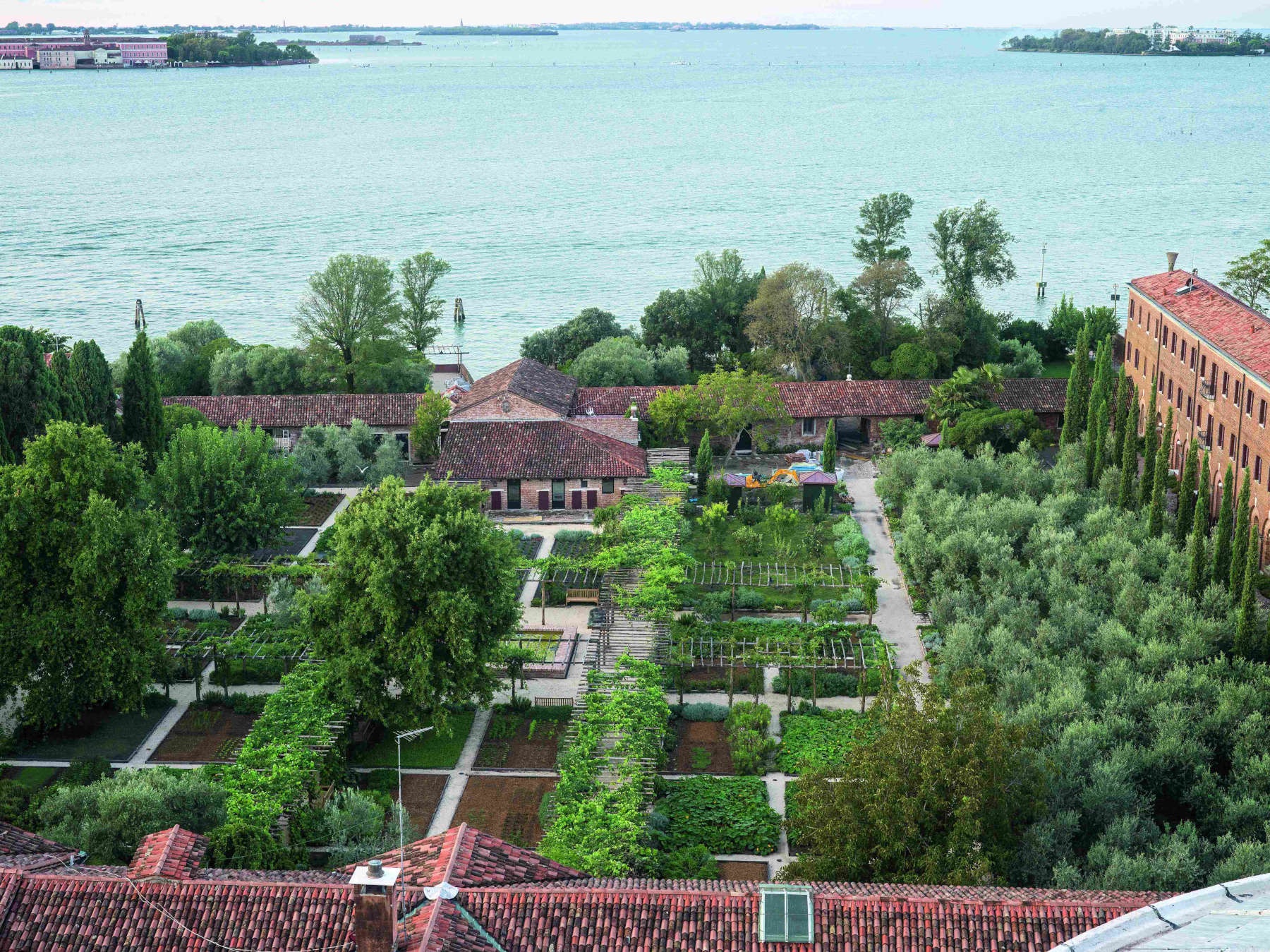
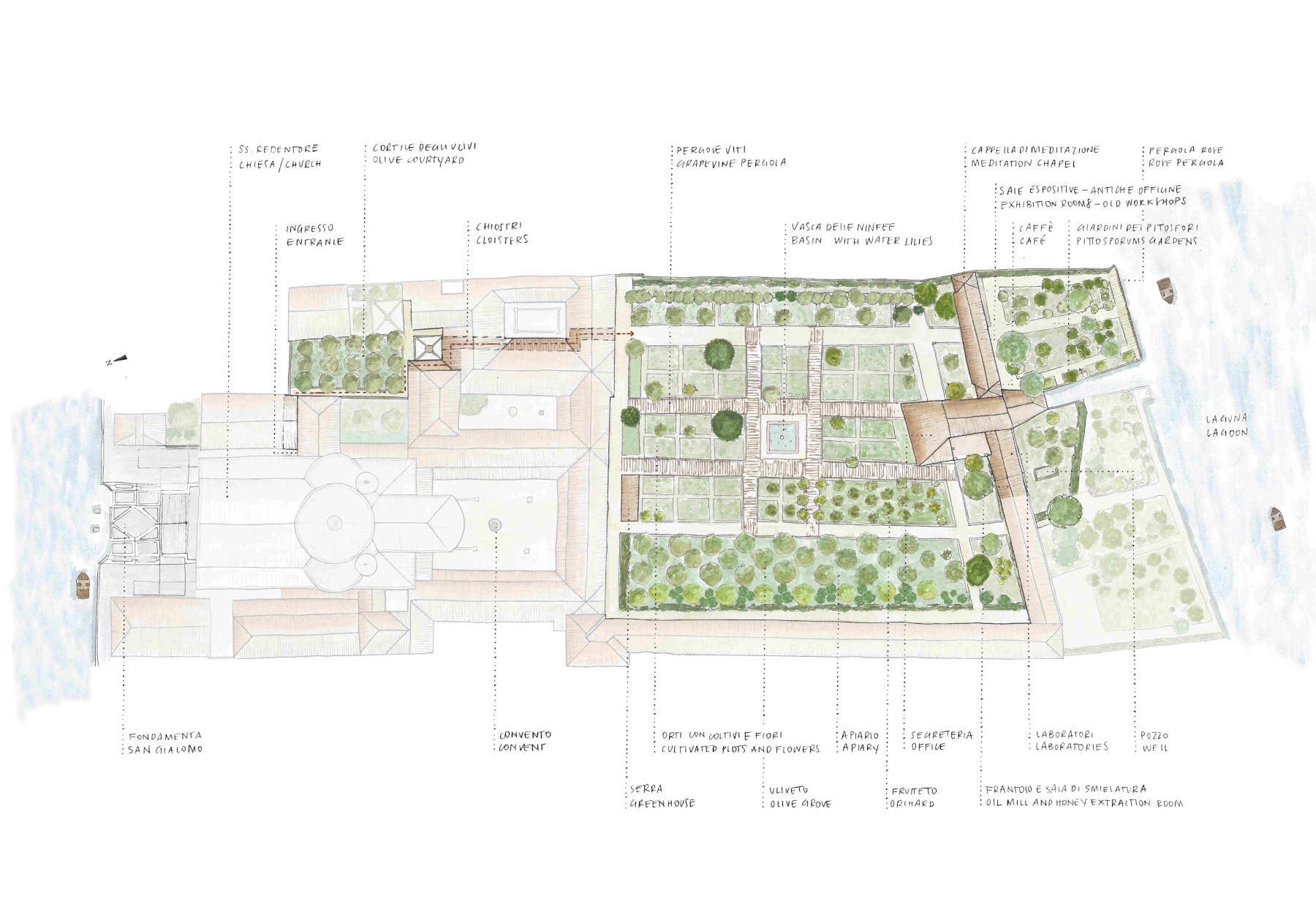
Redentore Gardens are open from Thursday to Sunday from 10 am – well worth a visit.
It’s important to remember that Giudecca has got a darker side too. The Women’s and Men’s Prisons for Venice are both located on the island. Whilst they don’t advertise their locations it is easy to figure it out. Look for high walls, watch towers and cameras. Last year, as part of the Venice Biennale, the women’s prison actually hosted an art exhibition. The women prisoners acted as guides. I wrote about this impressive and unique undertaking here: The Women’s Prison, Venice Part of the exhibition was a black and white short film, a ‘cortometraggio’ about a prisoner’s release day, it was shown at the Venice Film Festival in September 2024. It was a truly emotional experience that I was fortunate to witness. I also had the opportunity to meet three of the women ‘detainees’ pictured below.
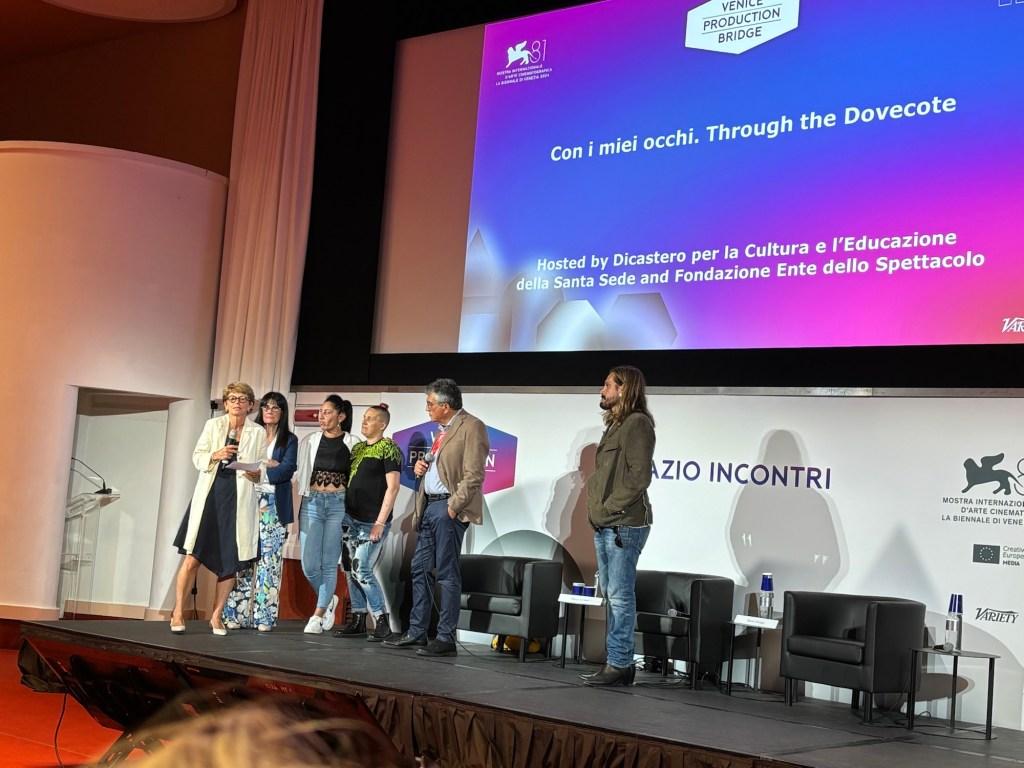
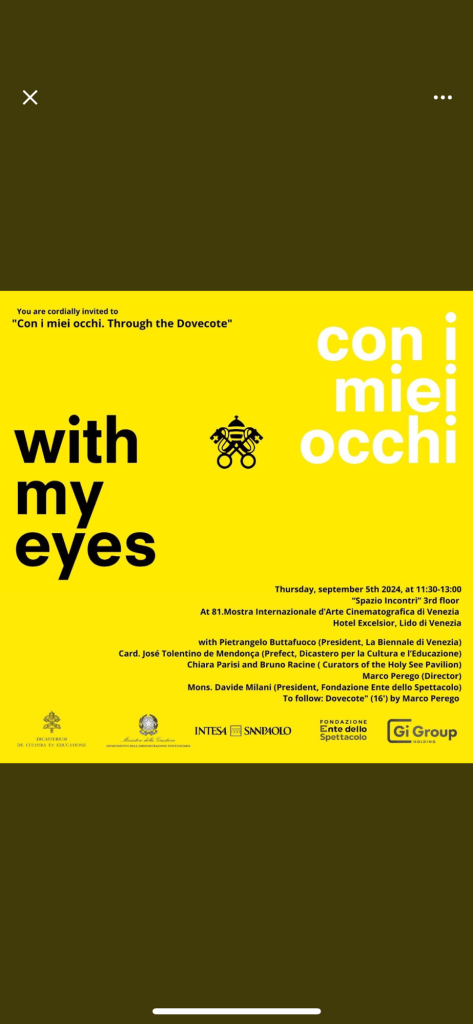
The short film ‘Con i miei occhi’ was screened at the Venice Film Festival, 2024
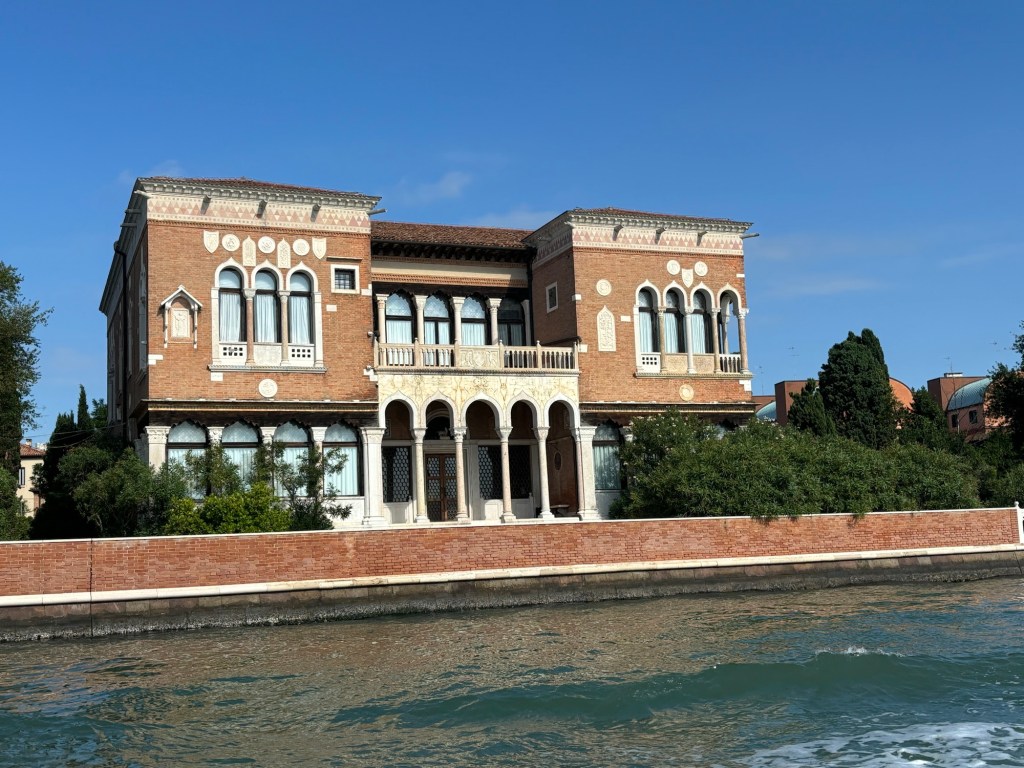
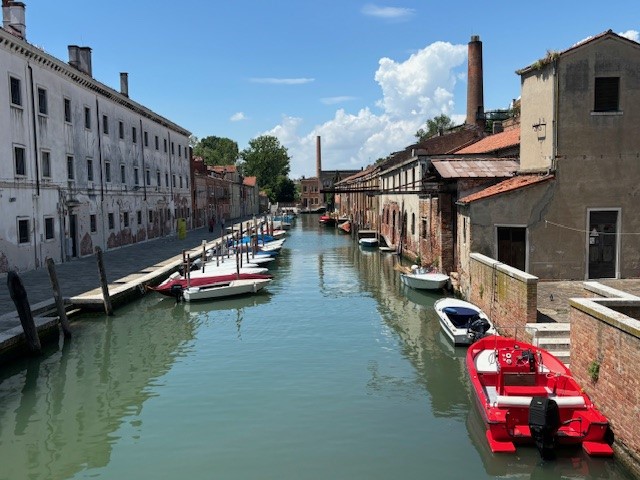
I’ve deliberately focused on Venetian projects and Venetian citizens in this article. From the wonderful work that the teachers at Villa Heriot are doing, training the art restoration specialists of the future to the community-minded frati (monks) of the Redentore Church there are so many good and kind people on Giudecca. From the ladies that sell fruit and vegetables from the Women’s Prison Garden (every Thursday morning) to the lovely gentleman who volunteers at Sant’Eufemia to tend the garden, there’s an abundance of good faith and kindness from one end of the Giudecca to the other. So next time you are in Venice, pop over to Giudecca to discover local and civic pride.
Notes – I’ve written numerous articles about Venice over the years – here are a few that may be of interest:
- Redentore, Venezia: July 2024
- On Giudecca: Giudecca and Sant’ Eufemia
- Venice and The Redentore
- The Women’s Prison, Venice
- They wouldn’t let me in…. (also about the Women’s Prison)
General information:
- Giudecca – CREA Contemporary Art Space – run by Pier Paolo Scelsi – Pierpaolo is currently looking for artists to fill his art spaces in 2026. www.creavenice.com
- Giudecca – Co-working spaces at € 30 per day (for a desk and wifi) and a peaceful office. Serendpt – https://coworkingvenice.serendpt.net/The office spaces are housed inside the former Church of Saints Cosmas and Damian.
- Teaching the next generation restoration and repair techniques for art, sculptures, friezes, facades: Villa Heriot – home to UIA – https://uiavenezia.com/ Universita dell’Arte Internazionale
- The Venice Gardens Foundation are doing amazing work in Venice. They restored and reinvigorated the Giardini Reali, next to San Marco. The second major project has been The Redentore Gardens: https://www.venicegardensfoundation.org/en/hortus-redemptoris
- Giudecca also houses the Fortuny Factory and Showroom – available to visit by appointment.
- For coffee and pastries or a light lunch I’d suggest ‘Majer’ a Venetian owned bar and kitchen.
- For more on Venice and Italy in general visit my blog: www.educated-traveller.com
- For tailor-made travel arrangements visit our sister site: www.grand-tourist.com
- Enquiries welcome!
- Buon appetito: For lunch I’d suggest: ‘schie con polenta’ – tiny shrimps from the lagoon served with polenta and then ‘Branzino’ – sea bass
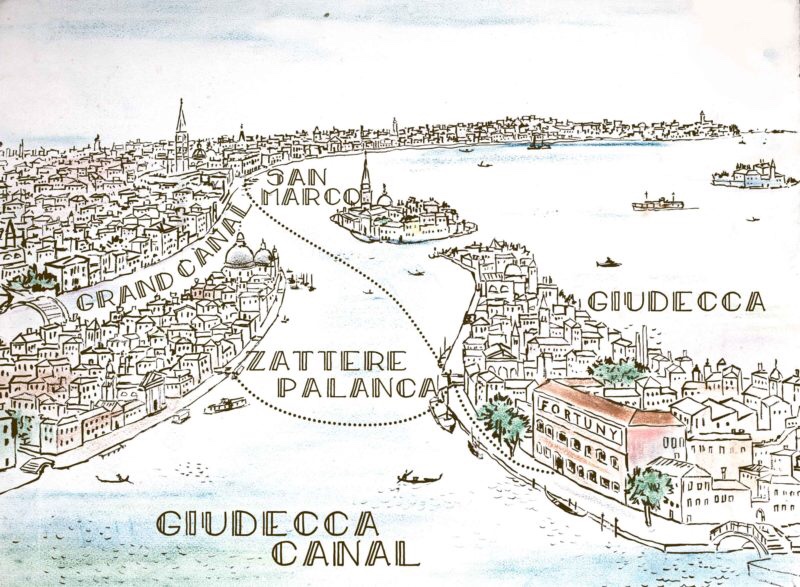
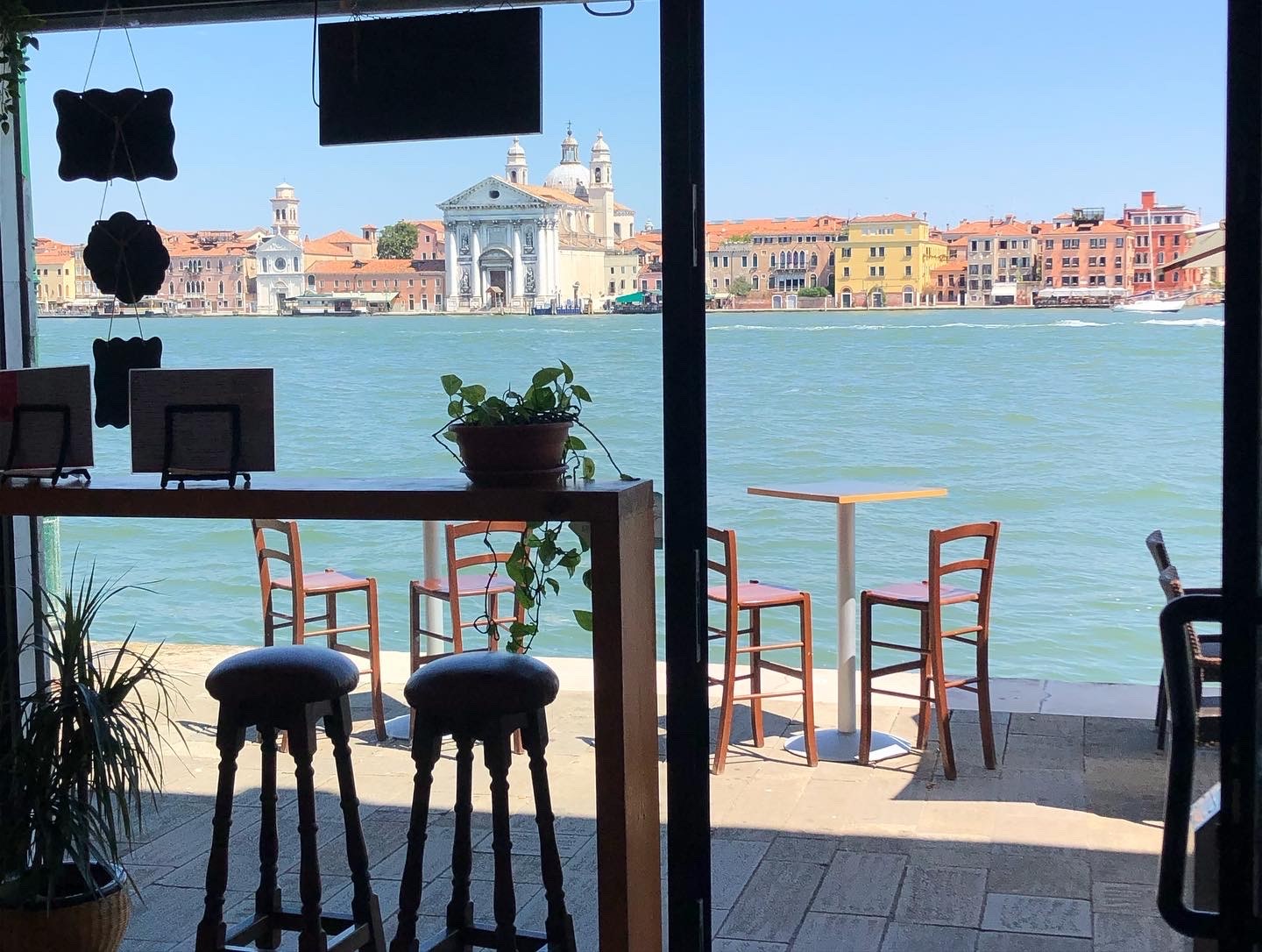
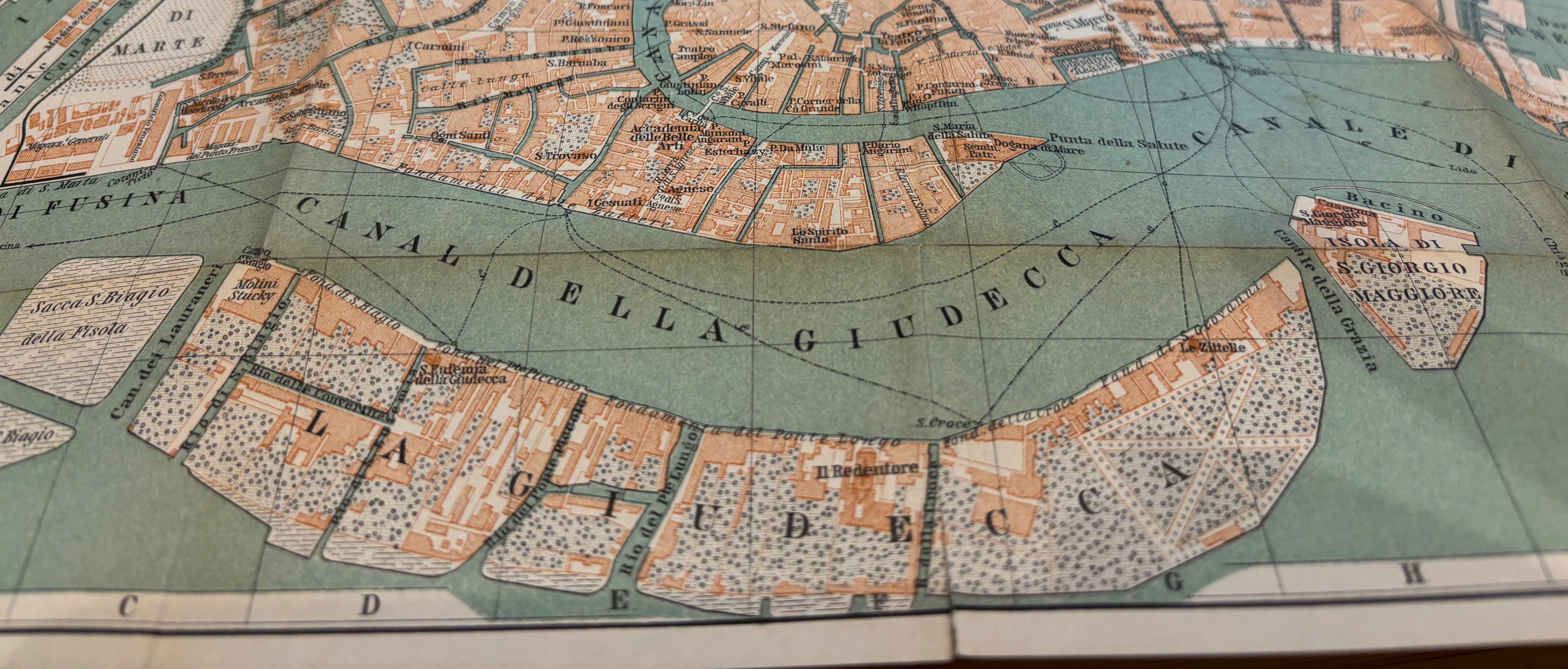
Giudecca (map) by Fortuny (2019), view from Giudecca, Redentore, 2024
July 2025

 The Educated Traveller