In his natural habitat! Venice of course.
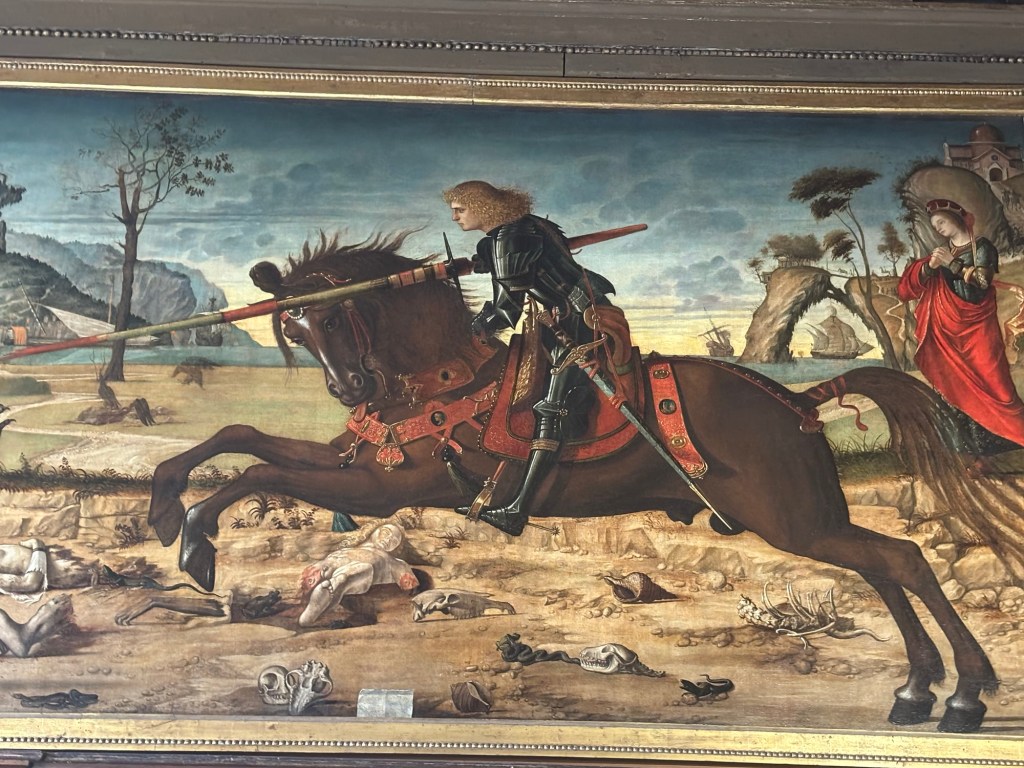
Carpaccio perhaps the most Venetian of Venetian painters spent his life painting in the city of Venice. He was active from 1480 until 1520 (approx). Many of his paintings date from the early years of the 16th century, 1502, 1503 etc. He was a master of detail, landscape and character.
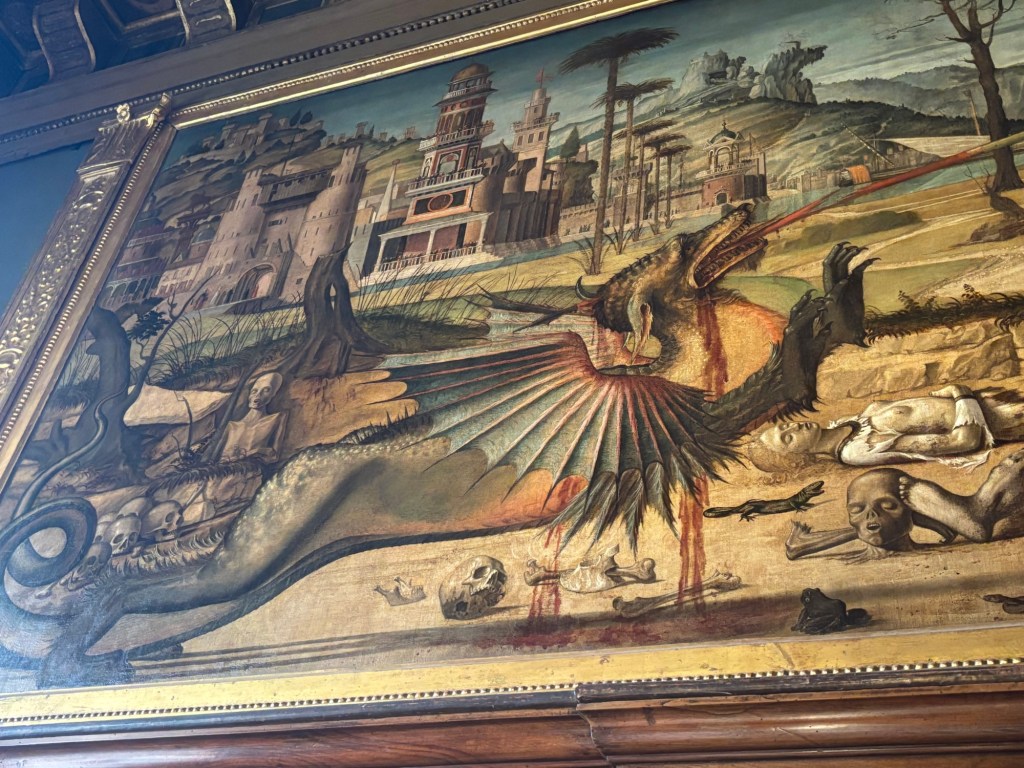
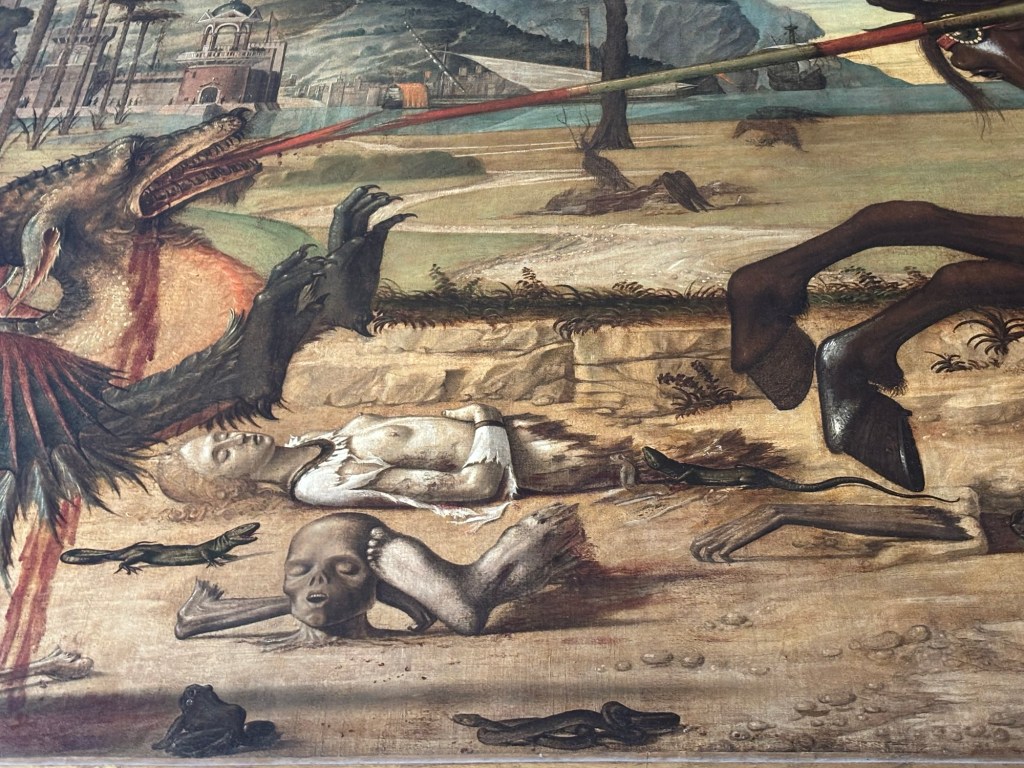
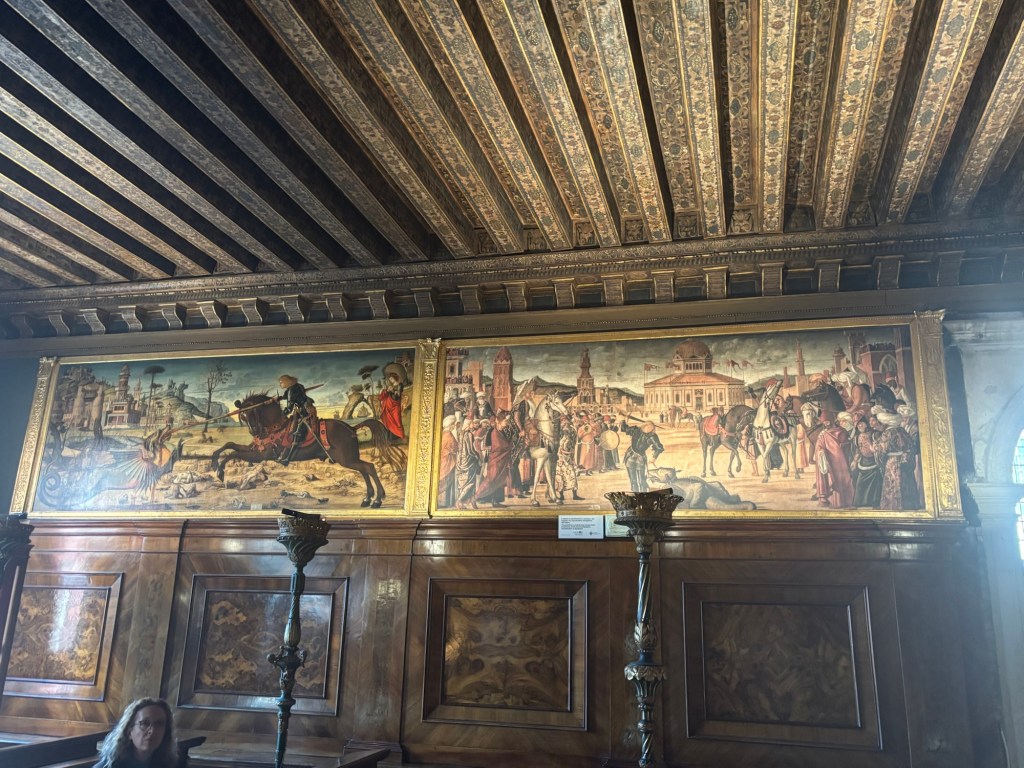
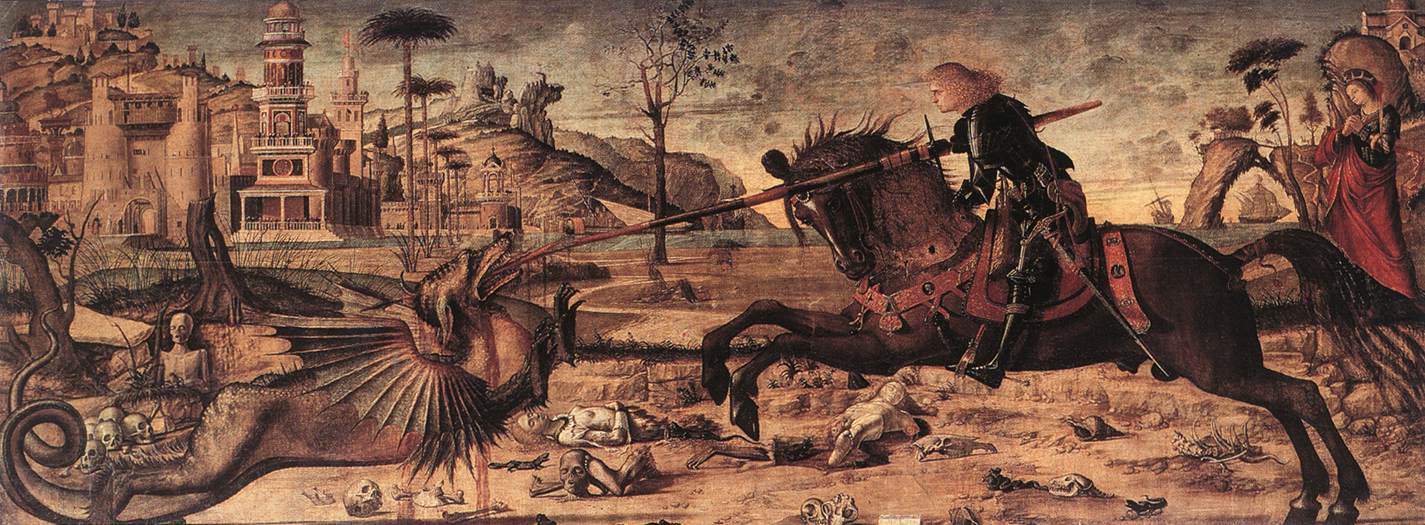
His cycle of paintings featuring the life of St George and his heroic slaying of the dragon have recently been restored – thanks to Save Venice – a charitable foundation based in America. Carpaccio’s masterpiece ‘The slaying of the dragon by St George’ has been restored to its former glory. The restoration which is effectively a specialist cleaning exercise has revealed a bright, detailed tapestry of symbols and information that were invisible before. George gallops towards the doomed dragon (visible in the pre and post restoration images below). There’s movement and bravery in the painting. The scattered remains of the dragon’s previous victims remind us that George has entered the dragons lair. The ground is littered with dismembered bodies. The two images below show the restored version of the painting (above) and the pre-restoration painting (below). The clarity of the images in the restored painting is truly impressive.
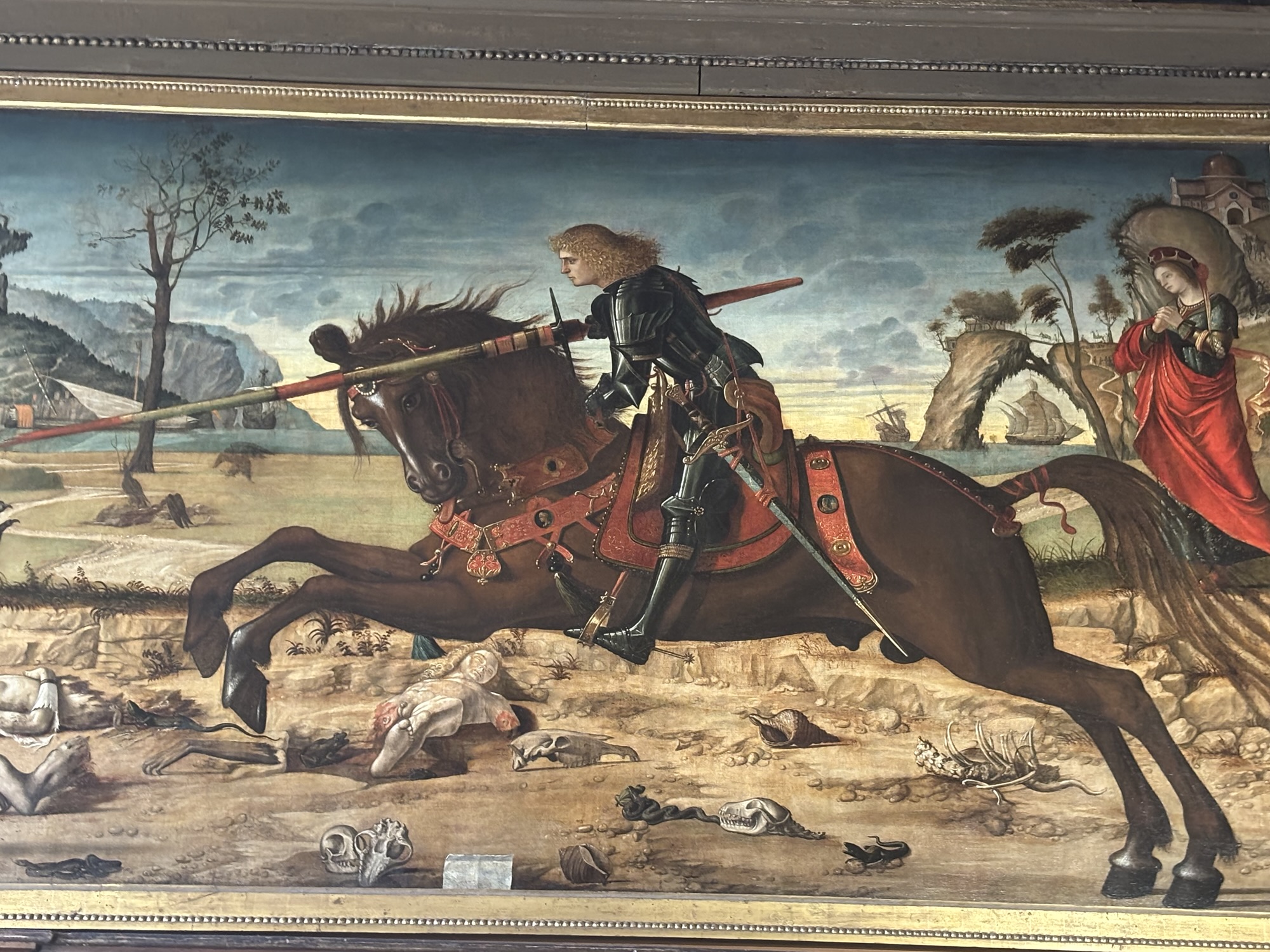
Carpaccio – The canvas above is the restored version of the painting – March 2025
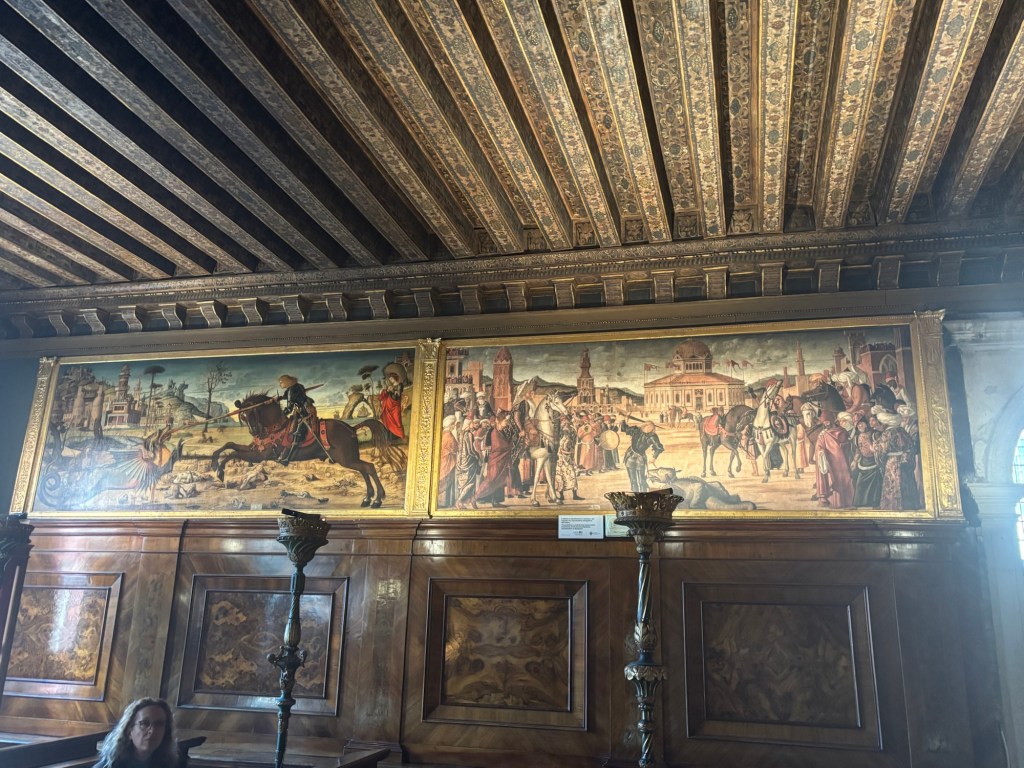
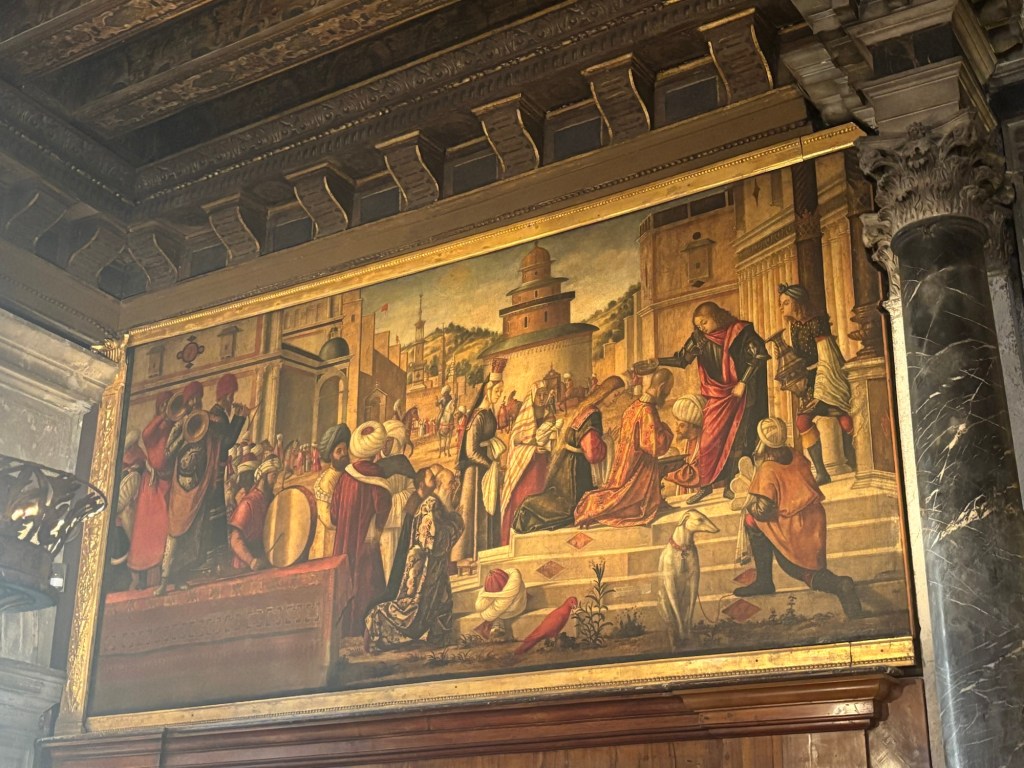
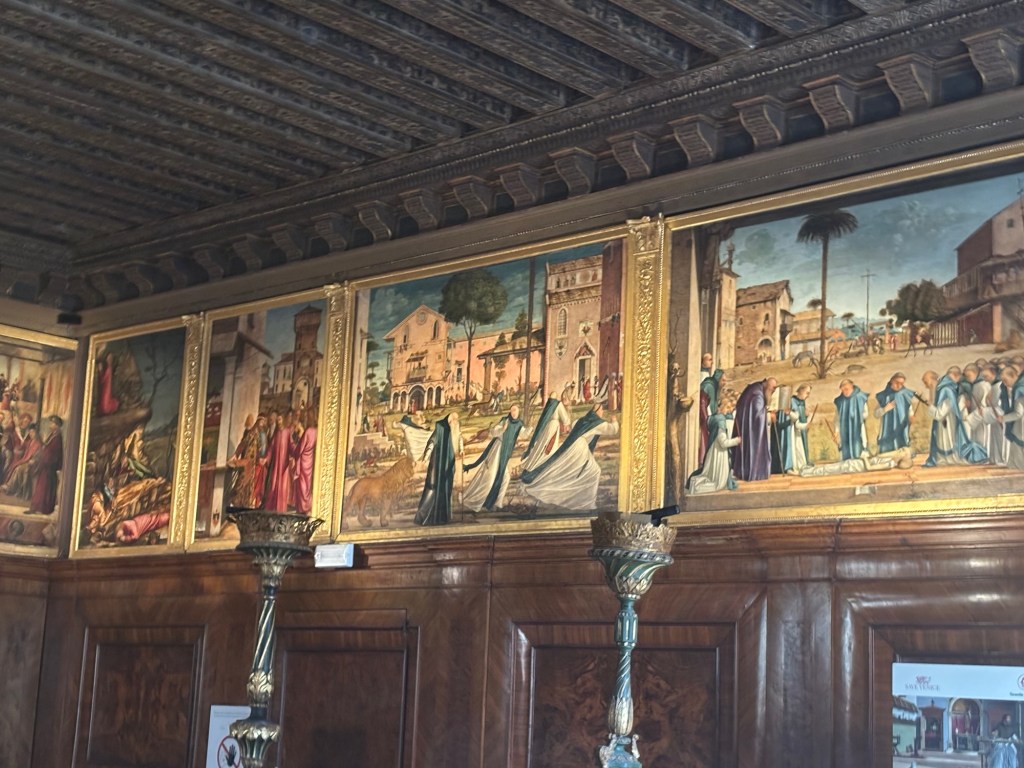
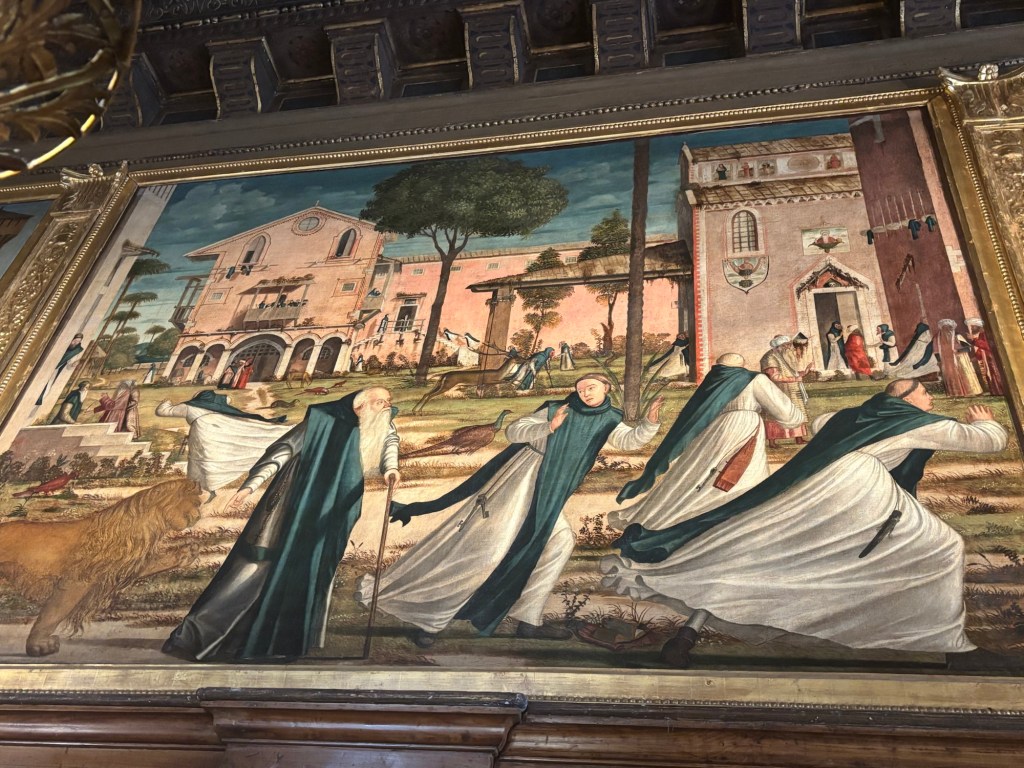
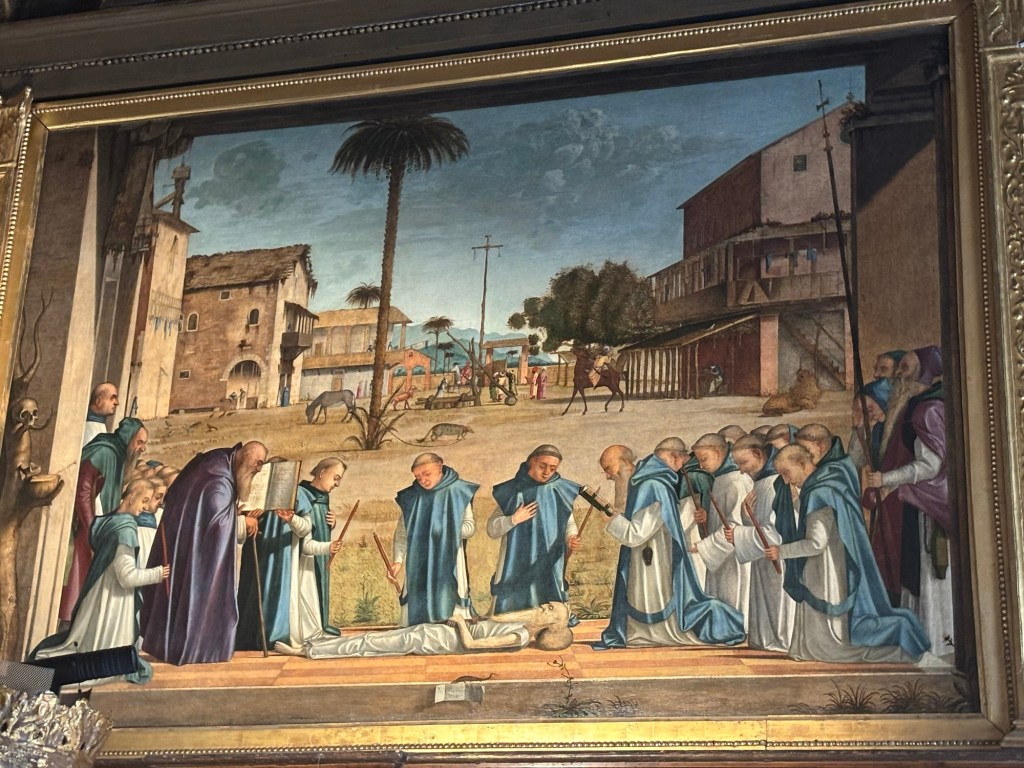
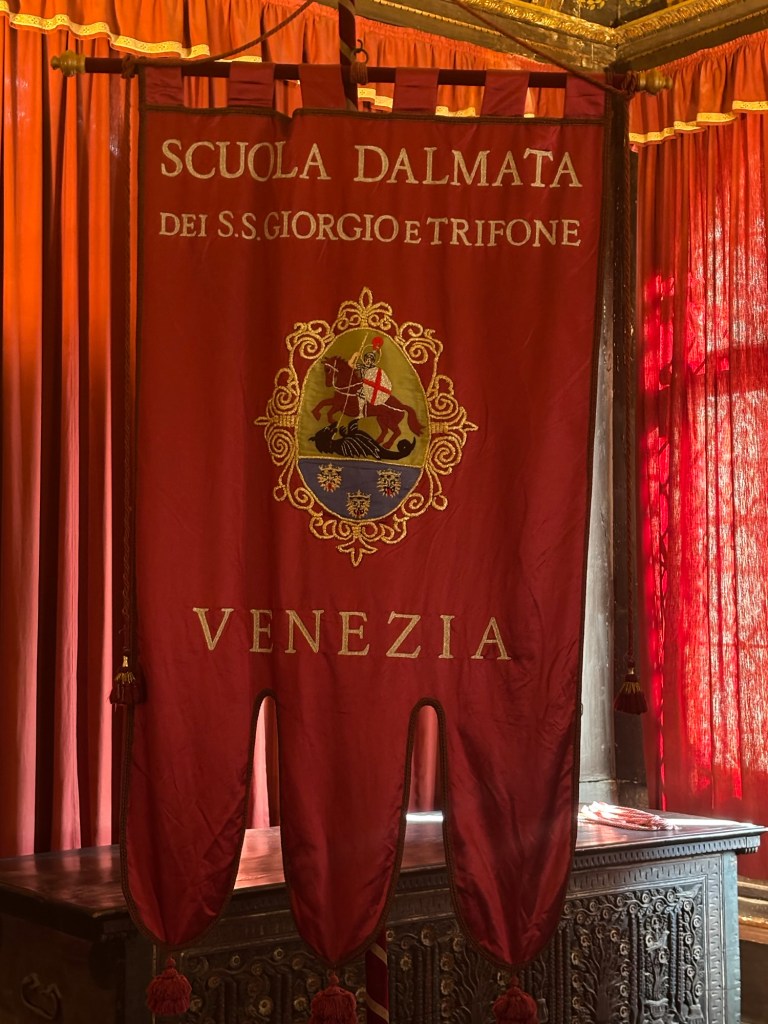
The Carpaccio paintings can be seen on the walls of Scuola Dalmata dei SS Giorgio e Trifone – often referred to as Scuola San Giorgio. The scuola is close to the church of San Giorgio dei Greci and about 10 minutes walk from Riva Schiavoni.
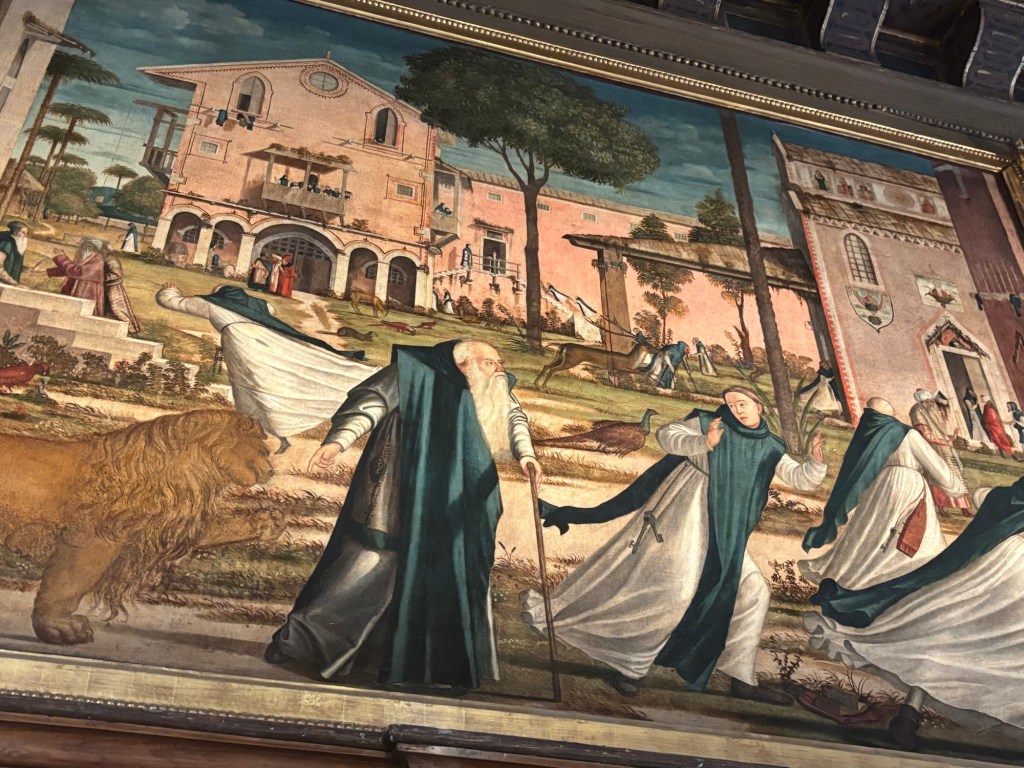
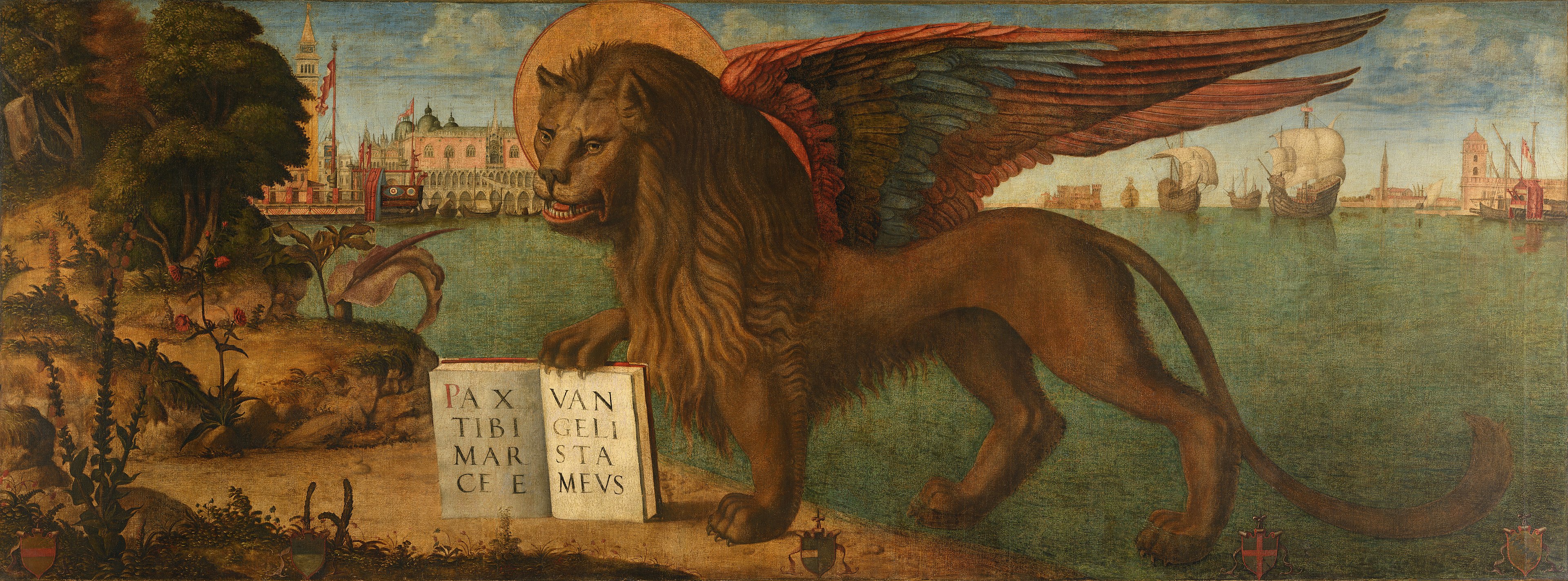
I particularly like the canvases of St Jerome (above). The saint is usually portrayed with a long beard and often reading or writing. He is regarded as an intellectual of the Christian world. The painting above shows Jerome introducing his friend the lion into a monastery and terrifying the monks. The legend is that the lion was suffering with a thorn in his paw. Jerome removed the thorn and the lion became his devoted companion as a result. The monks did not share Jerome’s enthusiasm and confidence towards the lion. There’s very heavy symbolism in this painting too, because the lion is the symbol of Venice. In fact one of Carpaccio’s most famous paintings is the ‘Lion of San Marco’ which he was commissioned to paint by the city fathers (below). This painting can be seen in the Palazzo Ducale.
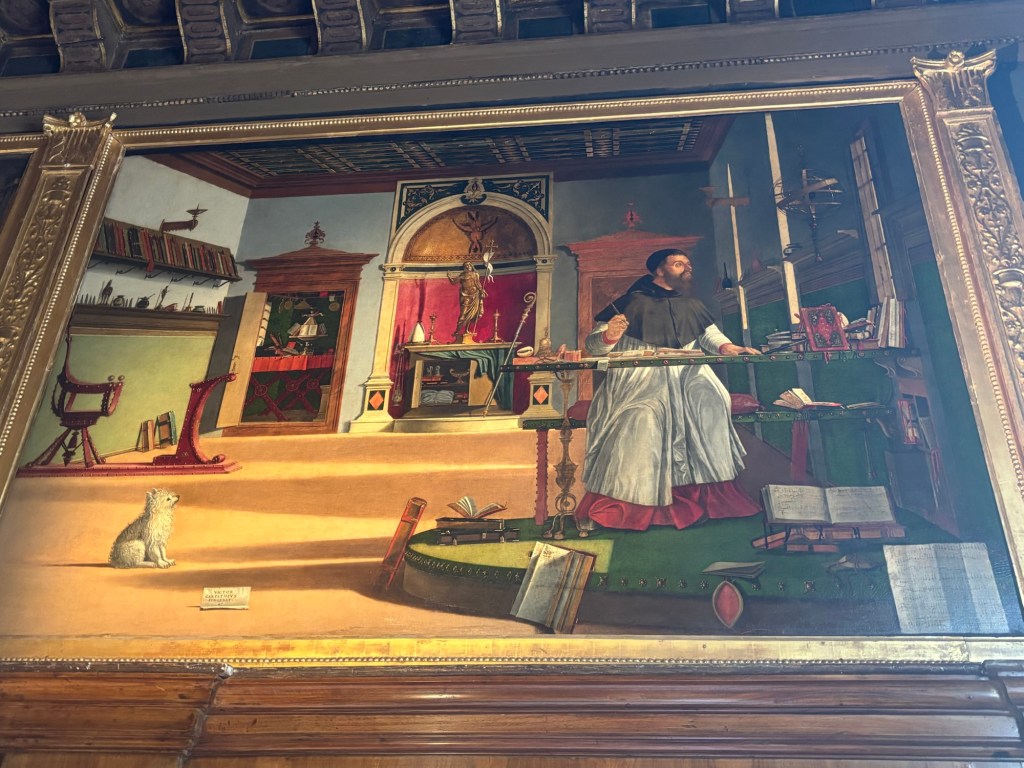
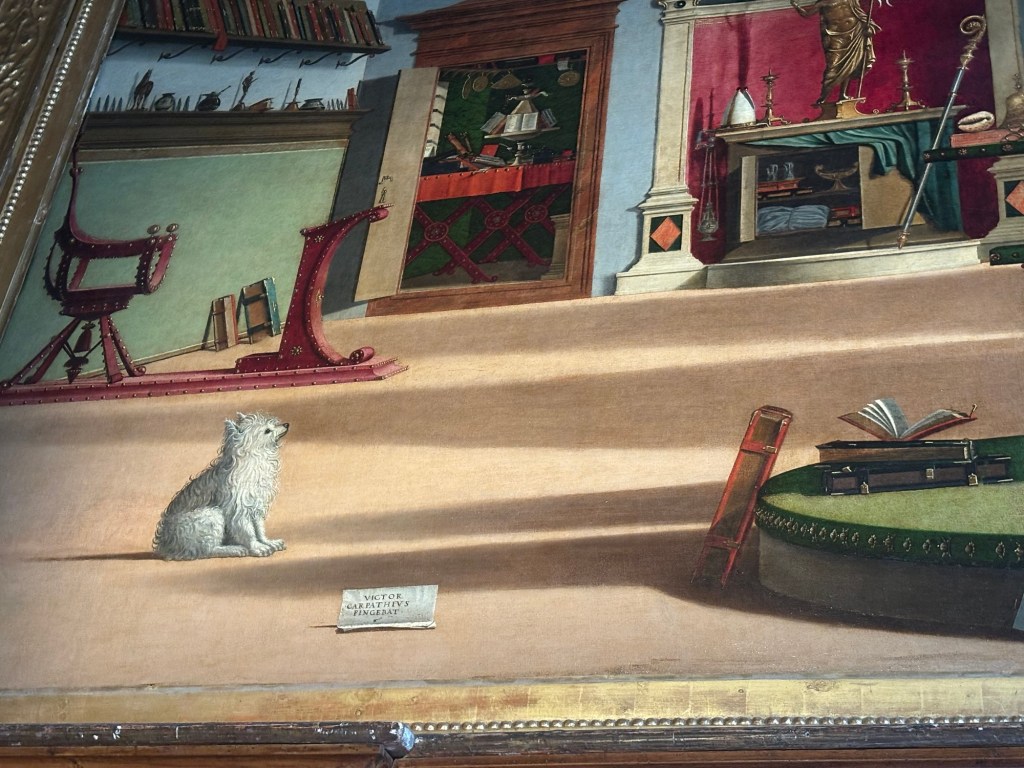
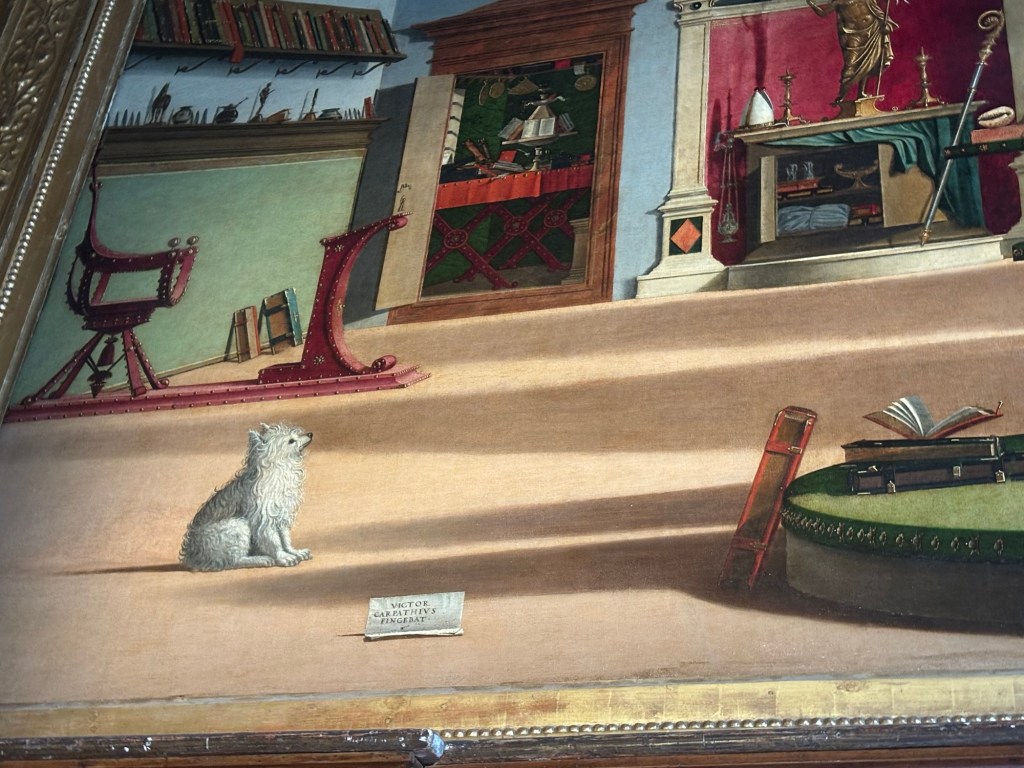
Another magnificent painting by Carpaccio is St Augustine in his study. The detail of the room and surroundings is exquisite. It is said that Carpaccio was influenced by Flemish painters like Van Eyck. A favourite of mine in this canvas is the cute little dog sitting in the middle of the room awaiting something – perhaps a little snack! There’s often humour in Carpaccio’s work.
I’ve written another article about Carpaccio that might be of interest. I’ve also written extensively about Venice, art, history, trade and artisan studios. You may enjoy the following:
A NOTE ON THE AUTHOR – Janet Simmonds (nee Panagakis) is a British-born Art Historian and Geographer, she specialises in the history, art and culture of Venice. She has two Master’s degrees from the Universities of Oxford and Manchester – the first in the Geography of the Mediterranean Basin, the second in Art History with a focus on Italian art and architecture, especially Venice’s blossoming as the contemporary art capital of Europe.
Janet acts as a guest lecturer for specialist groups, including universities and colleges. Clients include Oxford University Alumni, Alma College, Michigan (Master’s students in Creative Writing). In August, 2025 she is organising an Oxford Residency for Alma College students. Cultural Groups including New York’s 92nd Y, Boston Architectural Society, National Trust Groups, and private individuals with a particular interest in unique and exceptional experiences in Italy and especially Venice. In recent months she has been working on a new programme exploring the links between Venice and Istanbul. She is particularly interested in the connections to be found between art, literature and social history. Examples include Peggy Guggenheim’s Venice in the 1950s and the Palazzo Barbaro circle in the 1870s, including Whistler, Henry James and Isabella Stewart Gardner.
Janet writes about Venice on her blog www.educated-traveller.com which offers an interesting perspective on life in Venice.
March 2025

 The Educated Traveller