“But words are things, and a small drop of ink, / Falling like dew, upon a thought, produces / That which makes thousands, perhaps millions, think; / ‘T is strange, the shortest letter which man uses / Instead of speech, may form a lasting link / Of ages; to what straits old Time reduces / Frail man, when paper — even a rag like this, / Survives himself, his tomb, and all that’s his.” Byron (1821) Don Juan – Canto III, Stanza 88
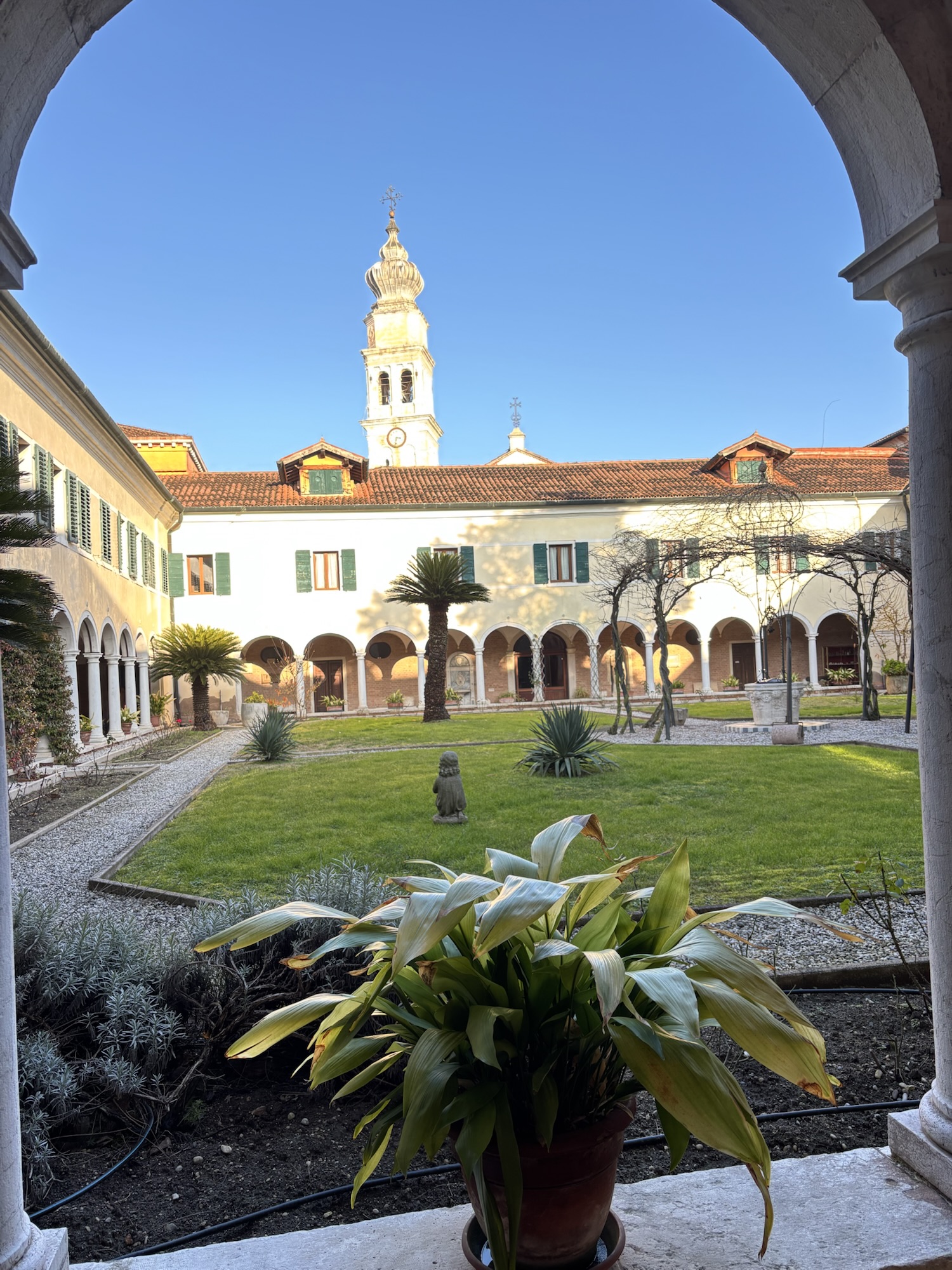
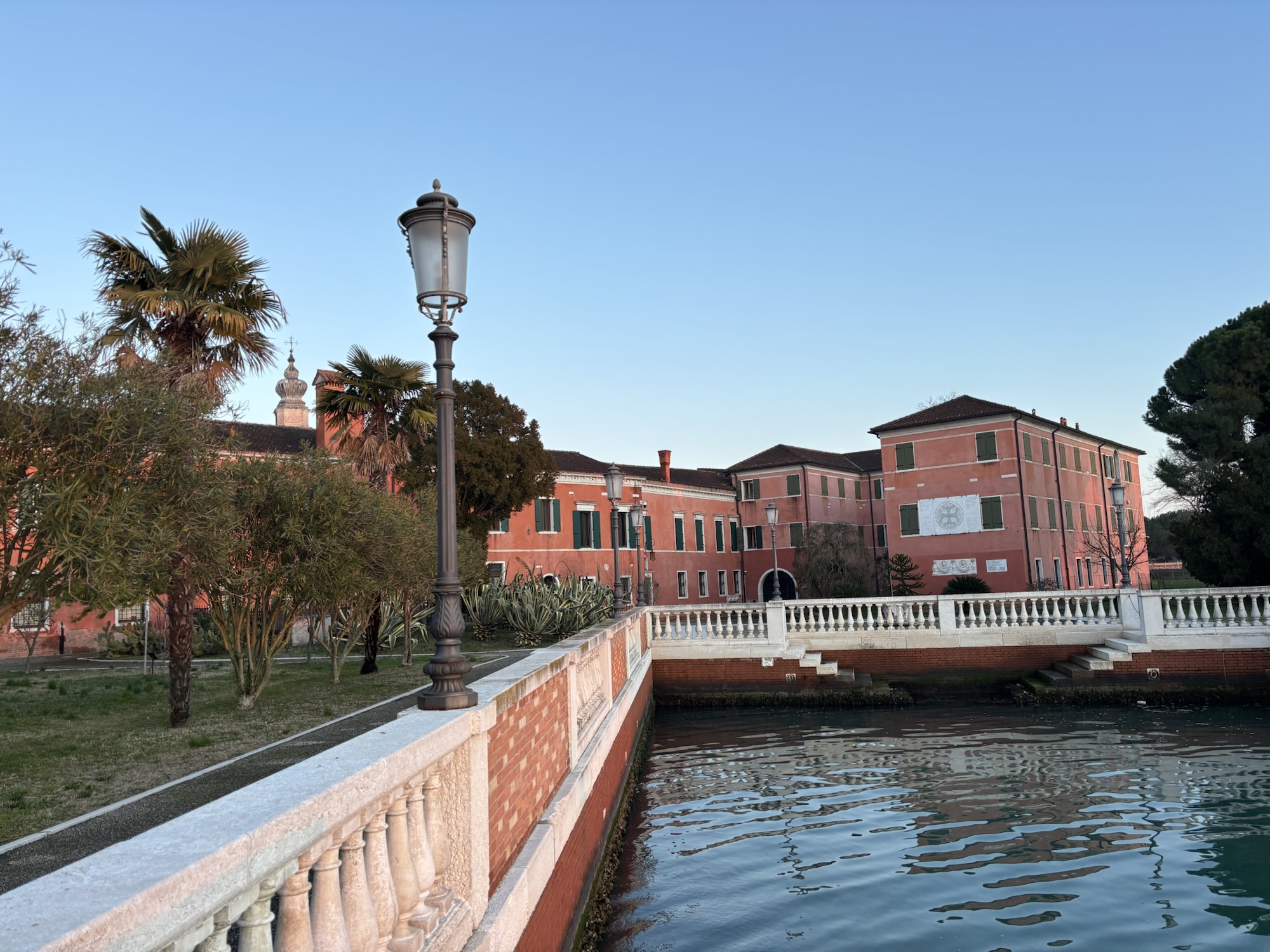
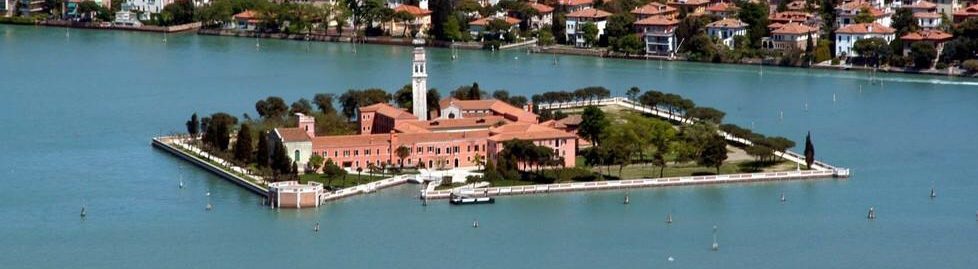
THE island of San Lazzaro located in the Venetian Lagoon has been home to a small group of Armenian monks since 1717. The monastery, library, church and gardens foster a scholarly tradition that continues to this day, more than three hundred years later.
THE FOUNDER – Mechitar was a determined and inspirational Armenian monk. He wanted to promote Armenian culture, literature, art and science – he just needed somewhere safe and secure where he and his fellow monks could devote their lives to study, prayer and learning. Having been forced to flee Constantinople by the Turks, Mechitar and his merry band headed west hoping that the Venetians would come to their rescue. As luck would have it Sebastiano Mocenigo, a Venetian aristocrat and future Doge of Venice, was sympathetic to their cause. Mocenigo was instrumental in persuading the Venetian Senate to give the island of San Lazzaro to Mechitar and his followers. The island, an abandoned leper colony gave the monks a home, a territory and a solid foundation where they could live and work in safety. Today three centuries later the tradition continues and San Lazzaro degli Armeni (to give the island its full title) is the most important Armenian cultural centre in Europe.
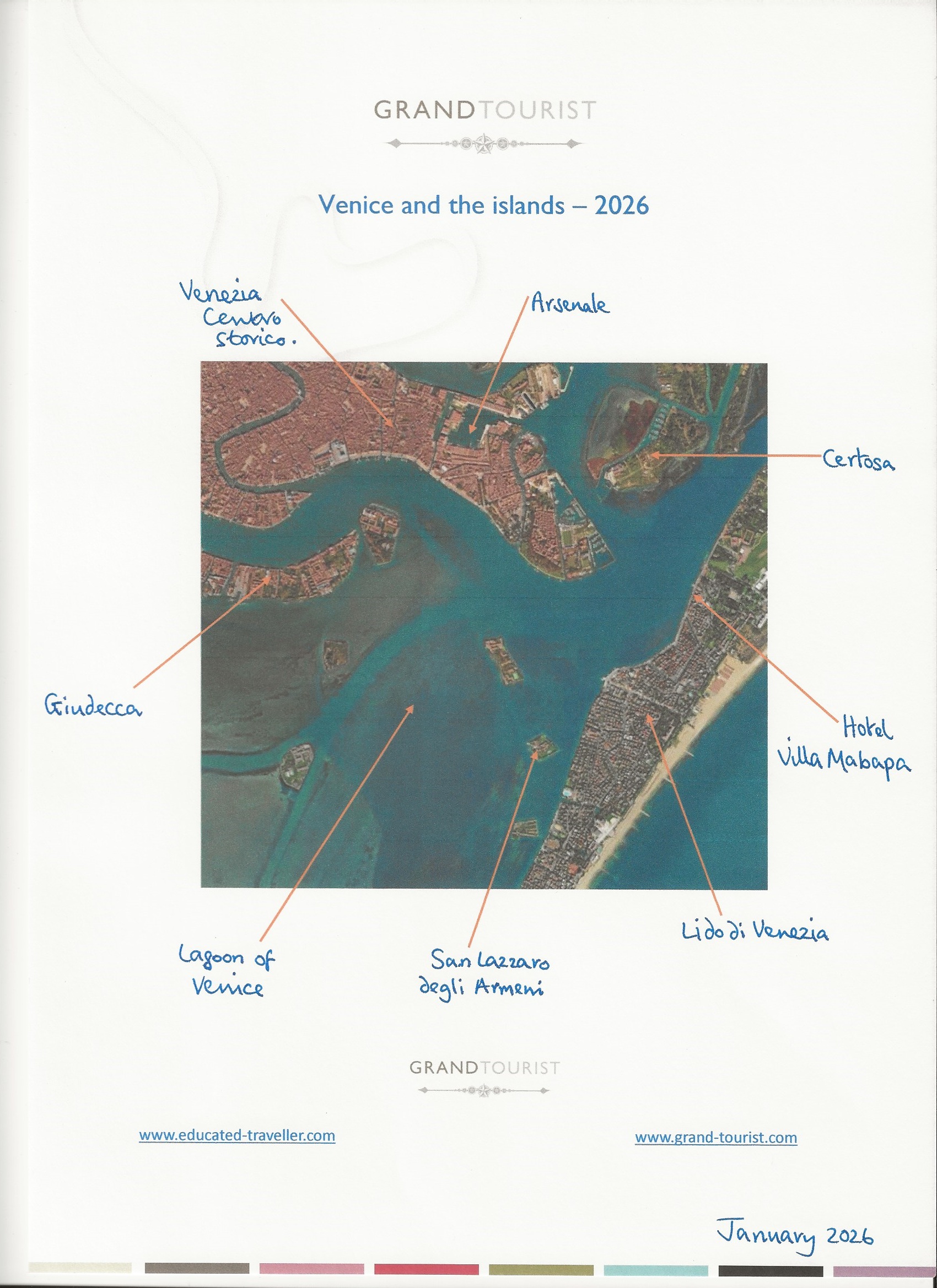
SAN LAZZARO – the island of San Lazzaro is located very close to Lido di Venezia (see map). Surrounded by the waters of the Venetian Lagoon it is far from the crowded piazza of San Marco. Even today it is relatively inaccessible. A public boat runs every couple of hours from San Zaccaria out towards Lido, calling at San Servolo and then San Lazzaro. Most days there is a public tour of the monastery, in various languages, at 3.30 pm. However, the island is a private monastery and tours are not guaranteed. Whatever you do, don’t just turn up on the island, they won’t let you in and whilst the garden area and outdoor terraces are nice, you’ll have exhausted all possibilities within about 20 minutes and then you’ll have a long wait for the next boat (at least 2 hours). It’s probably better to hire a local guide, like my friend Shoghik (Lucia), she’s Armenian and is a registered Venetian tour guide and extremely knowledgeable about Venice and the Armenian community in Venice (see details below).
HARD WORK – when Mechitar and his followers moved to San Lazzaro there was a lot of work to be done. The island was abandoned and overgrown. The monks had to clear the land, create an ‘orto’, a garden and rebuild the church. Over the years they systematically brought the island back to life, first the church (with its 12th century foundations), then the monastery and library. Next they completed the distinctive bell tower, created the panelled refectory and built a printing house. Some of the printing presses are still on the island although no longer in use. Over the years the library has become one of the largest and most important collections of Armenian literature with more than 150,000 volumes and around 4,500 rare manuscripts. The library includes works in Armenian, Hebrew, Greek and Latin. There’s also a significant collection of European books dating from the 15th century. The collection attracts scholars and students from all over the world. Conferences and meetings discussing Armenian culture and heritage are held on the island from time to time. I’m sure Mechitar would have been very satisfied by the community that he founded back in 1717.
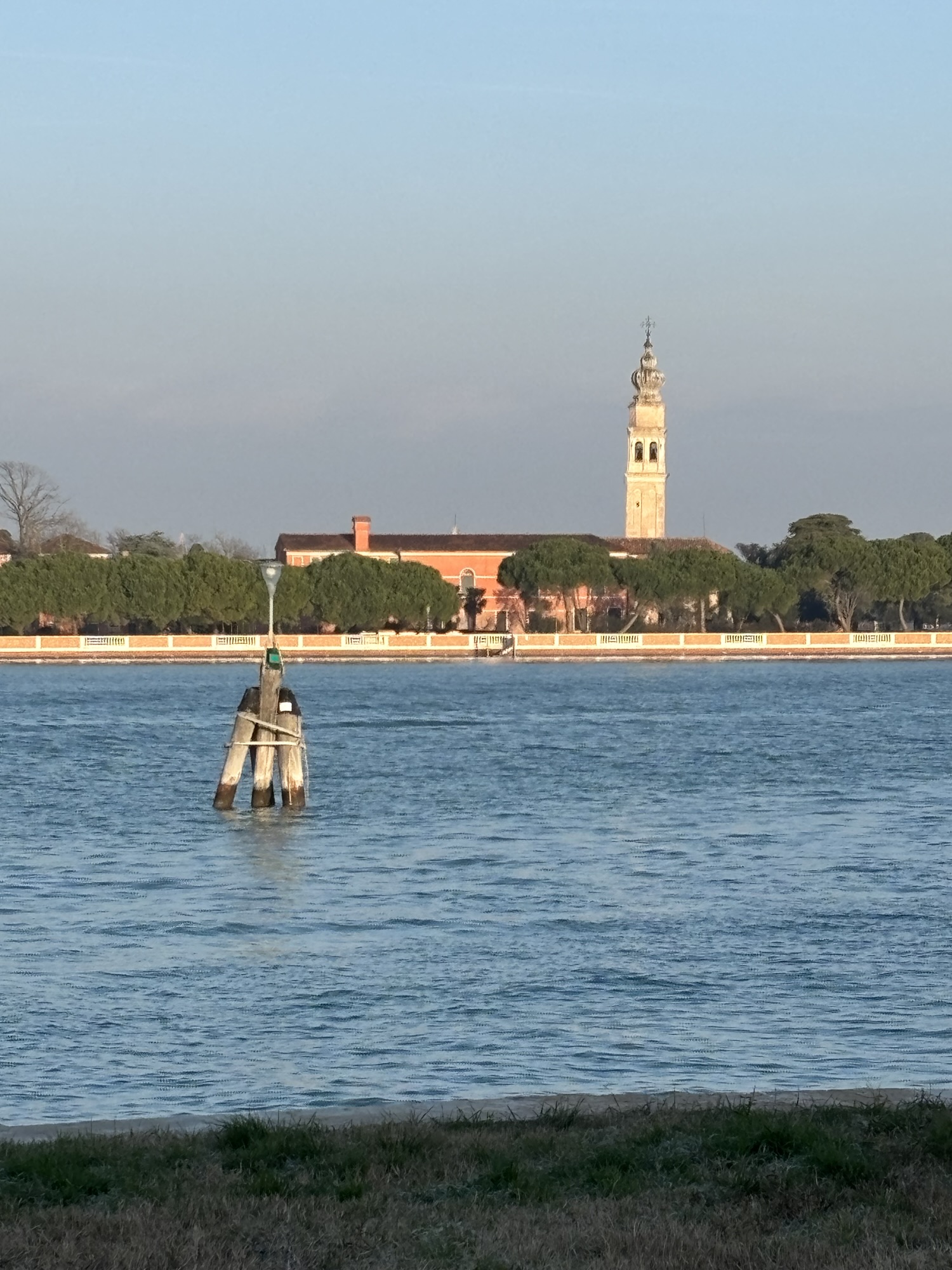
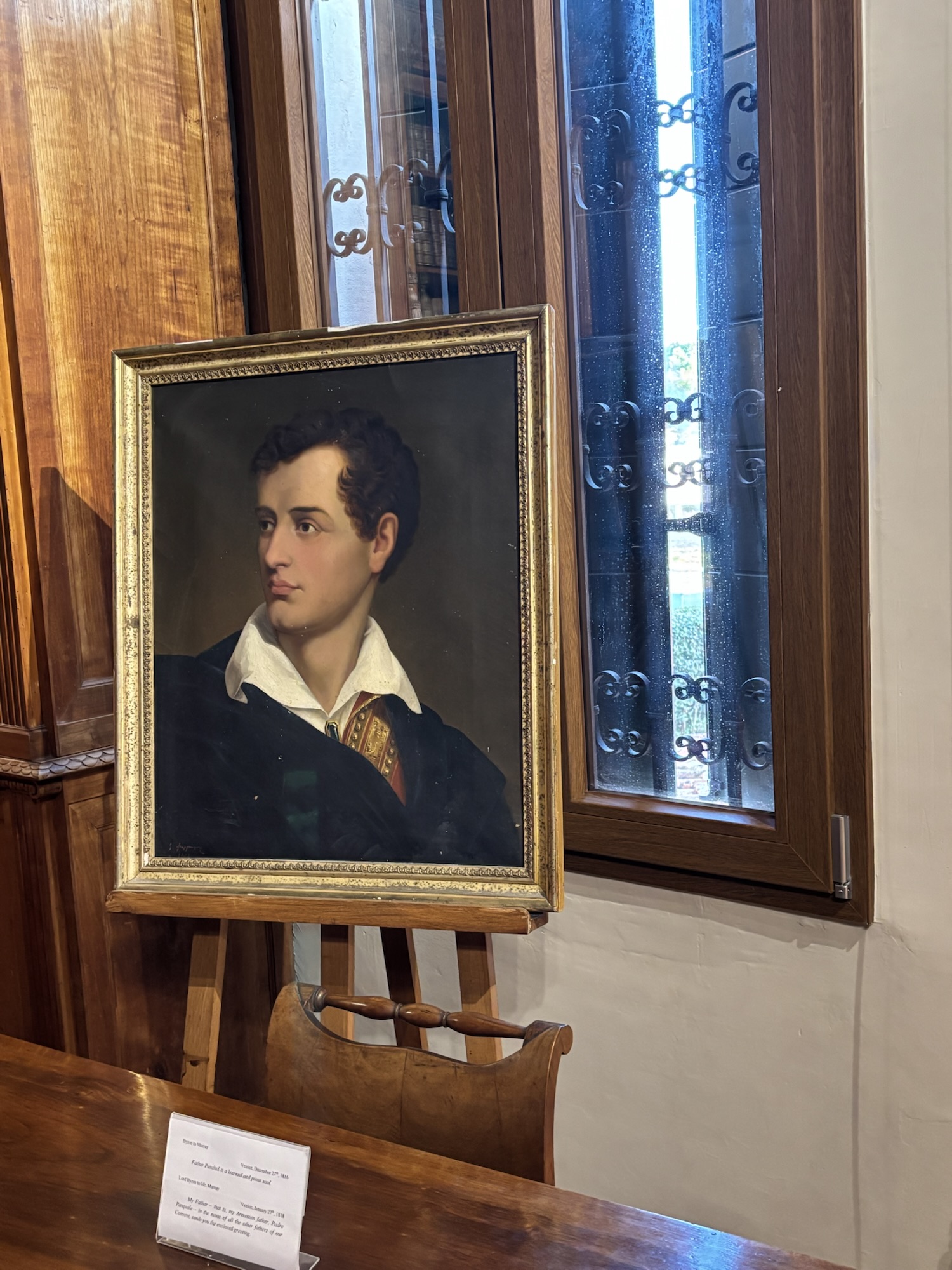
A FAMOUS VISITOR – One of the first famous visitors to arrive at San Lazzaro, and certainly the most documented, was George Gordon, Lord Byron. The Armenian monks have always been very proud of their association with the British poet who spent many hours on the island during the winter of 1816 to 1817. Whilst resident in Venice, Byron would travel by gondola out to the island each morning from his Venetian lodgings. Originally he stayed on La Frezzeria near San Marco and later on the Grand Canal. The journey must have taken at least an hour. On arrival at San Lazzaro he immersed himself in the study of the Armenian language and helped to create an English-Armenian dictionary and an English and Armenian Grammar book. He was assisted by the learned and multi-lingual Father Paschal Aucher.
BYRON – was already very well known when he arrived in Venice. The first two cantos of Childe Harold’s Pilgrimage had been published by John Murray in 1812. The first edition sold out in three days and Byron famously quipped ‘I awoke one morning and found myself famous’ . He was 24 years of age at the time. Byron had created in Childe Harold a narrative poem that was deeply personal. It follows the adventures of a young man travelling through Europe, a true‘Romantic’ discovering the best and the worst of the journey. The poem’s publication coincided with ‘The Grand Tour’ a rite of passage that many wealthy aristocrats were embarking upon to discover and appreciate the legacy of the Greek and Roman world. In Childe Harold a brooding, melancholic wanderer becomes the first ‘Byronic Hero‘. He is a complex character who is brooding and rebellious and yet at the same time fascinating and charismatic. The similarities between Byron himself and Harold were considerable! The poem became a key work in the ‘Romantic’ genre of the time.
The poet and adventurer also arrived in Venice with a significant reputation as a ladies man. The Armenian Monastery was a welcome haven for Byron who managed to create drama and intrigue wherever he went. At the monastery and in the company of the monks he had the time and luxury of peaceful study and learning. I’d like to suggest that Byron found the tranquillity of the island and the intellectual pursuit of learning Armenian a perfect antidote to his chaotic lifestyle and his numerous romantic liaisons. There’s a library in St Gallen Switzerland that has a Greek sign above the entrance ΨΥΧΗΣ ΙΑΤΡΕΙΟΝ quite literally this means‘a healing place for the psyche’ or a loose translation that I much prefer ‘A Sanatorium for the Mind’ I’m guessing that the Armenian Monastery was Byron’s sanatorium for the mind. A place where he found the freedom to think and to learn within the walls of the monastery in those winter months straddling the years 1816 to 1817.
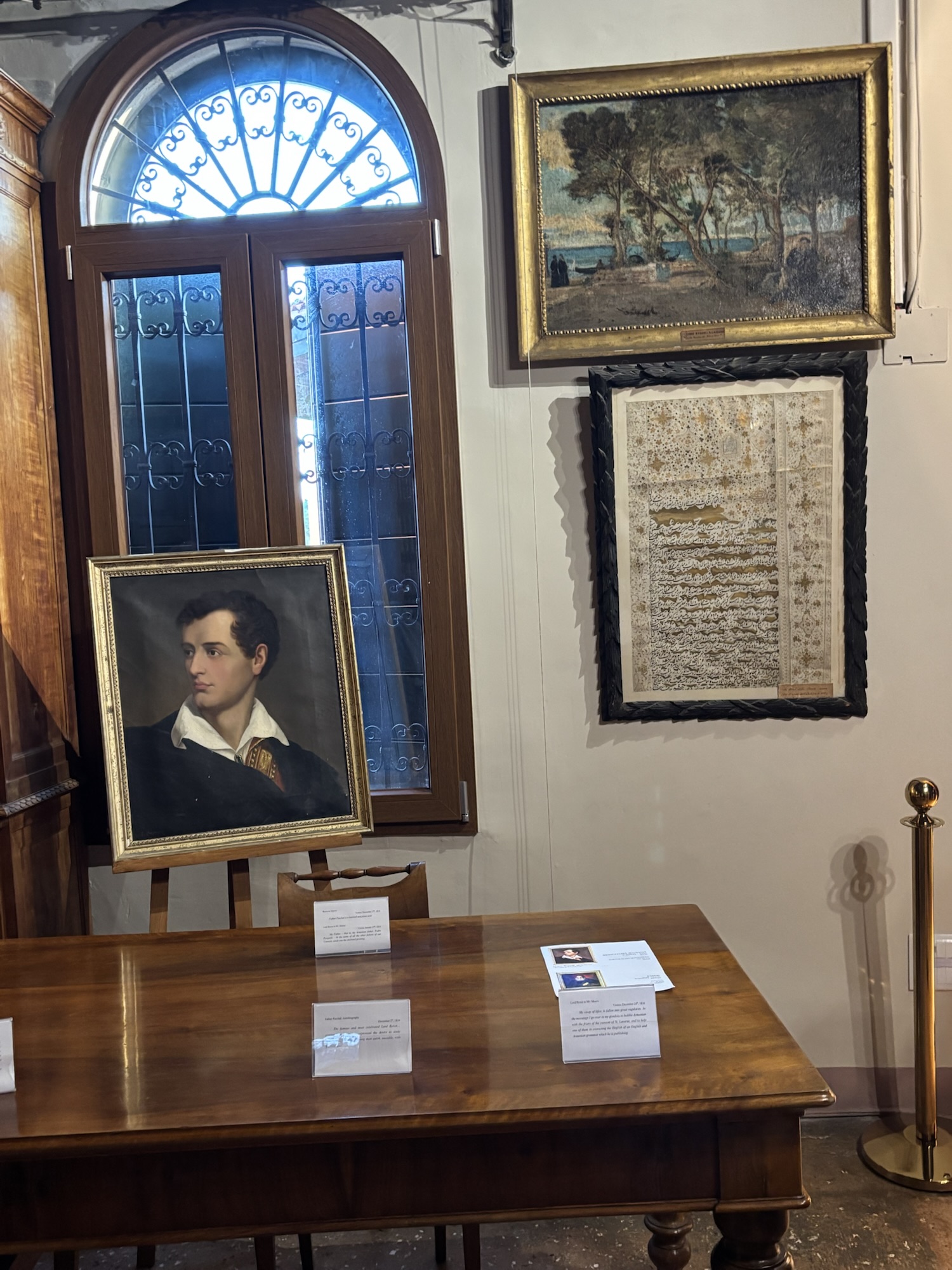
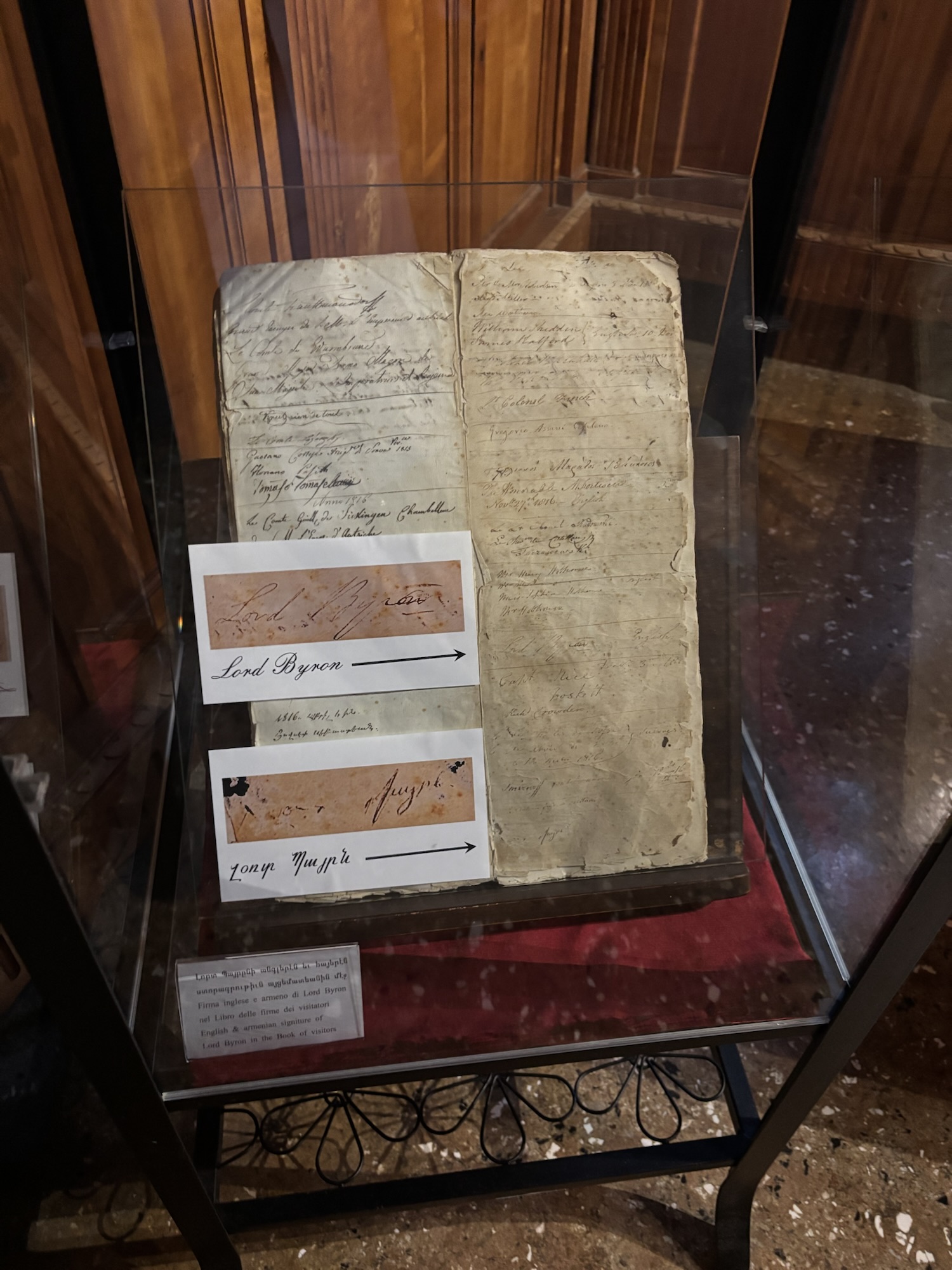
San Lazzaro Monastery – above left and Byron’s Room (above centre and right).
LORD Byron was a huge character and a passionate lover of life. He took an interest in the Armenian monks at a time when most visitors to Venice didn’t venture beyond the palaces of the Grand Canal and St Mark’s Square. His literary success and his larger-than-life antics made him a person of great influence in the drawing rooms and country houses of the British Isles. He was a source of gossip and fascination in Venice too. Add to this already potent mix the scandals that he created wherever he went and you have the makings of a playboy that everybody wanted to meet. From the point of view of the Armenian monks Lord Byron’s arrival on the island was a godsend. Here was a clever, handsome, intellectually curious and wealthy young man who was interested in Armenian language and culture. This man was a popular hero, a poet, a romantic and a best-selling writer. He was also a bad boy. He ignored social norms and yet at the same time he was charming, charismatic and quite often very brave. He’d swum across the Hellespont in 1810 – one of the most treacherous stretches of water in the Aegean. Whilst in Venice Byron swam from the island of Lido to the Grand Canal – with energy to spare, he then continued to swim the length of the Grand Canal up towards Fusina. He galloped on horseback down the beach at Lido with his friend Percy Shelley. This man was the original Byronic hero!
THE GREAT MAN – Byron’s desk where he sat and worked and copies of his signature are on display in the monastery, where he has acquired, over the years, a saint-like status. There’s a huge plaque on the external wall of the monastery recording Byron’s visits to San Lazzaro and a tour of the island is not complete without considerable reference to the great man. In the monastery garden there’s even a hillock, a grassy mound known as Byron’s Mound. The monks say that Byron would stand on the top of the mound and gaze across the lagoon. I immediately imagine Caspar David Friedrich’s painting of 1818 (see below)‘The Wanderer above the Sea of Fog’ . This was the age of the Romantic Poets. An age of dreaming and heroism. Byron was instrumental in creating this romantic and simultaneously melancholic view of the world.
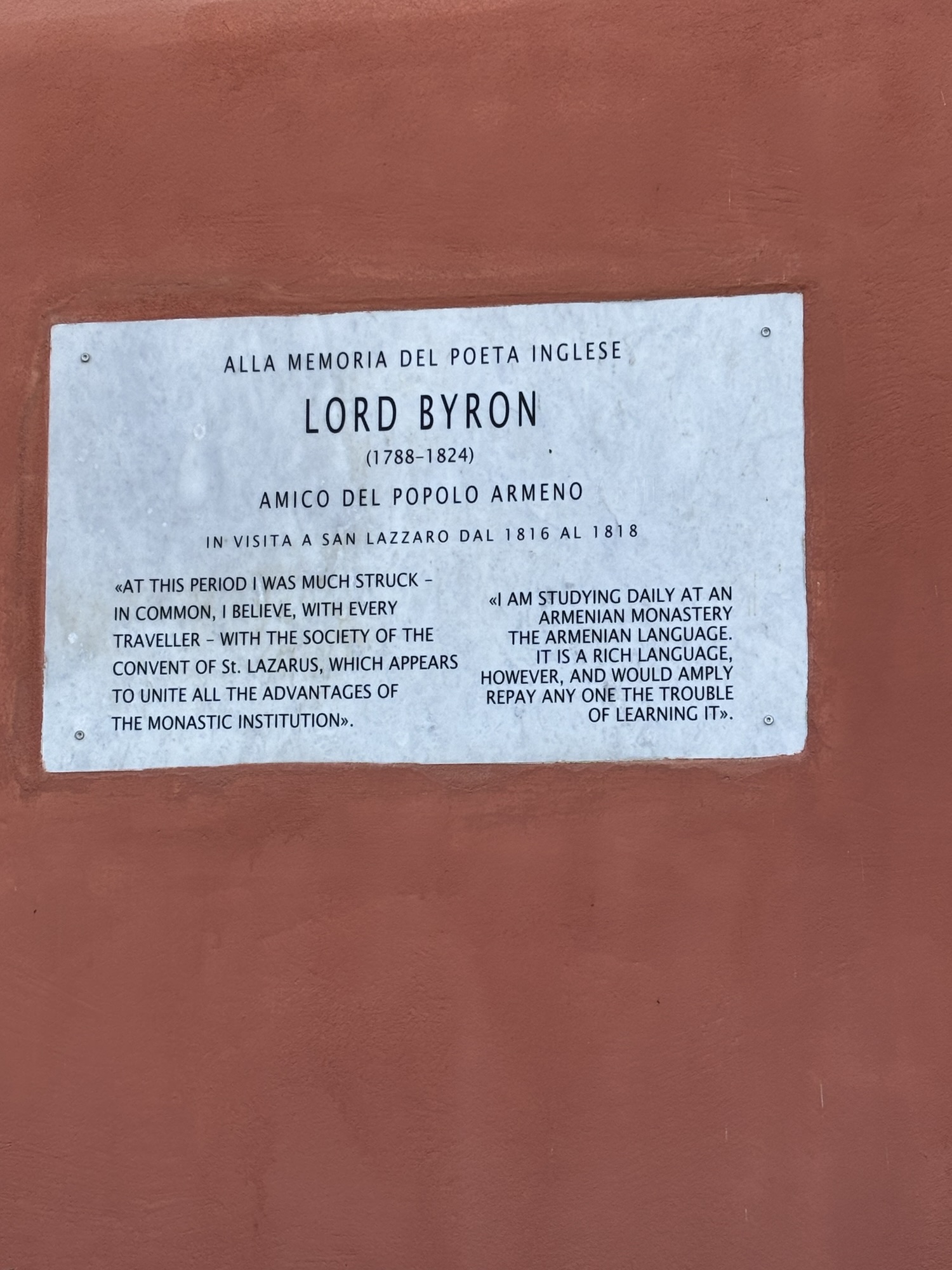

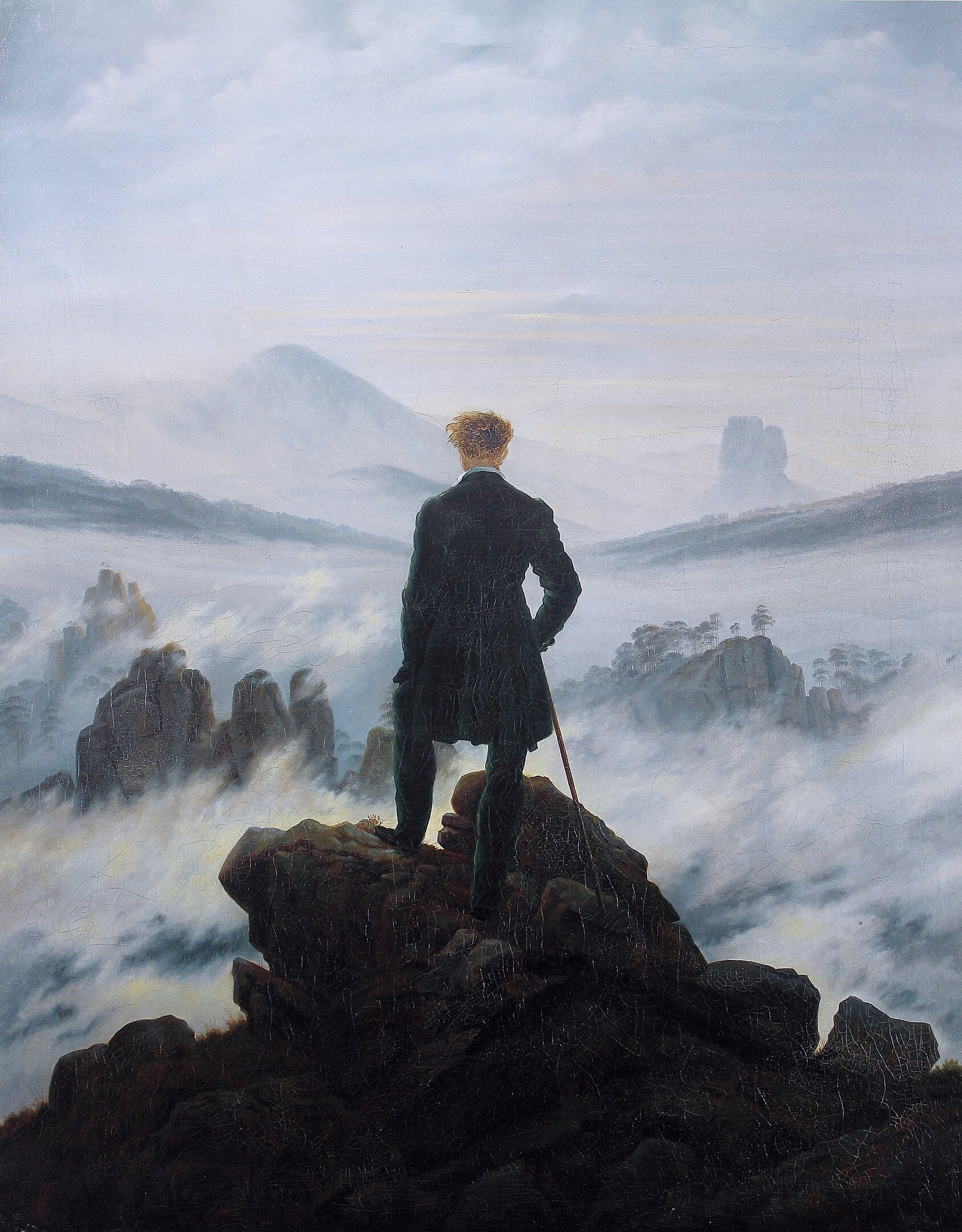
Byron plaque, Byron at funeral of Shelley, Fournier (1889) and Caspar David Friedrich’s painting (1818)
A POPULAR HERO – has to have an untimely death to finally achieve legendary status and possibly even sainthood. Sainthood was out of the question in the case of Byron because of his debauched lifestyle. However legend status was quite achievable. Byron contracted malaria and died at Missolonghi in Greece, whilst heroically assisting the Greeks in the War of Independence against the Turks. He was 36 years of age. A life of travelling, writing, womanising and adventure came to a dramatic conclusion. Almost immediately after his death his memoirs, entrusted to his friend Thomas Moore to be published after his death, were burned in the fireplace of John Murray’s office in Albemarle St, London. The contents of the memoirs were feared by his estranged wife and his half sister, both of whom were terrified of the scandalous content within. Fortunately for Byron enthusiasts his manuscripts and at least 3000 letters survived.
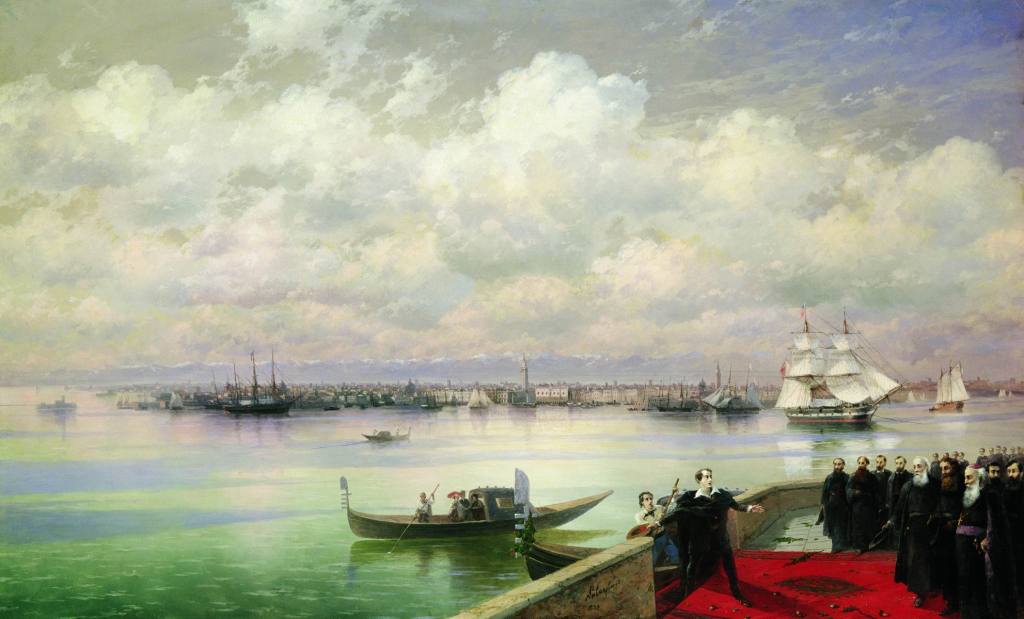
SINCE his death in 1824 Byron’s fame and notoriety has increased over time. Painters like Charles Eastlake and JMW Turner were inspired to paint canvases directly influenced by Byron (see below). The painting of Lord Byron as a hero at Missolonghi was painted by Théodoros Vryzakis in 1861 – it’s in The Louvre in Paris. Then perhaps the most famous of all is Ivan Aivazovsky’s painting of Lord Byron arriving on the island of San Lazzaro, painted in 1899 and now in the National Gallery, Yerevan, Armenian. A personal favourite of mine is Fournier’s funeral of Shelley, painted in 1899, with Byron standing enigmatically to the left of the burning pyre (above). All of these images served to intensify and further romanticise the impact of Byron on 19th century society. Although it’s important to remember that all of these paintings were created decades after Byron’s death.
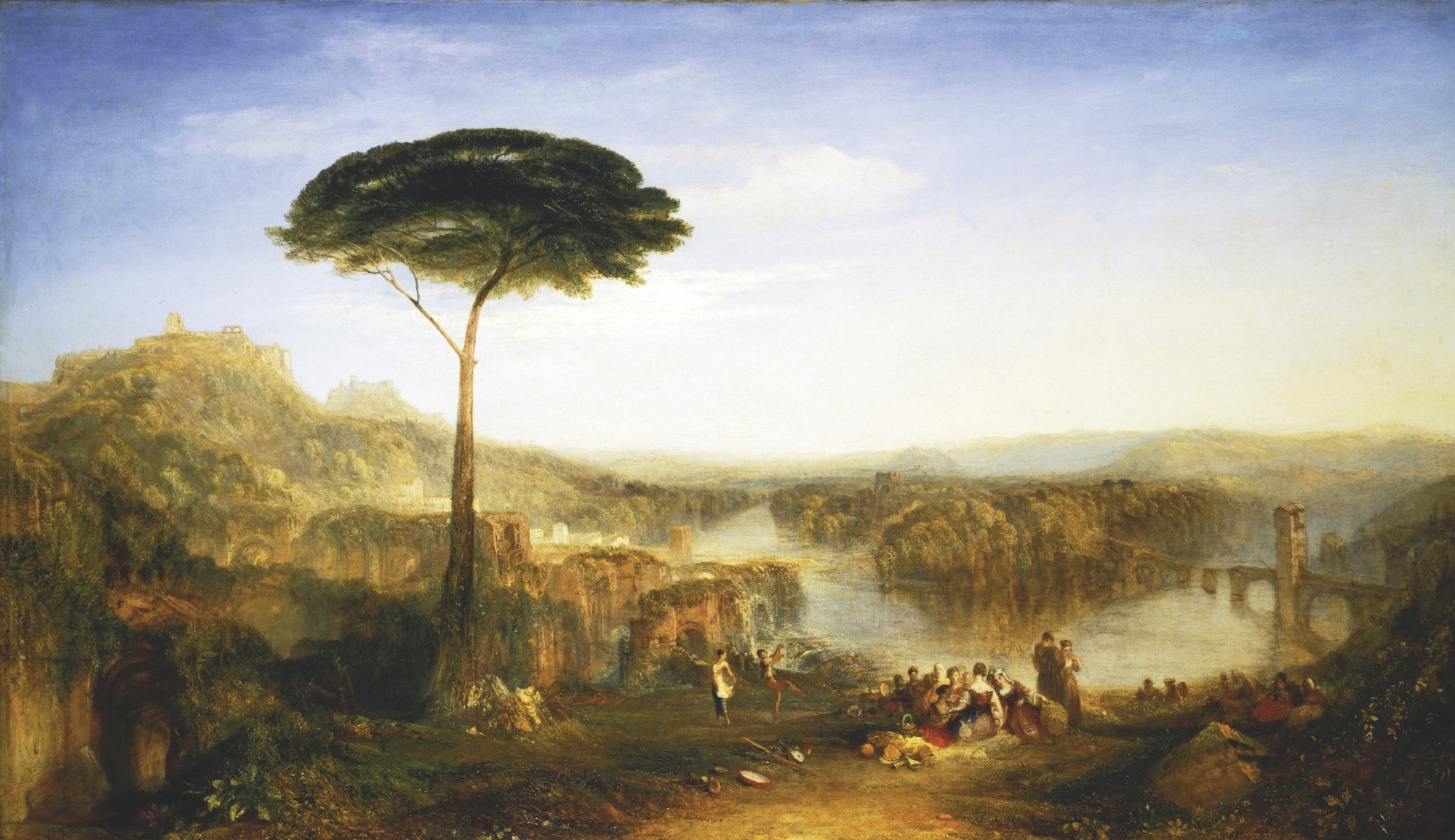

JMW Turner ‘Childe Harold’ 1832 (left) and Charles Eastlake ‘Lord Byron’s Dream 1827 (right) – both Tate Britain.
VARTANUSH – on the island of San Lazzaro the monks make a very special jam. It is rose petal jam and it comes from the roses that grow in the gardens of the monastery. It is absolutely delicious. Every year, usually in May, possibly early June, the roses are in full bloom. The monks harvest the rose petals, which they pick at sunrise and according to a secret recipe they create a fragrant, peachy-pink jam. Only about 5000 jars are made each year, most is kept for the monks to enjoy, but any surplus is sold in the monastery shop. Supplies don’t last long. It’s my ambition to purchase some of this wonderful jam and then, with the permission of the monks, to scurry to the top of Byron’s Mound and eat some of that perfumed jam, on freshly baked bread, whilst gazing at the lagoon, just as Byron did. Care to join me?

Lord Byron at Missolonghi (1824) artist Théodoros Vryzakis (1861) – Louvre, Paris
“But words are things, and a small drop of ink, Falling like dew, upon a thought, produces That which makes thousands, perhaps millions, think….
Notes:
- I’ve written several other articles about San Lazzaro and the Armenians as follows:
- The Armenian Island in Venice – San Lazzaro degli Armeni…
- A short article about the Armenian Church in Venice Armenia in Venice
- We found the key…
- Recommended reading: ‘In Venice and the Veneto with Lord Byron’ Gregory Dowling – Supernova 2008 (reprinted 2023)
Further thoughts:
- In 1810 Byron swam the notorious and dangerous stretch of water separating the Aegean Sea from the Sea of Marmaris -now known as The Dardanelles. He regarded it as his greatest achievement. He likens the swim to a Greek myth, where Leander (the star of the tale and probably Byron himself) swims this dangerous waterway every night to reach his lover Hero, a priestess of Aphrodite, who lived in a tower in Sesto. He wrote a poem about his excursion which I included in an article I wrote about Turkiye and Orientalism. Turkish Delight – Behind the scenes….
- For more on the Romantics in Rome – Rome – Keats, Shelley and Porta San Paolo
- The painting of Shelley’s funeral by Louis Edouard Fournier (1889) shows, very well in my opinion, the emotion, pathos and drama associated with the Romantic poets of the 1780-1830 period. Shelley drowned in 1822 – whilst sailing off Viareggio, Italy. He was sailing in his schooner ‘Don Juan’ named after his friend Byron’s epic poem
- If you’d like to visit the island of San Lazzaro I’d strongly recommend local guide Shoghik Baghdasaryan. She is an Armenian woman living in Venice, she is a fully qualified Venice City guide and she is an expert on Armenian culture and heritage. Her e-mail is: shoghik55.bagh@gmail.com She is also available to guide the Armenian Church in Venice.
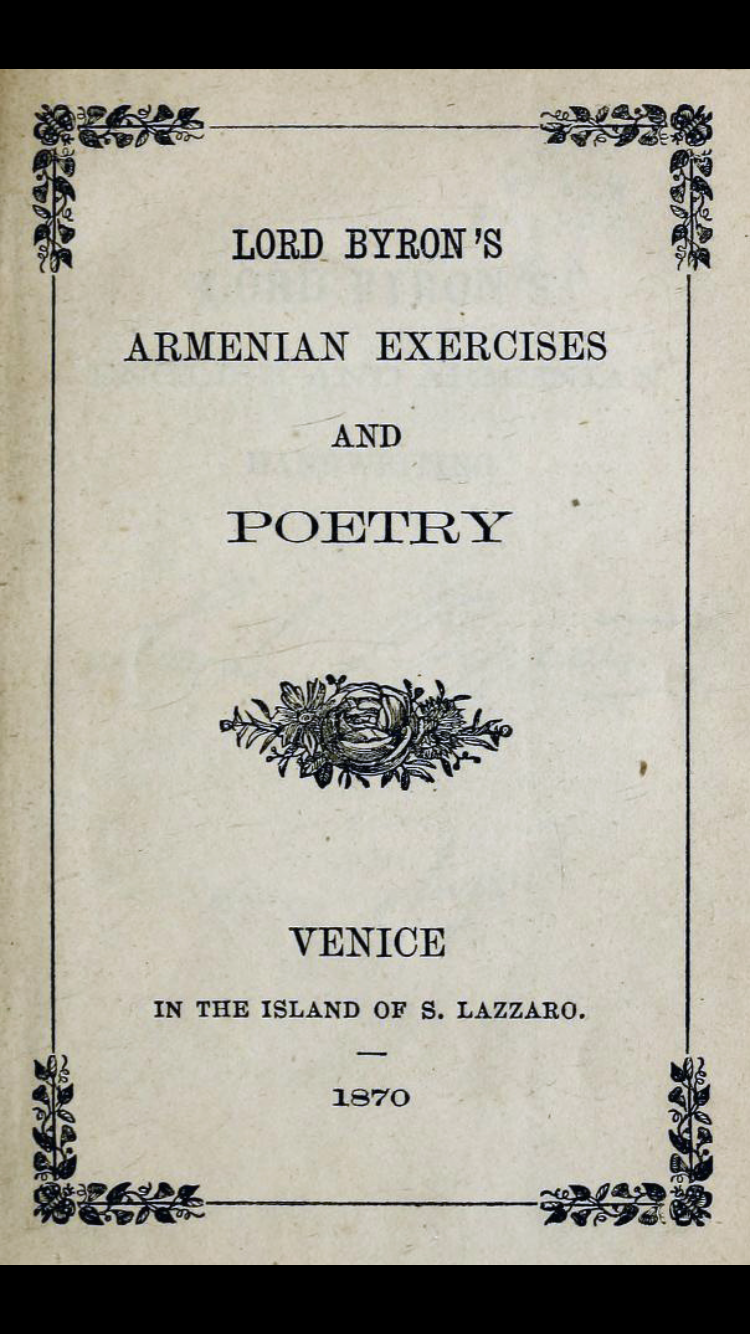

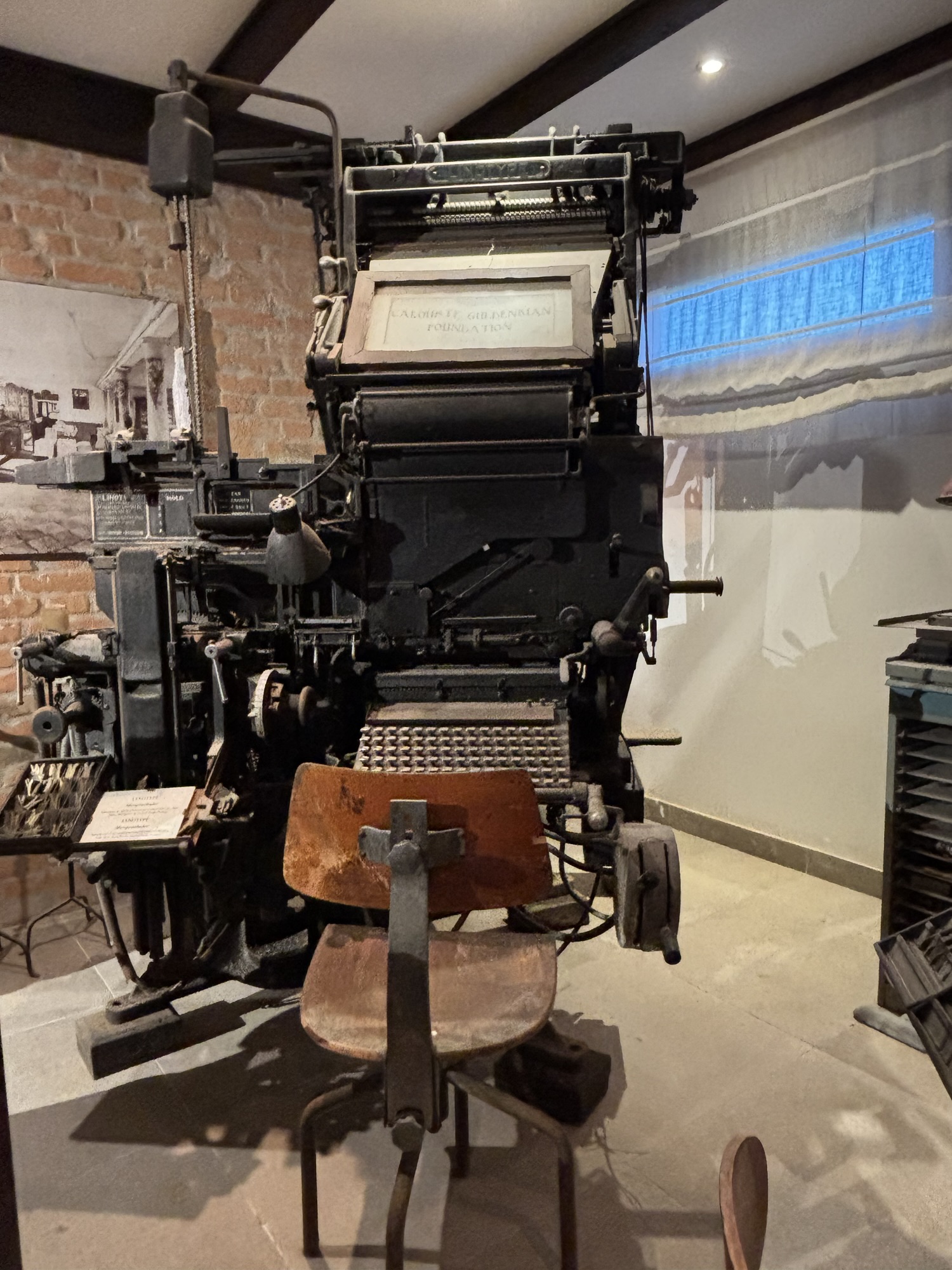
Byron’s Armenian Exercises + Poetry (1870), Lord Byron in Venice by Gregory Dowling, Sample Printing Press (now retired)
- A note on the author – Janet Simmonds is an Art Historian and a Geographer. A graduate of the University of Oxford, she has a special interest in Venice and the history of tourism – especially The Grand Tour. She works as a guest lecturer in Italy for university groups and private individuals. She also works in Oxford, London and throughout Italy.
- Blog: www.educated-traveller.com
- She offers specialist travel services in Italy and Greece especially relating to art, history and culture. Her company is appropriately named Grand Tourist. www.grand-tourist.com
- She has written a brief history of the Grand Tour – History of the Grand Tour
February 2026

 The Educated Traveller
Dear Janet, this would be an interesting talk to give (also by ZOOM) at the Keats Shelley House in Rome. ..if you havnt already ! Here is an article I mentioned them in > https://maryjanecryanandfriendsinitaly.substack.com/p/the-grand-tour-before-cell-phones
Ella Kilgallon is now the director there and they are doing lots to promote the place. Mary jane Cryan
LikeLiked by 1 person
Thank you so much Mary Jane – that’s very useful – much appreciated.
LikeLike