In the words of the song,
Istanbul was Constantinople,
Now it’s Istanbul, not Constantinople,
Been a long time gone Constantinople,
Now it’s Turkish delight on a moonlit night
Every gal in Constantinople
Lives in Istanbul, not Constantinople
So if you’ve a date in Constantinople
She’ll be waiting in Istanbul
Even old New York was once New Amsterdam
Why they changed it, I can’t say
People just liked it better that way……
Song – Words/Genius by: They might be giants…..
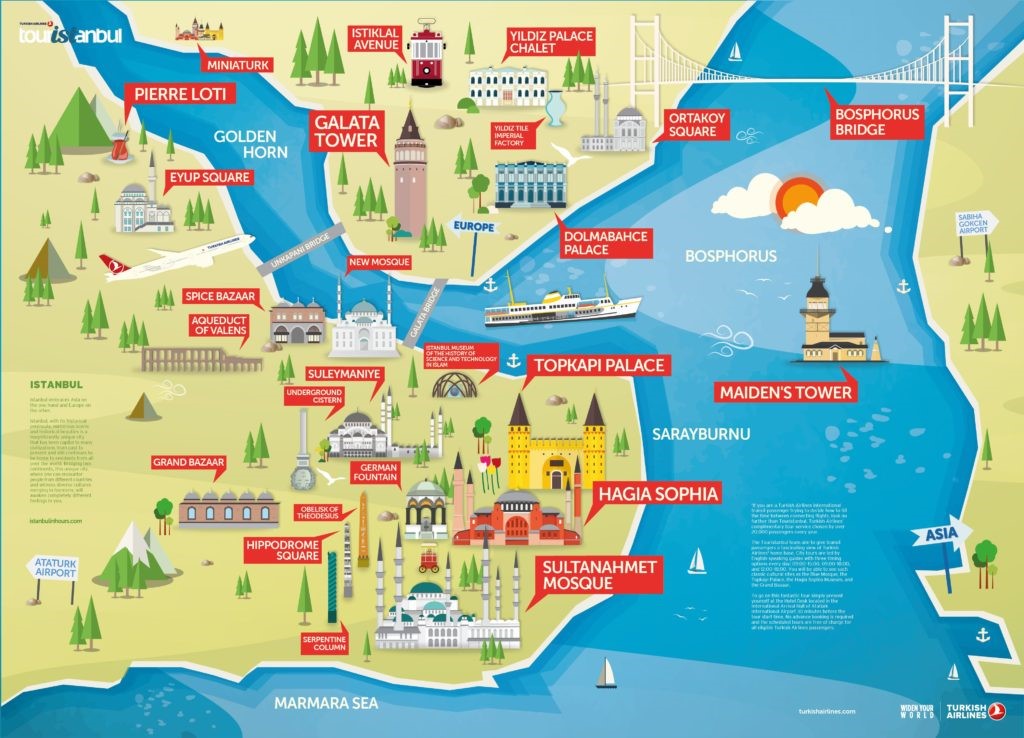
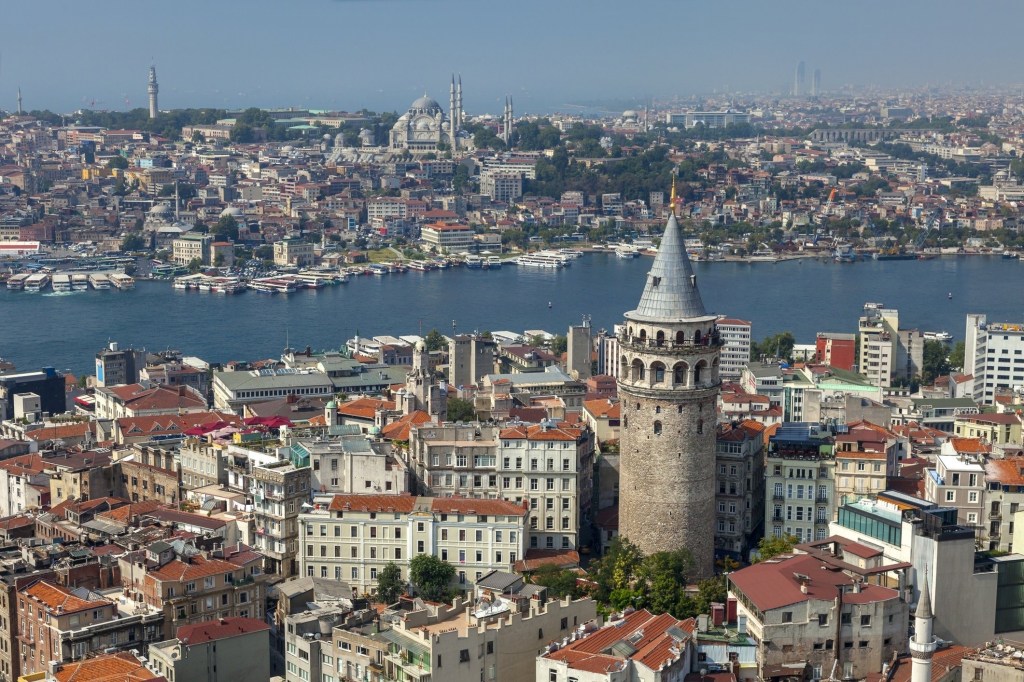
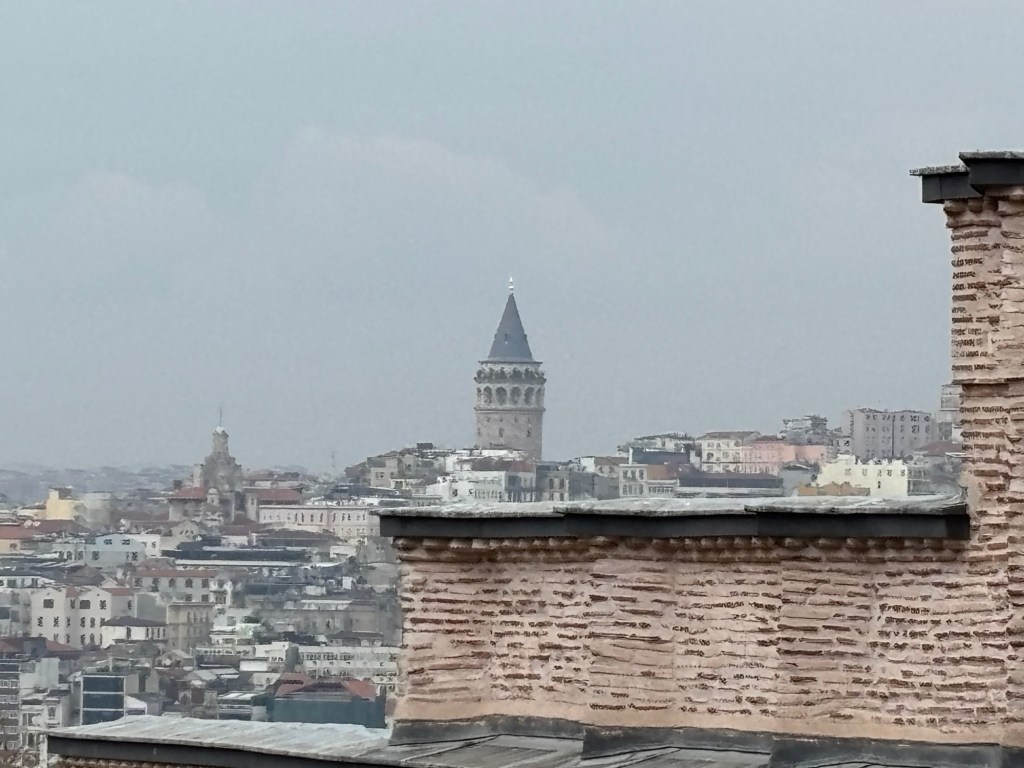
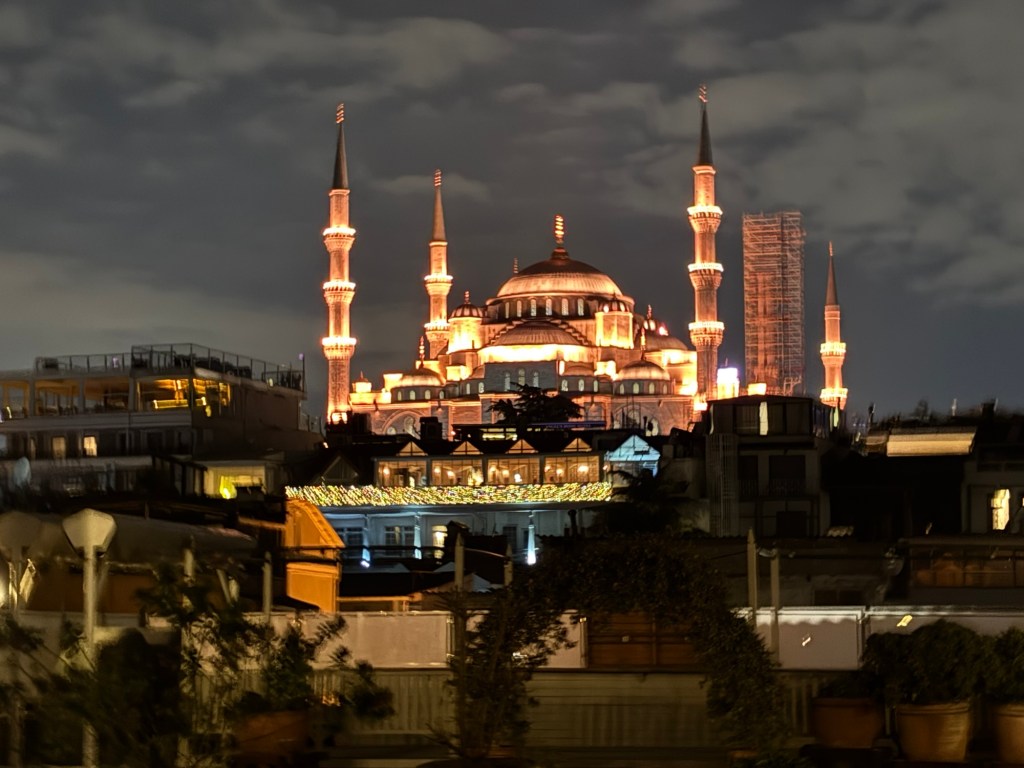
Let’s start with a time when Istanbul was still Constantinople. A time in the 19th century when the drawing rooms of Britain and France were fascinated by ‘the east’ and the exotic shores of the ‘Orient’. European travellers were discovering the palaces, mosques and colourful street markets of Constantinople, Damascus and Alexandria.
Tales of Constantinople and the Ottoman Empire appeared in the newspapers of London, Paris and Berlin in the 1850s for several reasons.
Firstly there was the Crimean War of the 1850s which was a territorial dispute between Russia and both the British and French armies. The aim was to support the Ottoman Empire. This unlikely alliance came together in an attempt to limit Russia’s territorial expansion in the Black Sea area. The war in Crimea was a bloody, horrible mess, with terrible loss of life and injuries. The conflict inspired Tennyson’s poem ‘The Charge of the Light Brigade’ …into the valley of death rode the six hundred…..
Secondly, Florence Nightingale and a team of nurses were sent from England to Constantinople to look after and attend to the many injured soldiers returning from the battlefields of Sebastapol (Crimea). Nightingale was horrified at the conditions that she found; filthy field hospitals, lack of basic hygiene and high mortality rates from infections and disease. She introduced hygiene routines and systems of cleanliness into military hospitals. She became known as ‘the lady with the lamp’ as she regularly checked patients at the end of each day (instigating the practise of a ward round). She was the founder of modern nursing.
Thirdly, the Suez Canal opened in 1869 linking the Mediterranean with the Red Sea and the Indian Ocean. The Suez Canal opened up a direct trade route for ships between Europe, India and China. The implications for trade were enormous. Britain, France and Italy were all involved in the Suez Canal project and were keen to ensure that the seas of the eastern Mediterranean were safe for their ships – hence renewed interest in the Ottoman Empire.
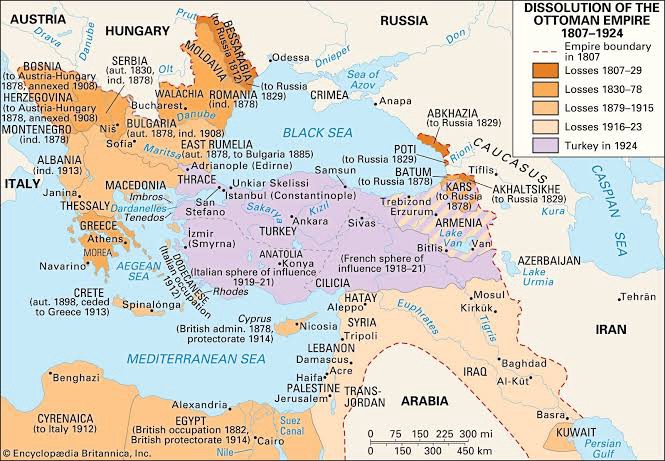
It was in the context of this fascination with ‘the east’ that a talented and educated young man called Osman Hamdi Bey found himself studying in Paris.
Osman Hamdi Bey (1842-1910) was a multi-talented young gentleman from a wealthy Ottoman family. He was sent to Paris to study law. When he arrived in Paris he studied law and also enrolled in art classes. He was taught by two influential French artists Jean-Léon Gérôme and Gustave Boulanger – both leading French Orientalist painters. Hamdi Bey loved Paris so much that he stayed for nearly a decade. He spent his time writing, painting and enjoying the Parisian lifestyle.
During that time he developed his own unique style of painting. He created detailed canvases filled with oriental images – all painted in a precise, photographic style. His paintings were hugely popular and can be found in many of the art galleries of Europe from Liverpool to Berlin. He was better known as an artist in Europe than he was in his home country.
Here are just a few of his most famous works:
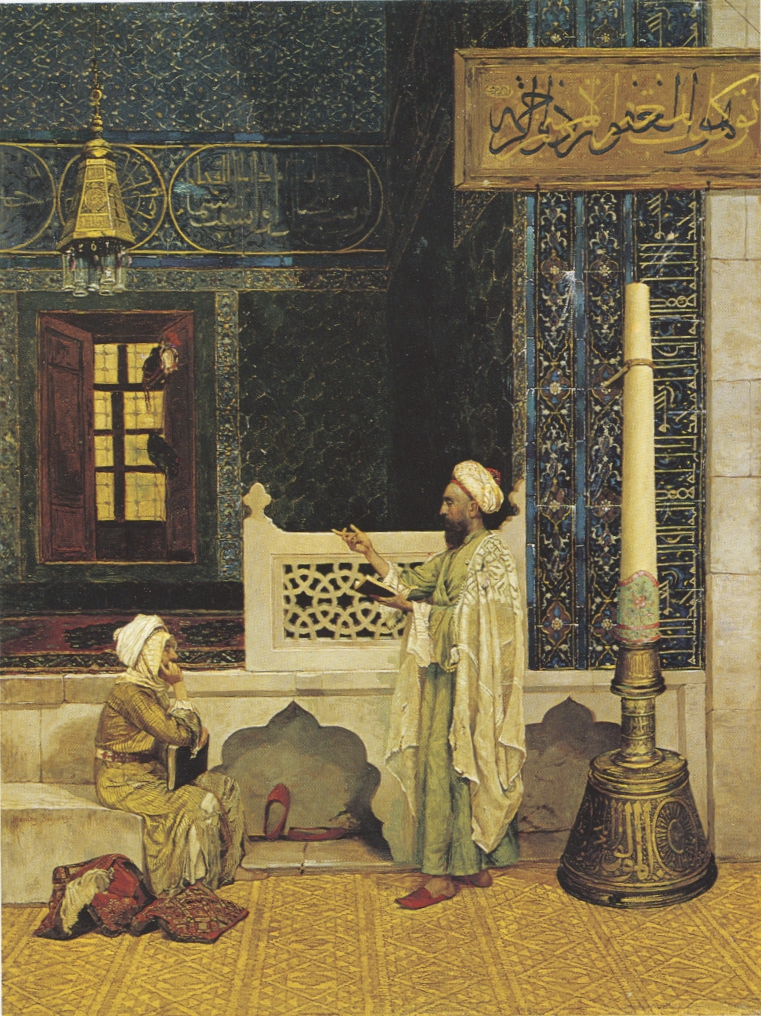
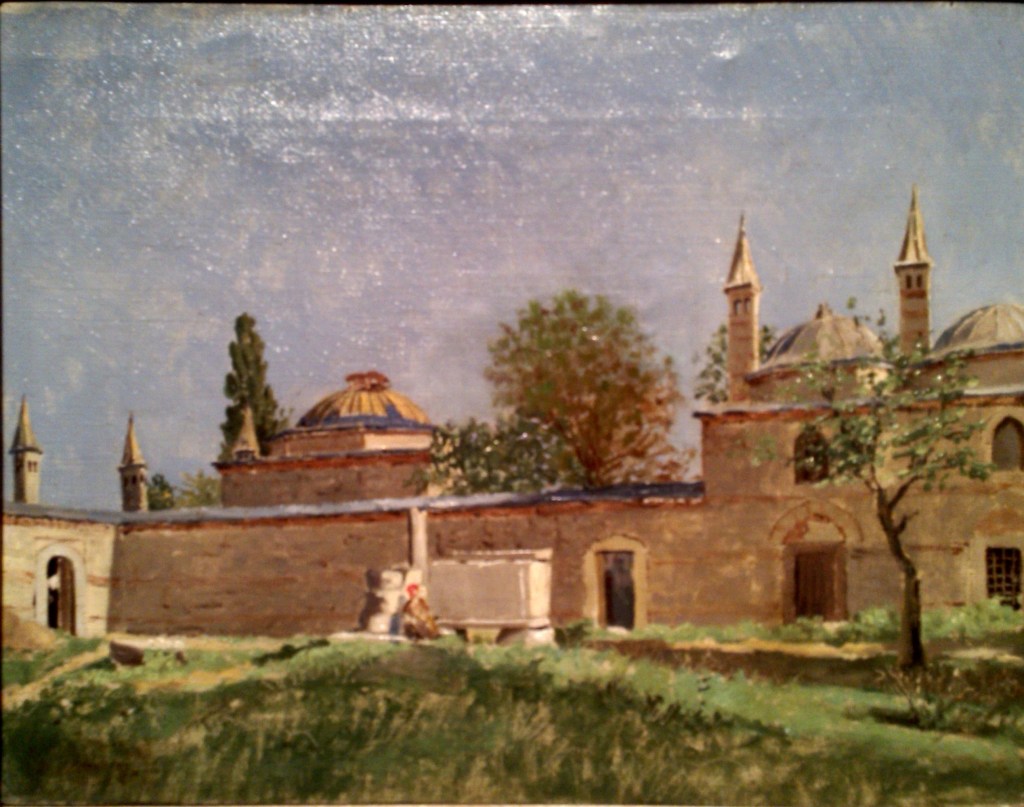
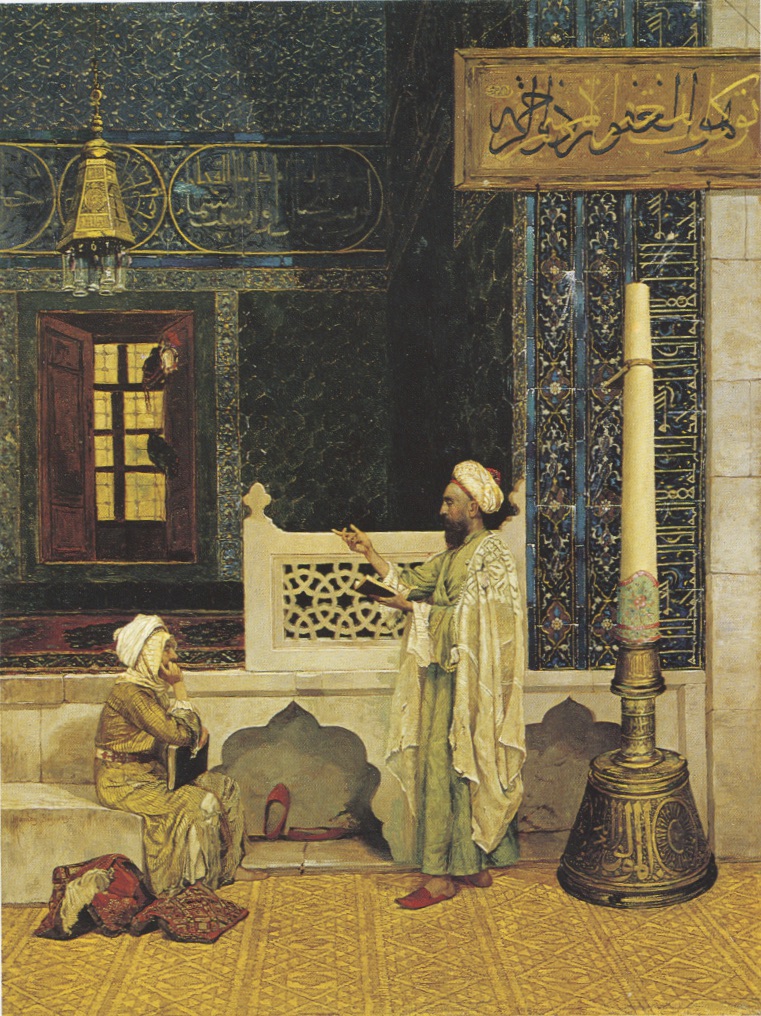
Hamdi Bey acted as a cultural bridge between west and east. From 1880 he exhibited in Paris, Vienna, Berlin, Amsterdam and London, and he even started an artistic salon in his home city of Constantinople. Today his paintings can be found in private collections and in museums throughout Europe including London, Liverpool, New York and Constantinople (now Istanbul).
His works were very popular and his meticulous detailed style gave the viewers much to consider and discuss. The Pera Museum in Istanbul has acquired a number of his paintings – his work is regarded as a useful documentary of art history in Istanbul in the twilight years of the Ottoman Empire.
There were several European painters working in Constantinople in the 19th century. The painting below – by Fausto Zonaro is a curious mixture of almost photographic realism, combined with colour and texture that reminds the viewer of the ‘Impressionist’ painters who were about to take the art world by storm. Zonaro was born in Padova, Italy and lived for years in Istanbul. He was court painter to Abdulhamid II and was commissioned to paint numerous works that can still be seen in Topkapi Palace, Dolmabache Palace and the Pera Museum. Zonaro was fascinated by the vibrancy, colour and drama of the Ottoman world.
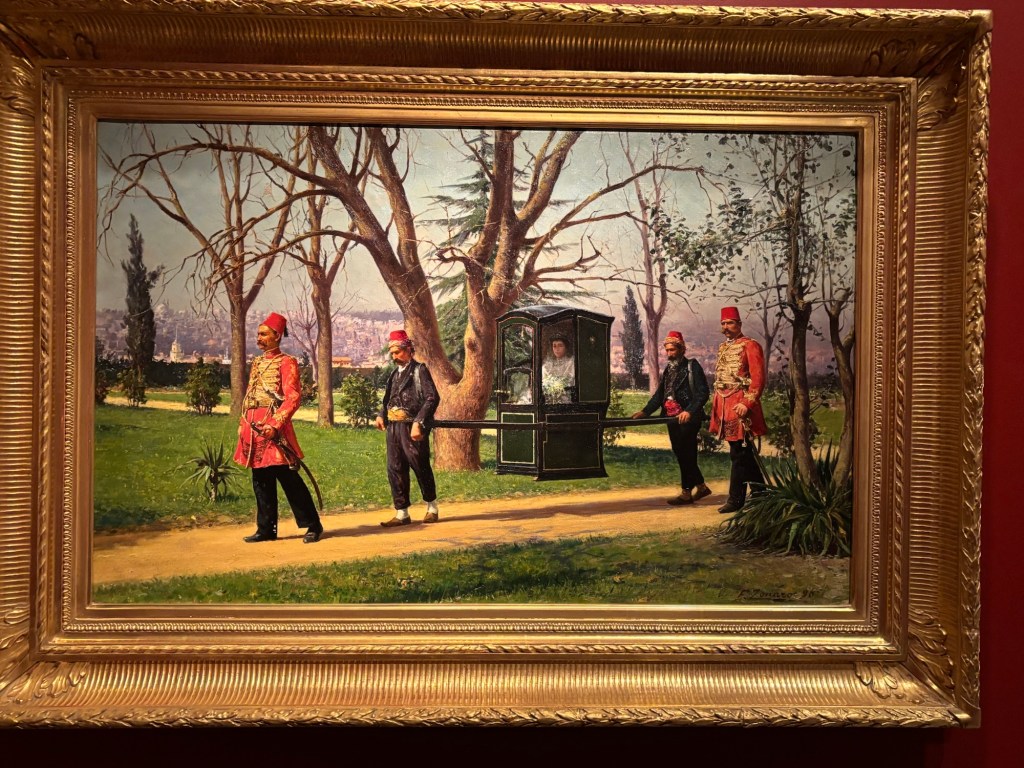
Ingiliz Elçisinin Kizz Tahtirevanda – artist Fausto Zonaro – 1896 (oil on canvas)
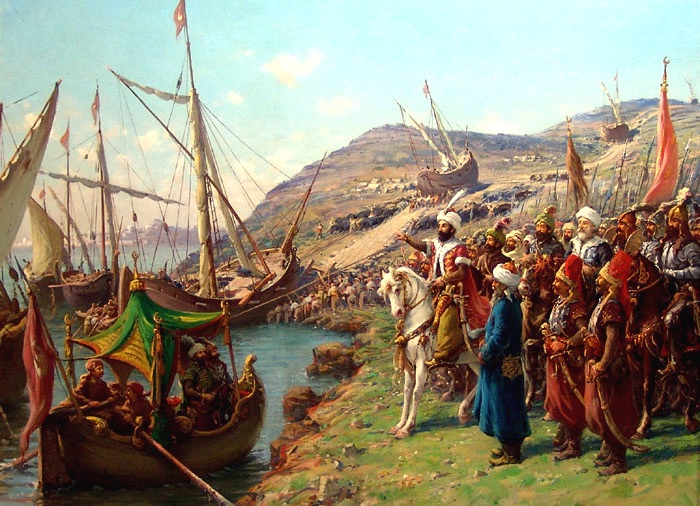
Painting of Conquest of Constantinople in 1453 – Mehmet II takes control of the city – artist Fausto Zonaro c. 1900
Painters like Osman Hamdi Bey and Fausto Zonaro offer us a window into the 19th century world of Constantinople and the Ottoman Empire. Whilst their paintings may be stylised and perhaps exaggerated they give today’s viewers the chance to visualise and imagine life in an ‘oriental’ world. This was a world that both fascinated and frightened western visitors in equal measure.
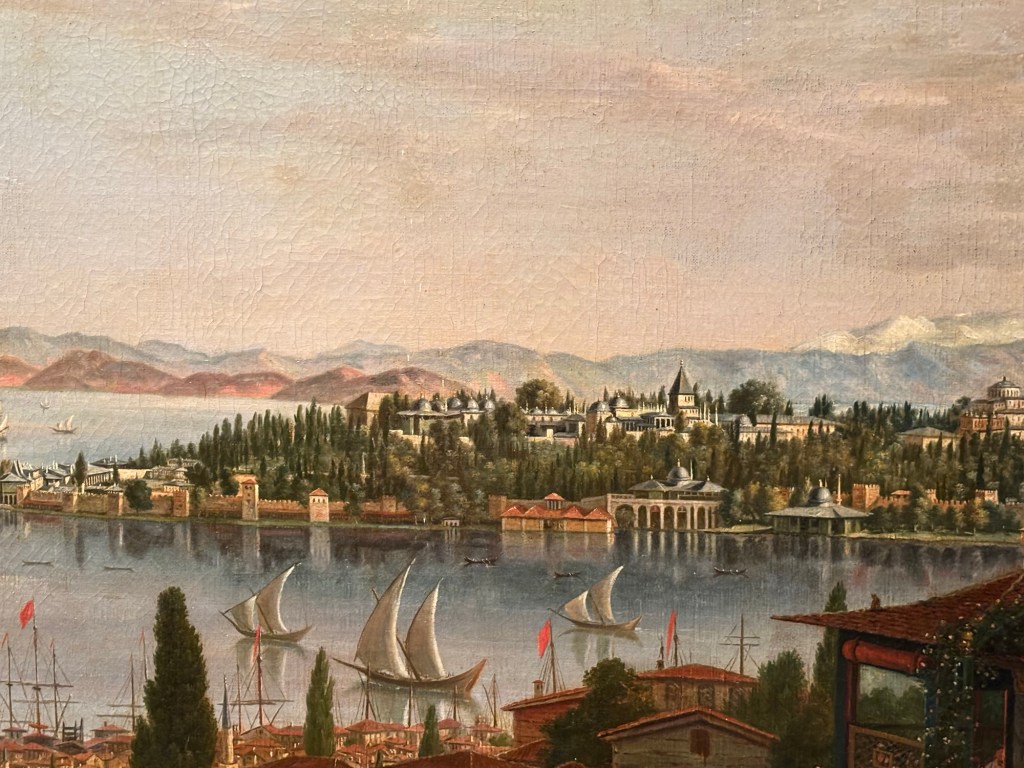
Panorama of Istanbul – Antoine de Favray (1773)
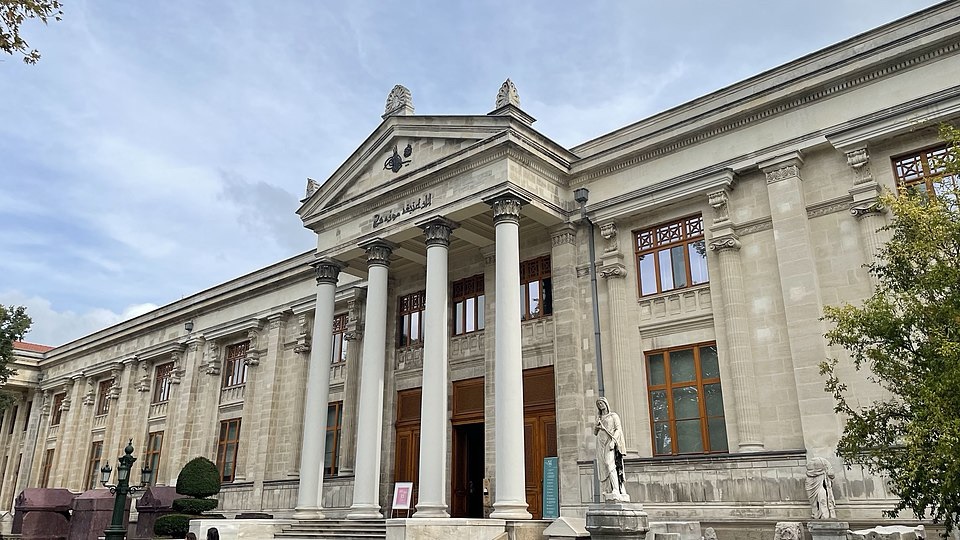
Probably the single most important Ottoman in the second half of the 19th century, outside the hierarchy of the sultans was Osman Hamdi Bey. He left behind an enormous legacy for us to consider, not only as a painter but also as an archaeologist and a person of influence in both Paris and the Ottoman regime. He is regarded as one of the first Ottoman archaeologists – he worked on archaeological digs in Nemrud (Anatolia) and Sidon (Lebanon). He also led a large team excavating at the Necropolis of King Sidon. This led to the discovery of the so-called ‘Alexander Sarcophagus’ a huge marble tomb that may (or may not) have been the final resting place of Alexander the Great. The sarcophagus is one of the main treasures of the Archaeological Museum. Hamdi Bey was instrumental in the creation of the archaeological museum in Istanbul and was the curator from 1881.
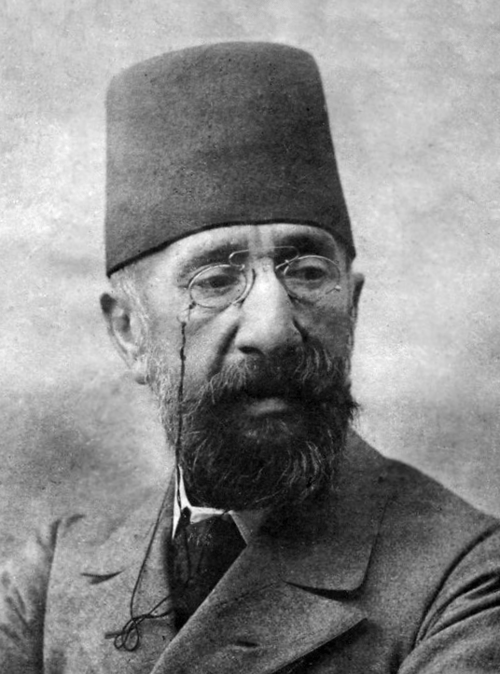
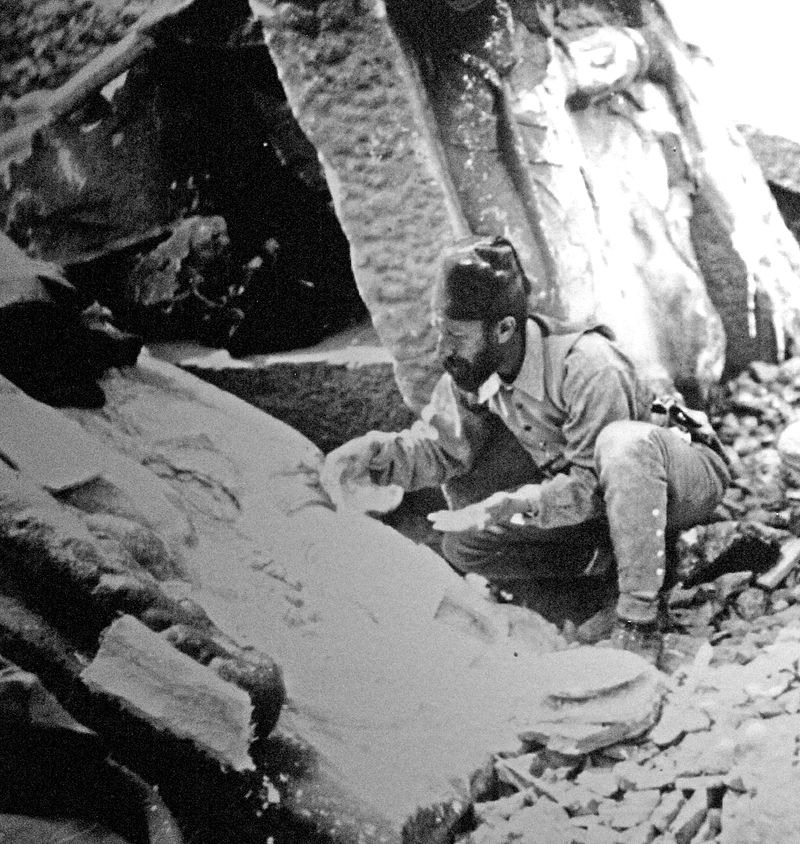
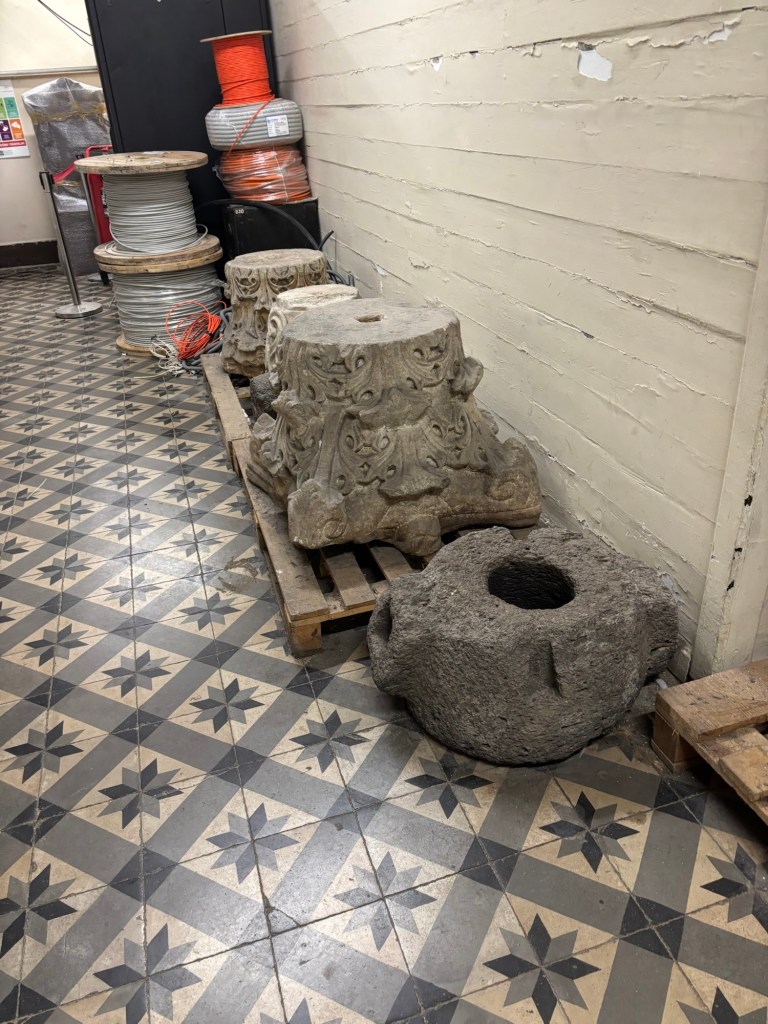
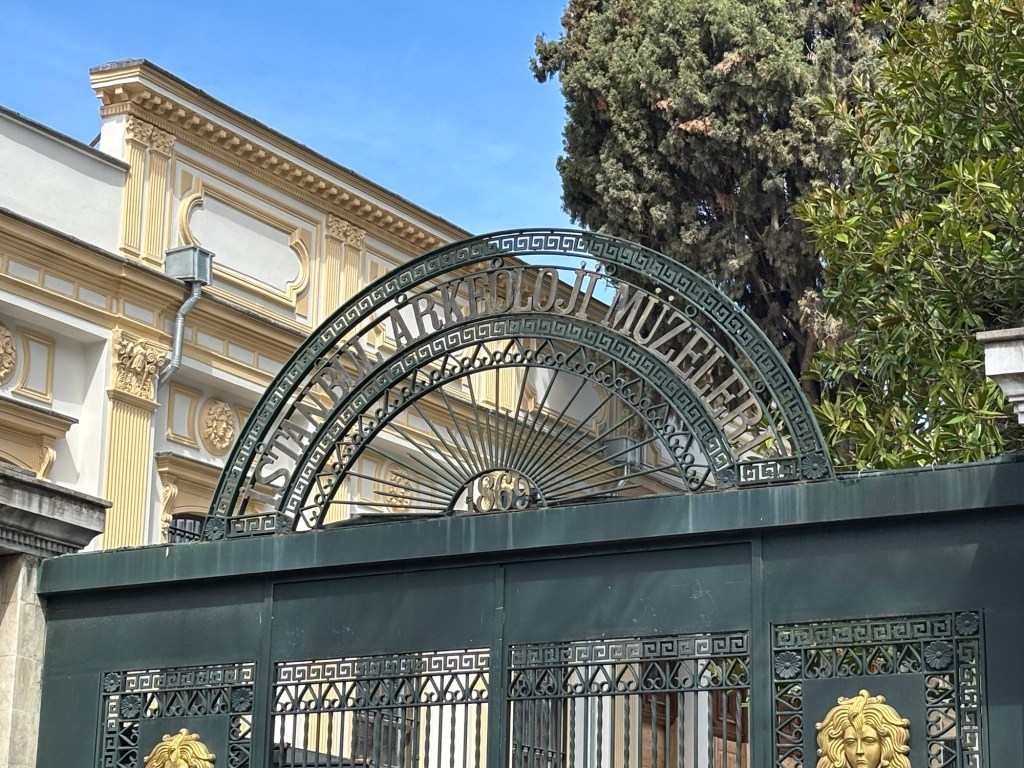
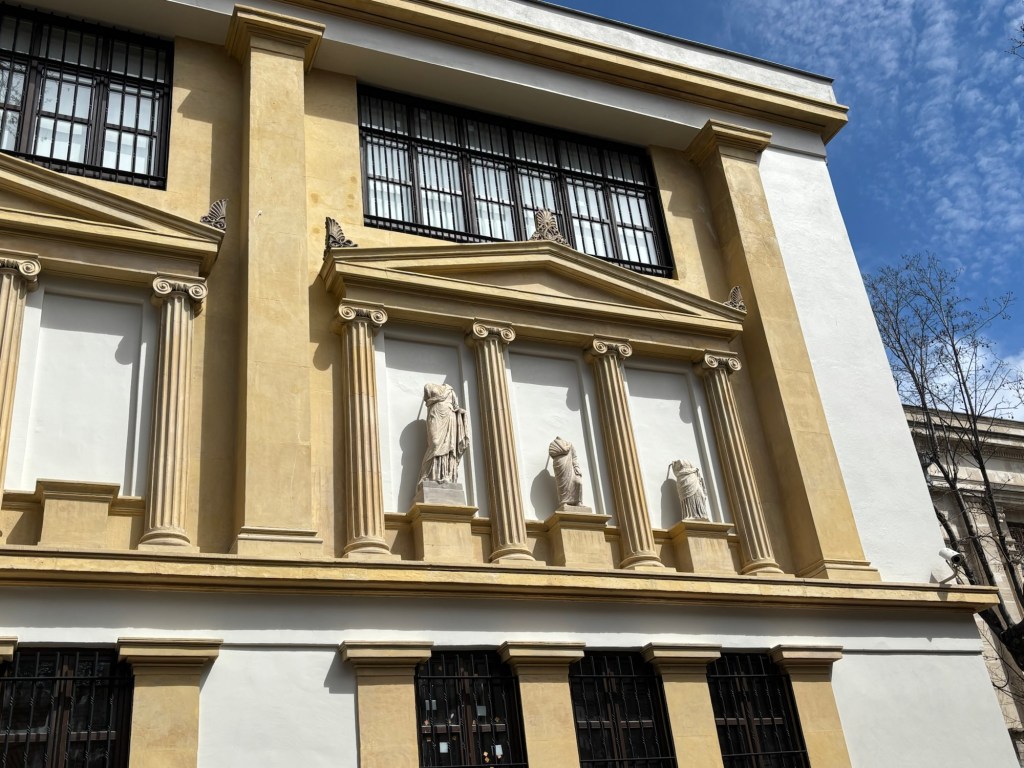
Archaeological Museum, Istanbul
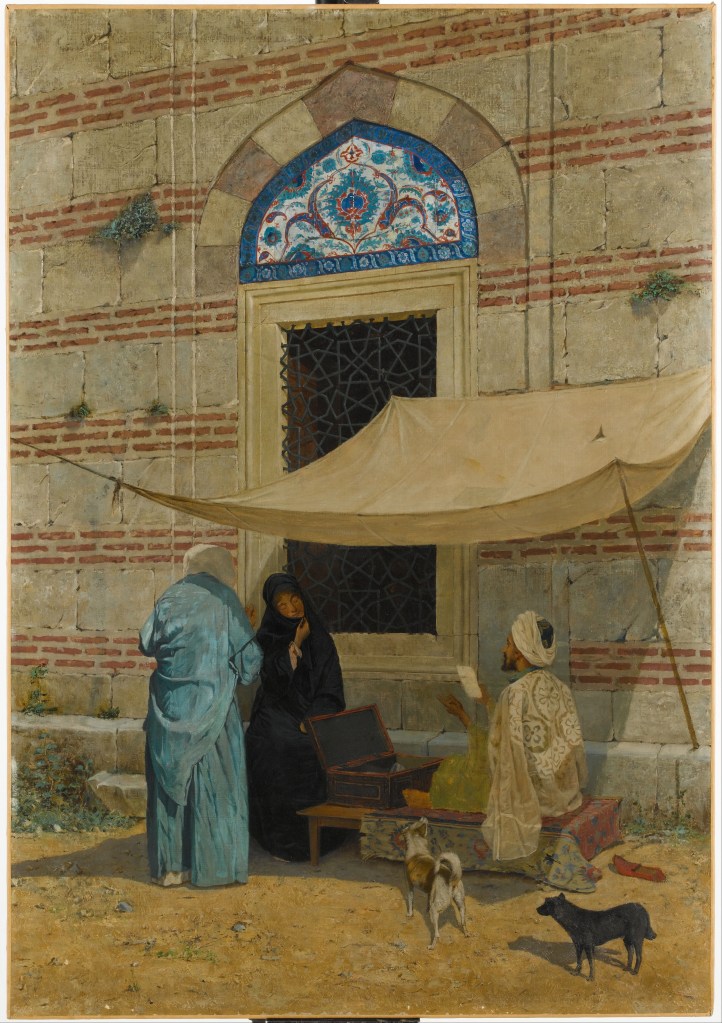
The first painting of Hamid Bey’s that I’d like to think about is ‘The Scrivener’ sometimes known as ‘The Scribe’. This is a painting that captures daily life in Turkey in the 1880s. The scene is a typical market place, probably adjacent to a mosque. The scribe has set himself up, under an awning, to provide shade. Local people come to him to request his services. He will write letters, read official documents, create replies to letters and documents. He will also explain complicated documents. This scene is an every day situation in Turkey in the 1880s. Ordinary people may not be able to read and write, so the services of a scribe to assist them is essential. Note the two dogs next to the scribe, hoping perhaps for a snack.
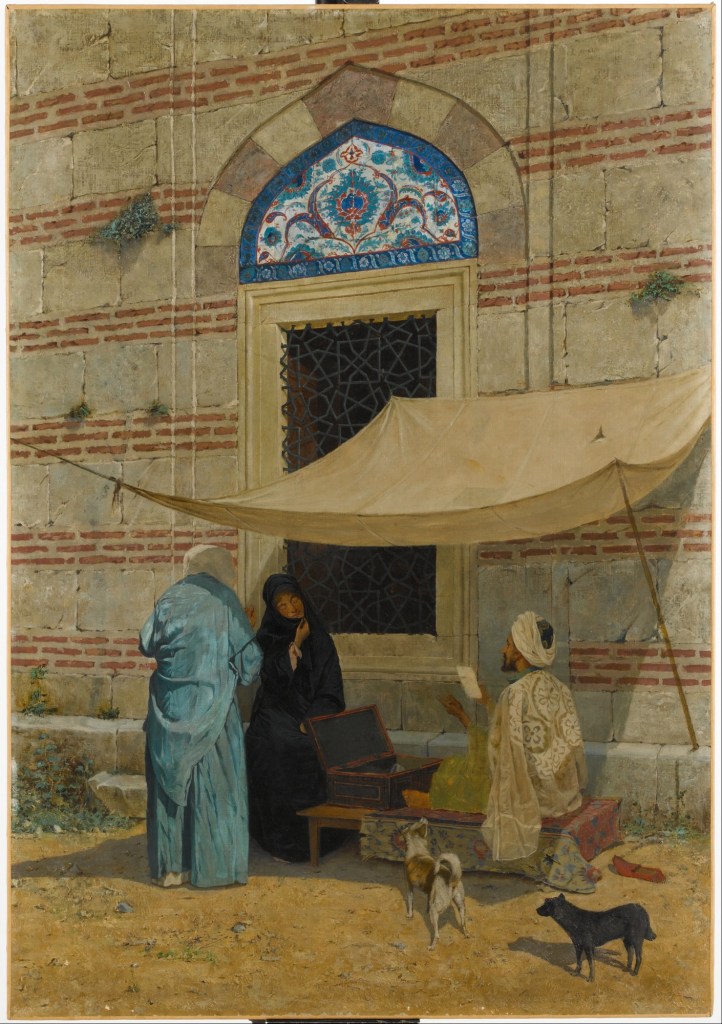
The Scrivener – 1888 – Sakıp Sabancı Museum, Istanbul
Next I’d like to consider The Tortoise Trainer – here Osman Hamdi Bey captures the twilight years of the Ottoman Empire with his superb painting of the tortoise trainer (1906). This painting shows a gentleman dressed in traditional Ottoman clothing attempting to organise and train a group of tortoises. It’s an allegorical story commenting on the decline and disorganisation of the Ottoman Empire. The painting is in the Pera Museum, Istanbul. The man in the painting is OHB himself!

The Tortoise Trainer – Osman Hamdi Bey
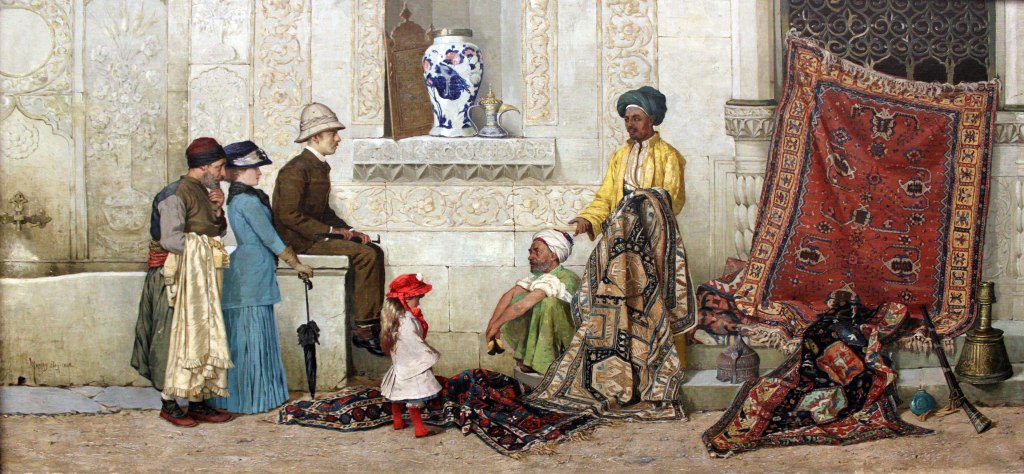
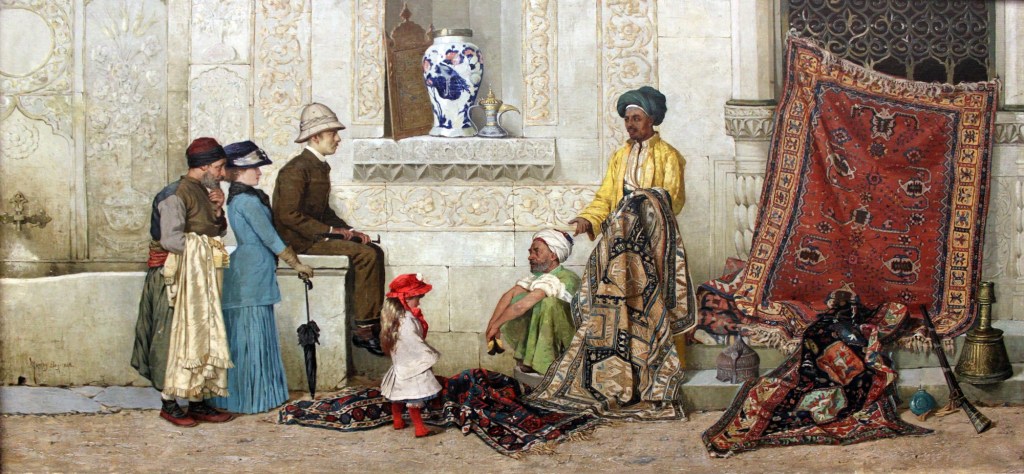
Finally I’d like to look at ‘The Carpet Seller’ my personal favourite. I’d like to start with the exceptional detail. Just look at the facade of the building where the carpet seller is working. It appears to be the outside wall of a mosque, with the washing fountain for hands and feet (prior to entering the mosque) located to the left of the family group. The family are charming and even comical. The adorable little girl with her wide legged stance and red stockings, intently listening to the carpet seller’s explanation of the carpets. The father, boyishly perched on a stone plinth, making him look incredibly young and vulnerable. The wife starring determinedly ahead, hands crossed, umbrella at the ready. The man in Turkish dress behind the lady is almost certainly their local guide or ‘cicerone’ holding a golden garment – the lady’s coat perhaps. Meanwhile the carpet seller explains the qualities, colours and exceptional value of the carpets on offer. Will the family make a purchase? It’s a good question – who knows.
Looking at the paintings of Osman Hamdi Bey and Fausto Zonaro enables us to glimpse at this rich tapestry of life and to appreciate and observe customs and costumes different from those of London or Paris. The notion of ‘orientalism’ influenced fashion, architecture and design in England, France and America well into the 20th century. The city of Constantinople was renamed Istanbul in 1930 as part of a movement towards a modern, Turkish democracy, founded by Ataturk in 1923. However you can’t negate 1600 years of Constantinople with a name change. The city of Constantinople was synonymous with the east and a way of life that was different from Western Europe. If the city is called Istanbul or Constantinople it’s still the same vibrant, exotic, chaotic, tapestry, that it’s been for the last one and a half thousand millenia.
Notes – Further Reading / other articles I’ve written about Turkiye:
- Istanbul and Turkey – so interesting….
- Orientalism in Venetian Art
- Orhan Pamuk – Orhan Pamuk – The Museum of Innocence
- Well worth a visit: Pera Museum, Istanbul
- Turkish Delight – Behind the scenes….
Happy Reading!
- Why not follow me: www.educated-traveller.com on instagram and facebook.
- Or check out my travel company www.grand-tourist.com
April 2025

 The Educated Traveller